1. Misaligned or Blocked Safety Sensors
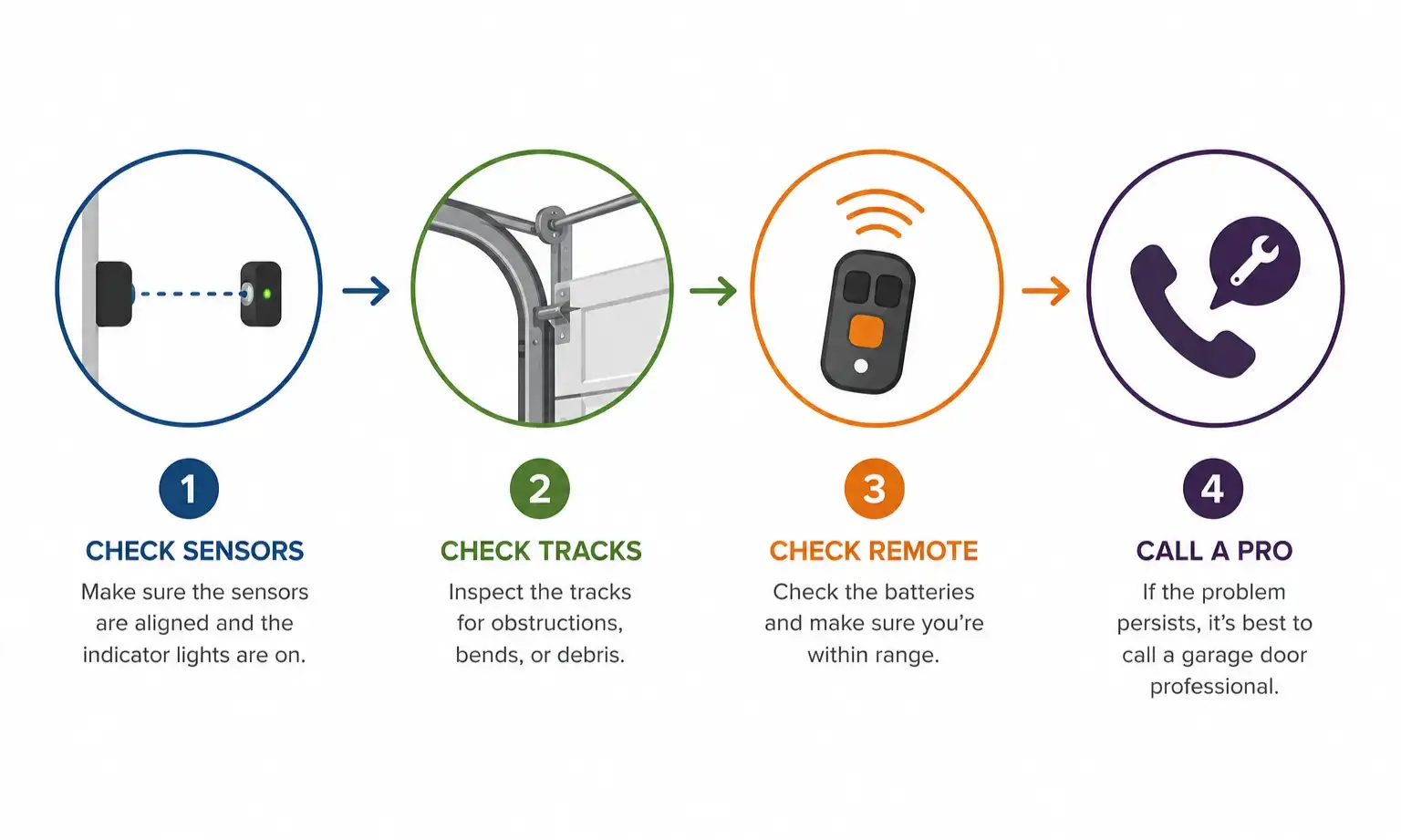
Since 1993, all automatic garage doors have been required to have photo-eye safety sensors. Located about six inches above the ground on either side of the door, these sensors shoot an invisible beam across the opening. If that beam is broken, the door will not close.
The Fix: First, check for obvious blockages like a stray broom, a trash can, or packed snow. Next, wipe the sensor lenses with a clean microfiber cloth to remove dust or spider webs. Finally, check the small LED indicator lights on the sensors. If one is blinking or off, the sensors are misaligned. Gently loosen the wingnut and adjust the sensor by hand until the light is solid, then tighten it back up.
2. Your Garage Door Tracks Are Dirty, Blocked, or Bent
The rollers on your garage door need a smooth, unobstructed path to travel down. If you notice signs of failing rollers, or if dirt, rocks, or hardened grease build up in the metal tracks, the door will bind and the opener will reverse direction.
The Fix: Take a flashlight and carefully inspect the tracks from ceiling to floor. Sweep out any debris and wipe the tracks down with a damp rag. Do not use heavy grease in the tracks, as it attracts more dirt. If you notice the metal is warped, dented, or completely out of alignment, do not attempt to hammer it back into place. Bending the metal weakens it and can cause the heavy door to fall. Instead, contact a professional for bent track repair.
3. The Opener’s Travel Limits Are Set Incorrectly
Your garage door opener has internal settings that tell the motor exactly how far to travel before the door is fully closed. Over time, vibration and weather changes can throw these settings off. If the door goes all the way down, lightly taps the concrete floor, and immediately reverses back up, your travel limits are likely set too high.
The Fix: Grab a step ladder and locate the “Travel” or “Limit” adjustment screws (or buttons, depending on the model) on the side or back of the motor housing. Turn the “Down” limit screw slightly counterclockwise to decrease the downward travel distance. Test the door, and adjust in small increments until the door closes and stays shut.
4. Worn, Frayed, or Broken Garage Door Cables
The thick steel cables running alongside your door work in tandem with the heavy-duty springs to lift and lower the door smoothly. If damaged garage door cables causes one to snap or become slack on one side, the door will sit crooked, jam in the tracks, and refuse to close.
The Fix: Inspect the cables visually. Are they fraying? Is one hanging loosely while the other is taut? Do not touch them. These cables are under immense, dangerous tension. If a cable is compromised, immediately stop using the door and schedule an expert cable repair to safely restore the system.
5. Your Garage Door Remote is Malfunctioning
Sometimes the problem isn’t the door at all; it’s the device you are using to command it. Dead batteries, signal interference, or an accidentally engaged “Lock” mode on the wall panel can mimic a broken garage door motor.
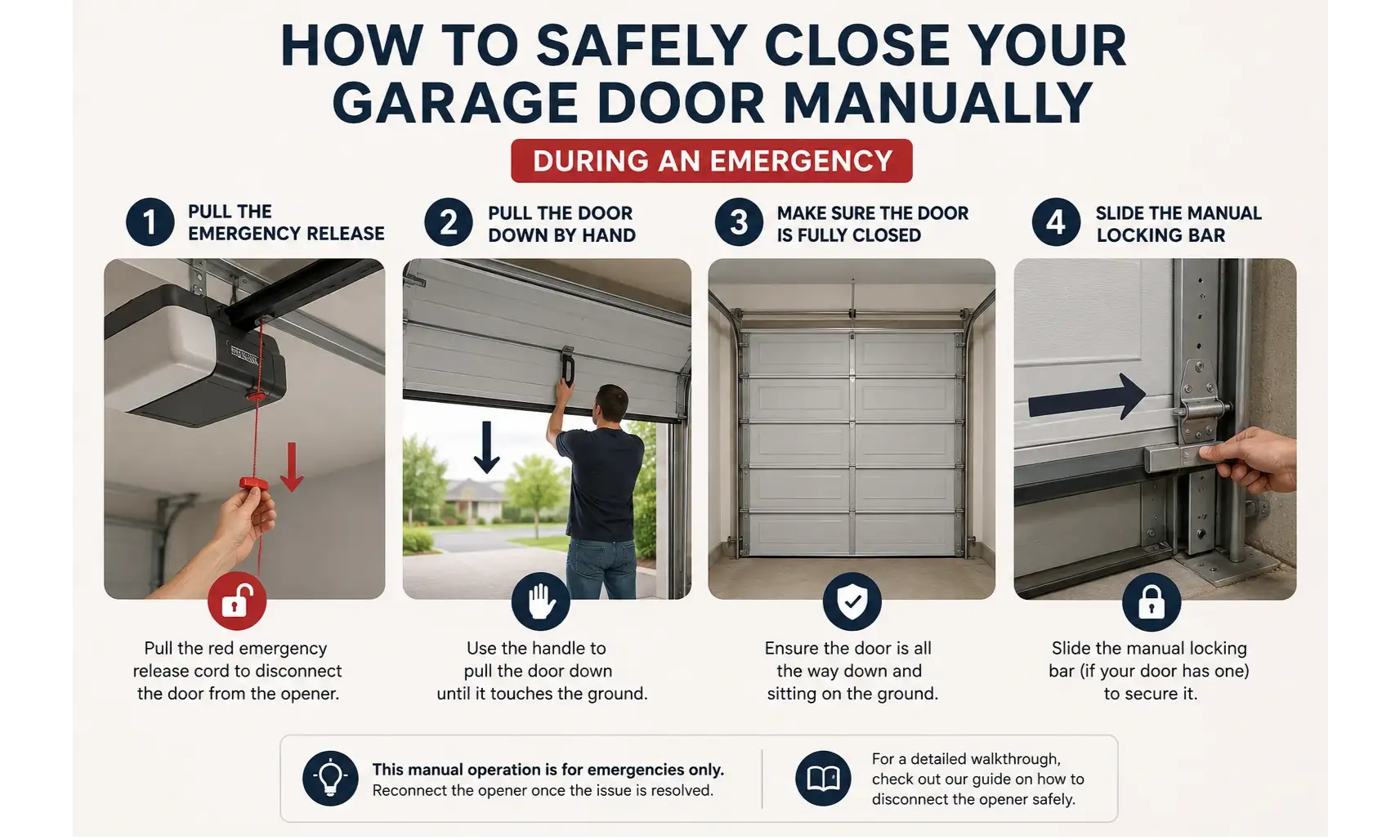
The Fix: First, try closing the door using the hardwired wall console inside the garage. If the wall console works but the remote doesn’t, swap the batteries in your remote. If the wall console also doesn’t work, check to see if the “Lock/Vacation” button has been activated by mistake, which disables all wireless signals.