Here’s the “aha moment” that changes everything: your garage is an extreme environment. The temperature fluctuations it endures are far more dramatic than those inside your climate-controlled home, and this is where battery science comes into play.
Batteries are essentially tiny chemical reactors. Temperature dictates the speed and efficiency of those reactions.
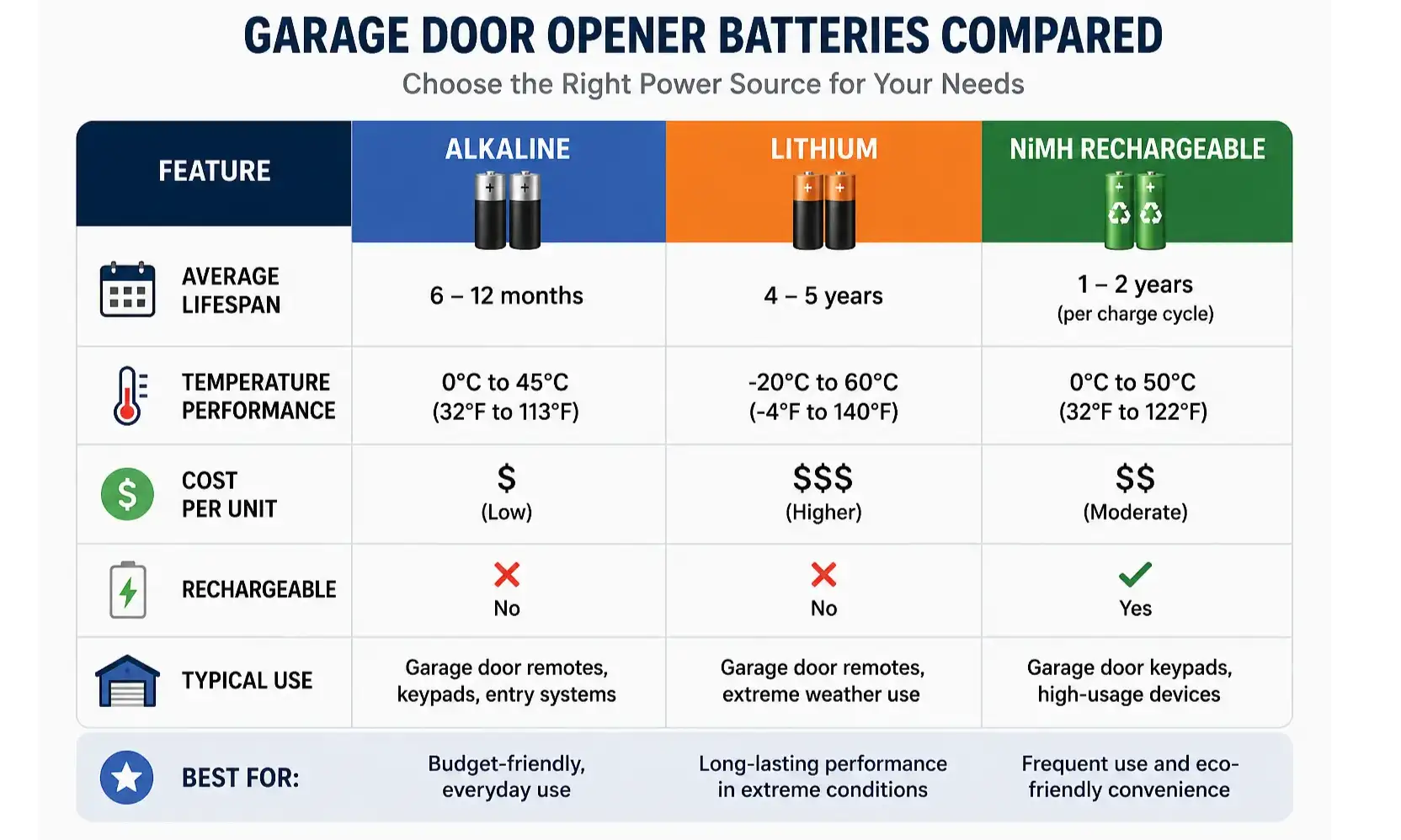
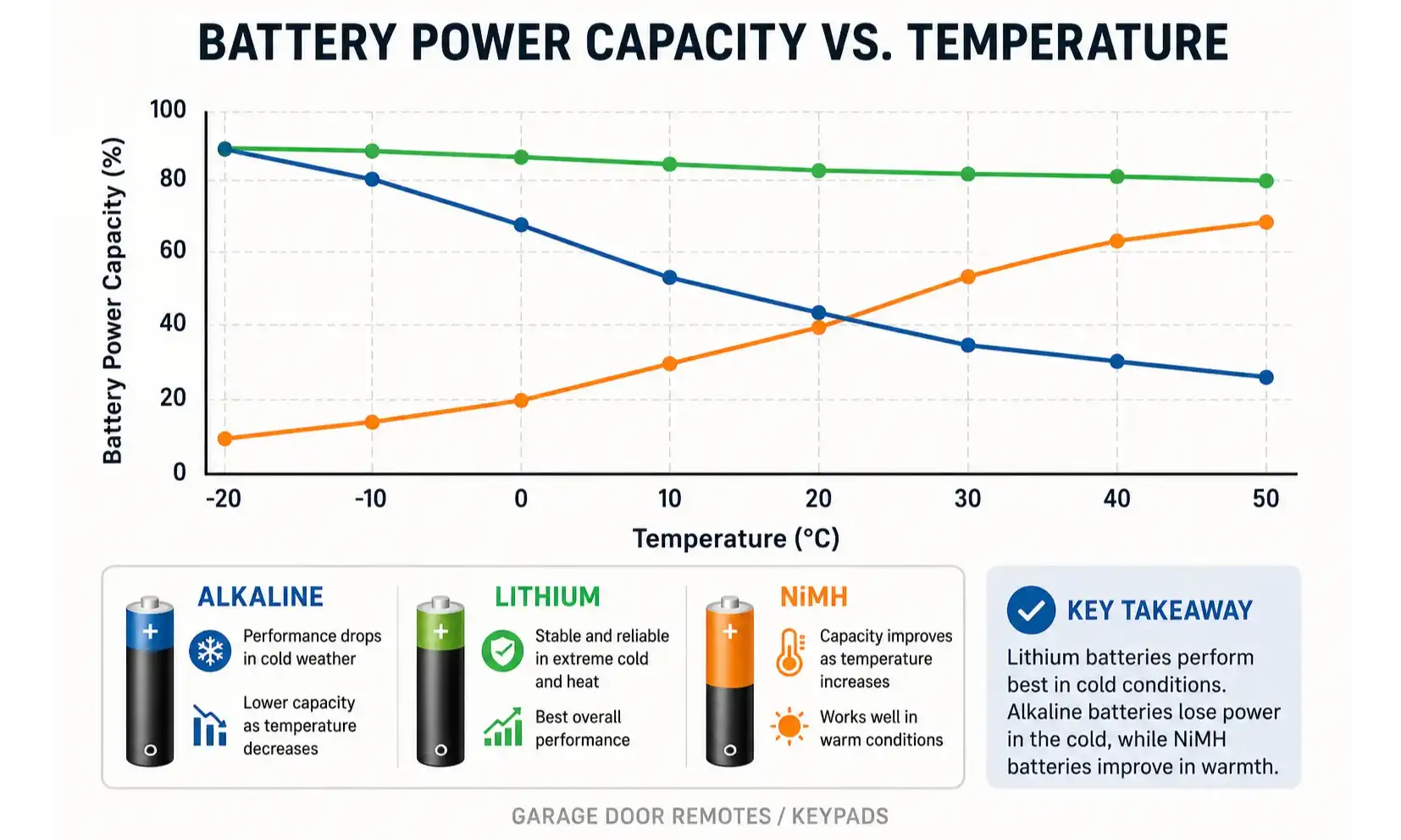
• In the Cold: The chemical reactions inside an alkaline battery slow down dramatically. This reduces the battery’s ability to deliver adequate voltage, making it appear weak or dead even if it’s technically full. At 32°F (0°C), a standard alkaline battery can lose as much as 50-80% of its effective capacity.
• In the Heat: High temperatures accelerate a battery’s internal chemical reactions. For alkaline batteries, this increases the rate of self-discharge and, more alarmingly, the risk of leaking corrosive potassium hydroxide, which can permanently damage your remote or keypad.
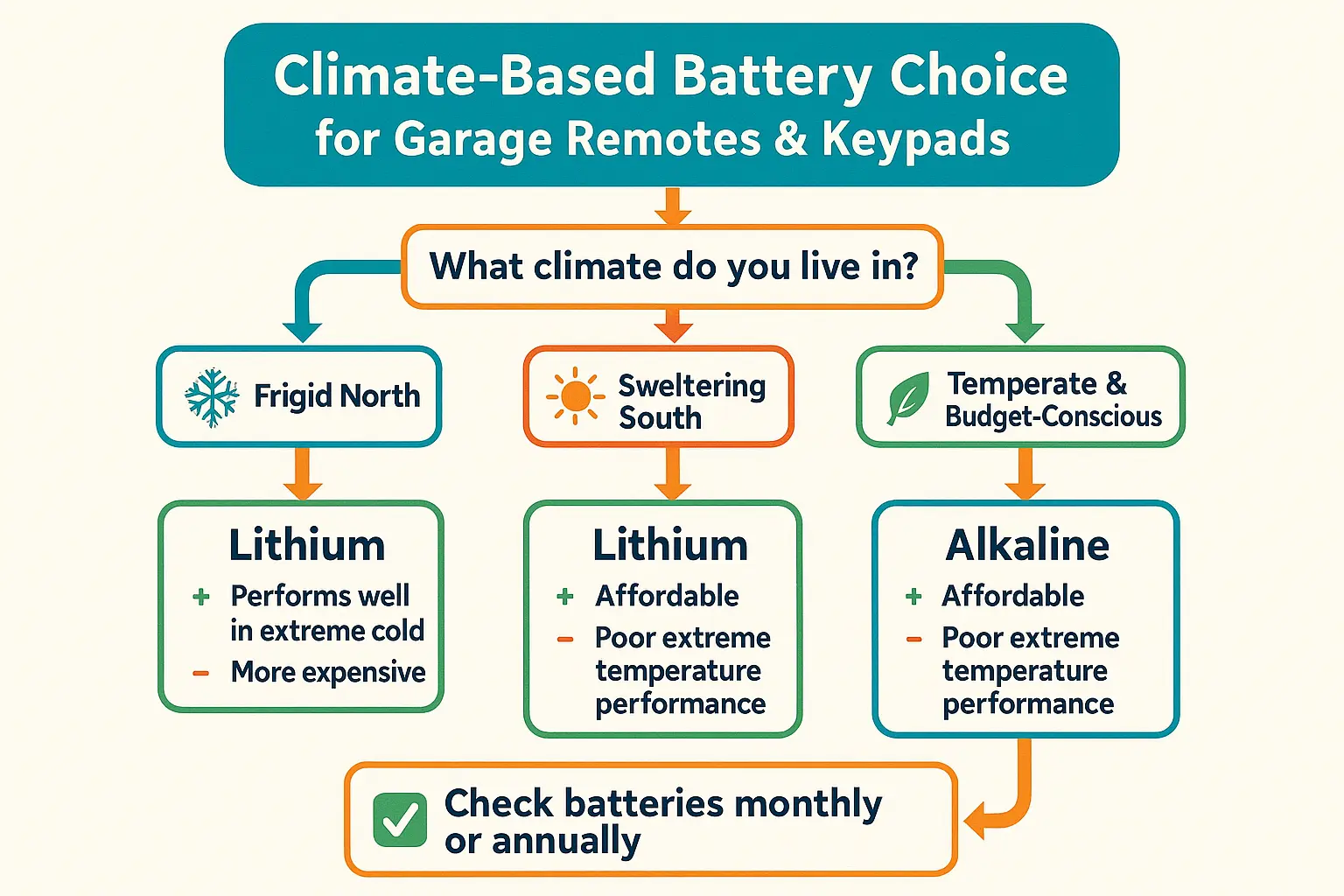
Lithium batteries, by contrast, use a different chemistry that is far more resilient to these temperature swings, maintaining stable performance from well below freezing to scorching hot.