The Red Cord vs. The Keyed Lock: Your Guide to Garage Door Emergency Releases


Published: Jun 22, 2026 | Updated: Jul 28, 2026

It’s a scenario no homeowner wants to face: the power is out, your car is trapped inside the garage, and you’re running late. Or worse, you’ve arrived home during a storm only to find your clicker is useless, and your garage is the only way into your house. You’re locked out.

In moments like these, a tiny, often-overlooked feature of your garage door system becomes the most important tool you own: the emergency release. But not all releases are created equal, and knowing which one you have—and which one you need—can be the difference between a minor inconvenience and a major headache.

Many homeowners are familiar with the red cord hanging from the opener, but what about the small, circular lock on the garage door itself? This guide will walk you through the difference between the standard internal pull cord and an external keyed release, helping you understand how they work and which one is right for your home.
Foundation: Your Opener's Lifeline - The Internal Release Cord


Let’s start with the basics. That red-handled cord hanging from the metal track of your garage door opener is your manual override. It’s the standard emergency release on virtually every automatic opener.
How does it work?:
Think of your garage door opener as a small engine (the motor unit) that moves a trolley along a rail. This trolley is connected to your garage door. When you hit your remote, the trolley pulls the door open or pushes it closed. The emergency release cord is a simple lever that disconnects the trolley from the opener’s chain or belt. Pulling the cord detaches the door from the motor’s control, allowing you to lift or lower it by hand. This is the core function of any garage door emergency release.
Using the Internal Release:
1. Ensure the Garage Door is Closed: For safety, only disengage the opener when the door is fully closed. Pulling the release on an open door could cause it to slam shut, especially if there’s an issue with the springs.
2. Pull the Cord: Give the red cord a firm pull downwards and slightly back, towards the motor. You should hear or feel a click as the trolley disengages.
3. Lift the Door Manually: You can now lift the door by hand. If it feels extremely heavy, stop immediately. This indicates a problem with the springs, which are designed to carry the door’s weight. Once power is restored, you’ll need to re-engage the system. You can typically do this by pulling the cord towards the door or by running the opener until the trolley automatically reconnects. If you find you need to reengage your garage door, it’s a straightforward process that restores automatic function.

Building: The Critical Question - When is the Lifeline Not Enough?


A comparison table showing the use case, pros, cons, and security considerations for both internal and external garage door releases.
The internal pull cord is a fantastic safety feature, but it has one critical limitation: you must be inside the garage to use it.

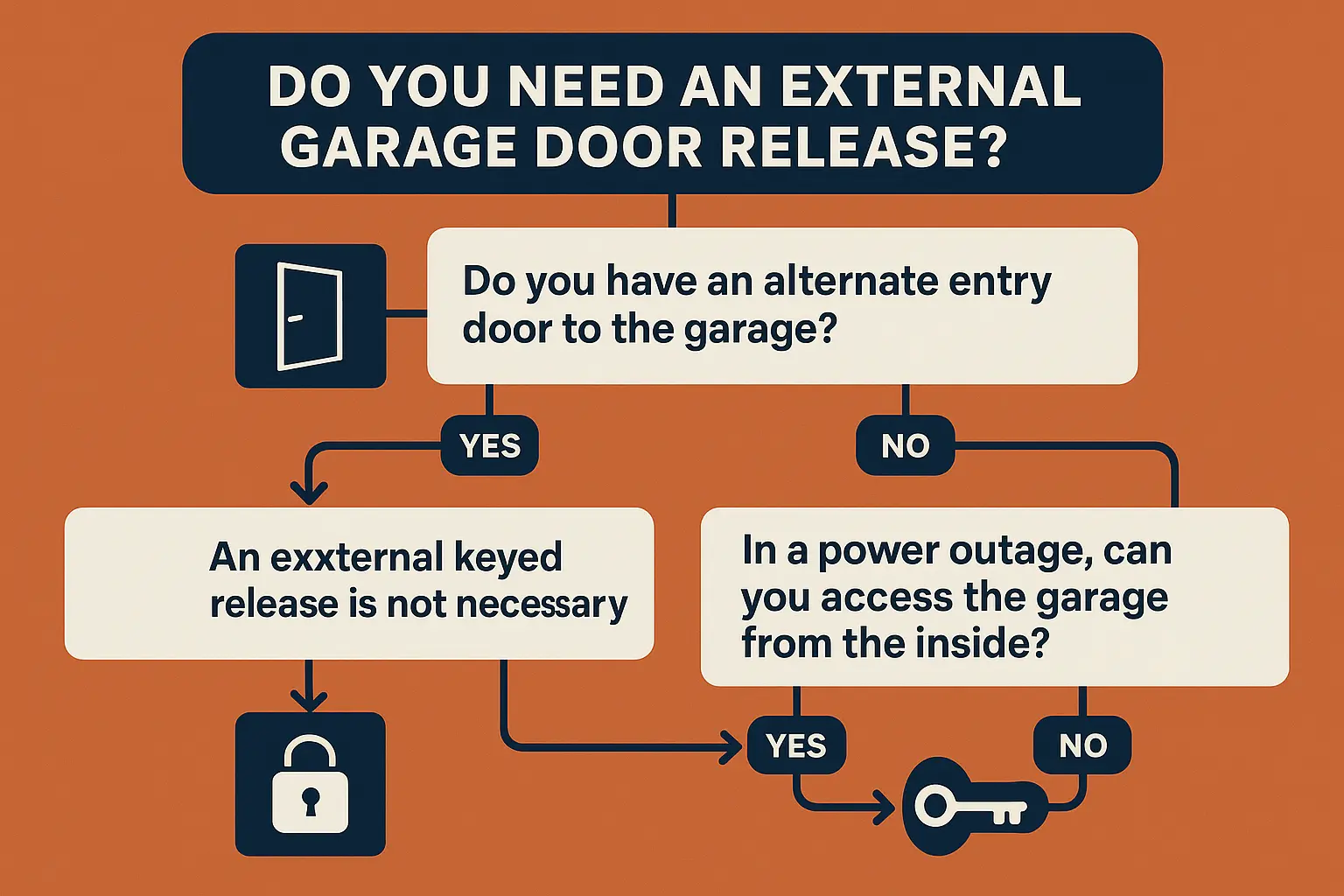
This presents a serious problem for a specific type of garage—one with no other entry point, often called a “detached” or “no-pass-door” garage. If the power goes out, and you don’t have a secondary door to walk through, you are completely locked out.

This is where the external keyed emergency release comes in.

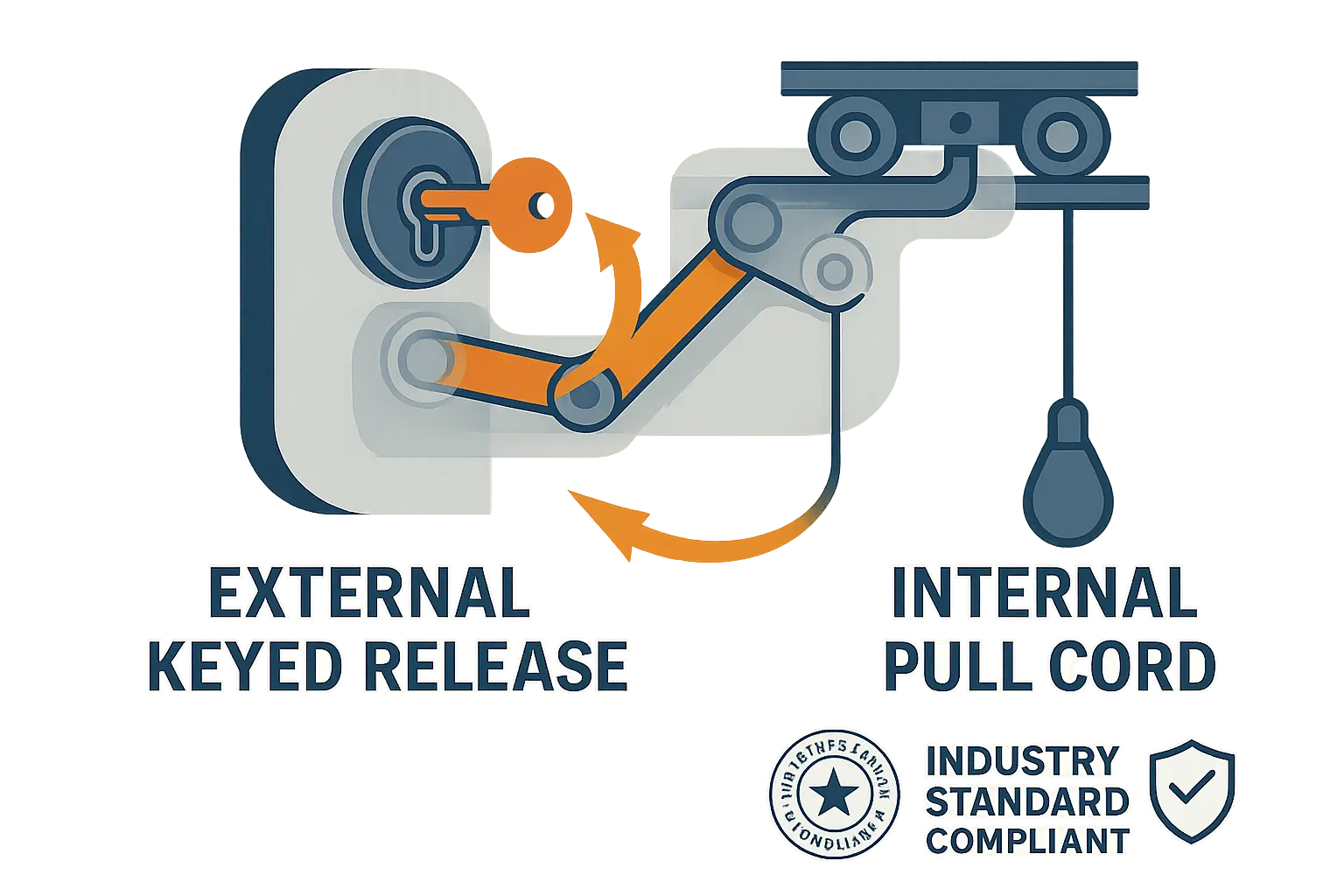
The “Aha!” Moment: They’re the Same System: Here’s the insight that simplifies everything: an external keyed release isn’t a different kind of mechanism. It’s simply an extension of the internal one. It’s a keyed lock on the outside of your garage door connected by a steel cable to the same release lever that the red cord pulls. When you insert the key and turn the lock, it pulls the cable, which in turn disengages the trolley—exactly as if you had pulled the red cord from inside. It gives you outside access to the inside function.
Caption: At a glance: Compare key features and use cases of Internal Pull Cords and External Keyed Releases to decide what suits your garage access needs.

Mastery: Step-by-Step Operation & Troubleshooting


A diagram showing how an external keyed release is connected via a cable to the internal trolley release mechanism on the garage door opener.
Using an external release is simple. You drill a small hole in your garage door, install the lock mechanism, and run the cable to the opener trolley’s release arm. Once installed, a quick turn of the key is all it takes to disconnect the door and gain manual access. The primary reason people need to learn how to open their garage door manually is almost always a power outage.
Caption: Visualize how turning the external key activates the same internal emergency release mechanism, confirming their seamless integration and engineered safety.

From Stuck to Solved: A Guide to Common Release Problems

Even with the right system, you might run into issues. Here’s how to troubleshoot them.

Action: Security, Maintenance, and Next Steps


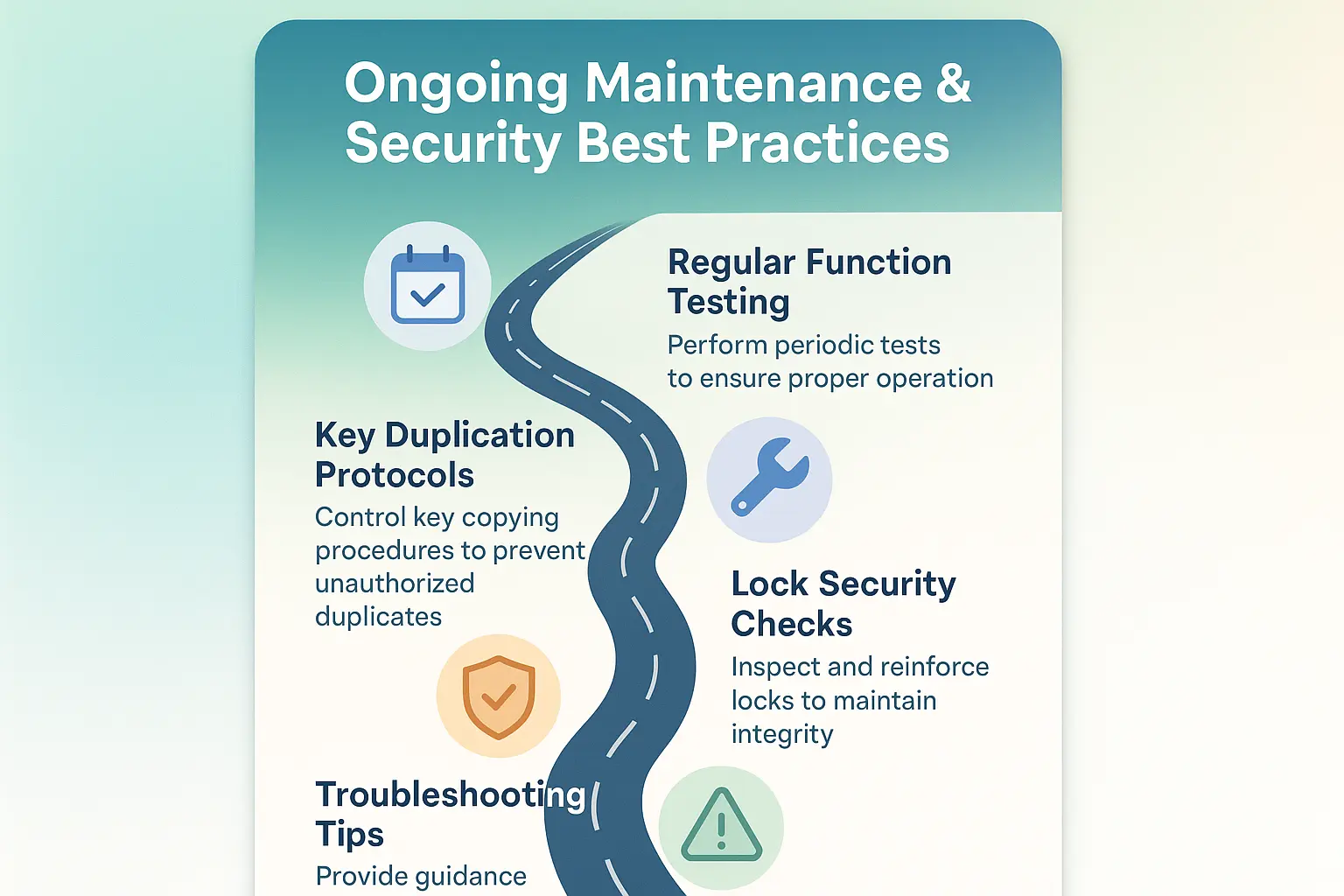
A visual guide illustrating the steps for maintaining and securing a garage door's emergency release system, including testing the lock and re-engaging the trolley.
Once you have the right emergency system in place, a little maintenance goes a long way.

Security and Maintenance Roadmap

Frequently Asked Questions (FAQ)


Do I really need an external release if my garage is attached to my house?

If your attached garage has a regular entry door that leads into your home, you do not need an external keyed release. In a power outage, you can simply go inside your house, enter the garage through that door, and use the standard red pull cord. The external release is specifically for garages with no other access points.

What happens if I pull the emergency cord while the garage door is open?

Warning: Never do this: The only thing holding the door up is the opener trolley. If you disengage it, the full weight of the door will come crashing down. This is extremely dangerous and can cause severe damage to the door and anything beneath it.

How do I reset my garage door after using the release?

The term “reset” usually means re-engaging the opener. After you’ve manually operated the door, close it fully. Then, hit your remote. The opener will move the connection point along the rail until it locks back into the trolley. If you have any trouble, our step-by-step guide on how to reset a garage door after pulling the red cord can help.

Continuing Your Learning Journey


Understanding your garage door’s emergency systems is a crucial part of homeownership. The internal pull cord is your day-to-day safety net for power failures, provided you have inside access. The external keyed release is the essential upgrade for any garage that would otherwise be completely sealed shut during an outage.

By assessing your garage’s access points and knowing how these simple but vital mechanisms work, you can ensure you’re always prepared and never left out in the cold.

Frequently Asked Questions


What is the difference between an internal pull cord and an external keyed emergency release?

An internal pull cord release is a manual rope attached to the garage door carriage that lets you disconnect the door from the opener from inside the garage. An external keyed emergency release uses a lock cylinder built into the outside of the door, allowing you to manually open it from the exterior when power is lost and there is no other entry point.

Do I need an external keyed emergency release for my garage door?

You strictly need an external keyed release if your garage lacks an alternative access point, such as a side entry door. Without it, if your automatic garage door opener loses power or fails, you will be locked out of the garage with no way to manually open the door from the outside.

How secure is an external keyed emergency release system?

When properly installed, an external keyed release is highly secure because it requires a physical key to turn the cylinder and pull the internal release cable. This prevents intruders from using 'fishing' tricks with clothes hangers to manually pull your internal release cord from the outside.

Contact / Request a Call