Don’t Just Fill That Crack: A Pro’s Guide to Concrete Repair Materials & Tools


Published: Jun 22, 2026 | Updated: Jul 28, 2026

Not so fast.
Choosing the wrong material for a concrete crack is like putting a band-aid on a broken bone. It might look better for a little while, but it doesn’t address the real problem and often leads to a bigger, more expensive failure down the road.

This guide is different. We’re not just going to show you what to use; we’re going to teach you how to think like a professional. By the end, you’ll understand how to diagnose your specific crack and choose the perfect material and tools for a repair that actually lasts.
The Two-Question Diagnostic: Your Key to a Perfect Repair


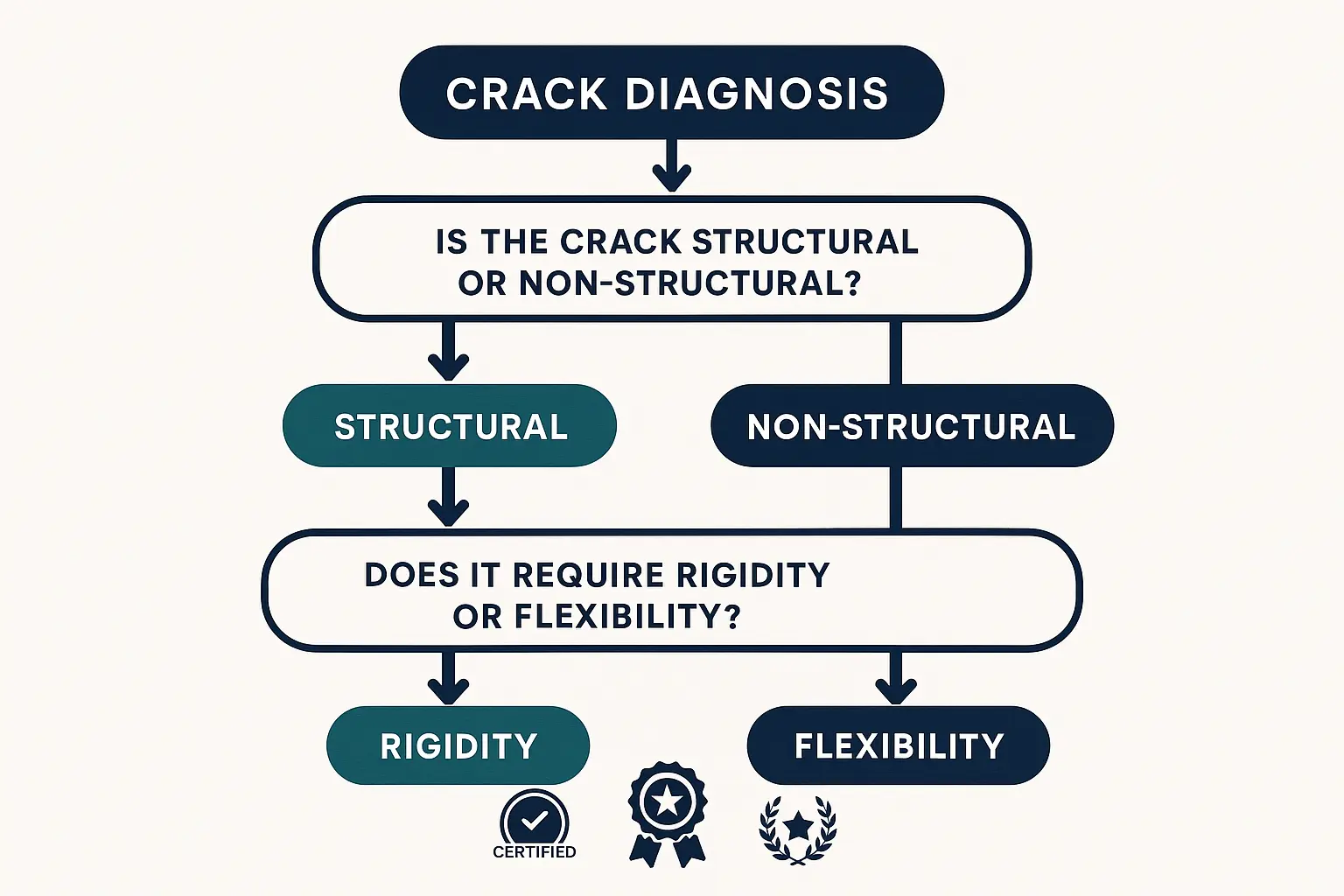
A flowchart illustrating the two-question diagnostic framework for concrete crack repair, guiding users to the correct material type based on whether the crack is structural and if it moves.
Before you even think about materials, you need to play detective. To choose the right solution, you only need to answer two fundamental questions about your crack. Get these right, and you’re 90% of the way to a successful repair.
1. Is it Structural or Non-Structural? A structural crack threatens the integrity of the concrete slab, like a crack in a foundation wall from settling. A non-structural crack is typically cosmetic, like a hairline crack in a patio from concrete shrinkage as it cured.

2. Does it Move? Concrete expands and contracts with temperature changes. A crack in an expansion joint is a “moving” or “active” crack designed to accommodate this. A crack in the middle of a stable, indoor floor is likely a “static” crack that won’t change.

Understanding this distinction is the single most important “aha moment” in concrete repair. You either need to “weld” the concrete back together or give it a flexible filling that can move with it.

Material Masterclass: Matching the Compound to the Crack


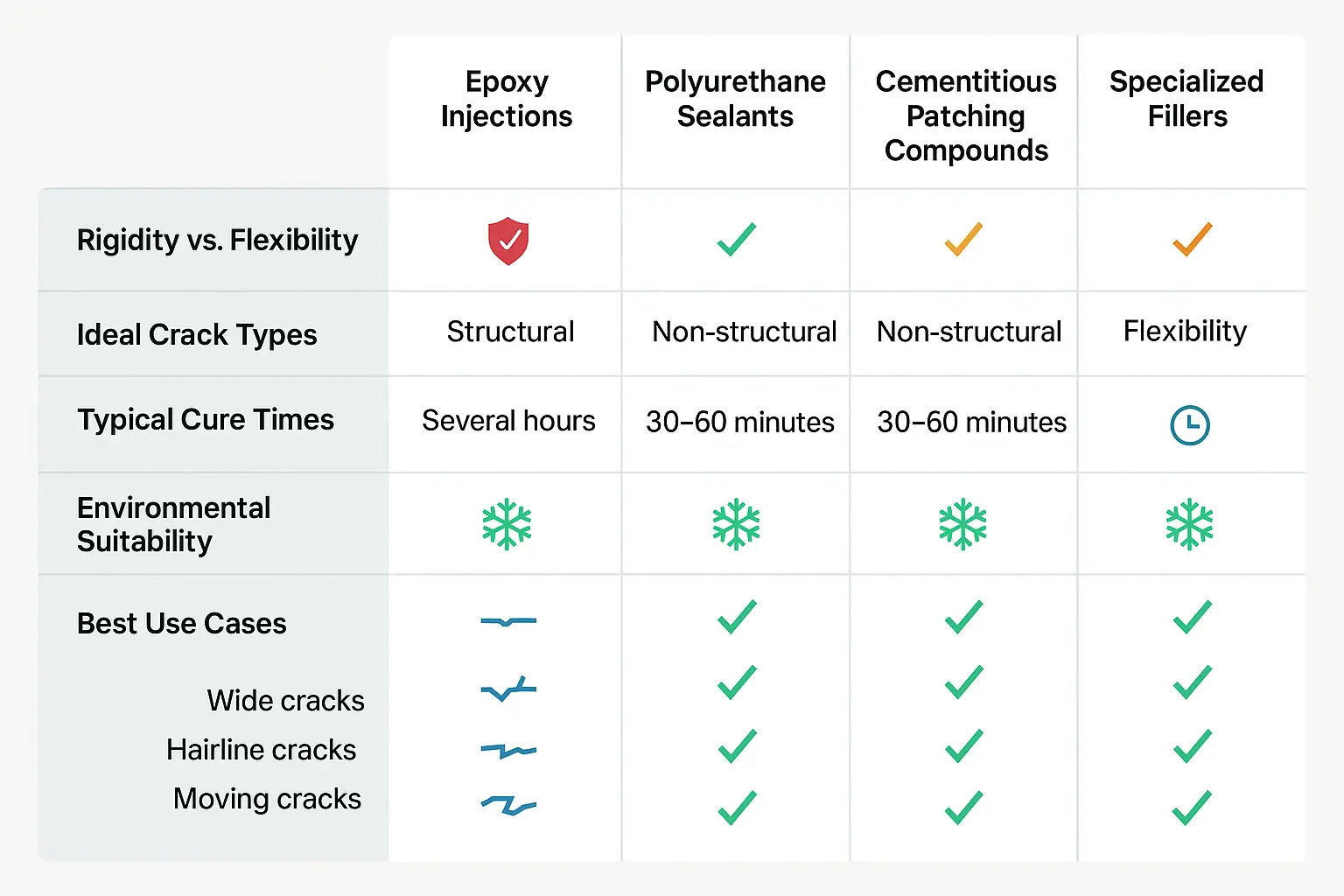
A detailed comparison chart of concrete crack repair materials, outlining the properties, best uses, and limitations of Epoxy, Polyurethane, and Cementitious Compounds.
Once you’ve diagnosed your crack, you can step into the “pharmacy” of concrete repair. Each material has a specific job. Using the wrong one is a recipe for failure.

Epoxy Injection Resins: The Structural Weld

Think of epoxy as a super-strength glue for concrete. It cures into a rigid plastic that is often stronger than the concrete itself.

Polyurethane Sealants & Foams: The Flexible Seal

Polyurethane is the polar opposite of epoxy. It’s all about flexibility. It creates a waterproof, durable seal that can stretch and compress as the concrete moves.

Cementitious Patching Compounds: The Surface Fix

These are traditional, cement-based products, often fortified with polymers for better adhesion and durability.

Application: A Real-World Scenario for a Wide Driveway Crack


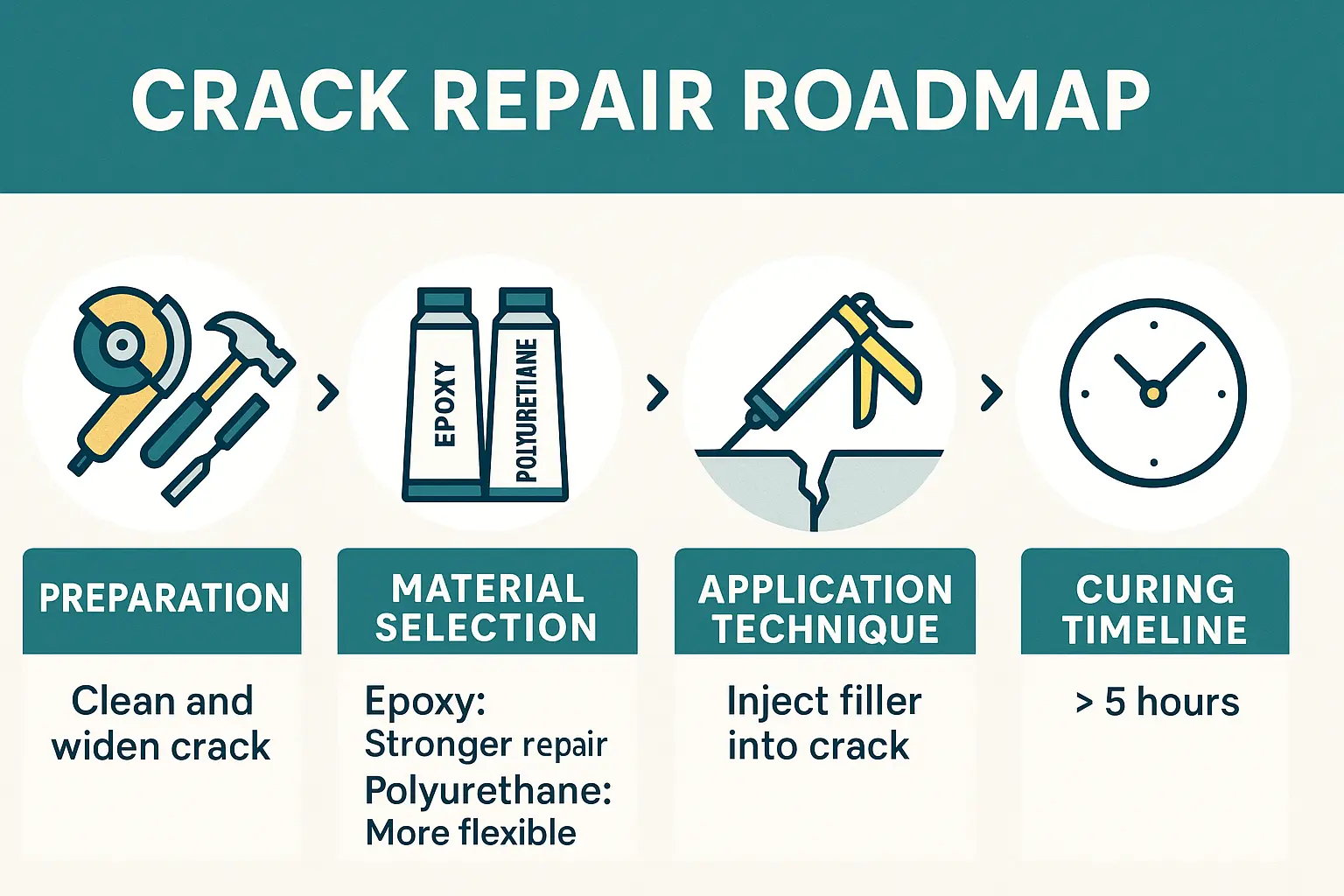
An infographic flowchart showing the step-by-step process for repairing a wide concrete crack, from preparation and cleaning to applying backer rod and sealant.
Let’s put this knowledge into practice. Imagine a 1/2-inch wide crack running across your driveway, right along a control joint.
1. Diagnose:

– Structural? No, it’s in a control joint, which is designed to crack.

– Moving? Absolutely. This joint expands in the summer heat and shrinks in the winter cold.

2. Select Material: Because it’s a non-structural, moving crack, you need a flexible sealant. A self-leveling polyurethane sealant is the perfect choice.

3. Select Tools & Process: A successful repair is all about preparation. Following a clear process ensures the sealant bonds properly and lasts for years.

Mastery: The Professional's Toolkit


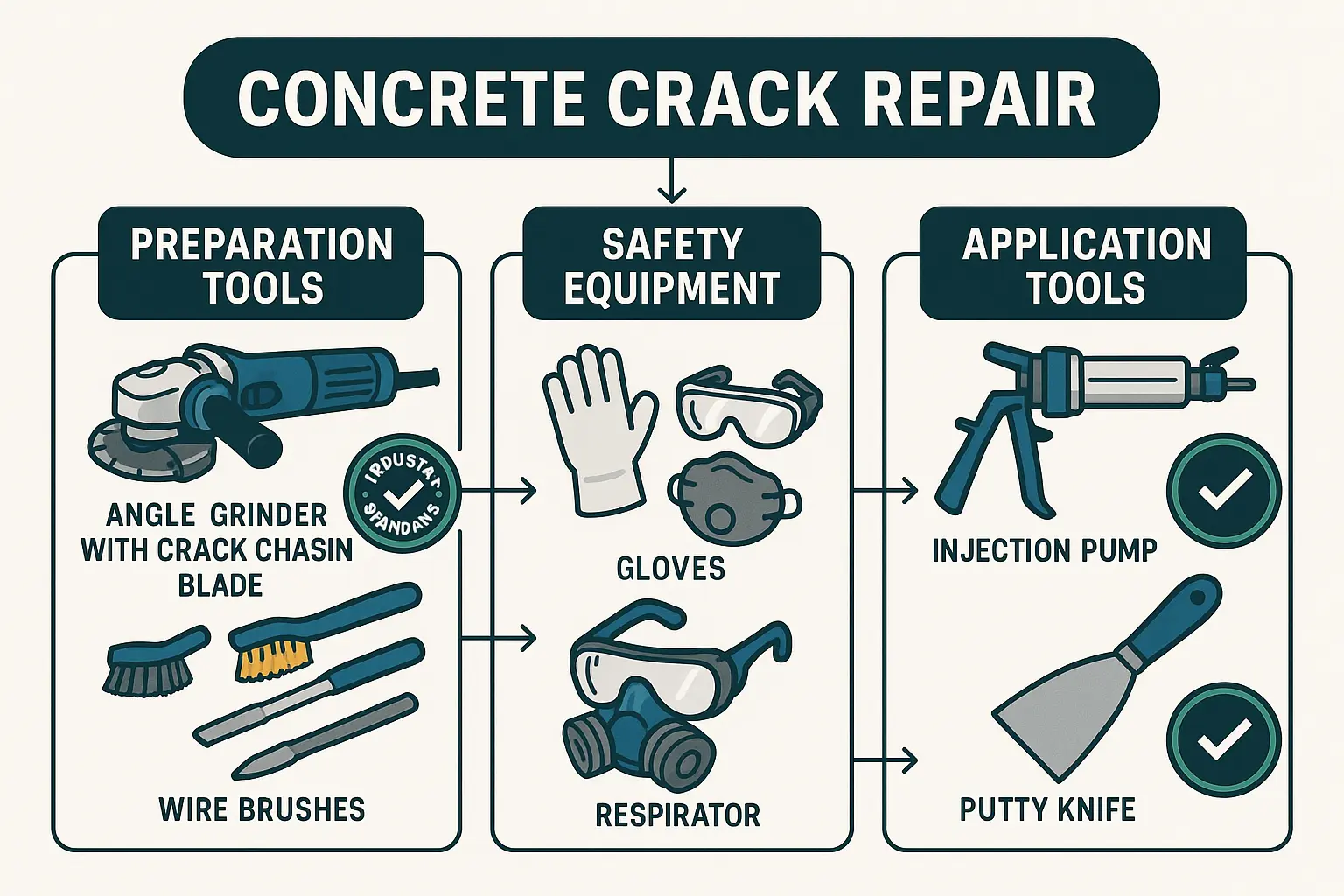
A layout of essential tools for concrete crack repair, including an angle grinder with a diamond blade, a shop vacuum, a wire brush, a caulk gun, and safety gear like gloves and glasses.
Having the right material is only half the battle. Professional results come from using the right tools, especially for preparation. A clean, sound surface is non-negotiable for a lasting bond.

Preparation Tools

Application Tools

Frequently Asked Questions (FAQ)


Q: What about very thin hairline cracks?:

A: For hairline cracks that are non-structural and not leaking water, the best solution is often to do nothing. If they bother you aesthetically, a concrete patch product with a fine aggregate can be troweled over the surface. For garage floors, an epoxy floor coating can seal and hide them effectively.

Q: How do I know if my crack is structural?:

A: Look for these warning signs: 1. The crack is wider than 1/4 inch. 2. One side of the crack is higher than the other (indicating shifting). 3. The crack is growing in length or width over time. 4. It appears on a foundation wall along with other signs like bowing or water intrusion. If you see any of these, it’s best to consult a structural engineer.

Q: How long does the repair material take to dry or cure?:

A: It varies dramatically by product. Polyurethane sealants can be tack-free in a few hours but may take several days to fully cure. Epoxies have a specific “pot life” (working time) and cure time, often reaching full strength in 24-72 hours. Always read the manufacturer’s instructions carefully.

Q: Can I do these repairs in any weather?:

A: No. Most repair compounds have specific temperature and moisture requirements. Applying them in conditions that are too hot, too cold, or too wet can cause the repair to fail. Check the product’s technical data sheet before you begin.

Your Path to a Perfect Repair


You now have the framework professionals use to guarantee a durable, effective concrete crack repair. By moving past the “one-size-fits-all” filler and learning to diagnose the problem first, you can confidently select the right material and tools for the job. You’re not just patching a problem anymore—you’re implementing a lasting solution.

Taking pride in your home’s integrity is a rewarding process. As you continue to improve your space, remember how modern advancements are changing home maintenance, from durable repair compounds to the exciting

Upgrading your home’s security and convenience goes beyond just fixing physical cracks. Embracing smart garage door technology 2025 allows you to monitor and control your entry points directly from your smartphone, ensuring your entire garage setup is modern and secure.

is expected to bring.

Frequently Asked Questions


What is the best material for repairing deep concrete cracks?

For deep structural cracks, a high-strength polyurethane or epoxy injection system is best because it bonds deeply within the fracture. For deep non-structural cracks, using a foam backer rod followed by a flexible polyurethane sealant prevents water intrusion while allowing for natural concrete expansion.

Do I need to widen a concrete crack before repairing it?

Yes, widening or 'routing' the crack with a cold chisel and hammer or an angle grinder is a crucial step. Creating a 'V' or 'U' shaped groove removes loose debris and gives the repair material more surface area to stick to, ensuring a lasting bond.

What essential tools are needed for DIY concrete crack repair?

The essential tools include a hammer and cold chisel (for widening the crack), a wire brush or vacuum (to completely remove dust and loose debris), a standard caulking gun (for applying tubes of sealant), and a putty knife or trowel to smooth the surface finish.

Contact / Request a Call