Why Weather Stripping Makes Your Garage Door Reverse


Published: Jun 17, 2026 | Updated: Jul 28, 2026

It’s one of the most baffling home repair moments. You press the button, your garage door dutifully lowers, makes contact with the floor, and then—for no apparent reason—it immediately reverses and goes all the way back up. You check for a stray recycling bin, a forgotten bicycle, anything in its path. Nothing.

If this scenario sounds frustratingly familiar, you’re not alone. You’ve likely stumbled upon a classic garage door mystery. While most homeowners immediately suspect the safety sensors, the true culprit is often sneakier and hiding in plain sight: the rubber weather stripping at the bottom of your door.

Let’s walk through this problem like a seasoned detective, starting with the usual suspects and then zeroing in on how a simple piece of rubber can outsmart your entire garage door system.
First, Let's Rule Out the Usual Suspects


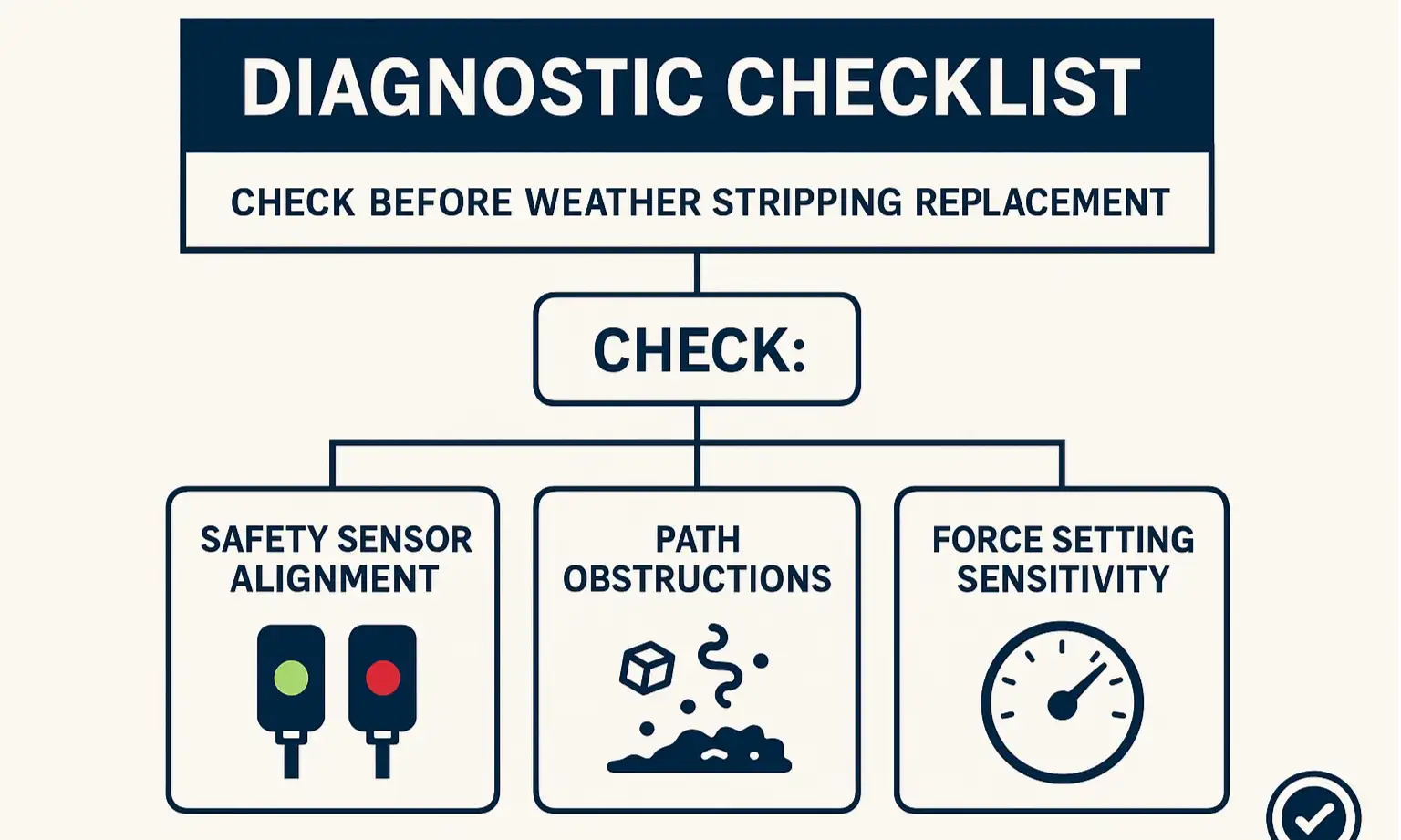
A critical diagnostic checklist helping users rule out common issues before replacing weather stripping.
Before you spend time and money on a new weather seal, it’s smart to perform a quick 3-point check. Modern garage door openers have a built-in safety reversal system designed to prevent accidents. This system is sensitive, and its job is to reverse the door if it detects any obstruction. Our first step is to make sure it isn’t reacting to a legitimate problem.

This checklist will build your confidence and ensure you’re solving the right issue.

If you’ve checked these three things and the problem persists, it’s time to investigate the weather seal.

The Sneaky Culprit: Your Garage Door's Weather Seal


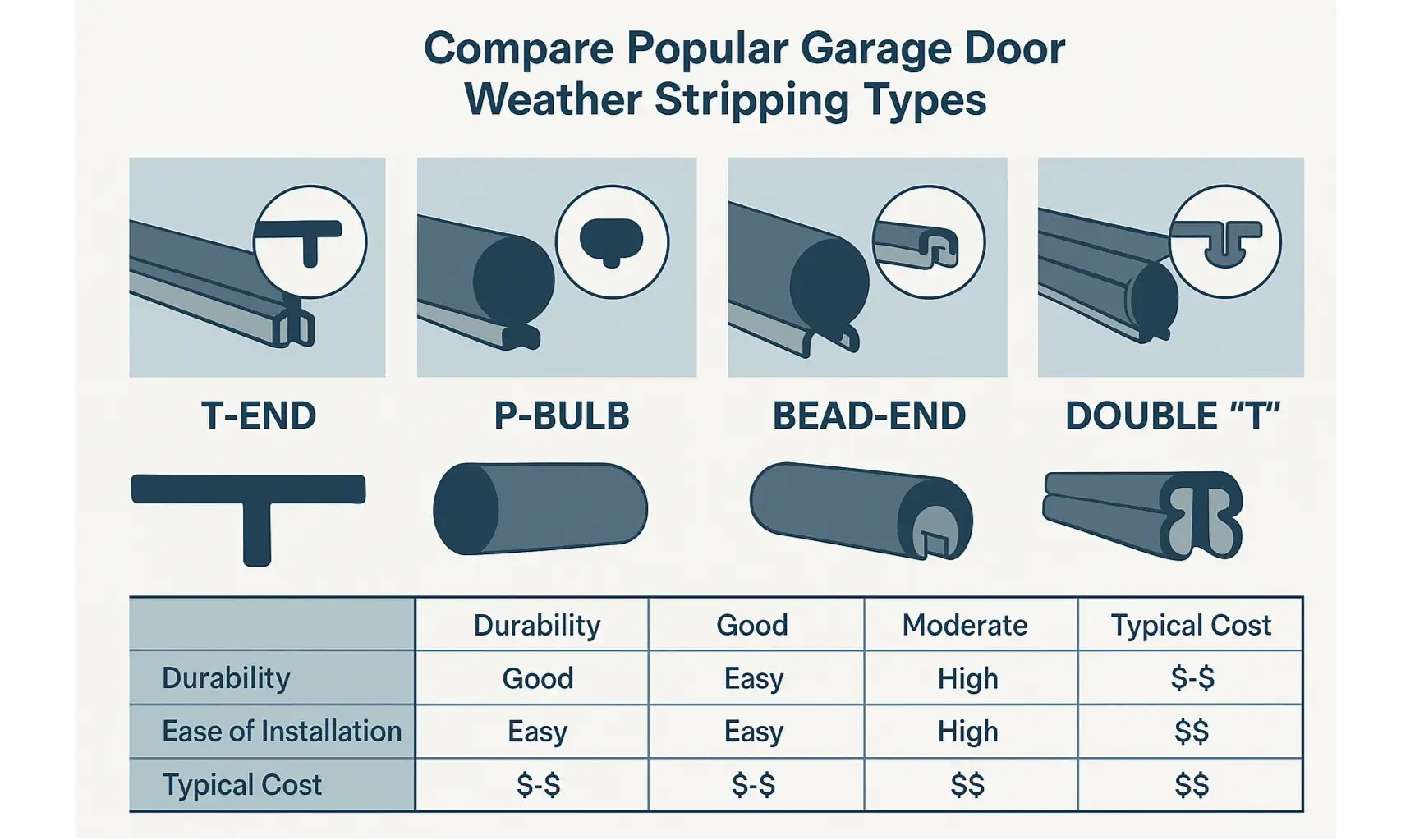
Compare popular garage door bottom seal types to select the right weather stripping for your repair needs.
Here’s the “aha moment” most homeowners miss: a worn-out weather seal can create a false obstruction.

Think of your opener’s safety system like a scale. It knows how much force is normally needed to close the door. If it suddenly encounters more resistance, it assumes it has hit something and immediately reverses.

Over time, your bottom weather seal can:

Essentially, the seal is no longer cushioning the door’s landing. Instead, it’s causing a collision that tricks the safety system. Besides causing operational headaches, a bad seal also contributes to significant energy loss due to poor door seals, letting drafts and pests into your garage.

Find Your Match: A Visual Guide to Bottom Seal Types

Before you can replace the seal, you need to identify what kind you have. The “retainer”—the metal track on the bottom of the door—determines the shape of the seal you need. Pull out a small section of your current seal to see its profile.

Mastery: Your Step-by-Step Guide to Replacing the Bottom Seal


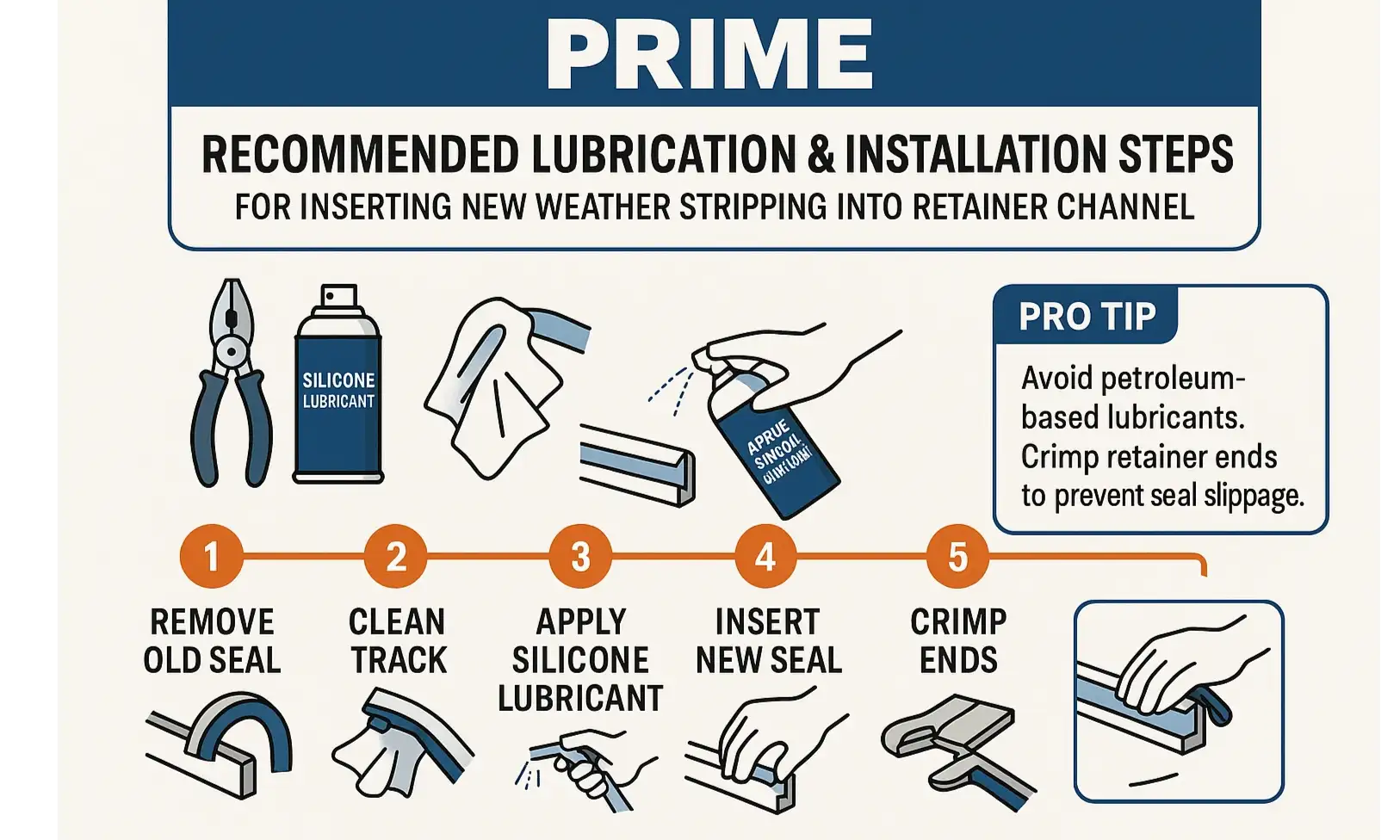
Follow these expert-approved steps for a lasting weather stripping replacement that prevents safety reversals caused by worn seals.
Replacing the weather stripping is a manageable DIY project that can solve your reversal problem in under an hour.

Tools & Materials You’ll Need:

New weather seal (correct type and length)

Step 1: Remove the Old Seal

Raise the garage door to a comfortable height where you can easily access the bottom. For safety, unplug the garage door opener and engage the manual lock. Use pliers to remove any screws holding the retainer in place and to slightly un-crimp the ends of the track. Then, firmly grip one end of the old seal and slide it out of the retainer. If it’s stuck, a flathead screwdriver can help pry it out.

Step 2: Clean and Prepare the Retainer Track

Once the old seal is out, use a rag and a screwdriver to clean out any dirt, debris, or rust from inside the channels. A clean track is essential for a smooth installation.

Step 3: Lubricate and Install the New Seal

This is where lubricant is your best friend.
Generously spray the inside of the retainer track and the edges of the new seal with a silicone-based lubricant. This will help it slide in without bunching or tearing.
Pro Tip: Use a silicone-based spray, not a petroleum-based one like WD-40. Petroleum products can degrade rubber over time, shortening the life of your new seal.

With a helper feeding one end, start sliding the new seal into the track. One person should guide the seal into the channels while the other pulls it through from the other side. Keep the seal straight to prevent it from twisting inside the track.

Step 4: Trim and Finish

Once the seal is all the way through, you can trim the excess.
AVOID THIS MISTAKE: Don’t cut your new seal too short! Leave about two extra inches on each side. You can tuck this excess into the hollow end of the seal to create a better barrier against drafts and critters.

Finally, use pliers to gently crimp the ends of the retainer track. This small step prevents the seal from sliding sideways over time. Re-engage the opener and test the door.

Action: Post-Installation Check & What to Do If It Still Reverses


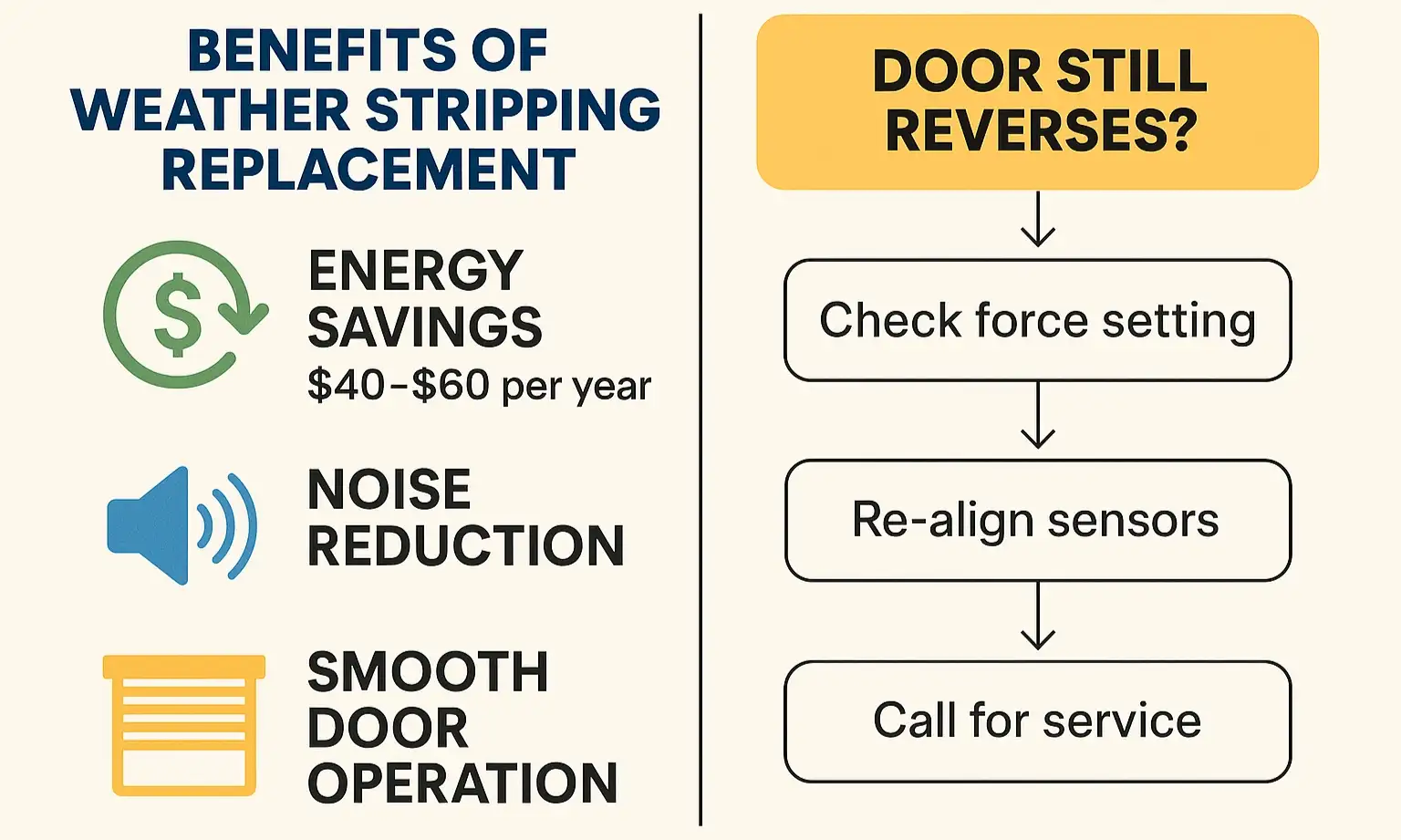
Understand the lasting value of replacing your garage door weather stripping and confidently navigate next troubleshooting steps if needed.
Run your garage door up and down a few times. The closing motion should be smooth, and the new seal should create a snug, even barrier against the floor.

What if the door still reverses? Don’t panic. Your new seal is likely thicker and more robust than the old, compressed one. The opener might just need to be recalibrated to this new, slightly higher level of resistance. If your garage door reverses before hitting the floor, a minor adjustment to the close-force setting on your opener motor will usually solve the problem for good.

From Frustration to a Perfect Close


That mysterious, reversing garage door often isn’t a sign of a major mechanical failure. More often than not, it’s the door’s way of telling you that a simple, wearable part—the bottom weather seal—has reached the end of its life.

By taking a methodical approach to diagnosing the problem and tackling the replacement yourself, you not only save yourself a headache but also gain a deeper understanding of how your garage door works. Now, you can enjoy the satisfaction of a door that closes perfectly, every single time.

Frequently Asked Questions (FAQ)


How often should I replace my garage door weather stripping?

A good quality seal should last 5-10 years, but it depends on your climate and usage. Inspect it annually for signs of cracking, tearing, or flattening.

Can I use any type of lubricant?

We strongly recommend a silicone-based lubricant. Soapy water can also work in a pinch. Avoid petroleum-based products like WD-40, which can damage the rubber.

What if my retainer track is damaged or rusted?

If the metal track that holds the seal is bent, broken, or severely rusted, it should be replaced along with the seal. This is a more complex job, and if you’re not comfortable, professional garage door weather stripping services can ensure it’s done correctly and safely.

Is a tight seal really that important?

Absolutely! Beyond preventing false reversals, a good seal keeps out rain, snow, dust, and pests. It also improves your home’s energy efficiency by stopping drafts, which can save you money on heating and cooling costs.

Frequently Asked Questions


Why does a garage door reverse right after hitting the floor?

When a garage door hits the floor and immediately rolls back up, the opener's safety system is detecting resistance. This is usually caused by either misaligned safety sensors or an overly thick, warped, or frozen bottom weather stripping seal that tricks the opener's close-force threshold into thinking it hit a solid obstruction.

How does weather stripping trigger a garage door safety reversal?

Over time, rubber weather seals can warp, crack, bunch up, or harden in cold weather. When the door tries to close, this compromised rubber creates physical resistance against the ground before the door reaches its official 'down limit' setting. The opener mistakes this physical friction for an object or person under the door and automatically reverses for safety.

How do you fix a garage door that reverses due to the bottom seal?

First, inspect the bottom seal to see if it is twisted or coming loose from its retainer track. If the rubber is intact but compressing too flat, you will need to slightly adjust the 'down travel limit' on your opener motor by a quarter-turn so the door stops just as the rubber gently seals against the concrete, rather than crushing aggressively against it.

Can cold weather cause my weather stripping to reverse the garage door?

Yes. Freezing Connecticut winter temperatures cause rubber weather stripping to lose its flexibility and stiffen. Additionally, moisture under the door can freeze the bottom seal directly to the concrete driveway. When the opener pulls or pushes against this rigid resistance, it triggers the force limits, causing the door to stall or reverse.

Should I just turn up the force settings on my opener to bypass the weather stripping?

No, you should never turn the force settings to maximum. While a minor 1/8th-turn tweak to the down-force can help settle a new, stiff piece of weather stripping, maxing out the force completely compromises the built-in safety mechanisms, meaning the door may fail to reverse if it hits a real person, pet, or vehicle.

Contact / Request a Call