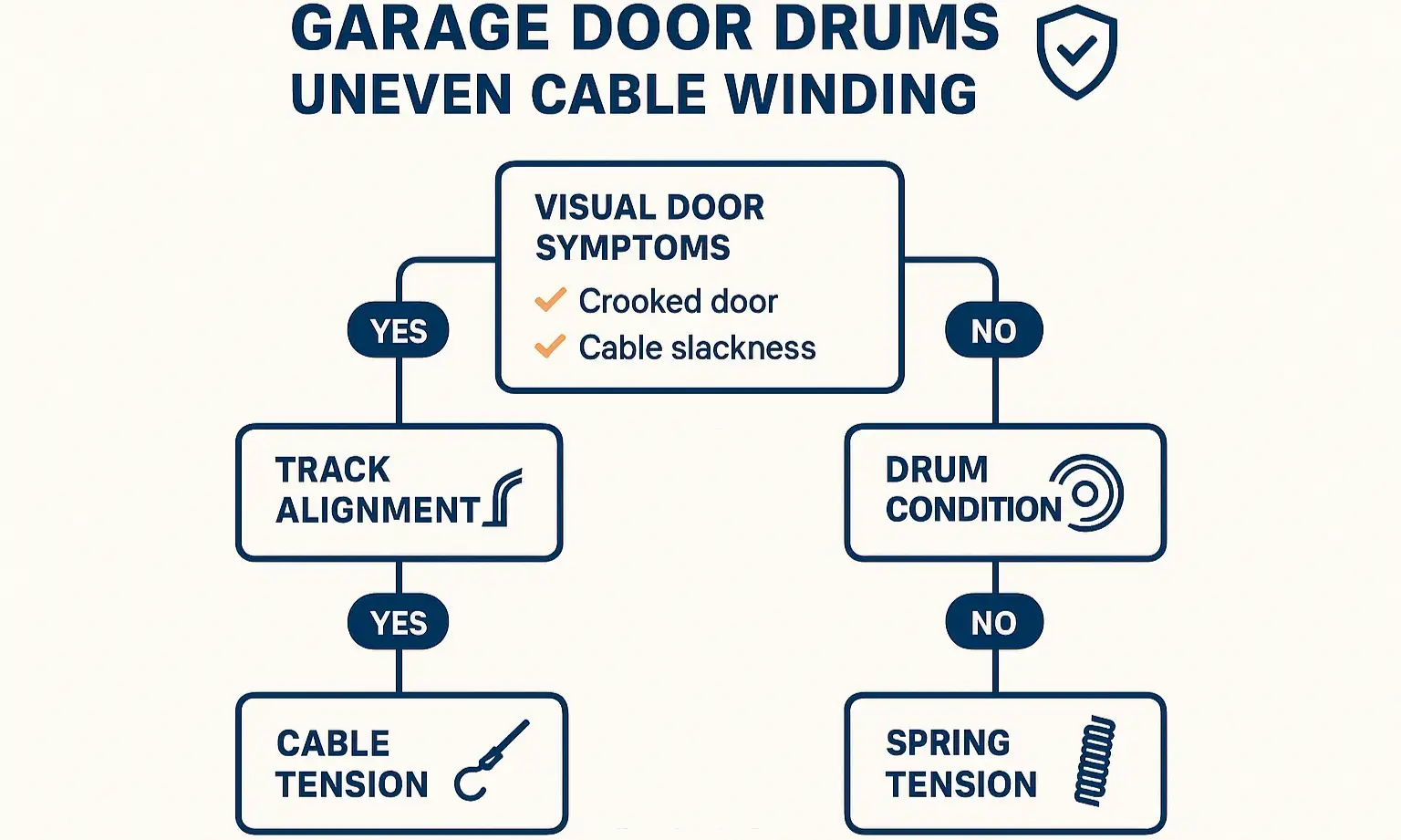
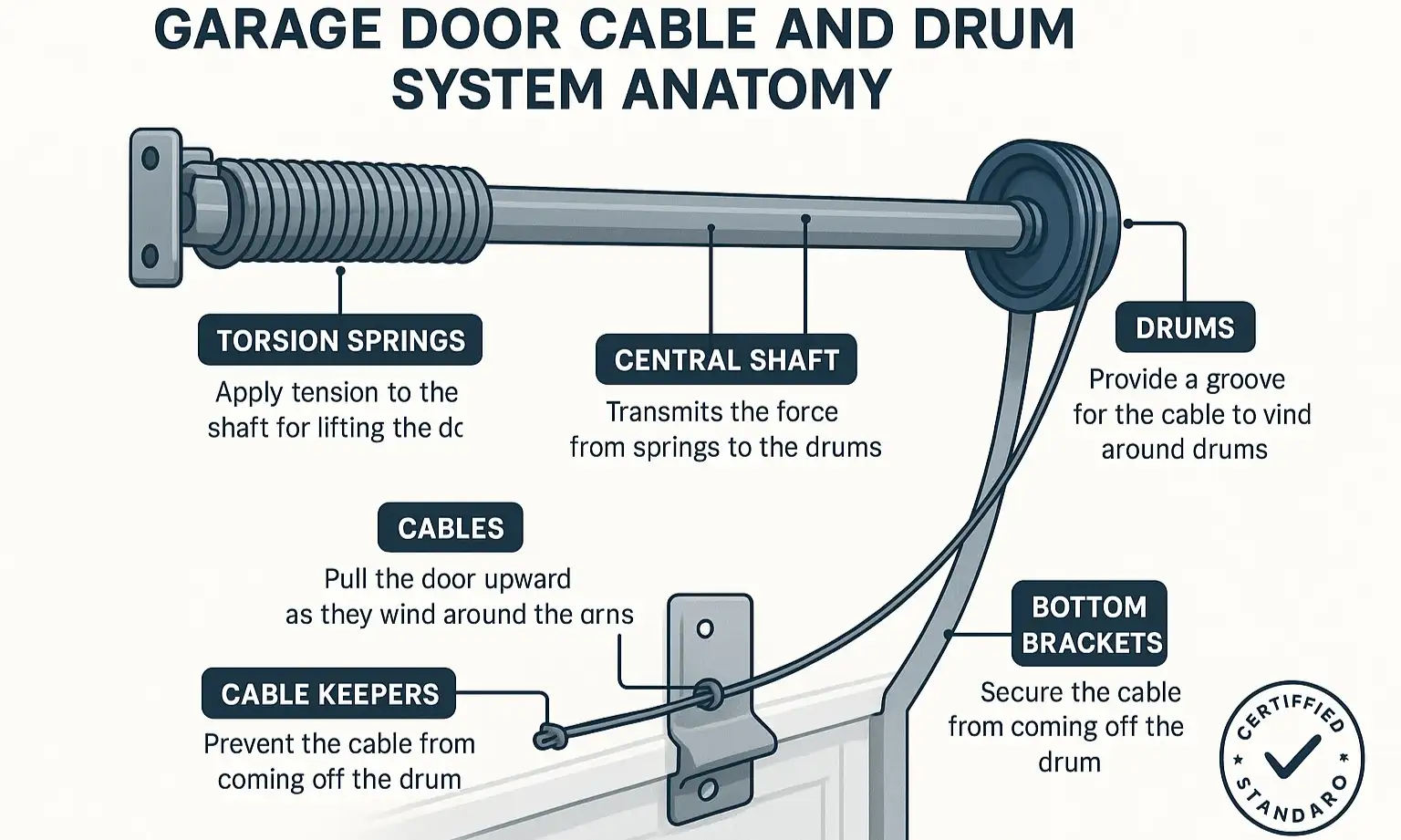
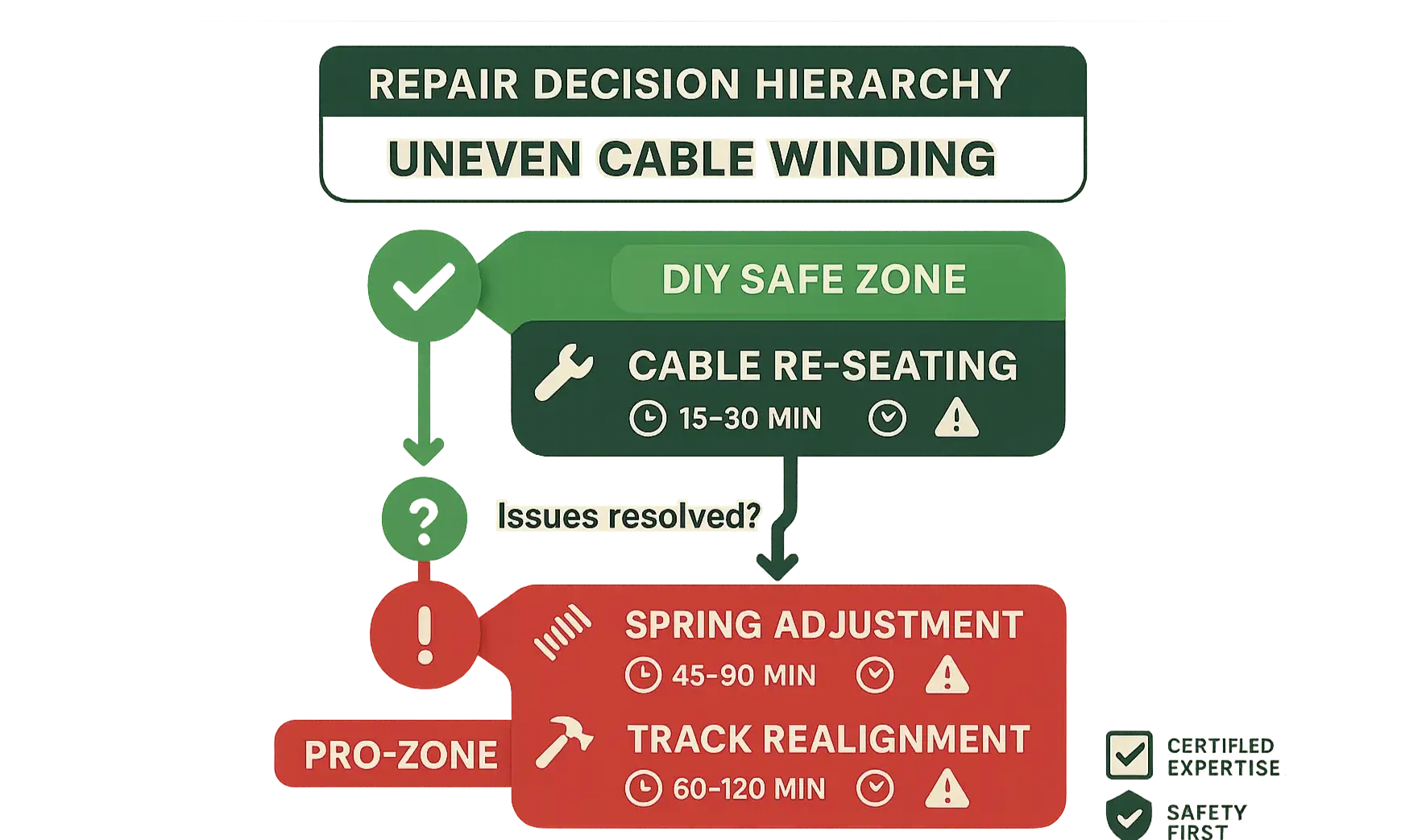
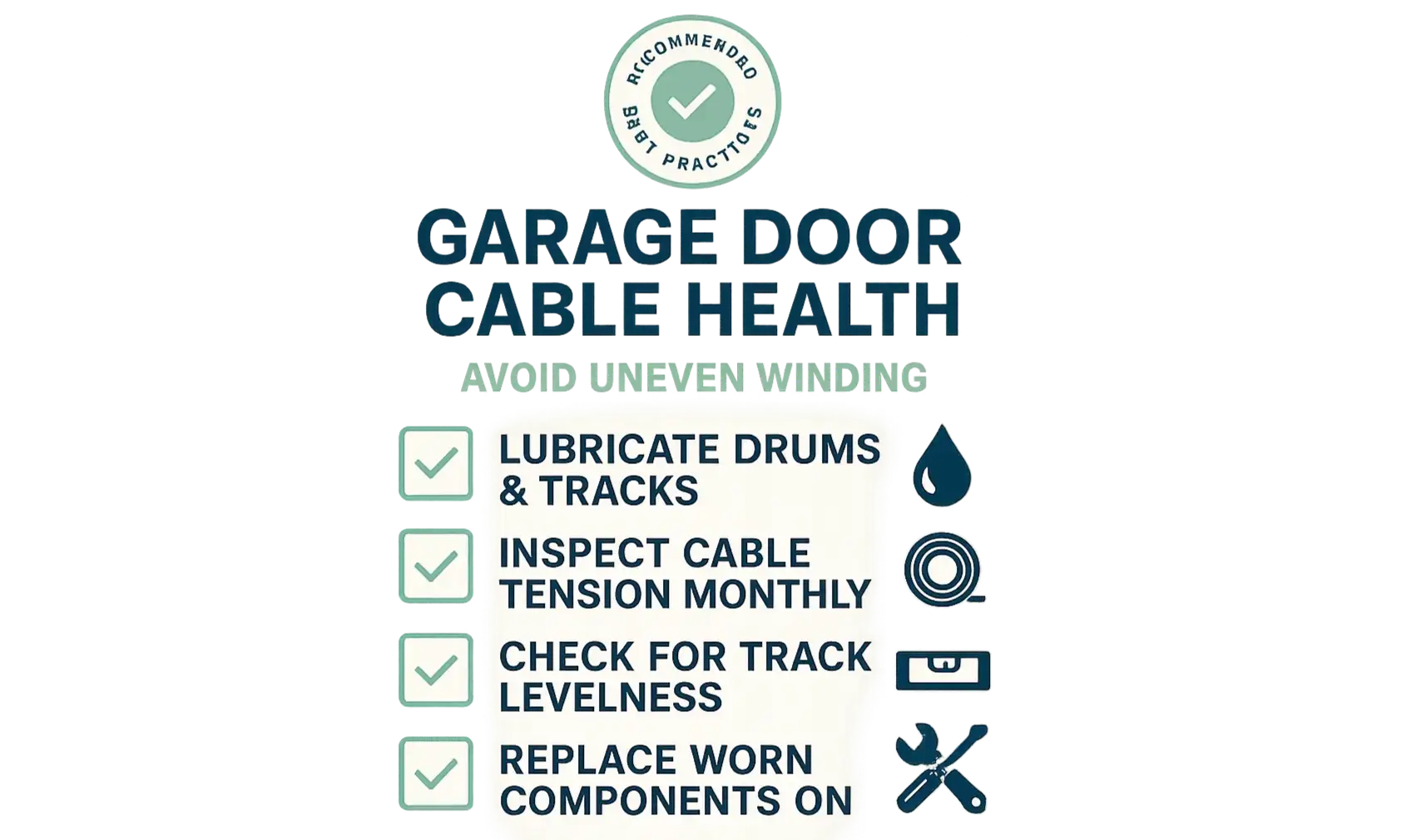
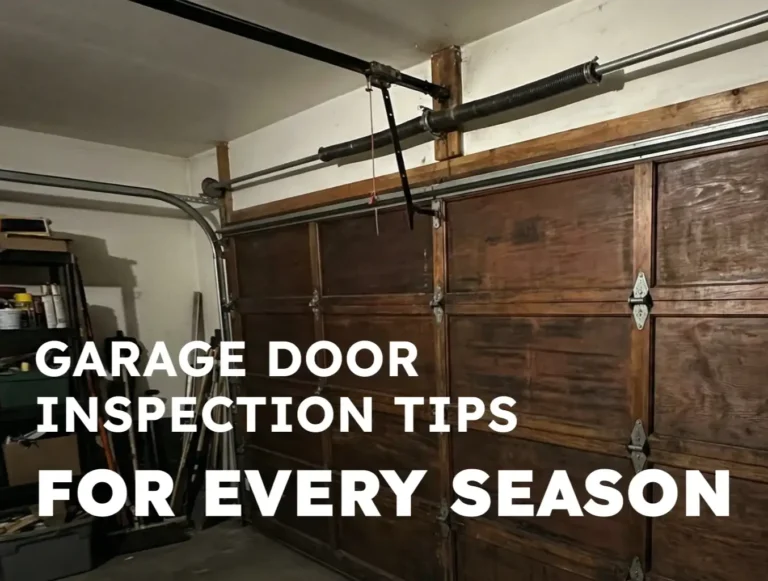
Warning: This is a “look, don’t touch” inspection.: The torsion spring system is under extreme tension and can cause severe injury or death if handled improperly. Do not attempt to adjust springs, cables, or brackets without professional training. This visual guide will help you identify the most likely root cause of your issue, so you know exactly what you’re dealing with.
Step 1: Check for Obvious Obstructions
The simplest explanation is often the right one. Look for anything physically blocking the door’s path on one side—a stray tool, a misplaced recycling bin, or debris in the track. This can cause the door to jam and throw a cable off the drum.
Step 2: Inspect the Tracks for Misalignment
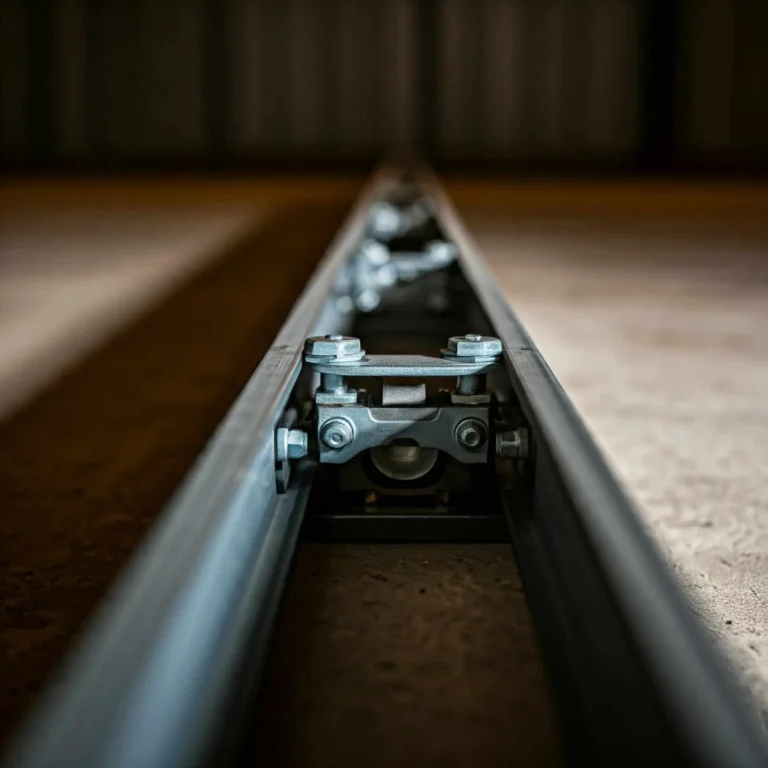
Visually inspect the vertical and horizontal metal tracks on both sides of the door. Are they parallel? Do you see any bends, dents, or loose bolts where the track is fastened to the wall? A misaligned track can cause the door’s rollers to bind, creating slack in the cable on one side. Proper garage door alignment is critical for smooth operation.
Step 3: Examine the Cables Themselves
With the door closed and the tension off the cables, look closely at them. Do you see any signs of rust, fraying, or broken strands? A damaged cable can stretch or snag, preventing it from winding correctly. If you spot damage, a professional garage door cable repair is necessary to prevent a sudden failure.
Step 4: Look at the Drums
Check the cable drums at each end of the torsion shaft. Are they cracked or visibly worn down? Over time, the grooves that guide the cable can wear away, allowing the cable to overlap and wind unevenly. Worn-out drums are a common cause of recurring cable problems, and a professional garage door drum replacement is the only proper solution.
Step 5: Assess the Door’s Balance (Safely)
An improperly balanced door is a key indicator of a spring issue. To test it: 1. Close the garage door completely. 2. Pull the red emergency release cord on your opener to disconnect it from the door. 3. Carefully lift the door manually to about halfway up. 4. Let go. A well-balanced door should stay in place. If it slams down or flies up, the spring tension is incorrect. This imbalance is a primary cause of slack cables and must be adjusted by a professional.