Dents & Scratches: Which Garage Door Material is Easiest to Fix?


Published: Jun 11, 2026 | Updated: Jul 28, 2026

It happens to the best of us. A stray baseball, a misjudged turn into the driveway, or a bump from the lawnmower—and now your garage door has its first battle scar. That sinking feeling is universal. But here’s something most homeowners don’t realize until it’s too late: the cost, effort, and success of fixing that dent or scratch depends almost entirely on the material your door is made of.

Choosing a garage door is about more than just color and style. It’s about understanding how your door will age and how it will stand up to the small accidents of everyday life. Before you try a DIY repair or call a professional, let’s explore which materials are the most forgiving and which require a more expert touch.

Foundation: A Quick Guide to Garage Door Repairability


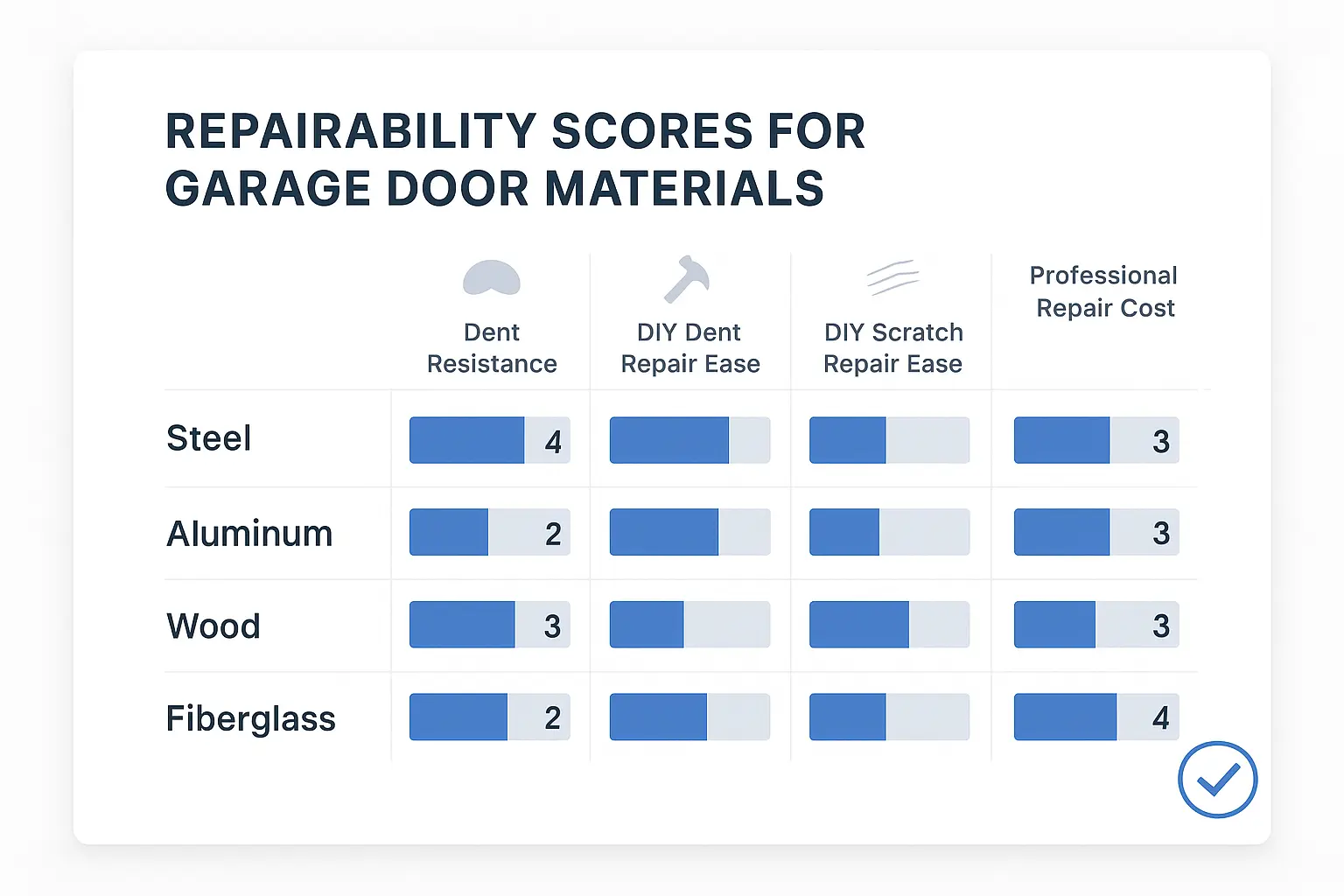
A visually appealing table titled 'Material Repairability Matrix' compares Steel, Aluminum, Wood, and Fiberglass garage doors across criteria like Dent Resistance, DIY Dent Repair, DIY Scratch Repair, and Professional Repair Cost, using a 1-5 rating scale.
Not all materials are created equal when it comes to cosmetic repairs. Steel is strong but can be stubborn once bent. Wood is softer but can often be “healed” seamlessly. To make it simple, we’ve created a matrix that scores each common material on key repairability factors.

The Material Repairability Matrix helps homeowners quickly compare garage door materials on ease and cost of repairing dents and scratches, empowering informed purchase and maintenance decisions.

This chart gives you a quick snapshot, but the story behind these numbers is what really matters. Let’s dive into the specifics of each material.

A Closer Look: How Each Material Handles Dents and Scratches


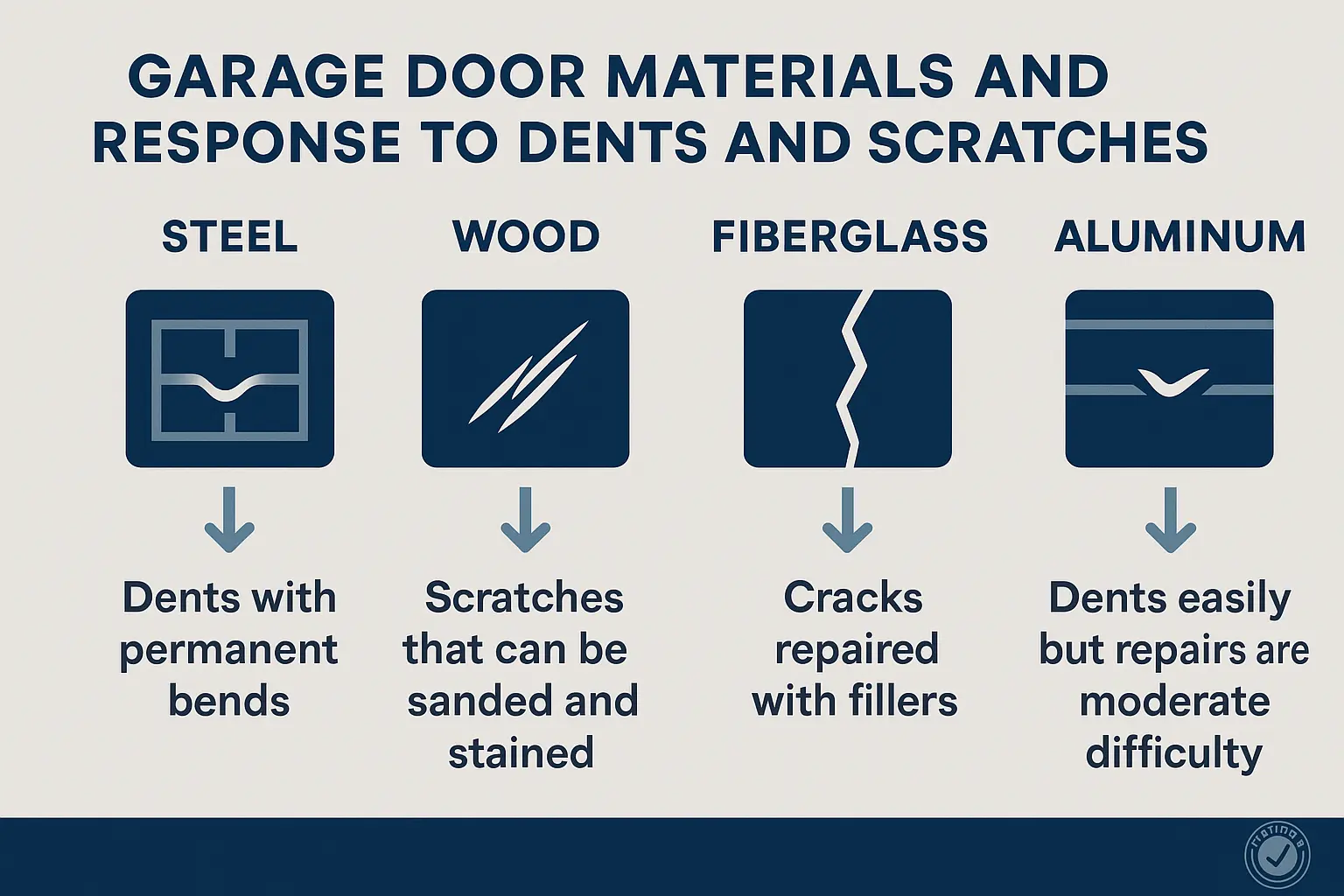
A diagram or graphic illustrating the different ways materials like steel, wood, and fiberglass react to impact; steel shows a dent, wood shows a compression/gouge, and fiberglass shows potential for cracking.
The way a material reacts to impact—whether it bends, cracks, or compresses—determines how it can be fixed. Understanding this basic science demystifies the entire repair process.

Understanding how each garage door material reacts to damage demystifies repair challenges and builds trust in our expertise to guide your maintenance planning.

Steel Garage Doors: Strong but Stubborn

Steel is the most popular garage door material for a reason: it’s durable, secure, and relatively affordable. However, when it comes to cosmetic damage, its strength becomes a challenge.

Aluminum Garage Doors: Lightweight but Delicate

Often used for modern, full-view glass doors, aluminum is lightweight and rust-proof. Its biggest drawback? It’s the softest of the metals and dents very easily.

Fiberglass & Composite Doors: Modern Looks, Unique Fixes

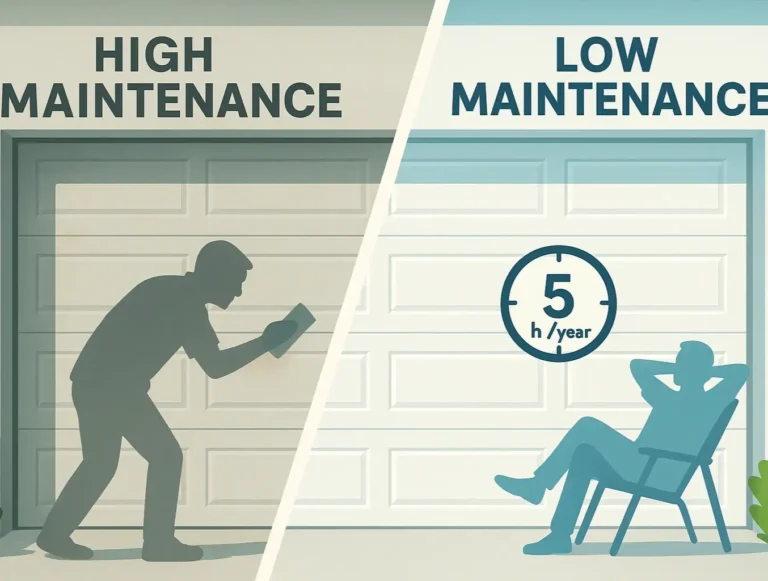
Fiberglass and composite doors are excellent at resisting dents and corrosion, making them a popular low-maintenance choice, often mimicking the look of real wood. However, they handle severe impacts differently.

The Big Question: Should You Repair or Replace the Panel?


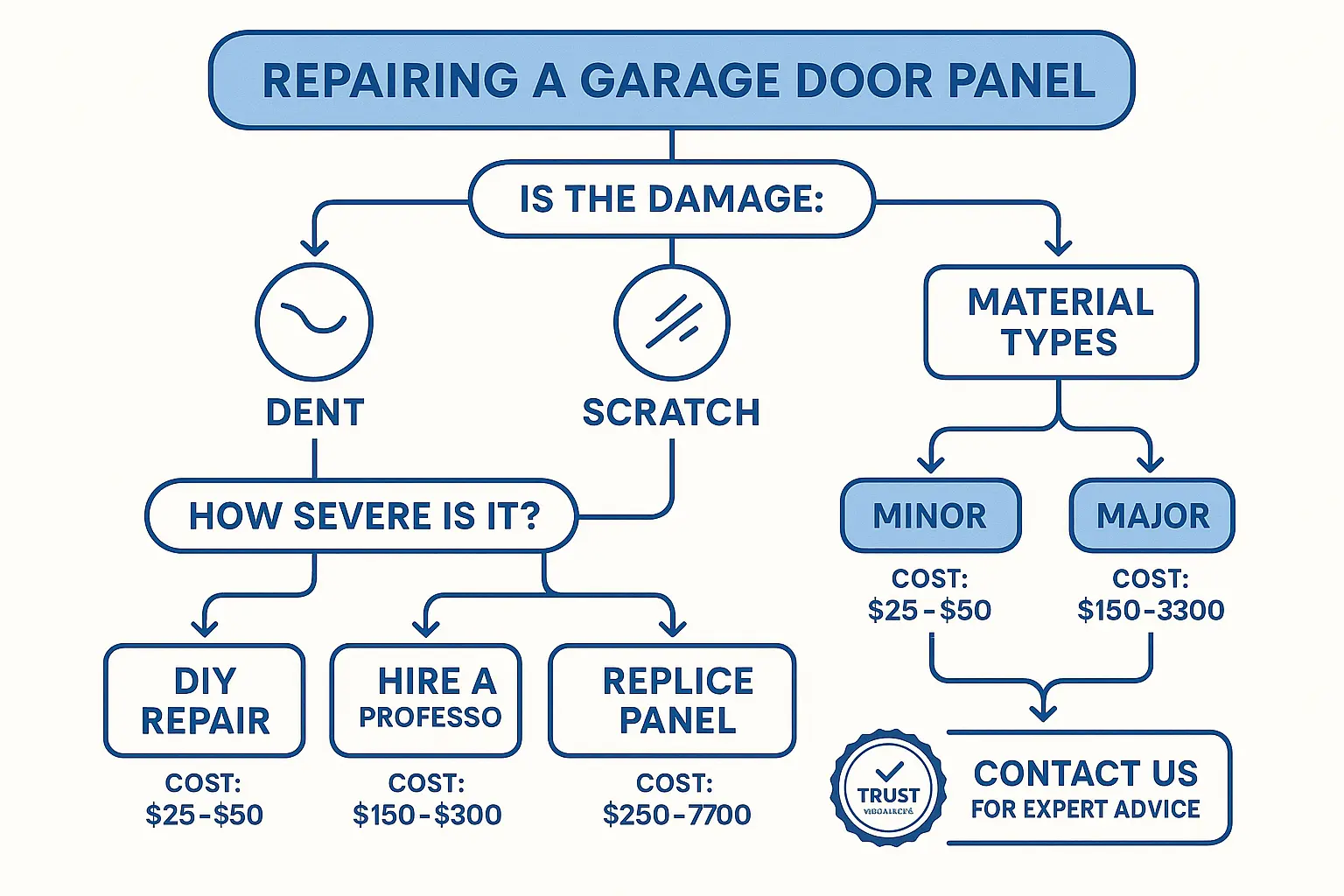
A simple flowchart or decision tree graphic that guides a user through the 'Repair or Replace?' question, with inputs like 'Material Type,' 'Damage Size,' and 'Location of Damage.''
You’ve identified your door material and assessed the damage. Now comes the critical decision. Do you attempt a fix, or is it time to look at a replacement panel? Making the right choice can save you both money and frustration.

Use this decision framework to confidently determine the best repair approach for your garage door based on material and damage, simplifying your maintenance journey.

Consider these factors:

Proactive Care: Preventing Damage Before It Happens


The easiest repair is the one you never have to make. While accidents are unavoidable, a few simple habits can dramatically reduce the risk of cosmetic damage and help you learn how to extend the lifespan of your garage door.

Frequently Asked Questions (FAQ)


Can all garage door dents be repaired?

Unfortunately, no. While many minor dents and dings can be improved, severe damage like large, creased dents or cracks that compromise the panel’s structure often can’t be fixed effectively. A professional can help you understand if your specific damage garage door is a candidate for repair or if replacement is the safer option.

How much does it cost to fix a dent?

Costs vary widely based on the material and severity. A simple steel dent pop-out might cost $100-$200. A more involved wood gouge repair or fiberglass crack fill could be $200-$400. This is often comparable to the cost of a single new panel, which is why the “repair vs. replace” decision is so important.

Is it cheaper to replace one panel or the whole door?

Replacing one or two panels is almost always cheaper than replacing the entire door. However, if your door is over 10-15 years old, or if more than two panels are damaged, the cost-effectiveness starts to shift towards a full replacement, which also gets you a new set of springs, tracks, and hardware.

Which material is best for a home with active kids?

For homes where basketballs, hockey pucks, and bicycles are a common sight, fiberglass or composite doors are often the best choice. Their high resistance to denting makes them incredibly durable against everyday kid-related impacts. Wood is also a solid choice, as minor gouges are relatively easy to repair.

Understanding your garage door’s material is the first step toward smart maintenance and long-term satisfaction. Whether you’re assessing a recent mishap or planning for a new installation, this knowledge empowers you to keep your home’s curb appeal looking its best for years to come. And if you’re exploring new door styles, understanding the difference between a garage door raised panel vs flush panel is another great step in your research.

Frequently Asked Questions


Which garage door material is the easiest to fix?

Steel and aluminum are generally considered the easiest garage door materials to repair. Minor dents can often be popped or hammered out, and if a section is severely damaged, individual panels can be swapped out without replacing the entire door.

Are wood garage doors easy to repair?

Wood doors are moderately easy to fix for minor cosmetic issues. Small scratches, gouges, or early signs of rot can be sanded down, filled with wood filler, and repainted or stained. However, severe warping or deep structural rot usually requires replacing the panels.

Can a dented fiberglass garage door be repaired?

Fiberglass is generally one of the hardest materials to repair. While it resists denting better than thin steel, if it cracks or breaks under heavy impact, it usually cannot be patched effectively. The damaged panel will almost always need to be replaced.

Is it cheaper to repair or replace a damaged garage door panel?

If only one or two panels are damaged (especially on steel or aluminum doors), it is usually much cheaper to repair or replace just those specific panels. If the door has widespread damage, warping, or is very old, a full replacement is often more cost-effective.

Contact / Request a Call