Imagine this: a powerful storm knocks out the power grid for hours. While your neighbors are fumbling with manual release cords in the dark, you press your remote, and your garage door glides open smoothly, powered by the sun it soaked up earlier that day.
This isn’t a futuristic dream. It’s an achievable reality for any homeowner, especially those with detached garages, off-grid workshops, or a desire for energy independence. But venturing into solar power can feel like navigating a maze of technical jargon and fragmented advice from online forums.
You’ve probably asked yourself: “Is this even feasible? What size panel do I need? What about batteries?” These are the right questions to ask. The good news is that with a clear understanding of four core components and one crucial calculation, this rewarding project is well within your reach. This guide will walk you through everything, transforming you from a curious browser into a confident planner.
Powering a Garage Door Opener with Solar Energy
Published: Apr 28, 2026 | Updated: Jul 28, 2026
Foundation: The 4 Core Components Explained Simply
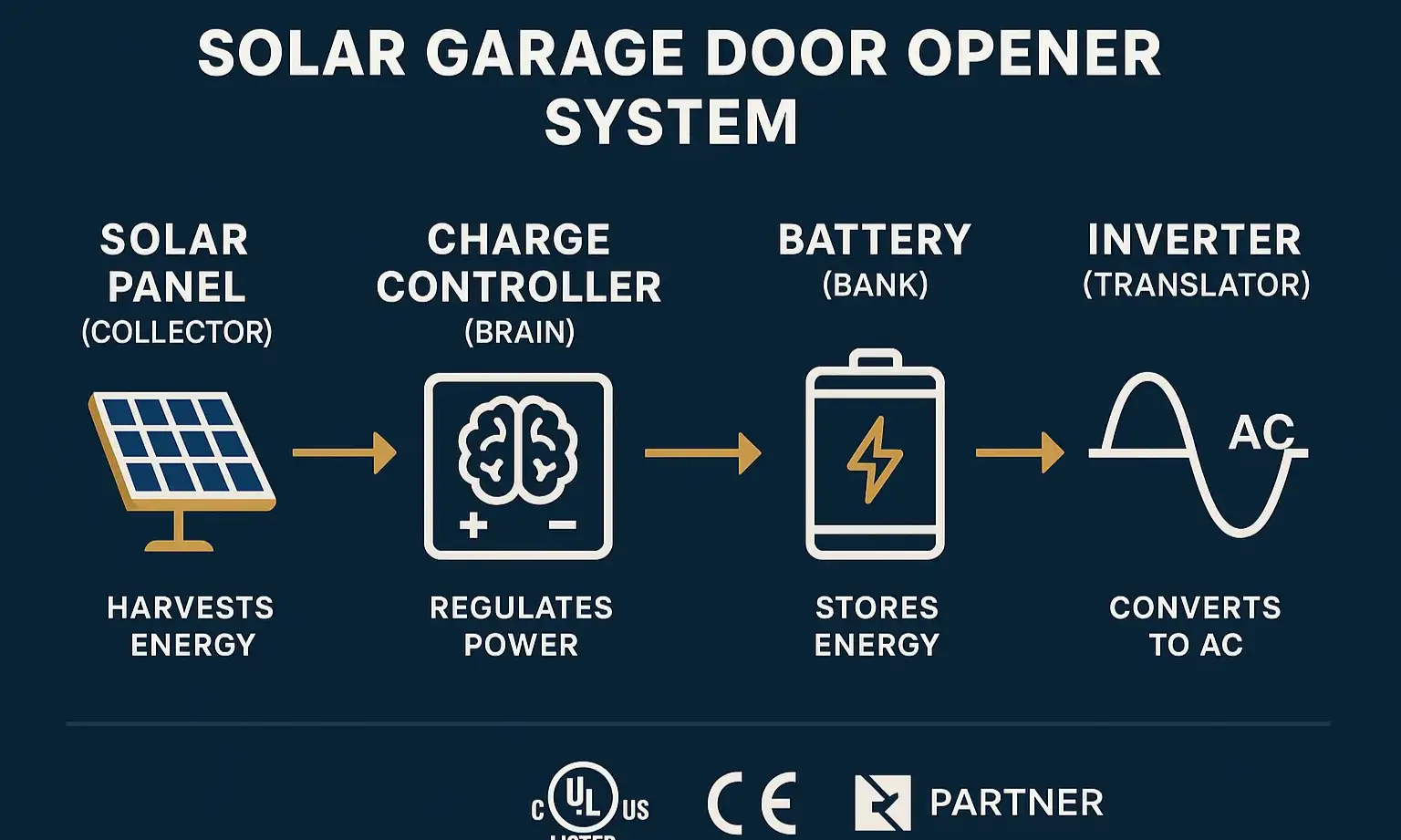
Powering a garage door opener with solar isn’t about buying a single “solar opener.” It’s about building a small, dedicated power system. Think of it like a team where each member has a specific job.
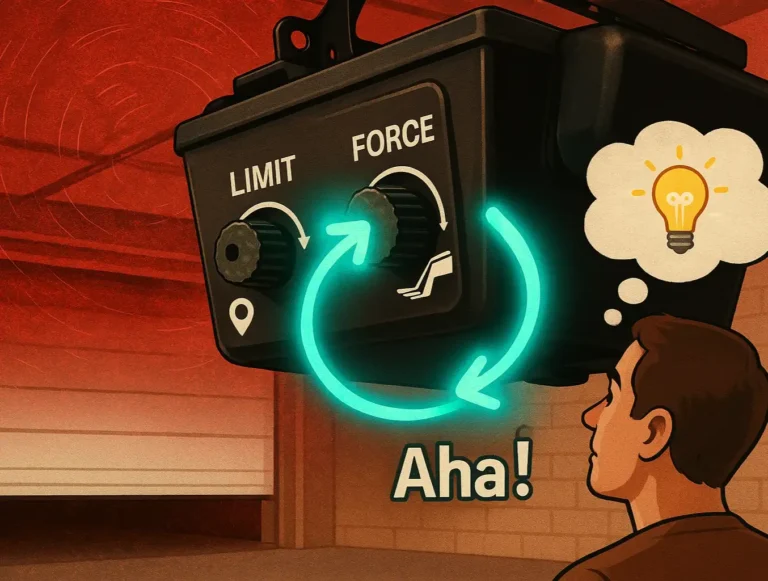
Aha Moment: If you have or purchase a specialty 12V DC-native garage door opener (often used in RVs or specific off-grid applications), you don’t need an inverter! This simplifies the system and makes it more efficient, as inverters themselves consume a small amount of power just by being on. However, for most people looking to convert an existing opener, an inverter is essential.
Building Your Solar Opener System: A Step-by-Step Guide
Now that you know the players, let’s put them to work. The success of your project hinges on accurately sizing your system, and that starts with understanding how much power your opener actually uses.
Step 1: Calculate Your True Power Needs (The Most Important Step)
This is the single most common point of failure for DIY solar projects. Many people only consider the power the opener uses when it’s moving the door. But there’s a hidden energy drain that can leave your battery dead overnight: standby power.
To plan properly, you need to know exactly how many amps a garage door opener uses in both active and standby modes. You can find these specs in your opener’s manual or on the unit itself.
Step 2: Size Your System for Success
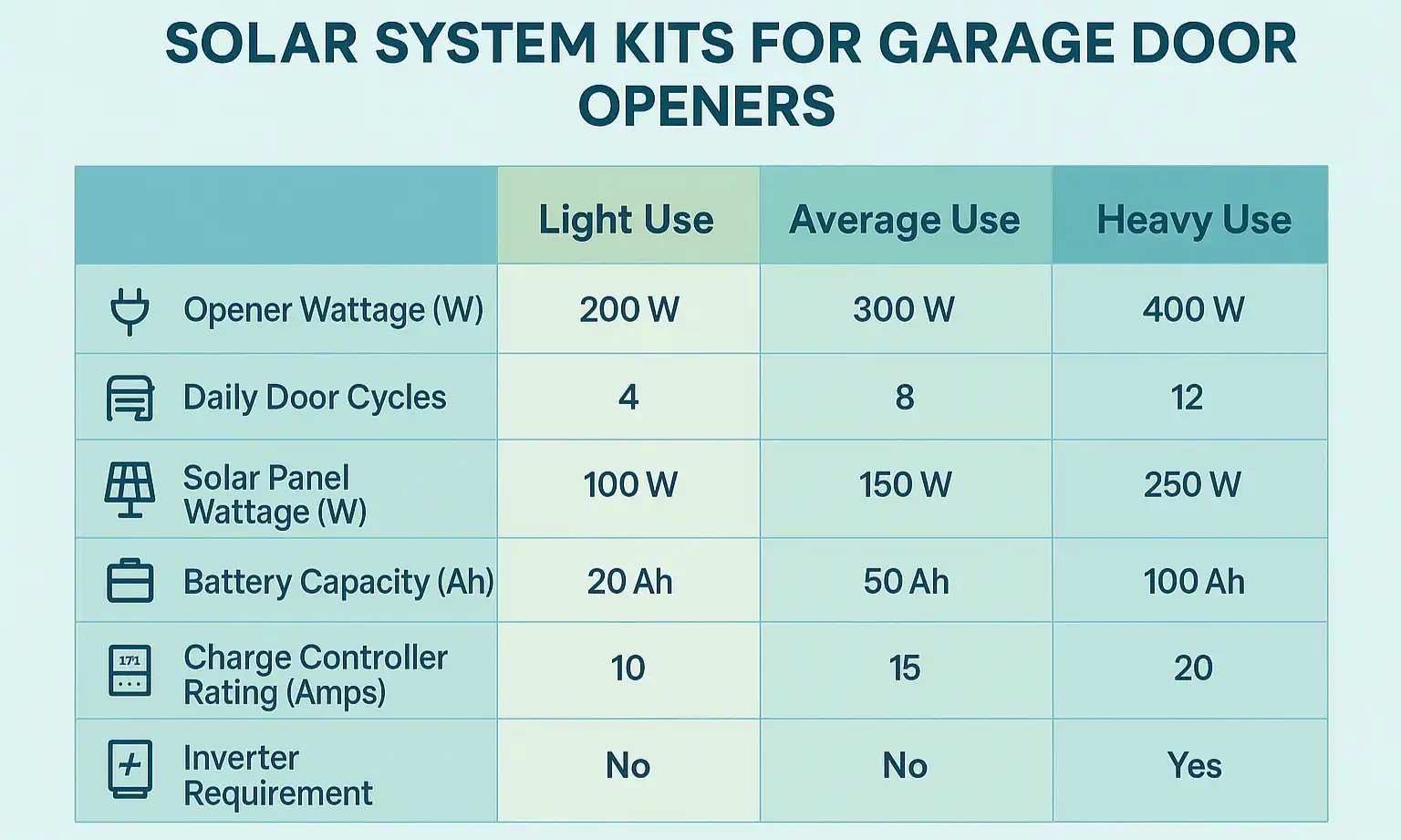
Once you know your daily energy needs (active + standby), you can choose the right components. You’ll also need to decide how many days of “autonomy” you want—meaning how many cloudy days in a row your system can survive on a full battery. For most regions, planning for 2–3 days is a safe bet.
To give you a starting point, here are some sample system sizes tailored to different usage patterns:
Note: These are just estimates. A larger standby draw or a location with less sun will require a larger system. Always oversize your system slightly to ensure reliability.
Step 3: Installation & Wiring Basics
While you should always follow the manufacturer’s instructions for each specific component, the wiring order is universal and crucial for protecting your equipment:
Mastery: Troubleshooting Common Solar Opener Problems
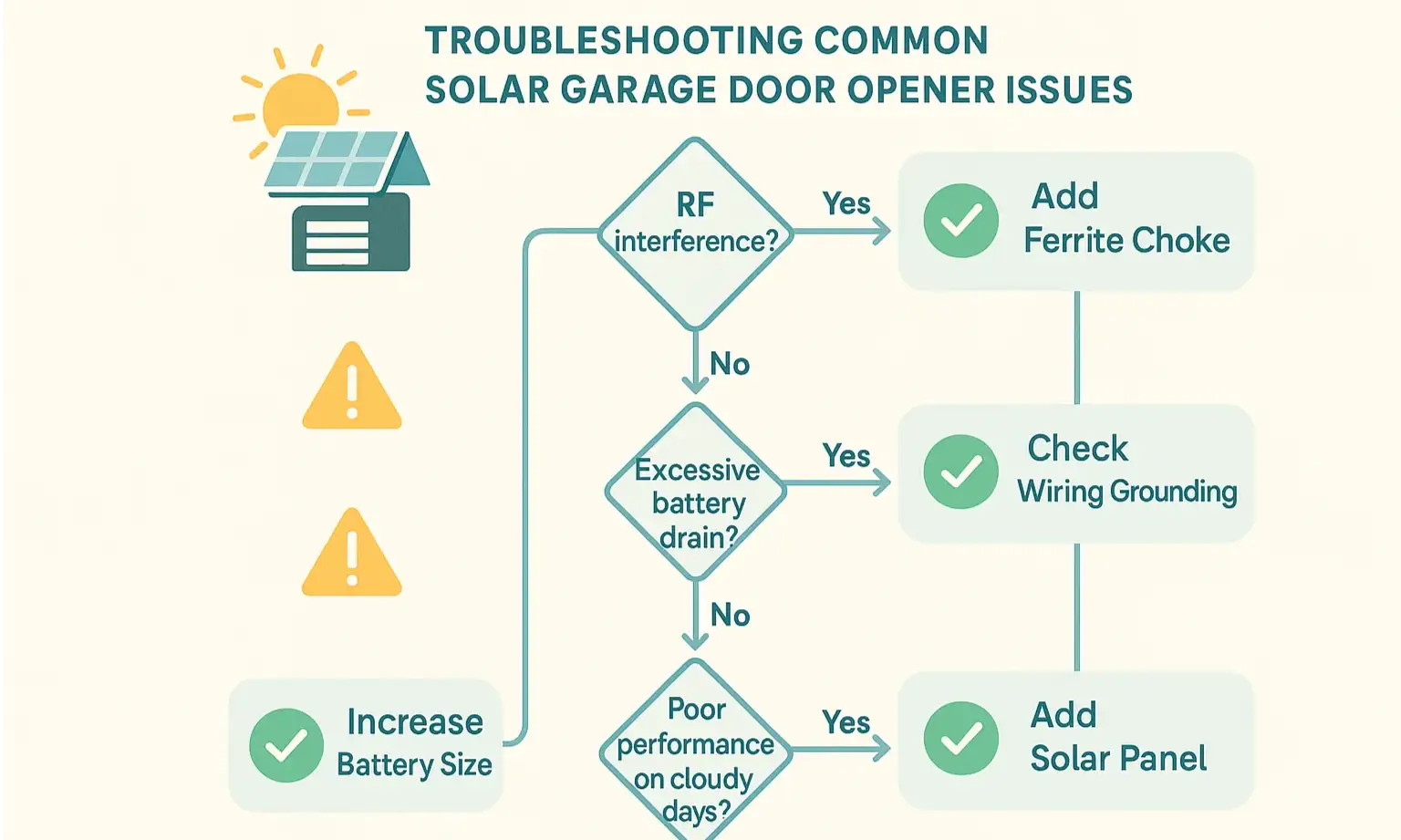
Even with perfect planning, you might run into issues. Here’s how to diagnose and fix the most common problems.
The #1 Frustration: Radio Frequency (RF) Interference
You’ve set everything up, the door opens with the wall button, but your remote suddenly works poorly or not at all. You’re likely experiencing RF interference.
Why it happens: Inverters, especially cheaper “modified sine wave” models, and sometimes even charge controllers, can generate “dirty” electricity. This creates electromagnetic noise in the same frequency range (around 315 MHz) that your garage remote uses, effectively jamming the signal.
How to fix it:
Frequently Asked Questions (FAQ)
What are the main pros and cons of a solar-powered garage door opener?
The biggest pros are energy independence, backup power during outages, and the ability to power a structure without running expensive electrical lines. The main cons are the upfront cost of the components and the reliance on sunlight, which requires careful system sizing.
Can I convert my existing garage door opener to solar?
Yes, absolutely. As long as you correctly size your battery and use an inverter to convert the battery’s 12V DC to 120V AC, you can power almost any standard opener.
How many cloudy days can my system handle?
This depends on your “days of autonomy” calculation in Step 2. A system sized with a large enough battery bank (e.g., the “Heavy Use” example) could potentially last 3-5 days with little to no sun, assuming it started with a full charge.
Do I need a special type of garage door opener?
No, but using a 12V DC-native opener can make your system simpler and more efficient because you won’t need an inverter. However, these models can be harder to find and may lack the features of standard AC openers.
Your Path to Energy Independence
Building a solar power system for your garage door is more than just a weekend project; it’s a step toward self-reliance. By understanding the core components, paying close attention to your total power needs (especially that sneaky standby draw), and knowing how to troubleshoot common issues like RF interference, you can build a reliable system that will serve you for years.
This project is a perfect gateway into the world of alternative energy. Once you have a power source in your garage, you can expand it to include other features. For example, many modern openers have a built-in battery backup, but a solar system provides a much more robust solution than the standard battery in garage door opener. And with reliable power, you can begin to explore other upgrades, like adding smart lighting for overhead garage doors to fully automate your space.
By starting with a clear, educated approach, you’re not just powering a door—you’re unlocking new possibilities.
This project is a perfect gateway into the world of alternative energy. Once you have a power source in your garage, you can expand it to include other features. For example, many modern openers have a built-in battery backup, but a solar system provides a much more robust solution than the standard battery in garage door opener. And with reliable power, you can begin to explore other upgrades, like adding smart lighting for overhead garage doors to fully automate your space.
By starting with a clear, educated approach, you’re not just powering a door—you’re unlocking new possibilities.
Frequently Asked Questions
What are the main pros and cons of a solar-powered garage door opener?
The biggest pros are energy independence, backup power during outages, and the ability to power a structure without running expensive electrical lines. The main cons are the upfront cost of the components and the reliance on sunlight, which requires careful system sizing.
Can I convert my existing garage door opener to solar?
Yes, absolutely. As long as you correctly size your battery and use an inverter to convert the battery's 12V DC to 120V AC, you can power almost any standard opener.
How many cloudy days can my system handle?
This depends on your "days of autonomy" calculation in Step 2. A system sized with a large enough battery bank (e.g., the "Heavy Use" example) could potentially last 3-5 days with little to no sun, assuming it started with a full charge.
Do I need a special type of garage door opener?
No, but using a 12V DC-native opener can make your system simpler and more efficient because you won't need an inverter. However, these models can be harder to find and may lack the features of standard AC openers.