For decades, the garage door has been a purely functional part of our homes—a simple barrier against the elements. Its lighting was an afterthought, a single, harsh bulb in the opener that did little more than prevent you from tripping in the dark. But for the modern home, where clean lines and integrated technology define the aesthetic, the garage door is no longer just a utility. It’s a canvas.
Imagine pulling into your driveway at dusk. Instead of fumbling for a switch, a soft, ambient glow emanates from the seams of your flush-panel garage door, highlighting its architectural form. As the door silently glides open, a “Welcome Home” scene activates, illuminating the interior and casting a warm, safe path into your home. This isn’t a futuristic concept; it’s the reality of integrated smart lighting, and it’s completely changing how we see our garages.
This guide is your starting point for understanding how to merge design, security, and convenience. We’ll explore the options, untangle the tech, and show you how to turn the largest moving part of your home into its smartest feature.
Overhead Garage Door Options with Smart Lighting Integration
Published: Apr 8, 2026 | Updated: Jul 28, 2026
Foundation: Understanding the Palette - Types of Smart Garage Lighting
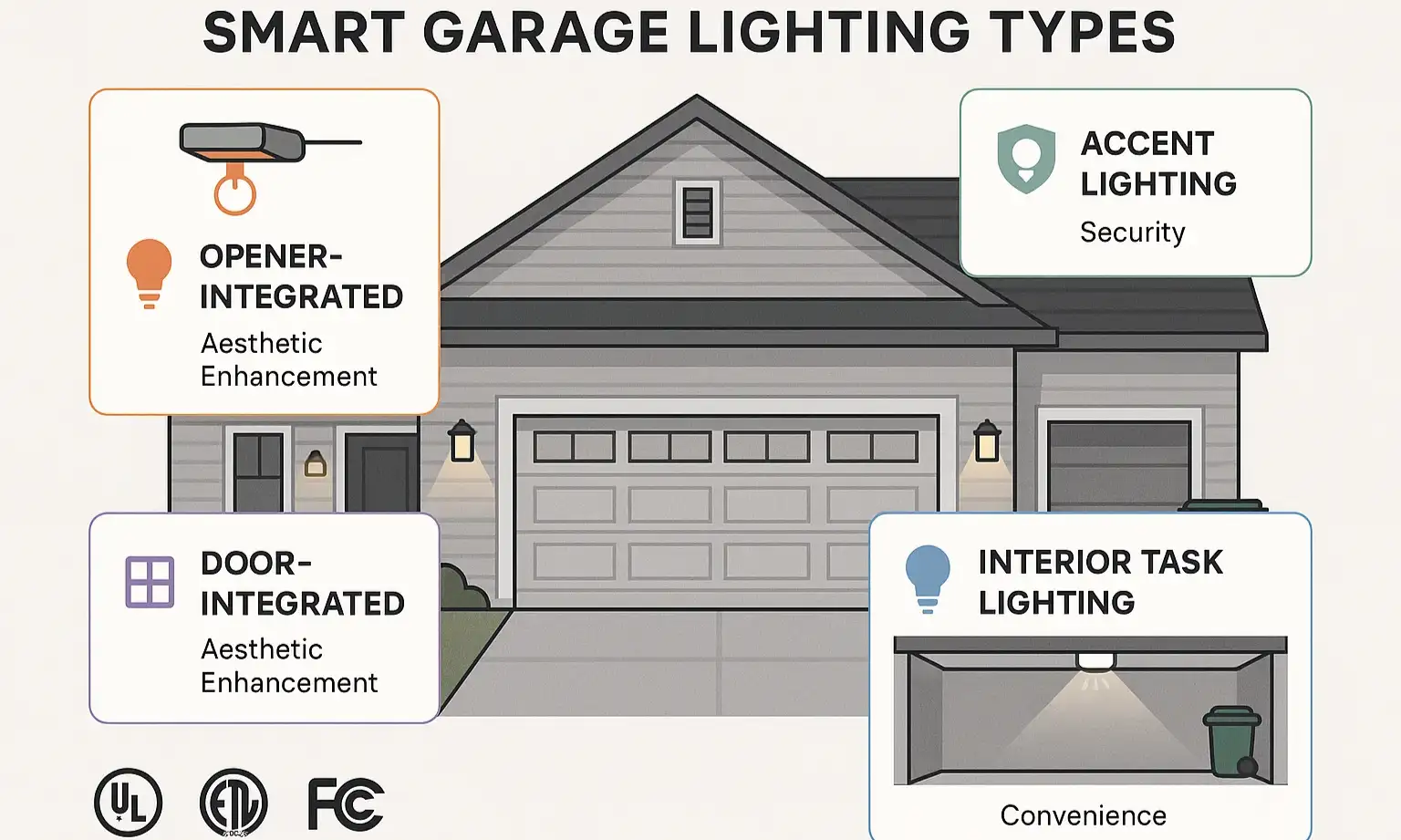
Before you can design your system, you need to know your tools. Smart garage lighting isn’t a single product but a spectrum of solutions, each serving a different purpose. Let’s break down the main categories.
Building: The Blueprint - Planning & Installing Your System
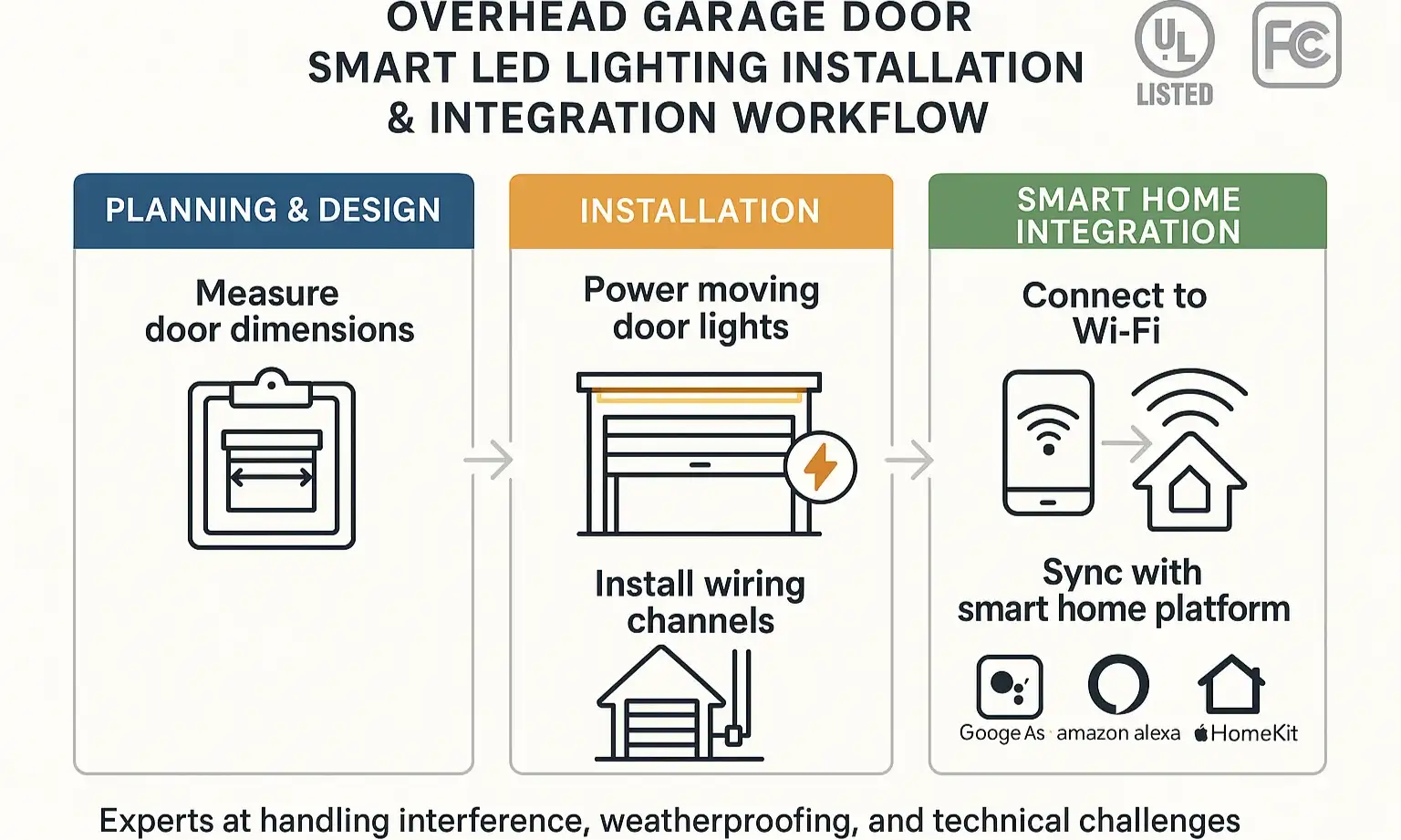
Bringing smart lighting to your garage door is a project that blends design with practical electrical work. Careful planning is the key to a successful, safe, and stunning installation.
Part 1: Planning Your Design
Start with your goal. Are you aiming for enhanced curb appeal, better security, or functional interior light? For modern homes with flush or plank-style doors, door-integrated LEDs offer the most dramatic effect. Consider the color temperature (Kelvin) of your lights—warm whites (~2700K) create a cozy feel, while cool whites (~5000K) provide crisp, clear light better for security and tasks.
Most importantly, consider power. While smart accent lights use your home’s existing wiring, lights mounted on the door itself present a unique challenge. You’ll need a way to safely route low-voltage power from a transformer inside the garage to the moving door, typically using a specialized flexible cable and contact system. For many, a professional consultation is the best first step.
Part 2: Installation Essentials
Whether you’re doing it yourself or hiring a pro, understanding the process is vital. A complete setup often involves more than just lights; a comprehensive smart access system might also be part of your plan. In fact, a modern garage door keypad installation can complement your smart lighting by providing keyless, secure access for family or deliveries.
For door-mounted systems, the process generally involves:
Part 3: Smart Integration
Once installed, the final step is connecting your new lights to your smart home brain—be it Amazon Alexa, Google Home, or Apple HomeKit. This is usually done through the manufacturer’s app, where you’ll connect the light controller to your home’s Wi-Fi network. From there, you can group your garage lights with other smart devices and begin creating powerful automations.
Mastery: The Automated Home - Advanced Scenes & Security Recipes
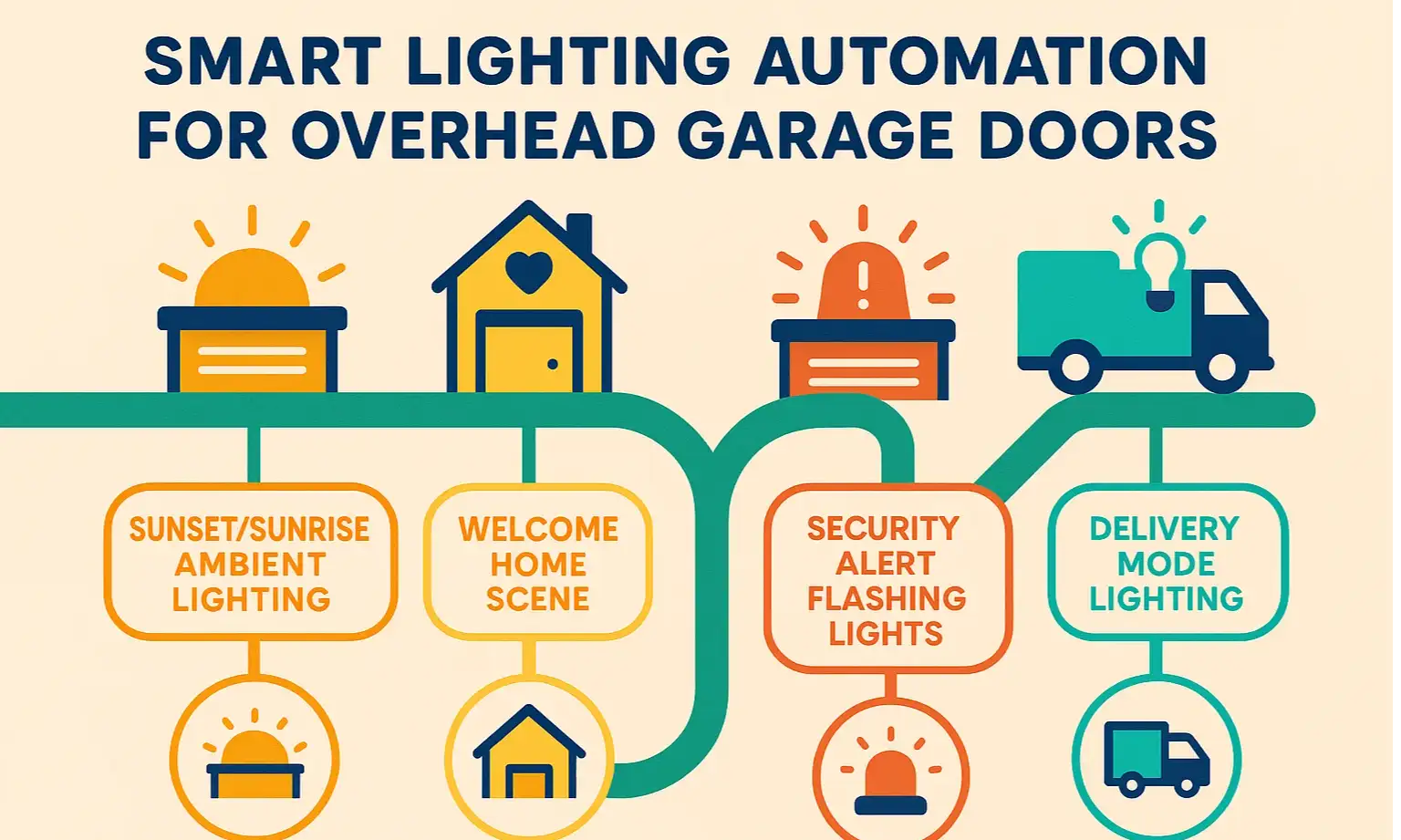
This is where your new lighting system transcends simple illumination and becomes an active part of your home. By creating scenes and automations, you can add layers of convenience and security you may not have considered. Here are a few “recipes” to get you started:
Action: The Buyer's Toolkit - Choosing Your System
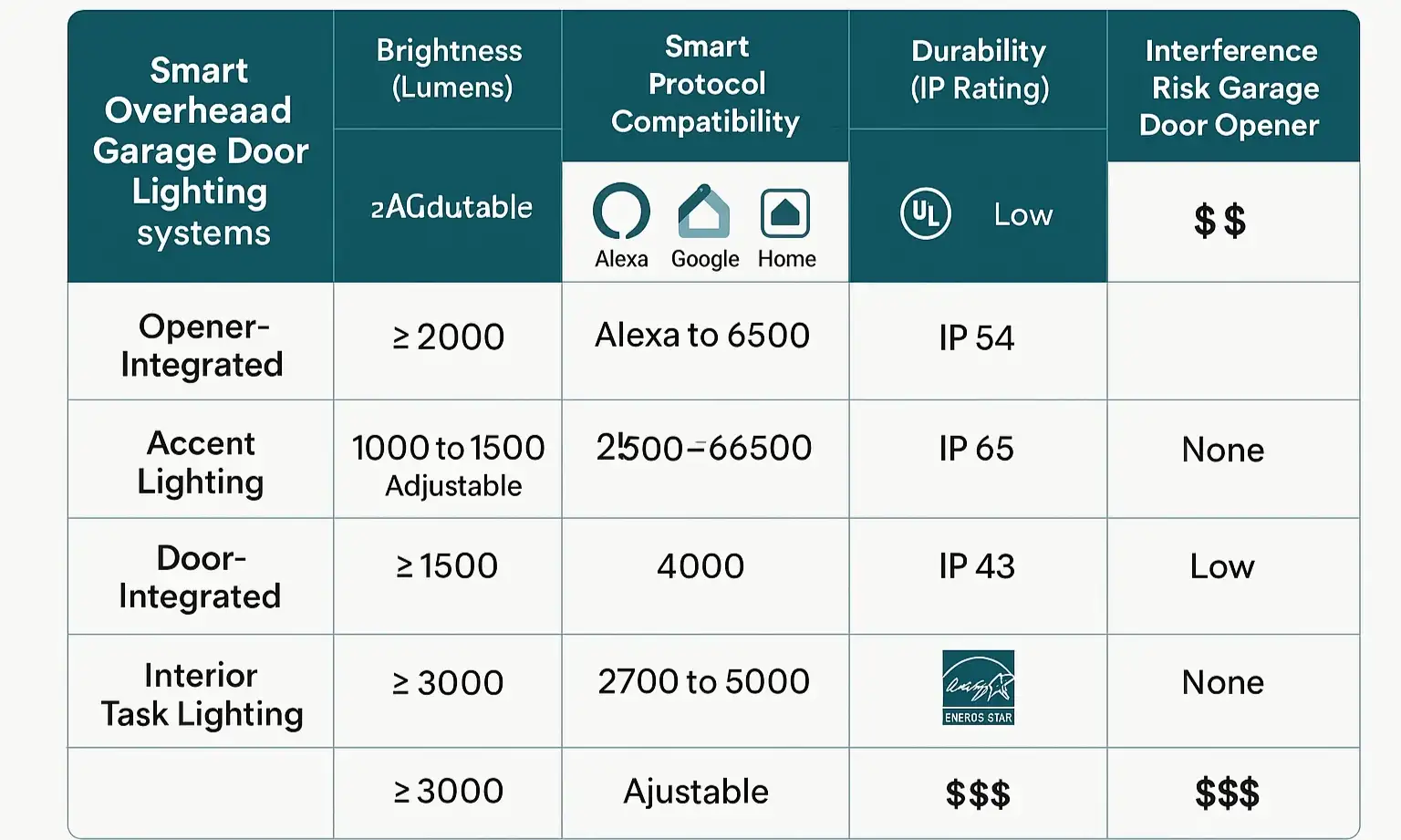
With a clear vision, you’re ready to choose your components. But navigating the options requires attention to a few key technical details that are often overlooked.
The “Aha” Moment: LED Interference
Here’s a critical issue that stumps many homeowners: you install a new LED bulb in your opener, and suddenly your remote’s range is terrible or stops working altogether. This isn’t a faulty bulb; it’s radio frequency interference (RFI). The unshielded electronics in some cheap LED bulbs emit “radio noise” that can jam the signal from your remote.
The Solution: Always look for LED bulbs specifically labeled “garage door opener compatible” or “low RFI/EMI.” Brands like Genie and Chamberlain/LiftMaster produce their own certified bulbs. This single step can save you hours of frustration and is more important than knowing how to program a garage door remote from another remote — because if the signal is blocked, no amount of programming will help.
Your Feature Checklist
When comparing systems, especially for exterior use, keep these factors in mind:
FAQ: Your Smart Garage Lighting Questions Answered
Which smart lighting systems are compatible with my garage door opener?
For opener-integrated bulbs, most brands work as long as you choose a low-RFI model. For more advanced systems, compatibility is less about the opener brand and more about your smart home hub (Alexa, Google Home, etc.). The lighting system talks to your hub, and your hub talks to a compatible smart garage controller (like MyQ). This is an important part of knowing how to choose a garage door opener that fits a smart ecosystem.
Can I use an indoor smart plug to control my exterior garage lights?
No. You must use a smart plug or switch specifically rated for outdoor use. Indoor models are not sealed against moisture and can be extremely dangerous when exposed to the elements.
My garage door opener light is not working after installing a new smart bulb. What’s wrong?
First, check for the LED interference issue discussed above. If you’re using a compatible bulb, the problem may be with the opener itself. If your garage door opener light not working is a persistent issue, it could indicate a problem with the logic board or socket, which may require troubleshooting.
How do I know if an LED strip is durable enough for a garage door?
Look for the IP rating. An IP65 rating is the minimum you should consider for a garage door, as it will be exposed to rain, dust, and temperature changes. Also, look for a strong 3M adhesive backing and consider adding mounting clips for extra security.
Your Home, Reimagined
Integrating smart lighting with your garage door is more than just a tech upgrade. It’s a design choice that enhances security, adds daily convenience, and elevates your home’s architectural character. By understanding the types of lighting available, planning your installation carefully, and unlocking the power of automation, you can transform the most overlooked part of your home into one of its most impressive features.
Ready to explore what’s next? Dive into the world of possibilities and discover the top smart garage door accessories of 2025 to continue building your connected home.
Ready to explore what’s next? Dive into the world of possibilities and discover the top smart garage door accessories of 2025 to continue building your connected home.
Frequently Asked Questions
Which smart lighting systems are compatible with my garage door opener?
For opener-integrated bulbs, most brands work as long as you choose a low-RFI model. For more advanced systems, compatibility is less about the opener brand and more about your smart home hub (Alexa, Google Home, etc.). The lighting system talks to your hub, and your hub talks to a compatible smart garage controller (like MyQ). This is an important part of knowing how to choose a garage door opener that fits a smart ecosystem.
Can I use an indoor smart plug to control my exterior garage lights?
No. You must use a smart plug or switch specifically rated for outdoor use. Indoor models are not sealed against moisture and can be extremely dangerous when exposed to the elements.
My garage door opener light is not working after installing a new smart bulb. What's wrong?
First, check for the LED interference issue discussed above. If you're using a compatible bulb, the problem may be with the opener itself. If your garage door opener light not working is a persistent issue, it could indicate a problem with the logic board or socket, which may require troubleshooting.
How do I know if an LED strip is durable enough for a garage door?
Look for the IP rating. An IP65 rating is the minimum you should consider for a garage door, as it will be exposed to rain, dust, and temperature changes. Also, look for a strong 3M adhesive backing and consider adding mounting clips for extra security.