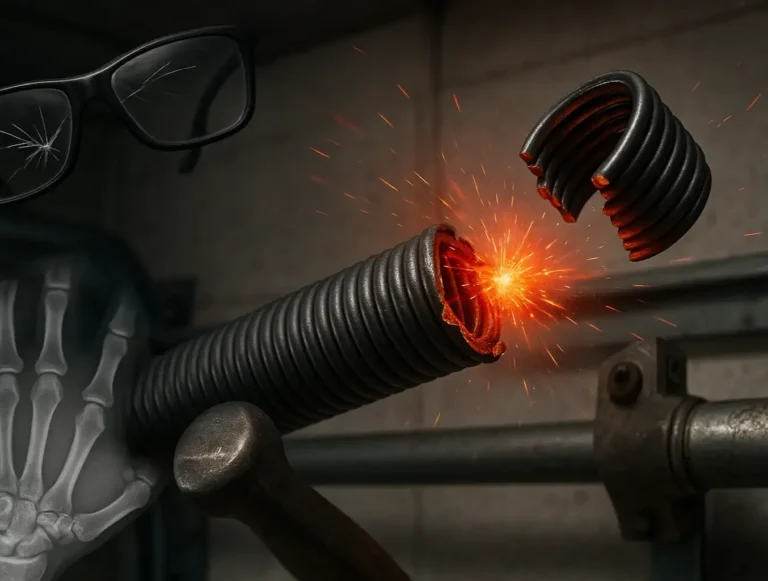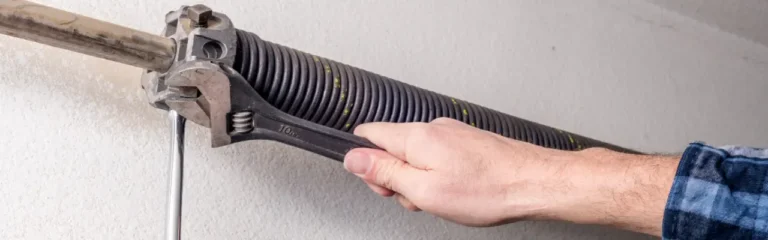
It often starts with a sound you can’t ignore—a sudden, deafening BANG! from the garage. You find your garage door won’t open, and a quick look reveals a break in the large spring above the door. Your first thought might be, “I’m pretty handy. How hard can it be to replace a spring?”
It’s a tempting thought. But that “simple” mechanical part is the single most dangerous component of your garage door system. Attempting a DIY repair without proper knowledge and tools is a primary reason why garage doors are linked to over 20,000 emergency room visits each year. This isn’t just about a repair going wrong; it’s about life-altering injuries that happen in a fraction of a second.
Before you even think about picking up a tool, let’s have a frank conversation—like a knowledgeable friend would over coffee—about why this task is best left to professionals. We’ll explore the hidden forces at play and the common, devastating mistakes that homeowners make every day.
Garage Door Spring Fix: 5 Mistakes That Can Lead to Catastrophe
Published: Jan 21, 2026 | Updated: Jul 28, 2026
Foundation: The Physics of Danger
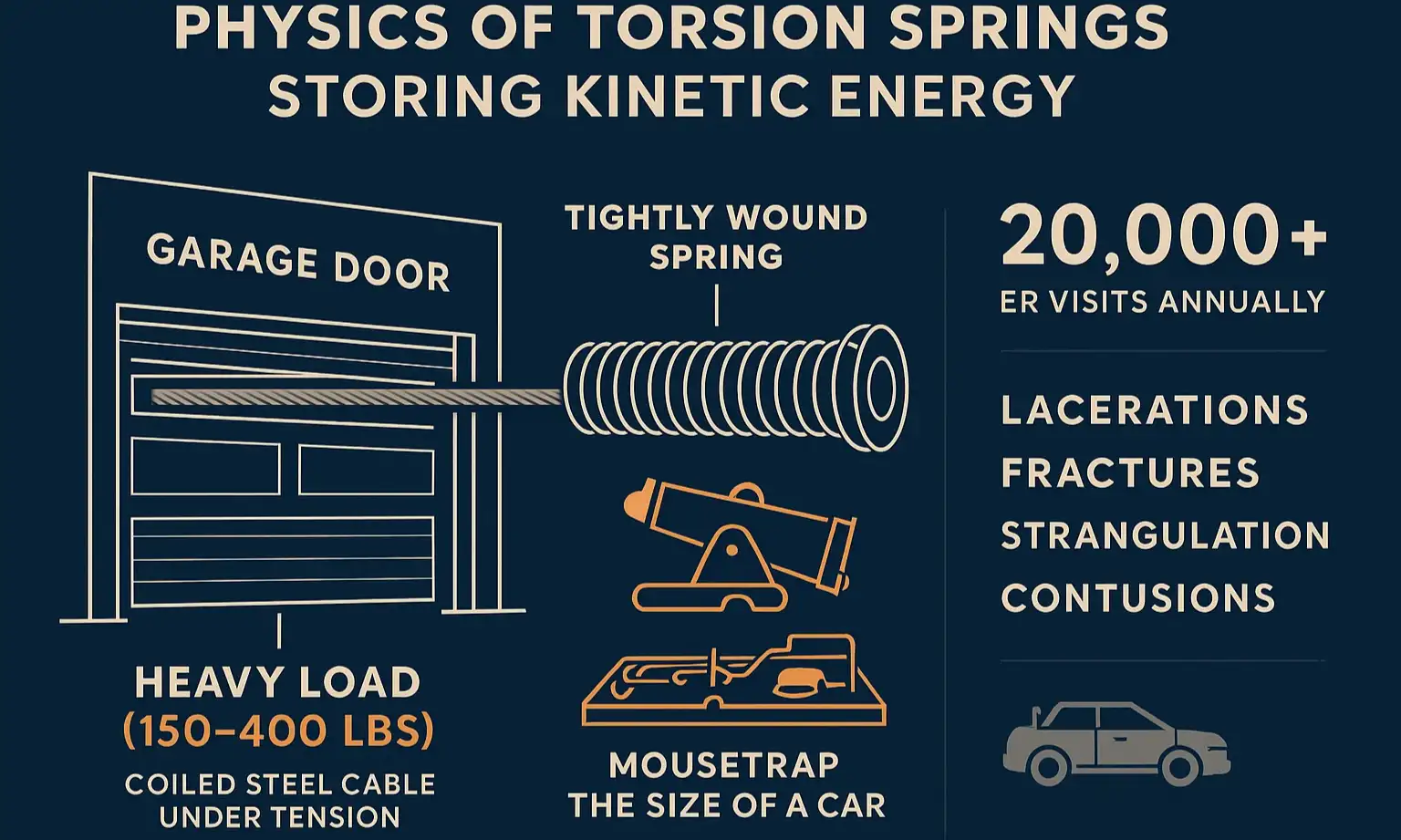
To understand the risk, you need to understand the job of a garage door spring. Whether you have a long torsion spring on a bar above the door or two extension springs along the sides, their function is the same: they act as a counterbalance to the immense weight of your garage door.
A standard two-car garage door can weigh anywhere from 150 to 400 pounds. The springs are wound under extreme tension to store the energy required to lift that weight. Think of a fully wound torsion spring not as a simple coil of metal, but as a loaded cannon. It contains an incredible amount of stored kinetic energy, waiting to be released. When a professional installs a spring, they are carefully containing and directing that force. When a DIYer attempts it, they are often unknowingly in the path of an uncontrolled, explosive release.
A standard two-car garage door can weigh anywhere from 150 to 400 pounds. The springs are wound under extreme tension to store the energy required to lift that weight. Think of a fully wound torsion spring not as a simple coil of metal, but as a loaded cannon. It contains an incredible amount of stored kinetic energy, waiting to be released. When a professional installs a spring, they are carefully containing and directing that force. When a DIYer attempts it, they are often unknowingly in the path of an uncontrolled, explosive release.
The 5 Most Common DIY Mistakes & Their Brutal Consequences
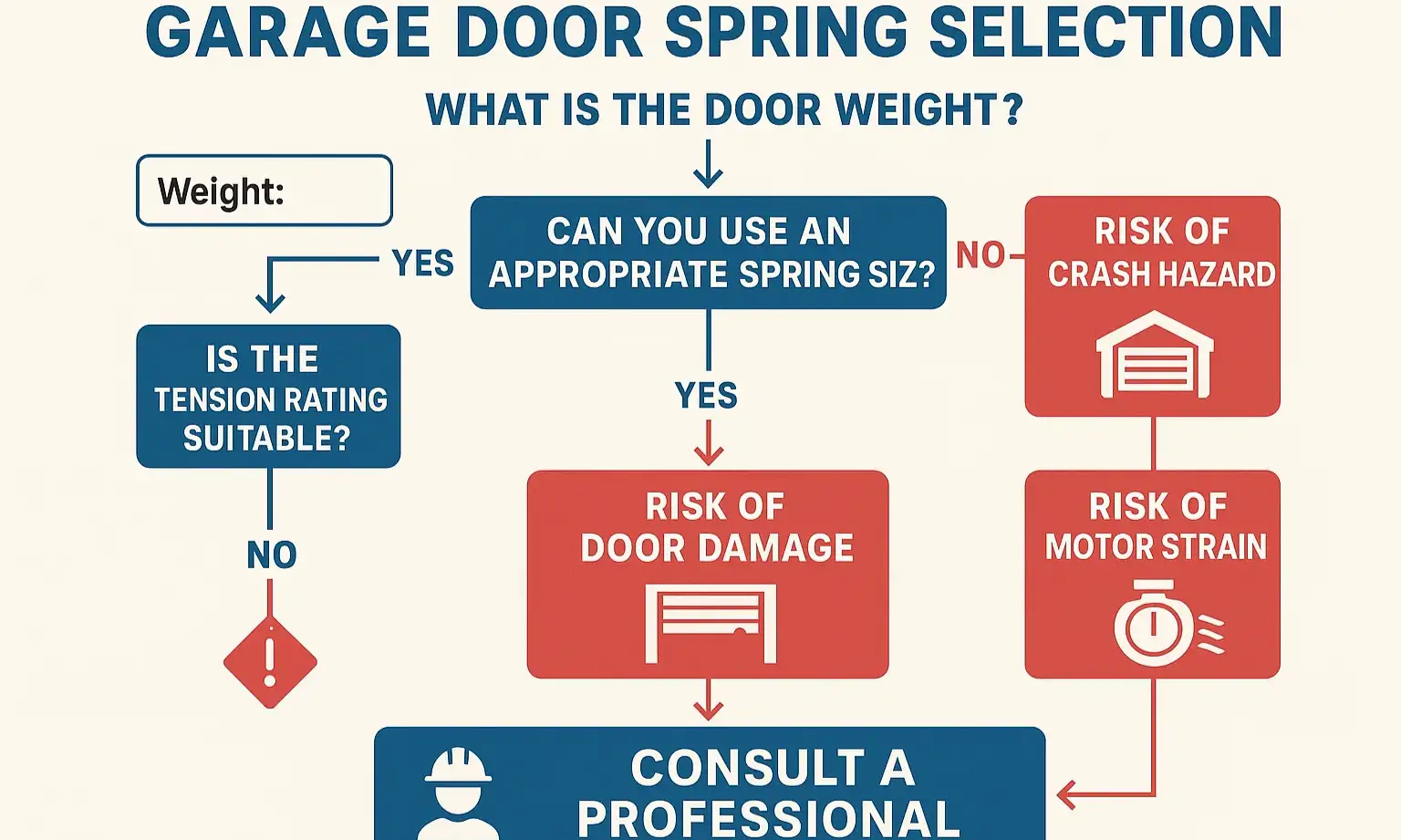
Most DIY injuries aren’t just bad luck; they’re the direct result of a few predictable, catastrophic errors. Here are the top five mistakes and the real-world consequences they carry.
Mistake 1: Using the Wrong Tools (The Projectile Error)
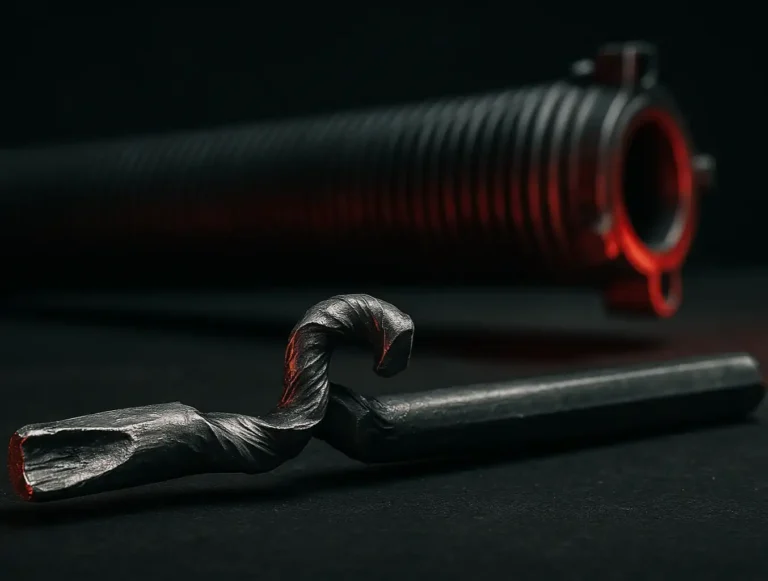
This is the most common and dangerous mistake. A torsion spring must be wound and unwound using solid steel winding bars that fit the winding cone holes perfectly. In a rush to get the job done, many homeowners grab what’s handy: large screwdrivers, pieces of rebar, or ratchet handles.
The Brutal Consequence: These tools are not designed to handle the torque of a torsion spring. Screwdrivers are brittle and can snap. Rebar is often too soft and can bend or slip out. When one of these improper tools slips or breaks under tension, it is launched with incredible force. It becomes a steel projectile that can cause deep puncture wounds, facial fractures, eye loss, and can easily embed itself in a wall, a car, or a person.
WARNING: TOOL FAILURE
Risk: Facial fractures, eye loss, deep puncture wounds.
Cause: Using screwdrivers, rebar, or other improper tools that cannot handle the spring’s torque, causing them to slip or snap and become high-velocity projectiles.
Mistake 2: Mishandling Tension (The Explosive Release)
Even with the right tools, a lack of understanding of the procedure is just as dangerous. A common error is removing the bottom bracket of the garage door while the springs are still under tension. This bracket is the anchor point connecting the lifting cables to the door’s immense force. Another fatal error is attempting to remove the center bracket holding a wound torsion spring.
The Brutal Consequence: Loosening the wrong bolt at the wrong time causes an instant, explosive release of all the stored energy. The spring can violently unwind, the cables can whip around like steel blades, and components can be ripped from the wall. This leads to severe lacerations, broken fingers or wrists, and concussions from being struck by flying parts.
Mistake 3: Buying the Wrong Spring (The Imbalance Catastrophe)
Garage door springs aren’t one-size-fits-all. They are precisely calibrated to your door’s exact weight, height, and the radius of the cable drums. Grabbing a “similar-looking” spring from a hardware store is a recipe for disaster.
The Brutal Consequence:
This is not a guessing game. An imbalanced door is an unpredictable and dangerous door.
Mistake 4: Neglecting Safety Cables on Extension Springs
If your system uses extension springs (running alongside the horizontal tracks), they require a safety cable running through the center of each one. These cables are often overlooked during a DIY replacement.
The Brutal Consequence: When an extension spring breaks, it doesn’t just snap in place. The stored energy sends the two halves flying in opposite directions with tremendous force. Without a safety cable to contain it, a broken spring can rocket across your garage, smashing through car windows, denting drywall, and causing severe injury to anyone in its path.
Mistake 5: Standing in the “Path of Destruction” (The Danger Zone)
Professionals know to never stand directly in line with the winding cone of a torsion spring while they are working on it. This area is the “danger zone”—the direct path a winding bar or broken spring will travel if something goes wrong.
The Brutal Consequence: Many DIY tutorials on the internet fail to emphasize this critical safety positioning. A homeowner focused on the task at hand might place their head or body directly in this path of destruction. This simple positioning error is what turns a tool slip into a fatal or permanently disabling injury.
Debunking Dangerous DIY Myths
False confidence is a powerful and dangerous thing. It’s often built on a few common myths that circulate online.
Myth 1: “It’s just a spring. I’ve fixed things before.”
Reality: This isn’t like fixing a leaky faucet. A garage door spring is a highly-tensioned industrial component. The forces involved are beyond what most household tools and experience can safely handle.
Myth 2: “I can just follow a YouTube video.”
Reality: A video cannot tell you the exact weight of your door, the condition of your cables, or if your brackets are properly secured to the wall. It can’t warn you if you bought the wrong part or stop you from using a screwdriver instead of a winding bar. Every door is different, and a generic video can’t account for the unique variables that make your situation dangerous.
When a spring breaks unexpectedly, it’s a problem that needs to be solved quickly and safely. It’s the exact scenario where professional emergency garage door repair is not a luxury, but a necessity.
Reality: This isn’t like fixing a leaky faucet. A garage door spring is a highly-tensioned industrial component. The forces involved are beyond what most household tools and experience can safely handle.
Myth 2: “I can just follow a YouTube video.”
Reality: A video cannot tell you the exact weight of your door, the condition of your cables, or if your brackets are properly secured to the wall. It can’t warn you if you bought the wrong part or stop you from using a screwdriver instead of a winding bar. Every door is different, and a generic video can’t account for the unique variables that make your situation dangerous.
When a spring breaks unexpectedly, it’s a problem that needs to be solved quickly and safely. It’s the exact scenario where professional emergency garage door repair is not a luxury, but a necessity.
Action: The Professional's Checklist
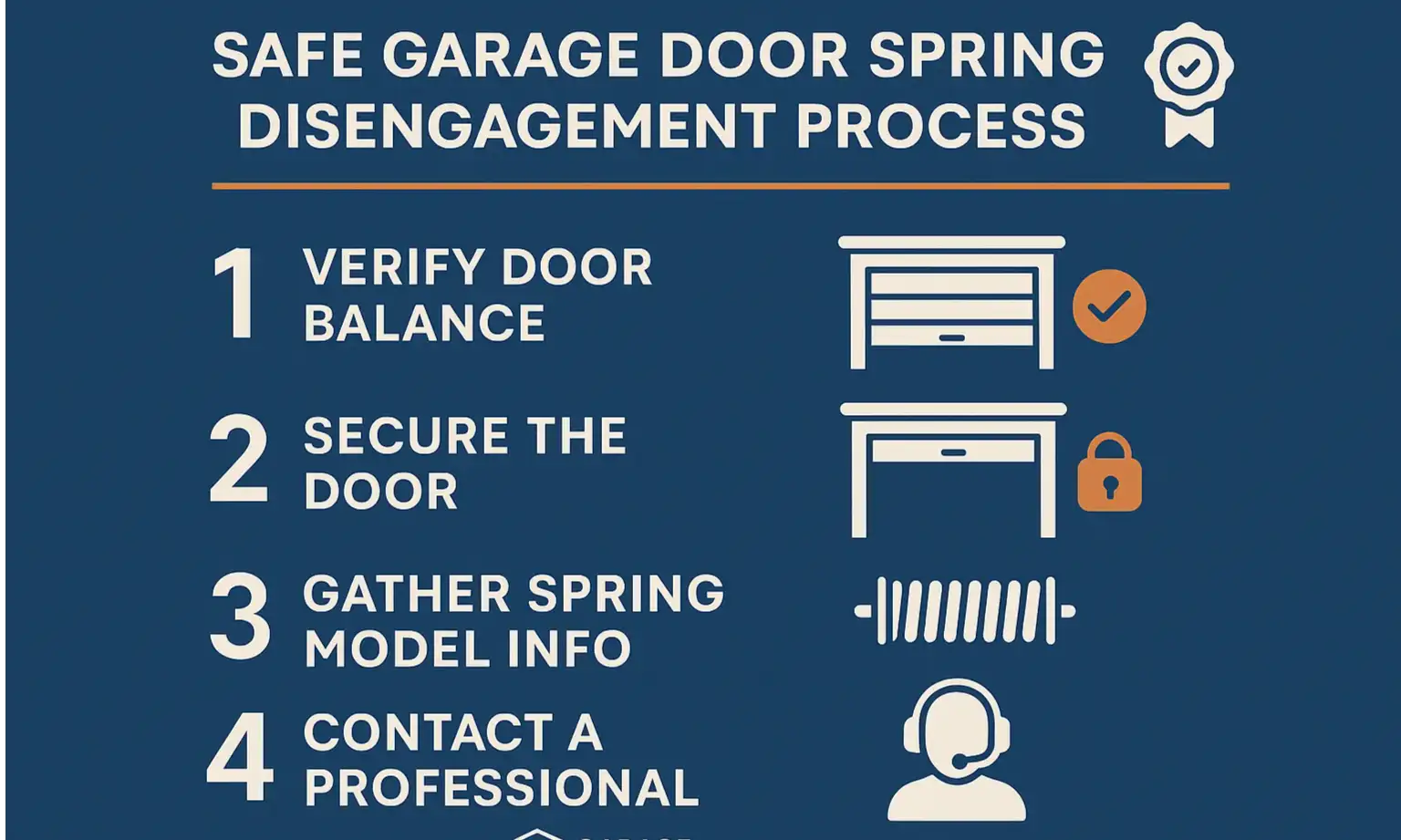
So, what should you do when your garage door spring breaks? The safest “fix” is to prepare for a professional. By taking these steps, you keep yourself safe and help the technician work more efficiently.
Frequently Asked Questions (FAQ)
What are the signs of a failing garage door spring?
The most common sign is a loud bang from the garage. You may also see a visible 2-3 inch gap in the spring itself. Other signs include the door feeling extremely heavy when lifted manually, opening crookedly, or the automatic opener straining but failing to lift the door.
What happens if you put the wrong spring on a garage door?
An incorrect spring creates a dangerous imbalance. A spring that’s too powerful can make the door fly up and refuse to stay closed. A spring that’s too weak will fail to lift the door’s weight, causing it to slam shut and burning out your opener motor.
Can I open my garage door with a broken spring?
Technically, you can by pulling the emergency release cord on the opener and attempting to lift it manually. However, you will be lifting the full, unsupported weight of the door (150-400+ lbs). This is extremely dangerous and can lead to back injuries or the door crashing down on you or your property. It is not recommended.
How many turns should be on a garage door spring?
There is no single answer. The correct number of turns is a precise calculation based on the door’s height, weight, and the size of the cable drums. A standard 7-foot door usually requires about 7.5 turns, but this is only a guideline. Over-winding can cause the spring to break prematurely, while under-winding will leave the door heavy. This calculation is a key reason professional service is vital.
Your Safety is Not a DIY Project
Your home is full of projects perfect for a handy homeowner, but garage door spring replacement is not one of them. The risk of severe, life-changing injury is simply too high. The specialized knowledge, tools, and experience required are not things you can learn from a quick online search.
When that “BANG” echoes through your home, let it be a signal to pick up the phone, not a wrench. Trusting a professional ensures the job is done correctly and safely, protecting you, your family, and your property. That’s why professional 24 hour garage door repair services exist—to handle these urgent, dangerous situations so you don’t have to.
When that “BANG” echoes through your home, let it be a signal to pick up the phone, not a wrench. Trusting a professional ensures the job is done correctly and safely, protecting you, your family, and your property. That’s why professional 24 hour garage door repair services exist—to handle these urgent, dangerous situations so you don’t have to.
Frequently Asked Questions
What are the signs of a failing garage door spring?
The most common sign is a loud bang from the garage. You may also see a visible 2-3 inch gap in the spring itself. Other signs include the door feeling extremely heavy when lifted manually, opening crookedly, or the automatic opener straining but failing to lift the door.
What happens if you put the wrong spring on a garage door?
An incorrect spring creates a dangerous imbalance. A spring that's too powerful can make the door fly up and refuse to stay closed. A spring that's too weak will fail to lift the door's weight, causing it to slam shut and burning out your opener motor.
Can I open my garage door with a broken spring?
Technically, you can by pulling the emergency release cord on the opener and attempting to lift it manually. However, you will be lifting the full, unsupported weight of the door (150-400+ lbs). This is extremely dangerous and can lead to back injuries or the door crashing down on you or your property. It is not recommended.
How many turns should be on a garage door spring?
There is no single answer. The correct number of turns is a precise calculation based on the door's height, weight, and the size of the cable drums. A standard 7-foot door usually requires about 7.5 turns, but this is only a guideline. Over-winding can cause the spring to break prematurely, while under-winding will leave the door heavy. This calculation is a key reason professional service is vital.