A garage isn’t just for parking anymore. Whether it’s your home gym, workshop, or extra storage, a garage that feels like a sauna in July isn’t doing you any favors. Many American property owners ask the same thing: how to keep a garage cool in summer without tearing the place apart or spending a fortune.
This guide from 24H Garage Doors explores the best ways to cool a garage in summer — without the need for major renovations. With just a few targeted upgrades and better airflow, you can turn your garage into a cooler, more usable space all summer long.
How to Keep a Garage Cool in Summer: Smart Solutions for Your Space
Published: Aug 15, 2025 | Updated: Jul 28, 2026
What Makes Garages Heat Up So Quickly in Summer
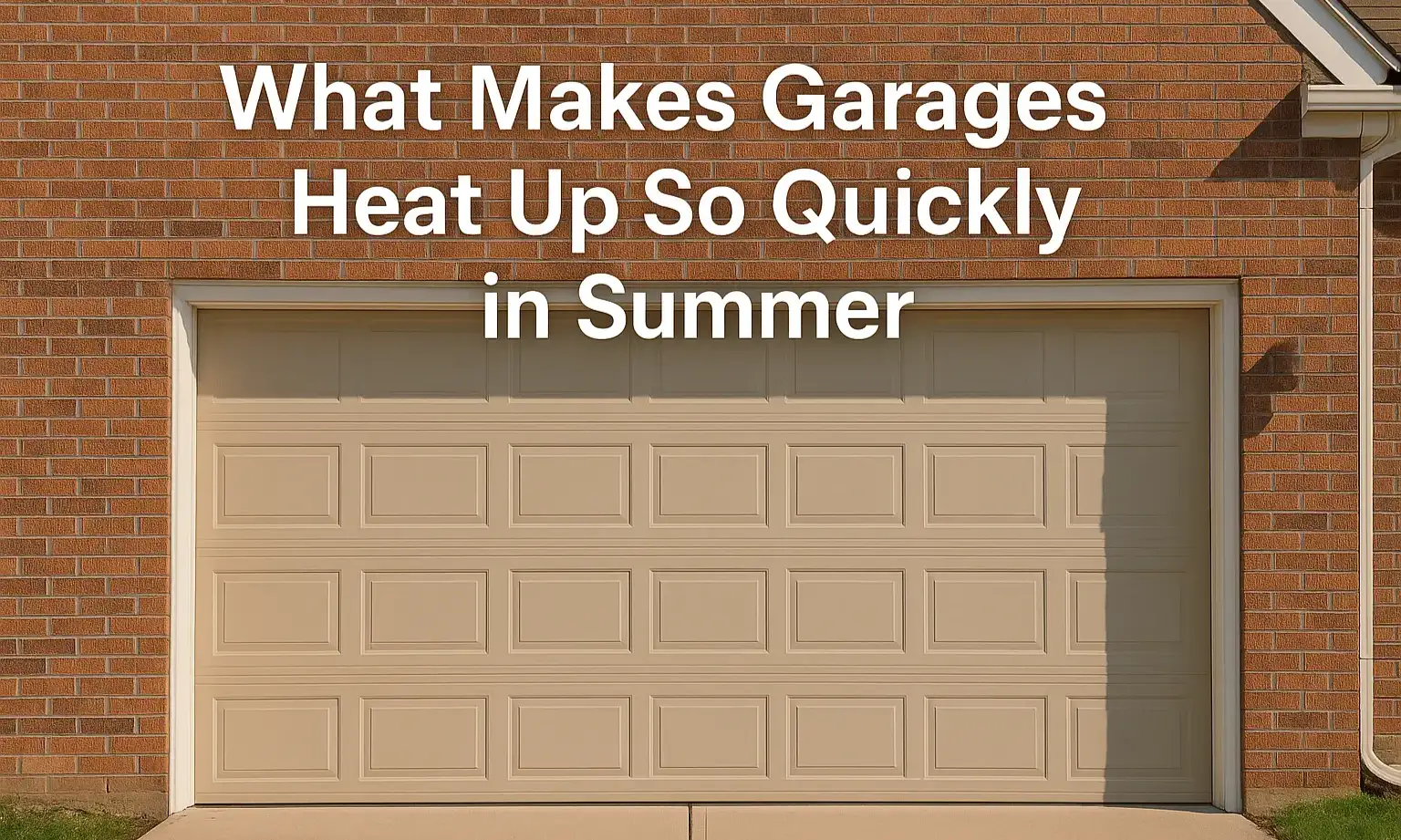
Garages heat up for a few simple reasons, and most of them come down to construction. Most garages are built with functionality in mind, not comfort — which means the materials used often trap heat.
Concrete floors absorb warmth during the day and radiate it back at night. Thin walls, single-layer garage doors, and uninsulated ceilings let outdoor heat pour in. And without airflow, it’s tough to keep the garage cool.
Garages that face west or south also take a bigger hit, since they get more direct afternoon sun — the hottest part of the day. That’s why some garages can feel 10–20 degrees hotter than the outside air by late afternoon. The same applies to smaller commercial garages, like auto shops and storage units, which often have limited airflow and basic building materials.
Concrete floors absorb warmth during the day and radiate it back at night. Thin walls, single-layer garage doors, and uninsulated ceilings let outdoor heat pour in. And without airflow, it’s tough to keep the garage cool.
Garages that face west or south also take a bigger hit, since they get more direct afternoon sun — the hottest part of the day. That’s why some garages can feel 10–20 degrees hotter than the outside air by late afternoon. The same applies to smaller commercial garages, like auto shops and storage units, which often have limited airflow and basic building materials.
The Best Ways to Cool a Garage in Summer Without Big Renovations
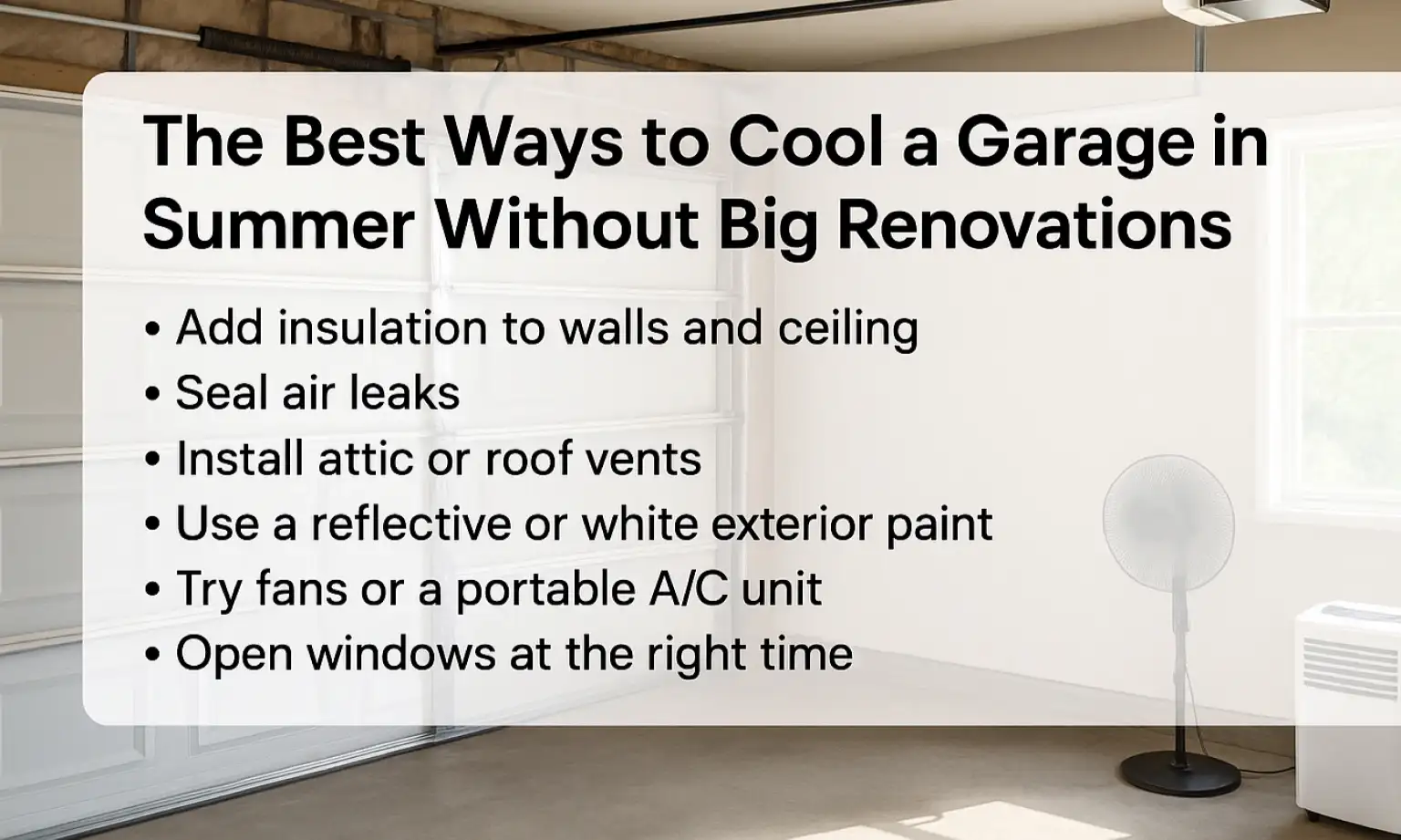
You don’t need to take on a full renovation to beat the heat. Some of the best fixes are surprisingly simple and affordable.
These strategies can help keep the garage cool in summer without major cost — whether it’s part of your home or a commercial garage that sees regular use.
What Garage Door Upgrades Help Keep the Garage Cool in Summer
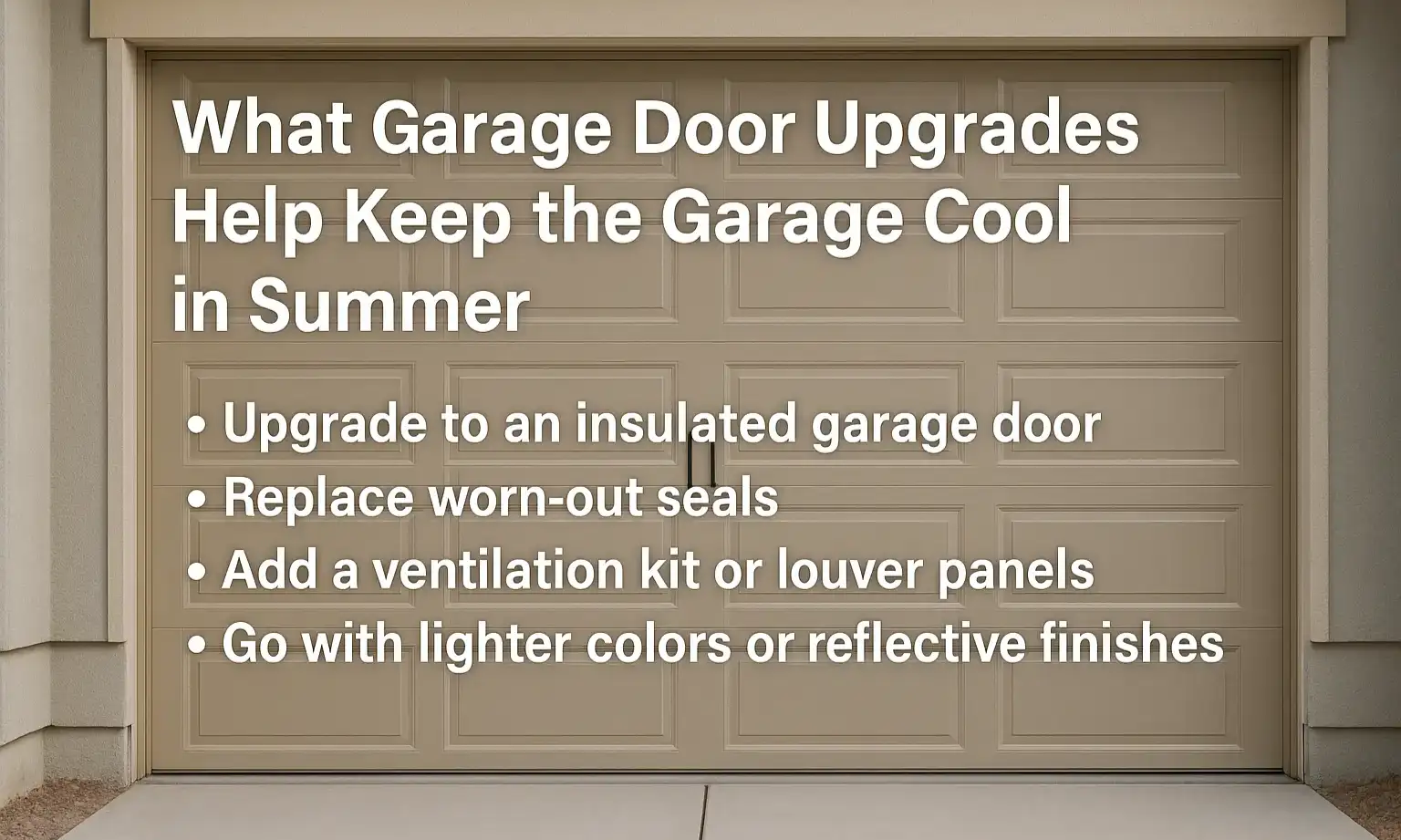
The garage door is usually the largest opening in your building, and it plays a huge role in indoor temperature. If you’re that person who asks, “how can I cool my garage in the summer?” with just one major improvement, start here.
Here’s what to consider:
Here’s what to consider:
Ready to Cool Your Garage This Summer with 24H Garage Doors?
Some upgrades, like sealing gaps or adding a fan, are easy weekend projects. When those fixes aren’t enough, a more permanent upgrade might be the answer.
At 24H Garage Doors, we offer solutions for both homes and commercial spaces. Whether you’re looking to replace your garage door, explore insulation options, or talk through energy-saving upgrades, we’ve got the experience to guide you. Explore our garage door installation and replacement services or contact us to create a cooler, more functional space that works year-round — at home or at work.
At 24H Garage Doors, we offer solutions for both homes and commercial spaces. Whether you’re looking to replace your garage door, explore insulation options, or talk through energy-saving upgrades, we’ve got the experience to guide you. Explore our garage door installation and replacement services or contact us to create a cooler, more functional space that works year-round — at home or at work.
Frequently Asked Questions
Why does my garage get so much hotter than the outside temperature?
Most garages are built for function rather than comfort, so the materials tend to trap heat. Concrete floors absorb warmth during the day and radiate it back at night, while thin walls, single-layer doors, and uninsulated ceilings let outdoor heat pour in. With little airflow, some garages can feel 10 to 20 degrees hotter than the outside air by late afternoon.
Does the direction my garage faces affect how hot it gets?
Yes. Garages that face west or south take a bigger hit because they get more direct afternoon sun, which is the hottest part of the day. This added sun exposure is one reason certain garages heat up faster than others.
Can I cool down my garage without doing a major renovation?
You do not need a full renovation to beat the heat. Some of the best fixes are simple and affordable, such as adding insulation, sealing air leaks, and improving ventilation. These strategies can help keep a garage cooler whether it is part of your home or a commercial space that sees regular use.
What role does insulation play in keeping a garage cooler?
Insulating your garage's interior is one of the fastest ways to control temperature. Batt insulation or foam board can block radiant heat from entering and help the garage hold cooler air longer. Sealing air leaks around doors and windows also makes any cooling solution more effective.