
With everyone looking for ways to cut energy consumption, people have started paying particular attention to every nook and cranny of their homes, including the garage door. One element of your home that tends to go unnoticed is the garage door, as it plays a crucial role in controlling heat and energy if your garage is situated next to the house. Learning about how energy efficiency is measured can help you improve your home’s thermal performance effectively in addition to reducing energy consumption.
Energy-Efficient Garage Doors: Save on Utility Bills in New Haven
Published: Dec 9, 2024 | Updated: Jul 28, 2026
How Energy Efficiency is Measured
Energy efficiency in garage doors is typically gauged by two primary factors: R-value and U-factor. R-value is an actual measure of the door, assuming that it must not allow heat flow. As is the case with any insulating material, the higher the R-value, the more effective the product’s insulating properties will be. For example, the R-value of 16 will insulate far more than the R-value of 6. On the other hand, the U-factor is a measure of the heat flow, and a lower U-factor denotes a higher R-value or thermal performance.
Types of Garage Door Insulation

Insulation plays a critical role in how well a garage door installation performs thermally during operation. There are three main types of garage door insulation: polystyrene, polyurethane, and reflective foil.
1) Polystyrene is standard in low-cost doors and offers a solid, cost-effective barrier. Although it provides less insulation than other types of insulating materials, it is durable and is ideally suited for areas where the temperatures rarely rise or fall.
2) Polyurethane is ideal for those seeking the most energy-efficient garage door. This insulation material is sprayed into the door panels, expanding to fill every cavity and providing the best thermal conductivity surface possible. These doors boast the highest R-values and are recommended for use, particularly in regions experiencing very cold or very hot climates.
2) Polyurethane is ideal for those seeking the most energy-efficient garage door. This insulation material is sprayed into the door panels, expanding to fill every cavity and providing the best thermal conductivity surface possible. These doors boast the highest R-values and are recommended for use, particularly in regions experiencing very cold or very hot climates.
3) The reflective foil insulation functions similarly by reflecting radiant heat away from the garage door and helping to cool it when temperatures are high. It is a versatile and lightweight option, but it may not provide an R-value as high as polyurethane or polystyrene.
Choosing a Garage Door for Thermal Efficiency in New Haven, CT
Selecting an energy-efficient garage door involves more than insulation type. That means you’re going to have to consider climate, garage usage, and personal preference. The door best suited to a cold and snowy climate is significantly different from the one best suited to a warm coastal climate. Additionally, if you use your garage for activities or as an entryway, prioritize a door with superior insulation to maintain comfort and reduce energy costs.
The selection of an appropriate garage door in New Haven, CT, demands consideration of climate conditions and energy efficiency needs. The region undergoes cold winters and temperate summers, so it requires a garage door that is capable of performing efficiently in all these conditions. Here’s how to choose the best option for your home, keeping in mind the specific weather patterns of New Haven.
The selection of an appropriate garage door in New Haven, CT, demands consideration of climate conditions and energy efficiency needs. The region undergoes cold winters and temperate summers, so it requires a garage door that is capable of performing efficiently in all these conditions. Here’s how to choose the best option for your home, keeping in mind the specific weather patterns of New Haven.
Focus on High R-Value Doors
When selecting a new door for your New Haven house, the most important factor to consider is the R-value, which measures the insulation capacity of the door. Winters in New Haven are quite cold, so doors that offer increased R-value will enable better insulation of the house, keeping the interior warm. High R-value insulations also prevent heat loss during colder months, reducing the heating system’s workload in winter.
Choose Polyurethane for Cold Weather
Homeowners in New Haven experiencing low temperatures should opt for polyurethane insulation material. Compared with other options, polyurethane exhibits higher thermal resistance and proves beneficial in wintertime. This type of insulation not only prevents cold from penetrating the house but also offers a nice, strong building structure. Polyurethane-insulated doors are ideal for maintaining a highly energy-efficient garage during the colder months in New Haven.
Reflective Foil Insulation for Warmer Months
New Haven winters are indeed a challenge, but summers can also become very hot, which is why it is important to know how your garage door fares in high temperatures. During summer, a garage door that blocks heat can be more important than insulation alone. The best solution in this case is reflective foil insulation. It allows only a small amount of heat from radiation to enter your garage. This is especially helpful if your garage is connected to the house and can otherwise introduce heat that is undesirable into the living areas. Choosing a door with reflective foil insulation will help keep your garage cool during the summer without putting stress on the door.
Choosing a Material
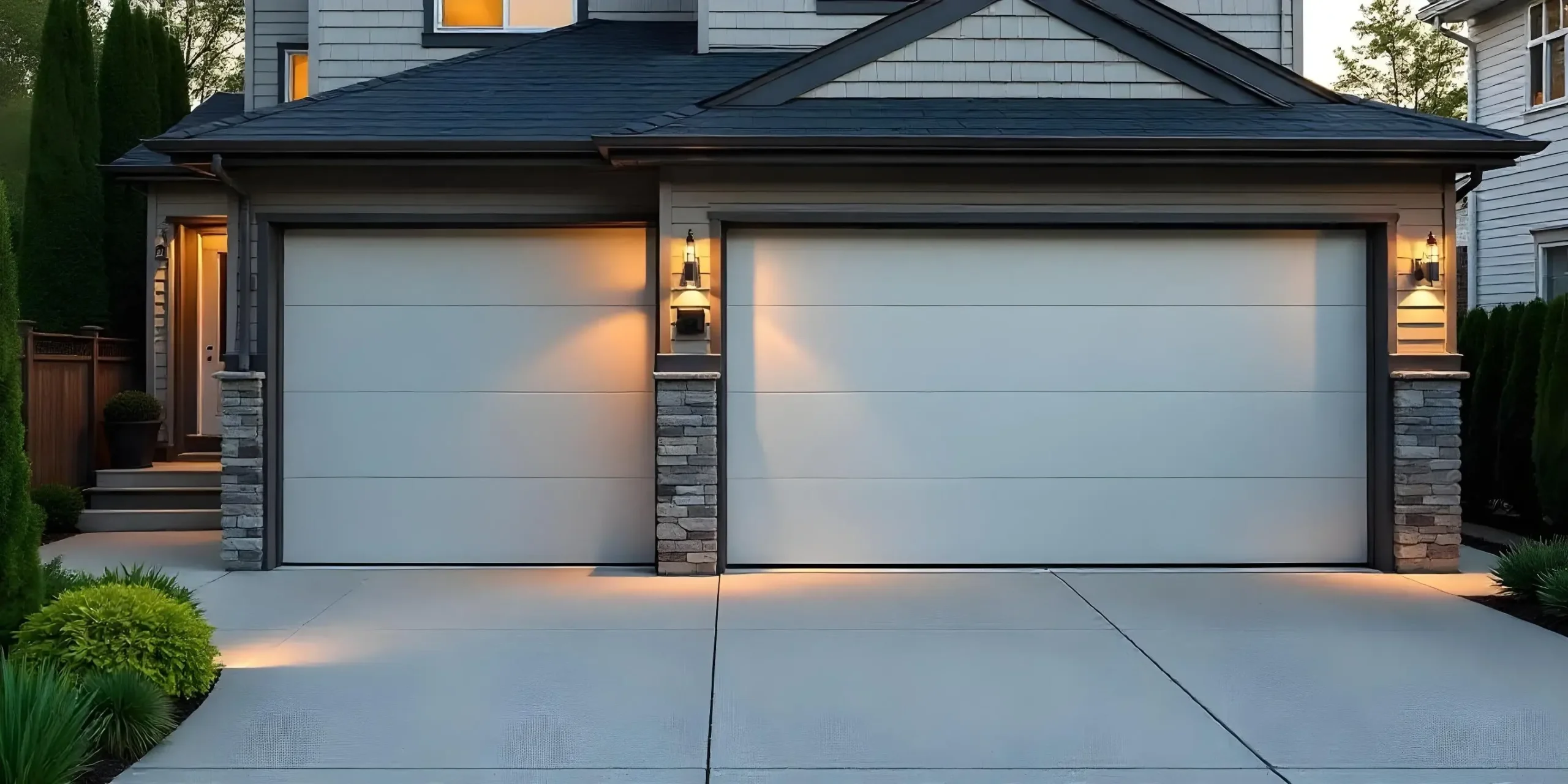
When it comes to materials, selecting the right one can further influence the energy efficiency and durability of your garage door. Here are some popular options:
1) Steel garage doors are durable and easy to maintain, and they have insulating material – polystyrene or polyurethane – to give them solid and efficient protection. Steel makes for an ideal energy-efficient garage door as it does not bend or crack as other materials might do.
1) Steel garage doors are durable and easy to maintain, and they have insulating material – polystyrene or polyurethane – to give them solid and efficient protection. Steel makes for an ideal energy-efficient garage door as it does not bend or crack as other materials might do.
2) Wooden doors have a natural aesthetic appeal and offer moderate insulation, but they may require more upkeep. If insulated properly, wooden doors can also be relatively energy efficient, but they are generally more susceptible to weathering than metal doors.
3) Fiberglass doors are light and do not dent easily but are not as good an insulator as other body materials. However, it can be used for an energy-efficient garage door, provided adequate insulation is used at the back of it, especially in moderately cold regions.
3) Fiberglass doors are light and do not dent easily but are not as good an insulator as other body materials. However, it can be used for an energy-efficient garage door, provided adequate insulation is used at the back of it, especially in moderately cold regions.
4) Composite wood doors use both the looks of wood and the durability of steel to offer a sound-sealed door that is less likely to wrap. Among the options available, this choice boasts the highest durability, which will be suitable for any homeowner who wants both looks and efficiency.
Additional Considerations for Optimal Energy Efficiency

Weather sealing is another key feature of garage door operation that is frequently neglected. Good-quality insulation, especially around the edges, between panels, and at the bottom of the door, reduces gaps that allow drafts to penetrate, preventing heat loss in winter and heat gain in summer. Weather sealing is typically used when a garage door is being installed, and when done properly, it will certainly enhance the energy efficiency of a door that is already rated for such, regardless of how highly efficient it is.
However, even if you get the most efficient of the currently available garage doors, it will not be able to perform optimally if it has been installed in the wrong way. When done by a professional, insulation materials are not compressed, and the door has no spaces in between through which air can pass. Inaccurate installation or improper fitting can lessen energy utilization proficiency and could also result in high energy charges because your HVAC (Heating, Ventilation, and Air Conditioning) system has to exert more effort to regulate the interior temperatures.
However, even if you get the most efficient of the currently available garage doors, it will not be able to perform optimally if it has been installed in the wrong way. When done by a professional, insulation materials are not compressed, and the door has no spaces in between through which air can pass. Inaccurate installation or improper fitting can lessen energy utilization proficiency and could also result in high energy charges because your HVAC (Heating, Ventilation, and Air Conditioning) system has to exert more effort to regulate the interior temperatures.
Conclusion
Choosing the right garage door that will insulate the most energy requires determining the insulation type, the materials, the climate, and the quality of the garage door installation. A well-chosen and properly maintained energy-saving garage door provides comfort, reduces costs, and enhances the appearance of your home. It also contributes to eco-friendliness. No matter if you are remodeling your garage or constructing a new one, the following elements will help you decide on which type of garage door is the most effective one for you.
Frequently Asked Questions
How is the energy efficiency of a garage door measured?
Energy efficiency in garage doors is typically gauged by two primary factors: R-value and U-factor. R-value measures how well the door resists heat flow, so a higher R-value means better insulating properties. U-factor measures heat flow itself, and a lower U-factor indicates a higher R-value or better thermal performance.
What types of insulation are used in garage doors?
There are three main types of garage door insulation: polystyrene, polyurethane, and reflective foil. Polystyrene is standard in low-cost doors and offers a durable, cost-effective barrier, while polyurethane is sprayed into the panels to fill every cavity and provides the highest R-values. Reflective foil is a lightweight, versatile option that reflects radiant heat away, though it may not reach an R-value as high as the others.
Which insulation is best for very cold or very hot climates?
Polyurethane is ideal for those seeking the most energy-efficient garage door. Because it is sprayed into the door panels and expands to fill every cavity, it delivers the best thermal conductivity surface and the highest R-values. These doors are recommended particularly for regions that experience very cold or very hot climates.
What should I prioritize when choosing a door for New Haven's climate?
The most important factor is the R-value, since New Haven has cold winters and temperate summers that require a door capable of performing efficiently in all conditions. Doors with a higher R-value provide better insulation for the region's cold winters. You should also consider your garage usage and personal preference, and prioritize superior insulation if you use the garage for activities or as an entryway.