The good news is you don’t necessarily need a special, lab-tested door with a big “fire-rated” sticker on it (though that is one option). The IRC outlines a few simple, common-sense choices that meet the 20-minute fire separation requirement.
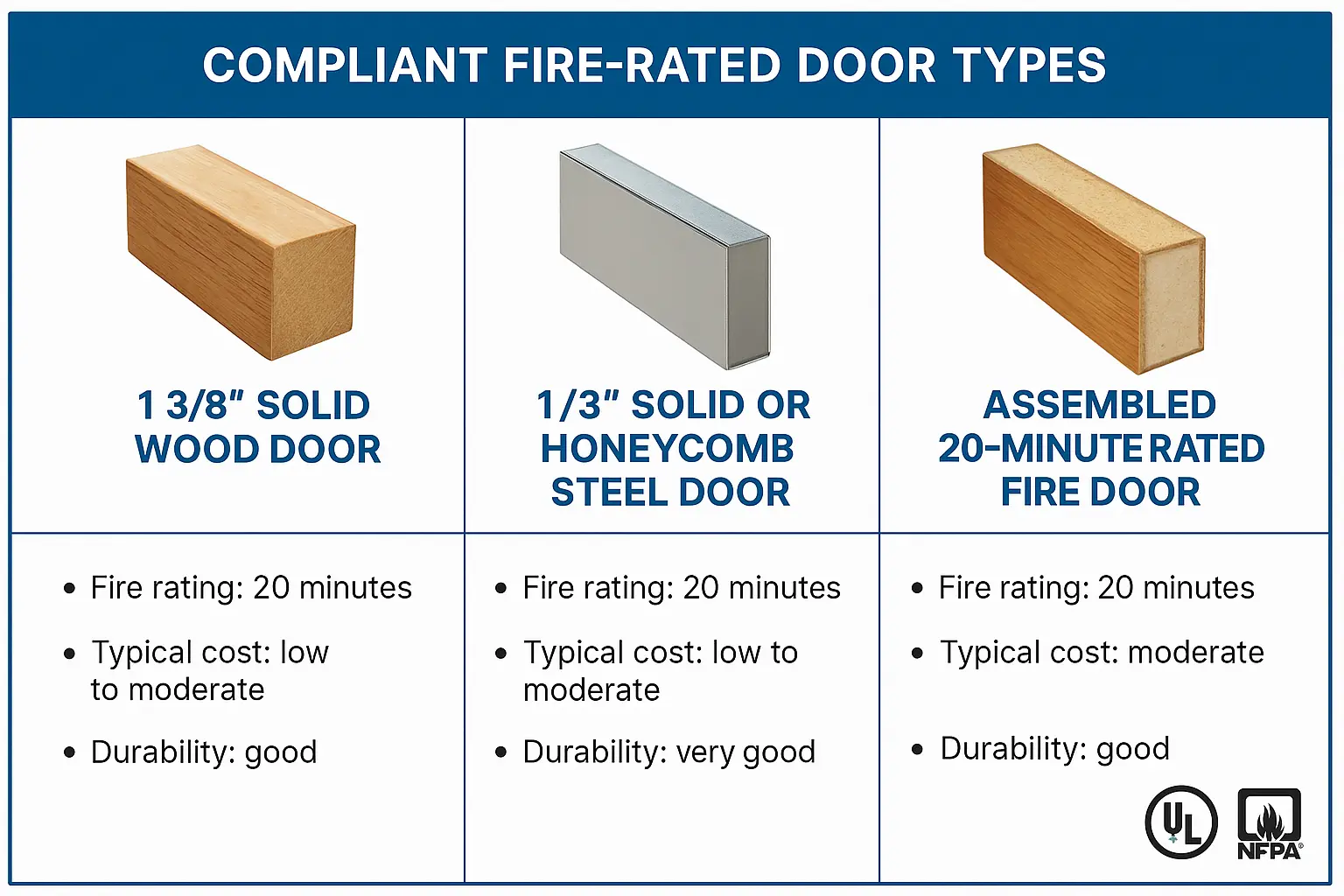
Here are the three most common compliant door types for the house-to-garage entry:
1. Solid Wood Door: Must be at least 1-3/8 inches thick. A solid-core door provides a dense barrier that burns slowly. Hollow-core interior doors are not compliant and are a significant safety hazard.
2. Solid or Honeycomb-Core Steel Door: Must also be at least 1-3/8 inches thick. The steel facing and dense core offer excellent fire resistance.
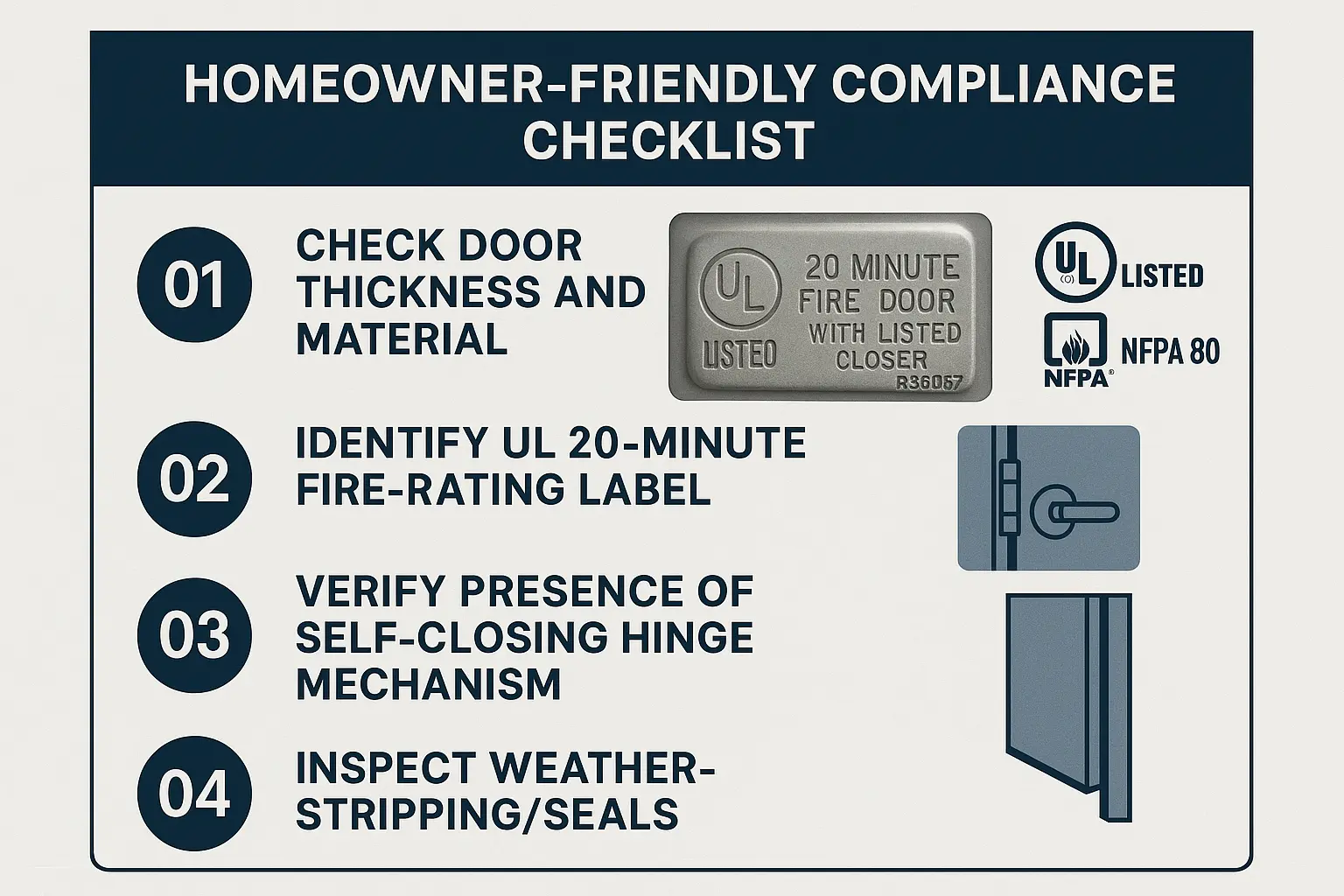
3. A 20-Minute Fire-Rated Door: These doors have been tested by a third-party agency (like Underwriters Laboratories, or UL) and will have a special label on the edge of the door, between the hinges, certifying their rating.
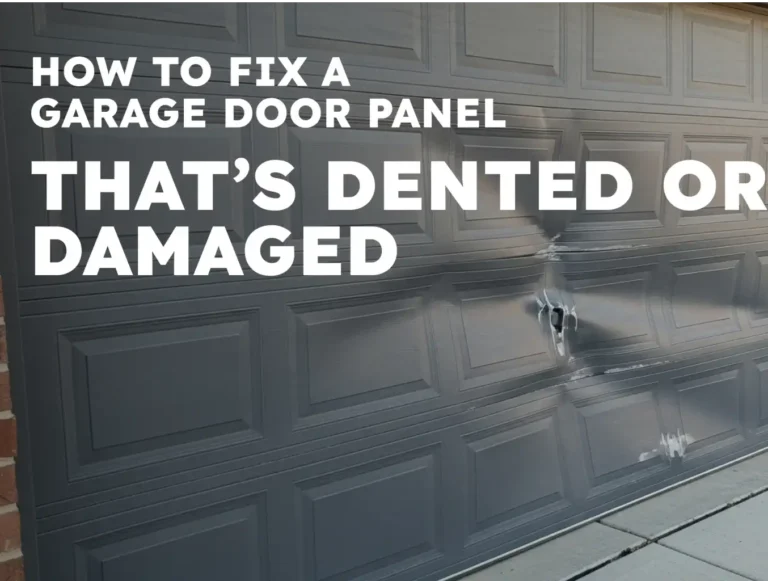
While fire safety is the main driver for this specific entry door, the materials for your main overhead garage door are also important for durability and longevity. The best garage door material for coastal homes, for example, will differ greatly from those in drier climates.