Once you’ve confirmed the bulb is the issue, you have a few excellent options to resolve it, ranging from a simple swap to a quick DIY fix.
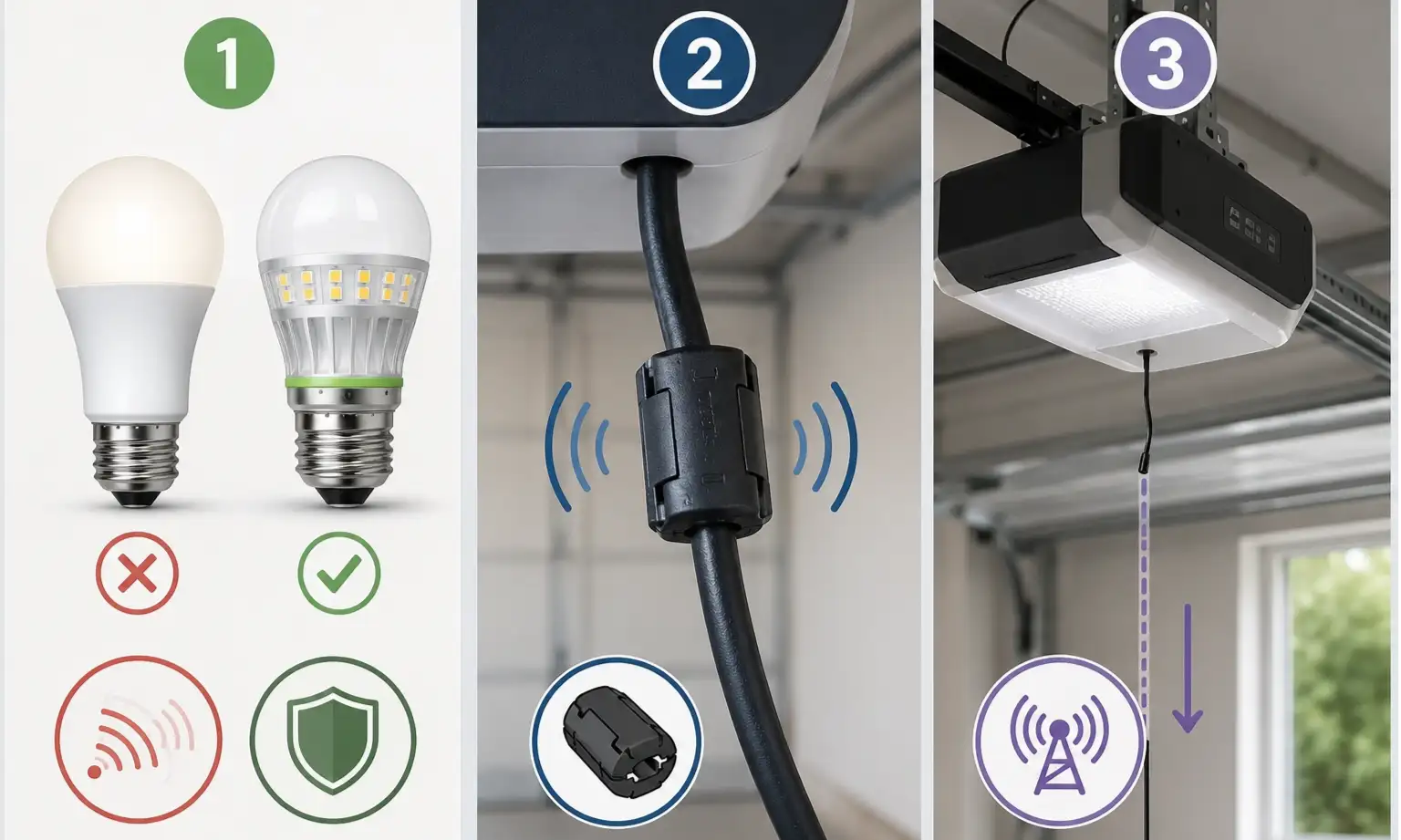
Solution 1: The Easy Fix (Recommended) – Switch to a Low-Interference Bulb
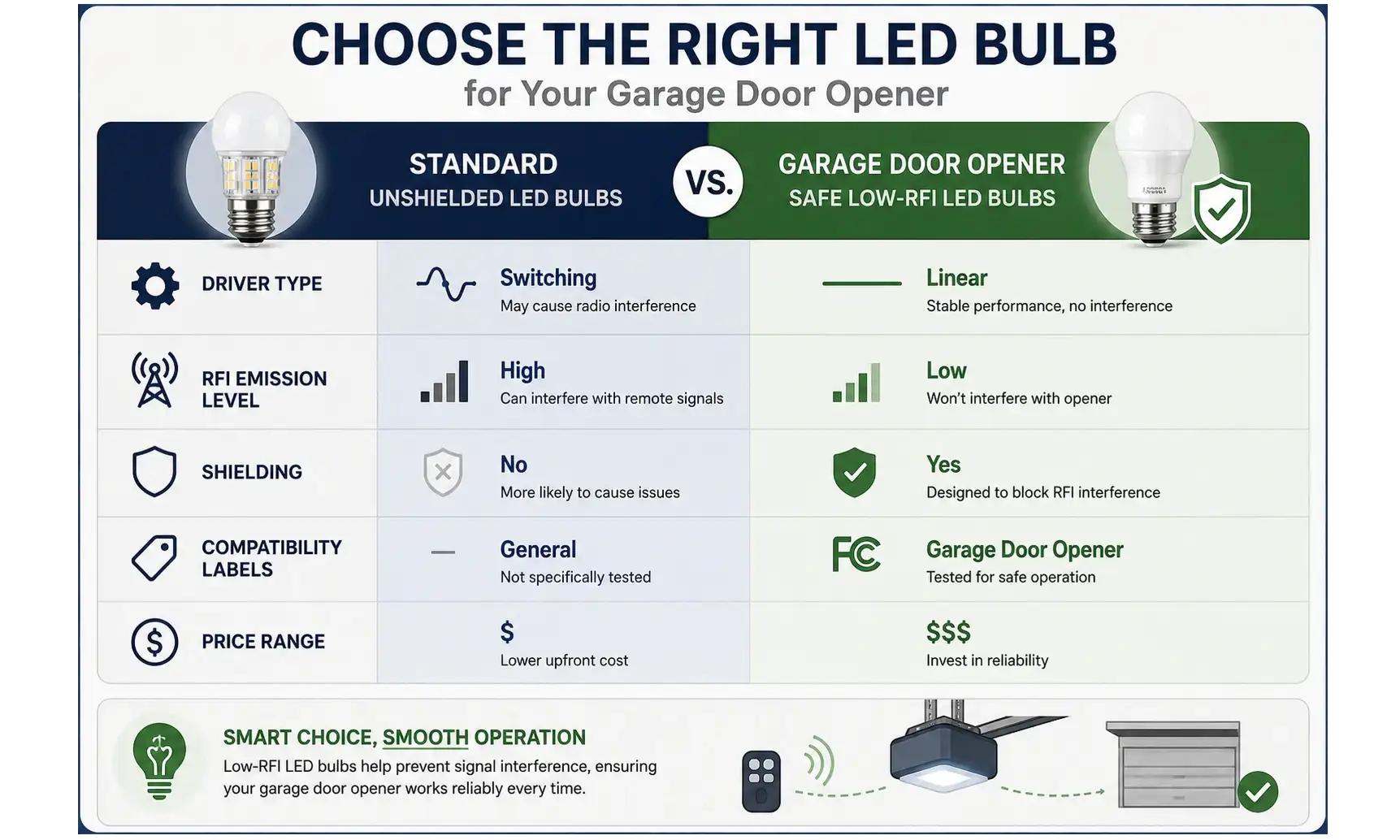
The simplest and most reliable solution is to use an LED bulb specifically designed for garage door openers. These bulbs are engineered with better internal components and shielding to minimize or eliminate RFI. They’re built to be “quiet” on the radio frequency spectrum.
When shopping, look for packaging that explicitly says “garage door opener compatible,” “low RFI,” or “low interference.” Major brands like Genie and Chamberlain (LiftMaster) produce their own lines of these bulbs, and they are widely available.
Solution 2: The DIY Fix – Add a Ferrite Bead (or Choke)
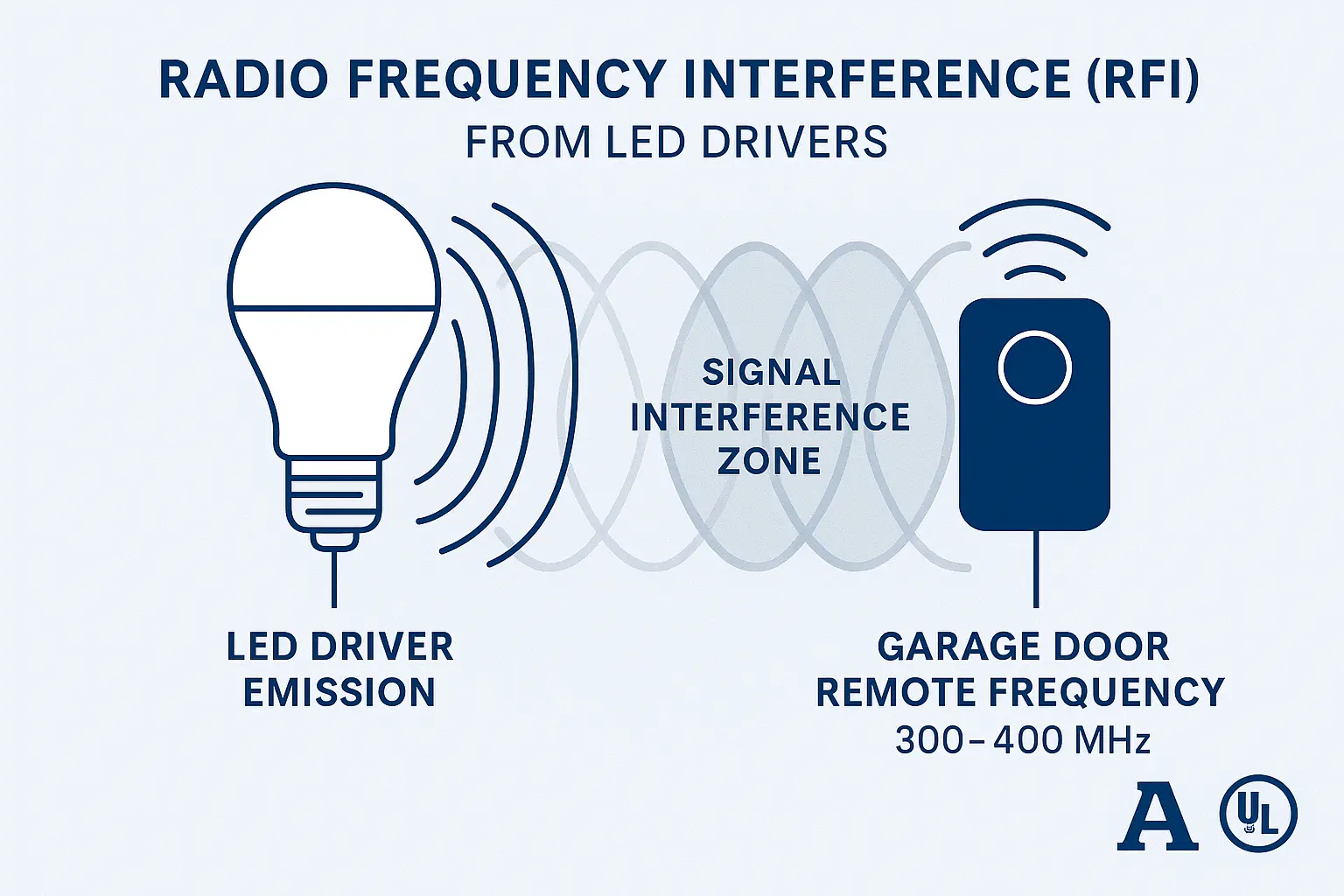
If you’re attached to your current bulb or enjoy a simple DIY project, you can try to suppress the RFI at its source. A ferrite bead (also called a ferrite choke) is a small magnetic clamp that snaps around a power cord. It acts as a filter, absorbing high-frequency noise and preventing it from traveling along the wire and radiating into the air.
Simply clamp one or two of these beads around the garage door opener’s power cord as close to the unit’s housing as possible. It’s a low-cost experiment that often solves the problem.
Solution 3: The Range-Boosting Fix – Reposition the Antenna
Sometimes, the issue is a combination of weak signal and interference. Your opener has a small antenna—usually a single wire dangling from the motor unit. By simply repositioning this wire, you can sometimes improve reception enough to overcome minor RFI.
Make sure the antenna is hanging straight down and is not touching any metal. For more significant improvements, you can learn how to extend the garage door opener range by adding a small piece of wire to the existing antenna, allowing you to move it further away from the noisy motor and light bulb.