When a garage door keypad stops responding, the first thing to check is the battery. Many keypads are battery-powered, and over time, performance issues like delayed entry or no response are often tied to a weak or dead battery. This guide covers how to change batteries in a garage door keypad, with steps that may vary slightly depending on the model, but the process is generally straightforward and takes just a few minutes.
How to Change the Battery in a Garage Door Opener Keypad: Simple Steps to Keep It Working
Published: Jul 11, 2025 | Updated: Jul 28, 2026
Step-by-Step: How to Change the Battery in a Garage Door Opener Keypad
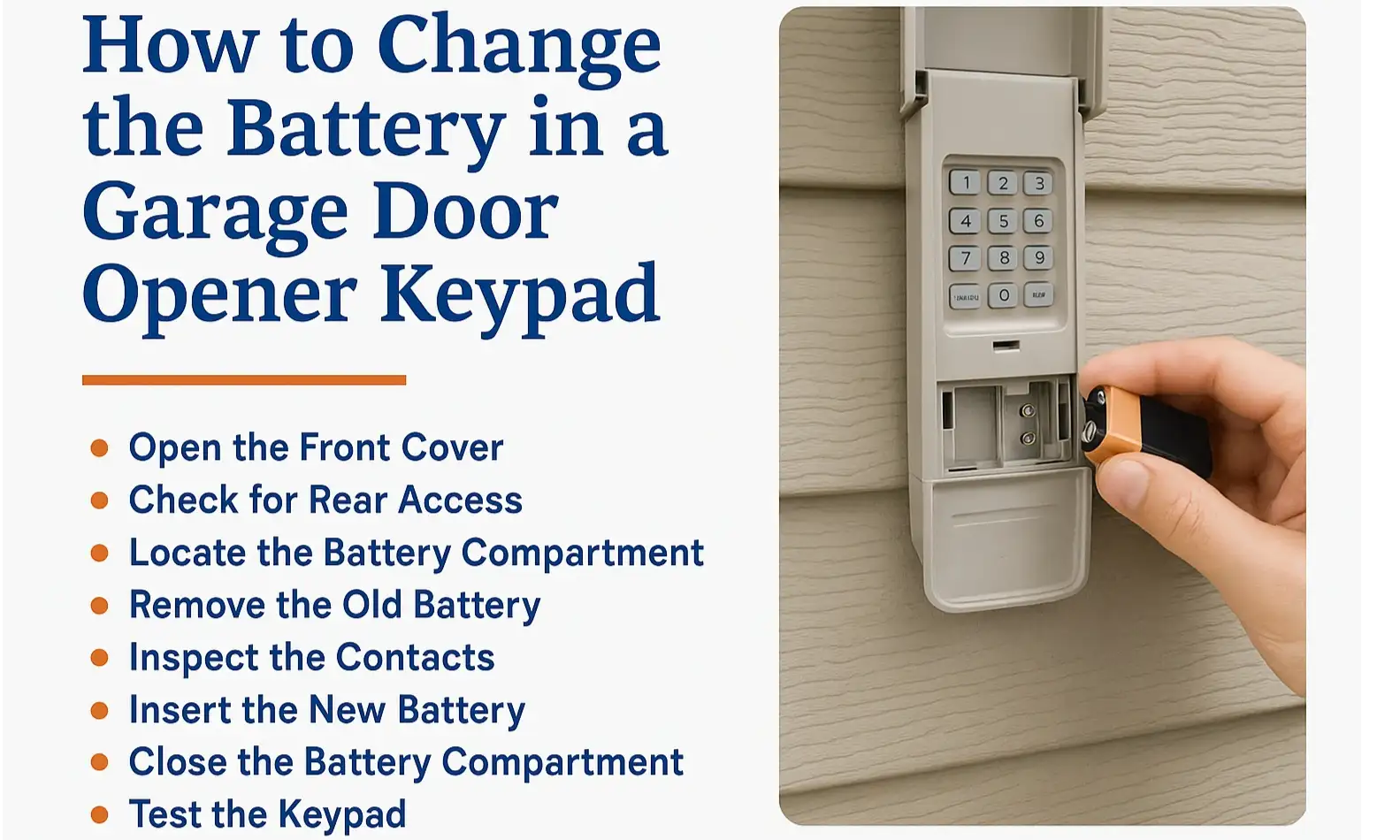
Before you begin, check the model of your garage door keypad. Most use a 9V battery, but some newer units use coin-cell batteries. If the keypad is exposed to weather, it’s often sealed more tightly — so handle with care.
Follow these steps:
1. Open the Front Cover. Lift the faceplate or slide up the front cover, depending on your model. If the cover is tight or stiff, gently pry it with a flathead screwdriver — but avoid forcing it to prevent damage.
2. Check for Rear Access. Some keypads require you to remove the entire unit from the wall to reach the battery compartment. If so, locate the release tab or mounting screws (usually at the bottom or back) and carefully detach the keypad.
Follow these steps:
1. Open the Front Cover. Lift the faceplate or slide up the front cover, depending on your model. If the cover is tight or stiff, gently pry it with a flathead screwdriver — but avoid forcing it to prevent damage.
2. Check for Rear Access. Some keypads require you to remove the entire unit from the wall to reach the battery compartment. If so, locate the release tab or mounting screws (usually at the bottom or back) and carefully detach the keypad.
3. Locate the Battery Compartment. Look for a plastic compartment or a snap-in battery terminal. You may need to pop open a secondary panel inside the keypad to access the battery housing.
4. Remove the Old Battery. Disconnect or slide out the battery carefully. Check whether the battery is a 9V block or a coin cell (CR2032 is common). Note the polarity and how it’s positioned — this matters during reinstallation.
5. Inspect the Contacts. Before installing the new battery, check the battery terminals inside the keypad for corrosion or dust. If needed, gently wipe with a dry cloth or a pencil eraser to ensure a good connection.
6. Insert the New Battery. Use a fresh, matching battery. Align it with the correct polarity (plus and minus symbols) and press it firmly into place until it’s secure.
7. Close the Battery Compartment. Snap the compartment shut or reassemble the panel. If you removed the keypad from the wall, reattach it now — make sure it locks into place and sits flush.
8. Test the Keypad. Press a few buttons and enter your access code. A working keypad should light up or give an audible click. If nothing happens, double-check the battery orientation and try again.
If you’ve followed all the steps and the keypad still doesn’t respond, the problem may lie with the unit itself or the garage door opener. In that case, you might need a garage door opener repair in order to check for wiring issues, signal interference, or internal faults that prevent proper keypad communication.
4. Remove the Old Battery. Disconnect or slide out the battery carefully. Check whether the battery is a 9V block or a coin cell (CR2032 is common). Note the polarity and how it’s positioned — this matters during reinstallation.
5. Inspect the Contacts. Before installing the new battery, check the battery terminals inside the keypad for corrosion or dust. If needed, gently wipe with a dry cloth or a pencil eraser to ensure a good connection.
6. Insert the New Battery. Use a fresh, matching battery. Align it with the correct polarity (plus and minus symbols) and press it firmly into place until it’s secure.
7. Close the Battery Compartment. Snap the compartment shut or reassemble the panel. If you removed the keypad from the wall, reattach it now — make sure it locks into place and sits flush.
8. Test the Keypad. Press a few buttons and enter your access code. A working keypad should light up or give an audible click. If nothing happens, double-check the battery orientation and try again.
If you’ve followed all the steps and the keypad still doesn’t respond, the problem may lie with the unit itself or the garage door opener. In that case, you might need a garage door opener repair in order to check for wiring issues, signal interference, or internal faults that prevent proper keypad communication.
How Often Should You Change Batteries in Garage Door Keypads
Most garage door opener keypads need a new battery every 1 to 2 years, depending on usage, battery type, and exposure to weather. Outdoor units or keypads used often may need replacement sooner.
Slow responses, missed entries, or dim backlighting usually mean the battery is low. Replacing it before winter is also a smart idea, as cold temperatures can drain battery life faster.
If the keypad continues to fail even after a battery replacement, a technician can assess whether the unit needs to be replaced. Installing a newer, weather-resistant model often improves long-term performance.
Slow responses, missed entries, or dim backlighting usually mean the battery is low. Replacing it before winter is also a smart idea, as cold temperatures can drain battery life faster.
If the keypad continues to fail even after a battery replacement, a technician can assess whether the unit needs to be replaced. Installing a newer, weather-resistant model often improves long-term performance.
Wrapping Up
Now that you know how to replace a garage door keypad battery, you can keep your entry system working without delay.
Still, if a new battery doesn’t solve the issue, the keypad or opener may need a closer look. 24H Garage Doors offers expert support, from diagnostics to full garage door opener installation, including keypad upgrades that hold up in all conditions. Feel free to reach out anytime — we’ll make sure the issue is handled properly.
Still, if a new battery doesn’t solve the issue, the keypad or opener may need a closer look. 24H Garage Doors offers expert support, from diagnostics to full garage door opener installation, including keypad upgrades that hold up in all conditions. Feel free to reach out anytime — we’ll make sure the issue is handled properly.
Frequently Asked Questions
What kind of battery does a garage door keypad usually take?
Most garage door keypads use a 9V battery, but some newer units use coin-cell batteries, with the CR2032 being common. Before you start, check the model of your keypad so you know which type to buy. When removing the old battery, note its polarity and position, since that matters during reinstallation.
How do I get into a keypad that's sealed or mounted tightly to the wall?
Start by lifting the faceplate or sliding up the front cover, and if it's stiff you can gently pry it with a flathead screwdriver without forcing it. Some keypads require you to remove the entire unit from the wall to reach the battery, so look for a release tab or mounting screws usually at the bottom or back. Keypads exposed to weather are often sealed more tightly, so handle them with care.
How often will I need to replace the battery in my keypad?
Most garage door opener keypads need a new battery every 1 to 2 years, depending on usage, battery type, and exposure to weather. Outdoor units or keypads used often may need replacement sooner. Slow responses, missed entries, or dim backlighting usually mean the battery is low, and replacing it before winter is smart since cold temperatures drain battery life faster.
My keypad still won't respond after I put in a fresh battery. What now?
First, double-check that the battery is installed with the correct polarity and try again. You should also inspect the battery terminals for corrosion or dust and gently wipe them with a dry cloth or pencil eraser for a good connection. If it still doesn't work, the problem may be with the unit or the opener itself, and a technician can check for wiring issues, signal interference, or internal faults.