You’ve found the perfect home, but there’s one catch: the garage. Maybe it’s a charming older house with low ceilings, a modern build that prioritized living space over garage height, or a basement garage with ductwork right where the door should go. You’re facing a common but frustrating problem: you don’t have enough vertical space—or “headroom”—for a standard garage door.
Before you give up on your dream of a functional, automatic garage, there’s an elegant engineering solution you need to know about. It’s called a low-headroom track system, and it’s designed specifically for spaces like yours. This guide will walk you through everything you need to know, transforming you from problem-aware to solution-confident.
Your Ultimate Guide to Low-Headroom Track Systems
Published: Jan 29, 2026 | Updated: Jul 28, 2026
First Things First: What is Headroom and Why It’s a Big Deal?
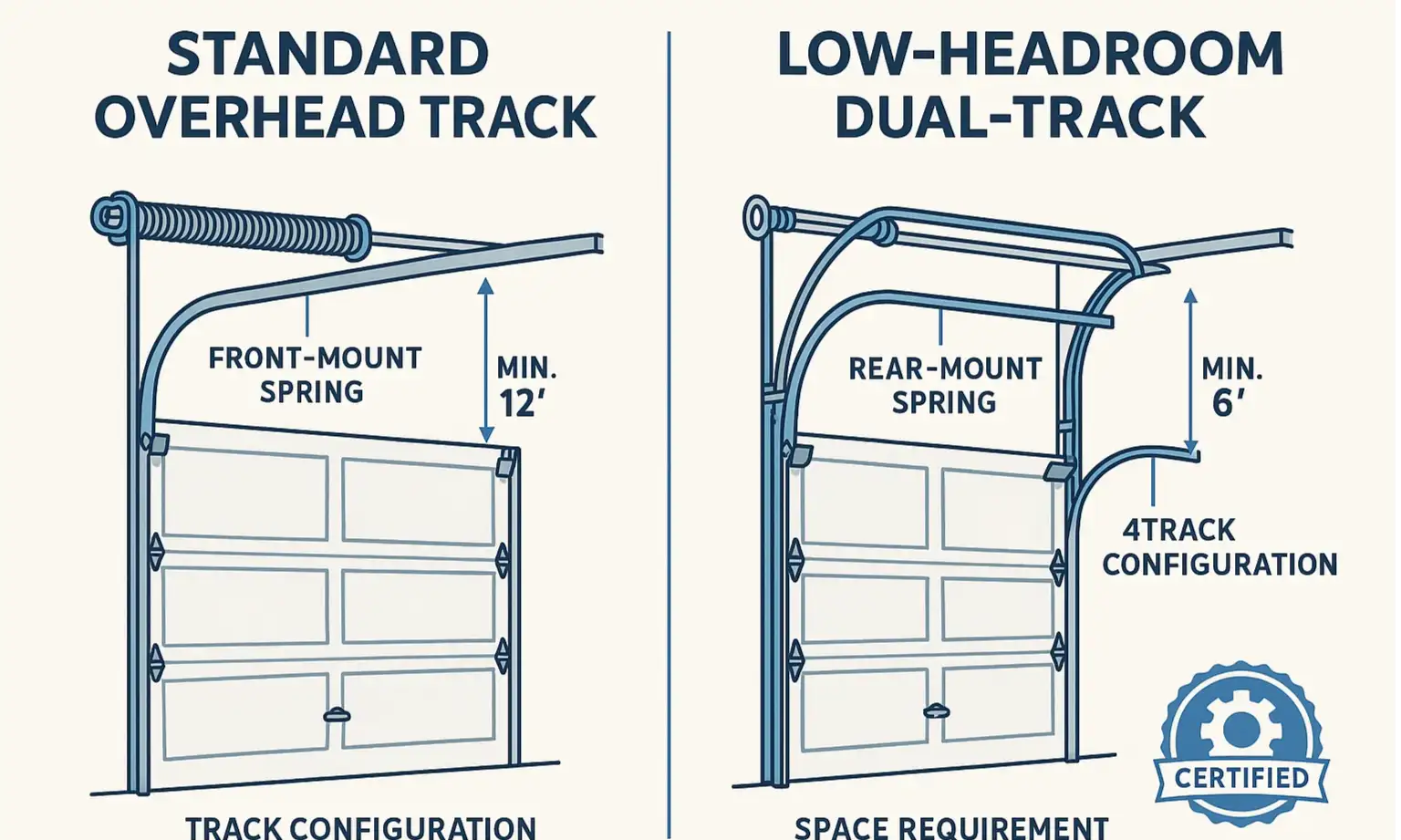
In the world of garage doors, “headroom” is the amount of clear vertical space between the top of the door opening and the ceiling (or the lowest obstruction, like a beam or pipe).
Think about how a standard garage door opens. It moves up, and then the top section makes a wide, gradual curve to run along the horizontal tracks. This curve, plus the space needed for the torsion spring system mounted directly above the door, requires a decent amount of headroom—typically 12 to 15 inches for a standard setup.
When you don’t have that space, you have a “low headroom” situation. Trying to force a standard system into a tight space is a recipe for disaster, leading to a door that won’t open fully, damaged panels, or a failed spring system.
Think about how a standard garage door opens. It moves up, and then the top section makes a wide, gradual curve to run along the horizontal tracks. This curve, plus the space needed for the torsion spring system mounted directly above the door, requires a decent amount of headroom—typically 12 to 15 inches for a standard setup.
When you don’t have that space, you have a “low headroom” situation. Trying to force a standard system into a tight space is a recipe for disaster, leading to a door that won’t open fully, damaged panels, or a failed spring system.
How to Measure Your Headroom (The Right Way)
Before you go any further, grab a tape measure. Accurately measuring your headroom is the single most important step in finding the right solution. It’s simple:
This number is your available headroom.
Introducing the Low-Headroom Track System
So, how do you fit a door that needs 12 inches of space into a garage that only has 9, 6, or even 4 inches of headroom? The answer lies in a clever modification: a dual-track system.
This is the core “aha moment” of low-headroom solutions. Instead of one track on each side, a low-headroom system uses two:
This is the core “aha moment” of low-headroom solutions. Instead of one track on each side, a low-headroom system uses two:
This setup allows the top section to make a much sharper, quicker turn as it opens, moving horizontally almost immediately instead of arcing high into the ceiling space. This simple change dramatically reduces the amount of headroom needed.
Not All Kits Are Created Equal: Your Low-Headroom Options
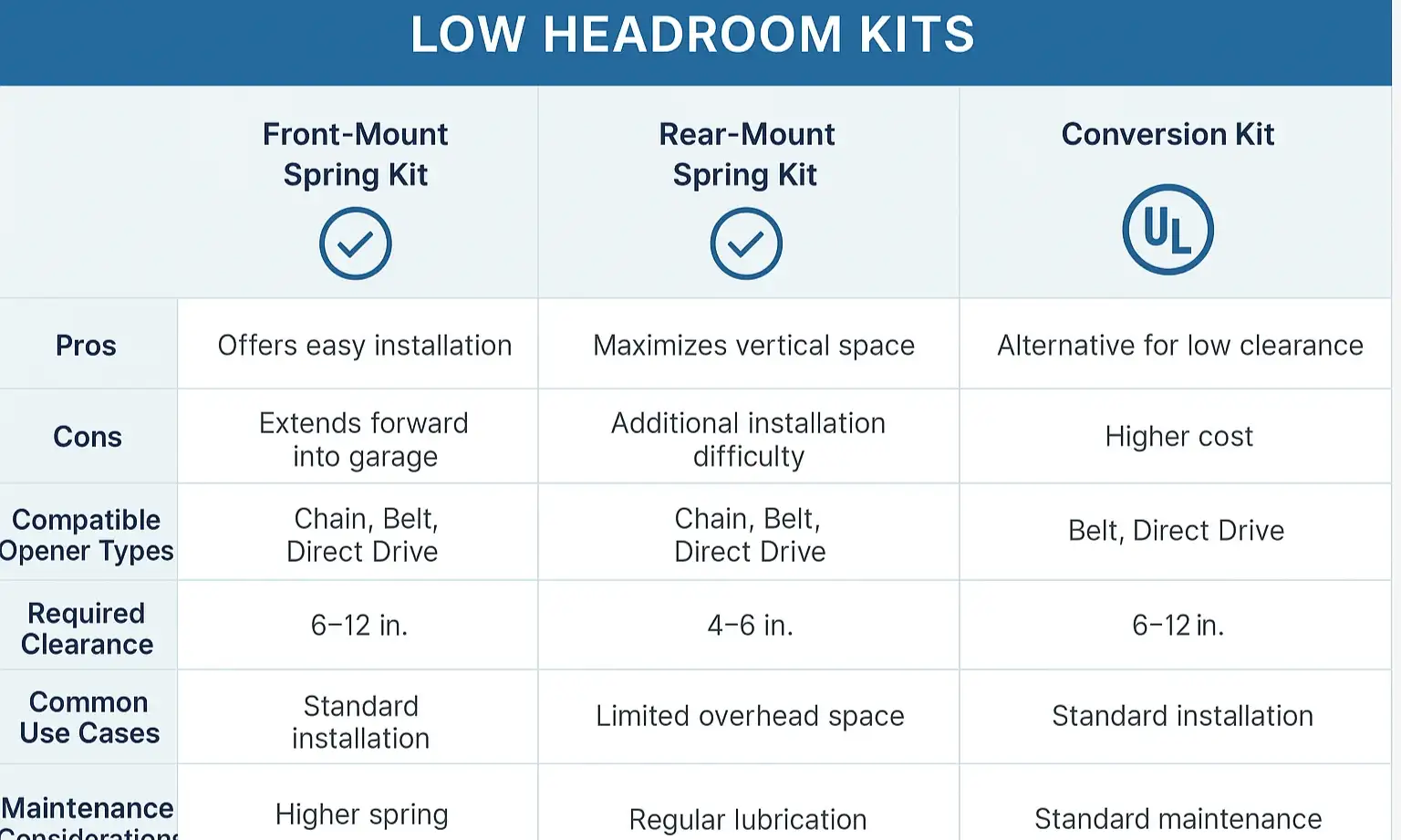
A low-headroom system isn’t just about the tracks; it’s also about managing the torsion spring, which is the muscle that lifts your heavy door. Since there’s no room above the door opening, the spring has to go somewhere else. This leads to two primary types of low-headroom kits.
Front-Mount vs. Rear-Mount Systems
The main difference comes down to spring placement:
Bringing It Home: Installation, Costs, and Openers
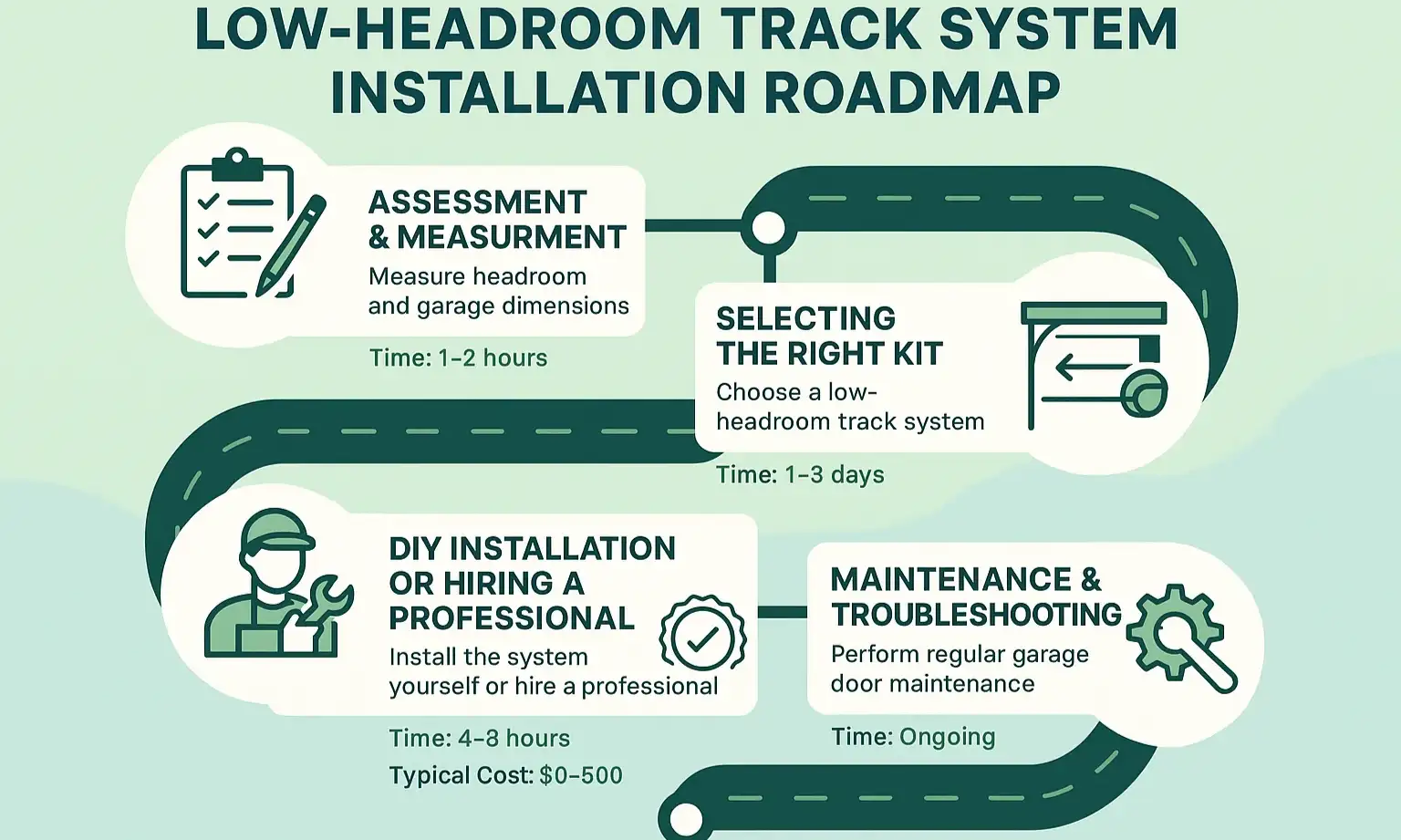
While many homeowners are interested in DIY solutions, installing a low-headroom track system is a job best left to professionals. The spring systems are under extreme tension and can be incredibly dangerous. The precision required for proper garage door track alignment is also much higher than with standard tracks.
Installation & Cost Overview
A Note on Garage Door Openers
Standard ceiling-mounted openers that use a rail, chain, or belt can still work, but they present a challenge. The motor unit sits right in the path where a rear-mount torsion spring needs to go.
The ideal partner for a low-headroom system, especially a rear-mount one, is a jackshaft opener. Also known as a wall-mount opener, it attaches to the wall beside your garage door and connects directly to the torsion bar. This design frees up the entire ceiling, making it the perfect, clutter-free solution for tight spaces. If you’re wondering who installs garage door openers of this type, a professional garage door technician is your best bet.
Keeping It Smooth: Common Low-Headroom Track Problems
When installed correctly, low-headroom systems are very reliable. However, due to their complexity, they can be sensitive to misalignment. Some issues to watch for include:
Many of these are minor issues that a routine garage door tune up can prevent or resolve.
Frequently Asked Questions
How much headroom do I actually need for a low-headroom track?
With a rear-mount torsion spring system, you can often get by with as little as 4-5 inches of headroom. Front-mount systems typically require around 9 inches. A professional can give you an exact number based on your specific door.
Can I use any garage door with a low-headroom kit?
Yes, most standard sectional garage doors can be fitted with a low-headroom conversion kit. The key is to ensure the spring system is correctly calibrated for the door’s weight.
Do low-headroom systems cost more?
Yes, you can expect to pay more for the specialized hardware and the more complex installation compared to a standard track system. However, this cost makes a previously unusable garage fully functional.
Are these systems less reliable than standard tracks?
Not at all. When installed and balanced by a qualified professional, a low-headroom system is just as safe and reliable as a standard one. Regular maintenance is key to its longevity.
Your Next Step
A low ceiling doesn’t have to be a deal-breaker. With the right low-headroom track system, you can have a safe, functional, and automatic garage door in even the tightest of spaces. Understanding your options is the first step toward finding the perfect solution for your home.
Whether you’re exploring the best garage door systems for a new build or need an expert for a delicate garage door torsion spring repair in Connecticut, having the right knowledge empowers you to make the best decision for your home.
Whether you’re exploring the best garage door systems for a new build or need an expert for a delicate garage door torsion spring repair in Connecticut, having the right knowledge empowers you to make the best decision for your home.
Frequently Asked Questions
How much headroom do I actually need for a low-headroom track?
With a rear-mount torsion spring system, you can often get by with as little as 4-5 inches of headroom. Front-mount systems typically require around 9 inches. A professional can give you an exact number based on your specific door.
Can I use any garage door with a low-headroom kit?
Yes, most standard sectional garage doors can be fitted with a low-headroom conversion kit. The key is to ensure the spring system is correctly calibrated for the door's weight.
Do low-headroom systems cost more?
Yes, you can expect to pay more for the specialized hardware and the more complex installation compared to a standard track system. However, this cost makes a previously unusable garage fully functional.
Are these systems less reliable than standard tracks?
Not at all. When installed and balanced by a qualified professional, a low-headroom system is just as safe and reliable as a standard one. Regular maintenance is key to its longevity.