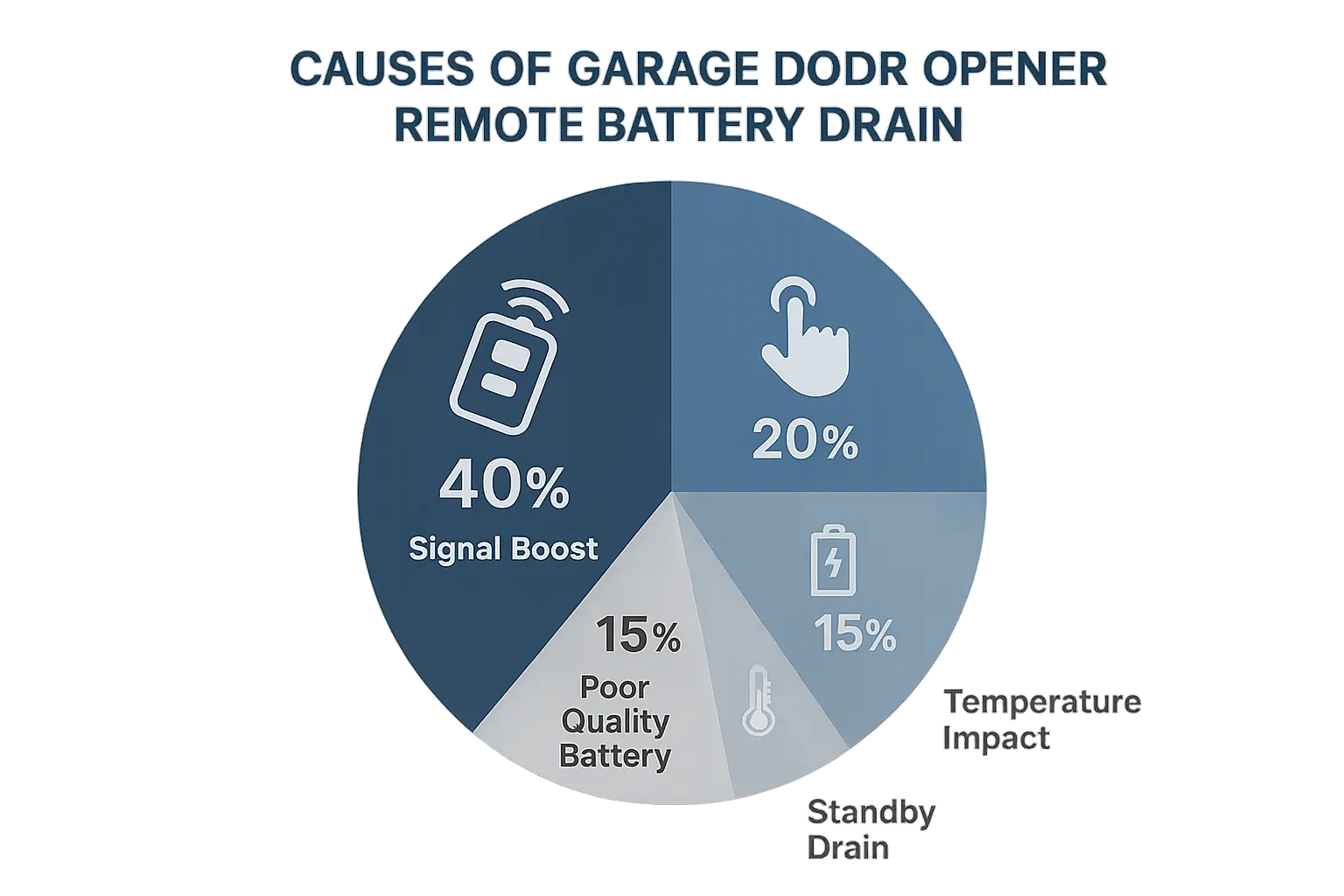
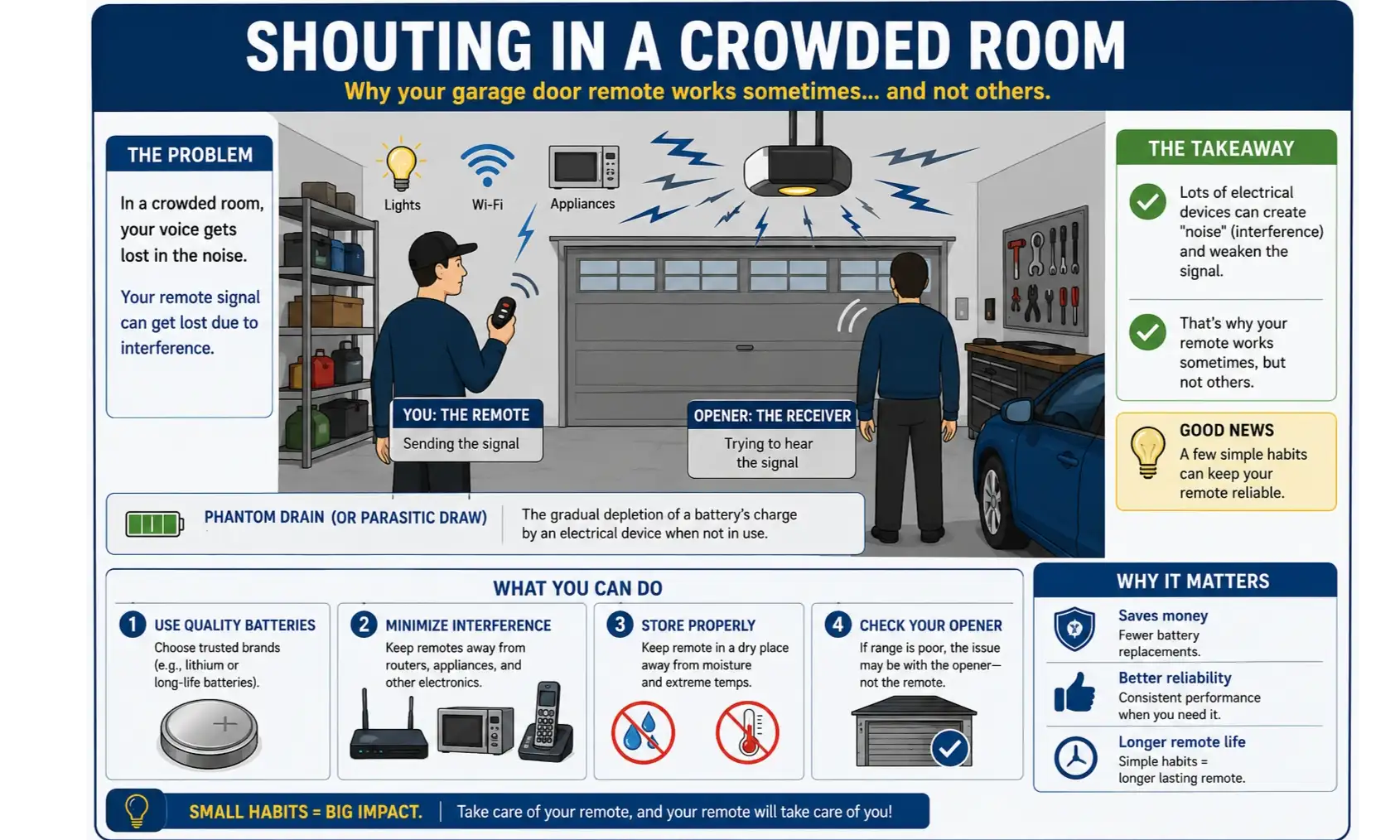
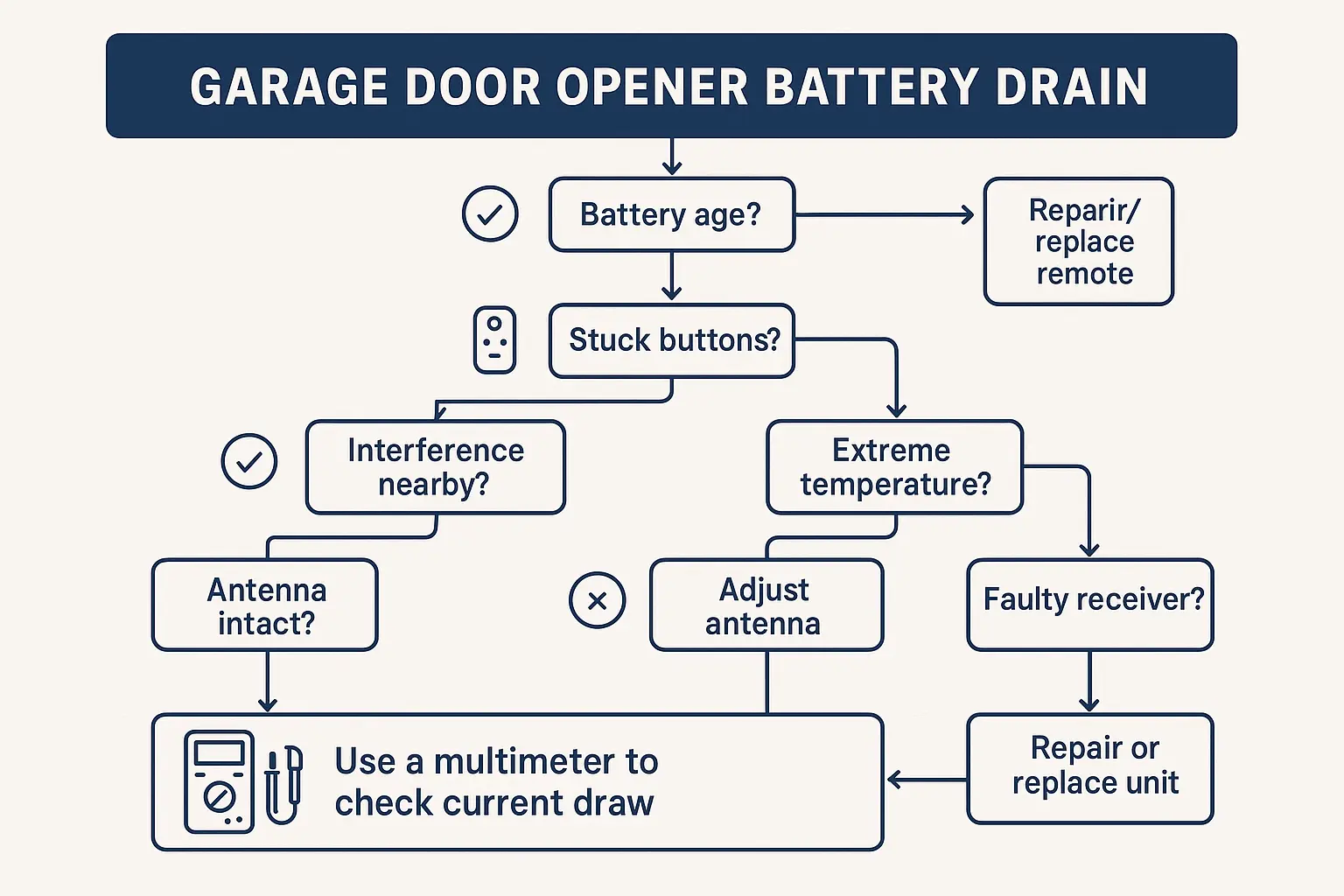
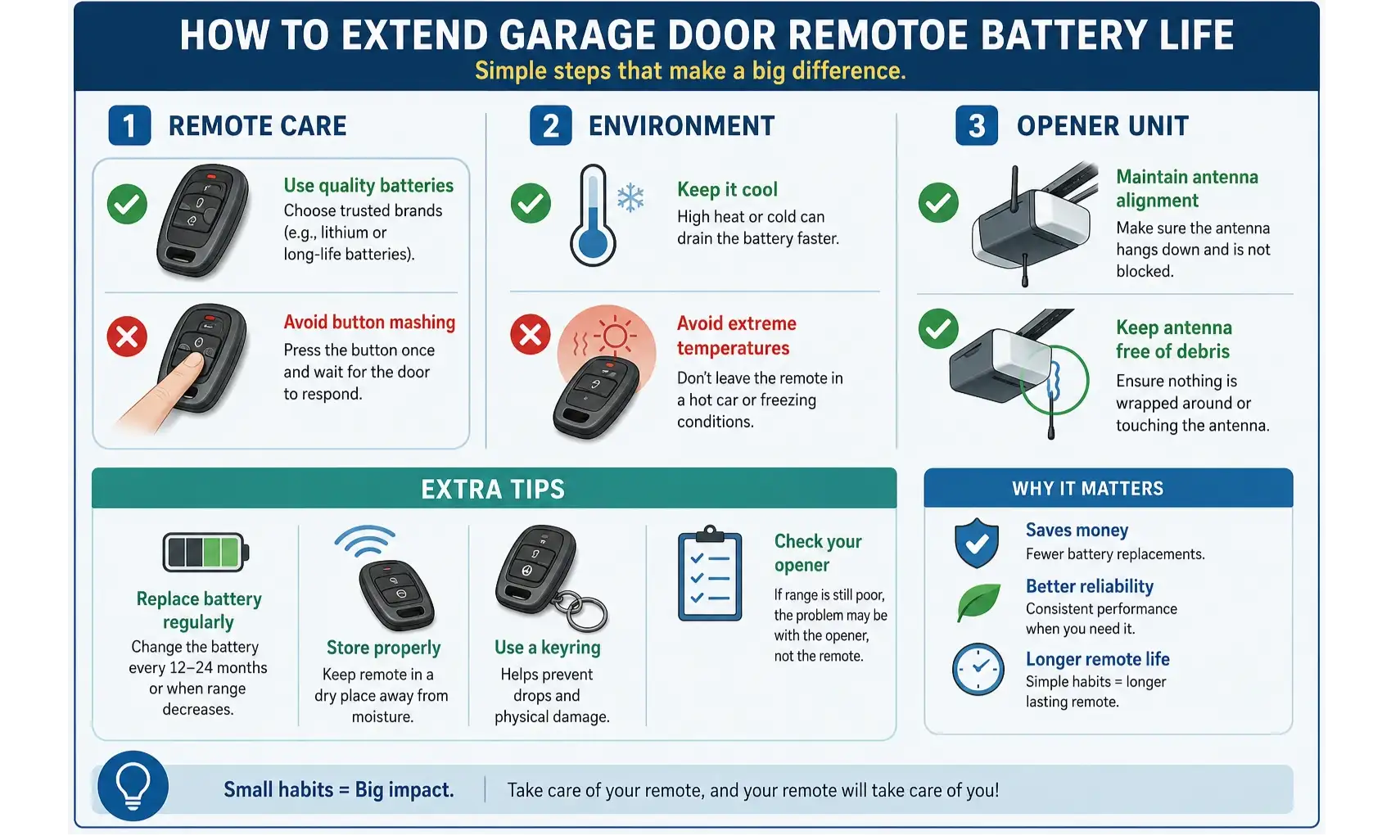
So, what causes your remote to “shout” or otherwise waste energy? The problem rarely stems from a single source. It’s usually a combination of factors related to the remote, the environment, and the opener unit itself.
Culprit #1: The Remote Itself (The Usual Suspects)
While not always the primary villain, the remote can have issues that contribute to a short battery life.
• Stuck Buttons: A button that is even slightly depressed can cause the remote to transmit continuously, draining a new battery in a day or two. This can happen if the remote is jostled in a bag or the internal components wear out.
• Low-Quality Batteries: Not all batteries are created equal. Bargain-bin batteries often have a lower capacity and can’t deliver consistent power, leading to a much shorter lifespan. Always opt for reputable brands. If you’re unsure which garage door remote battery to use, check your opener’s manual.
• Internal Faults: Over time, the internal contacts can corrode or wear out, leading to shorts or inefficient power use.
Culprit #2: The Environment (The ‘Noise’ in the Room)
Your garage isn’t a vacuum. It’s filled with invisible forces that can disrupt the signal between your remote and opener.
• Radio Frequency (RF) Interference: This is the biggest environmental factor. Many modern electronics emit radio frequencies that can “jam” the signal. Common sources include LED light bulbs, cordless phones, wireless routers, and even some appliances. When this interference is present, your remote has to work much harder to send a clear signal.
• Extreme Temperatures: Batteries are chemical devices, and their performance is affected by temperature. Extreme cold, a common source of winter garage door problems, can significantly reduce a battery’s effective capacity.
Culprit #3: The Opener Unit (The ‘Hard of Hearing’ Listener)
This is the most overlooked cause of phantom drain. A problem with the main opener’s receiver can force every remote in your home to overcompensate.
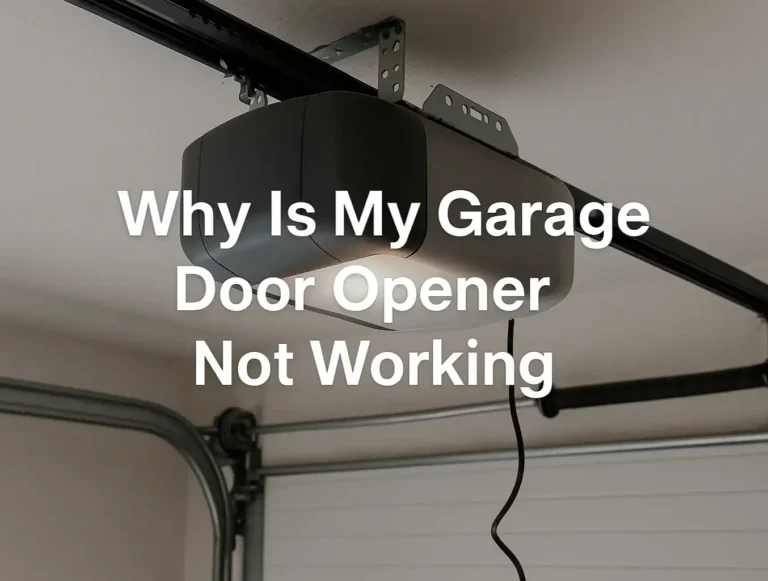
• A Weak or Obstructed Antenna: The small antenna wire dangling from your opener unit is its “ear.” If this wire is damaged, coiled up, or blocked by metal objects, its ability to receive the signal is drastically reduced.
• Failing Receiver: Like any electronic component, the receiver board in the opener unit can degrade over time. As it weakens, it requires a stronger signal to register, putting more strain on your remote’s battery. This is one of the more frustrating garage door opener antenna problems because it’s not immediately obvious.