That High-Pitched Squeak: A Homeowner’s Guide to Silencing Garage Door Pulleys


Published: Jun 11, 2026 | Updated: Jul 28, 2026

That sound. It’s the high-pitched squeal that cuts through the morning quiet, announcing your departure to the entire neighborhood. Or it’s the grating screech that welcomes you home, making you wince every time. A noisy garage door isn’t just an annoyance; it’s a communication. Your door is trying to tell you something is wrong, and one of the most common culprits is a tiny, overlooked part: the pulley.

Many homeowners grab the nearest can of spray and hope for the best, but this “spray and pray” method often misses the root cause. The secret isn’t just what you do, but why. By learning to diagnose the specific sound your door is making, you can move from a temporary fix to a lasting solution. This guide will teach you how to listen to your garage door, pinpoint the problem, and finally bring peace and quiet back to your home.

If reducing noise is a priority, you may also want to explore the quietest garage door opener options for smooth operation and learn what contributes to a quieter garage door system overall.
Before You Grab the Lube: The Secret to Finding the Real Problem


The most common mistake in garage door maintenance is treating the symptom without understanding the disease. A squeak is a symptom, but the cause could be anything from simple friction to a bearing on the verge of failure. To find the real problem, you need to become a garage door detective.

Safety First: What You MUST Know

Before you do anything, it’s crucial to understand the forces at play. Your garage door’s springs are under extreme tension to lift a door that weighs hundreds of pounds. This tension is transferred through the cables and pulleys.
Warning: Never attempt to adjust or remove high-tension cables or springs yourself unless you are professionally trained. A mistake can cause serious injury. If you have any doubt about the safety of a procedure, it’s always best to consult a professional. For a deeper understanding of the risks, it’s worth knowing what a safe garage door spring removal process entails.

The “Listen & Look” Test: Become a Garage Door Whisperer

To isolate the noise, you need to hear the door operate without the sound of the motor. Here’s how you perform a simple diagnostic test:

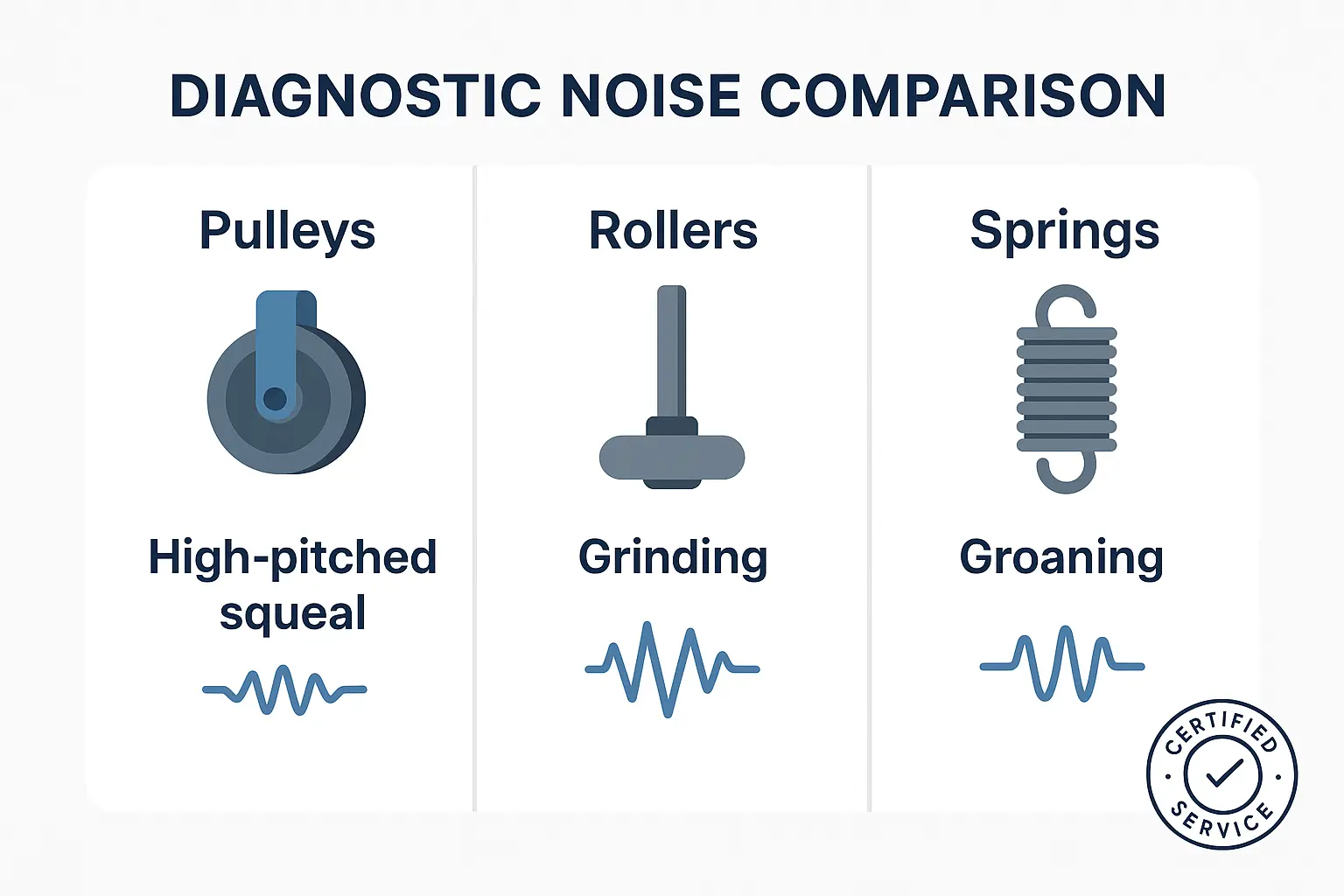
The Noise Diagnostic Chart: Is it the Pulleys, Rollers, or Springs?


A diagnostic chart showing three common garage door noises—squeaking pulleys, grinding rollers, and groaning springs—with icons and descriptions to help homeowners identify the source of the problem.
Different parts make different noises when they need attention. Think of it as learning your door’s unique language. Our comprehensive garage door noise troubleshooting starts with identifying the sound.

Solving the Pulley Problem: Lubricate, Adjust, or Replace?


A flowchart guiding the user through the decision process for garage door pulley maintenance. It starts with "Identify Squeak," leading to "Listen Test." Based on the noise type, it branches to "Lubricate Axle," "Check for Wobble," and finally "Replace Pulley" if needed.
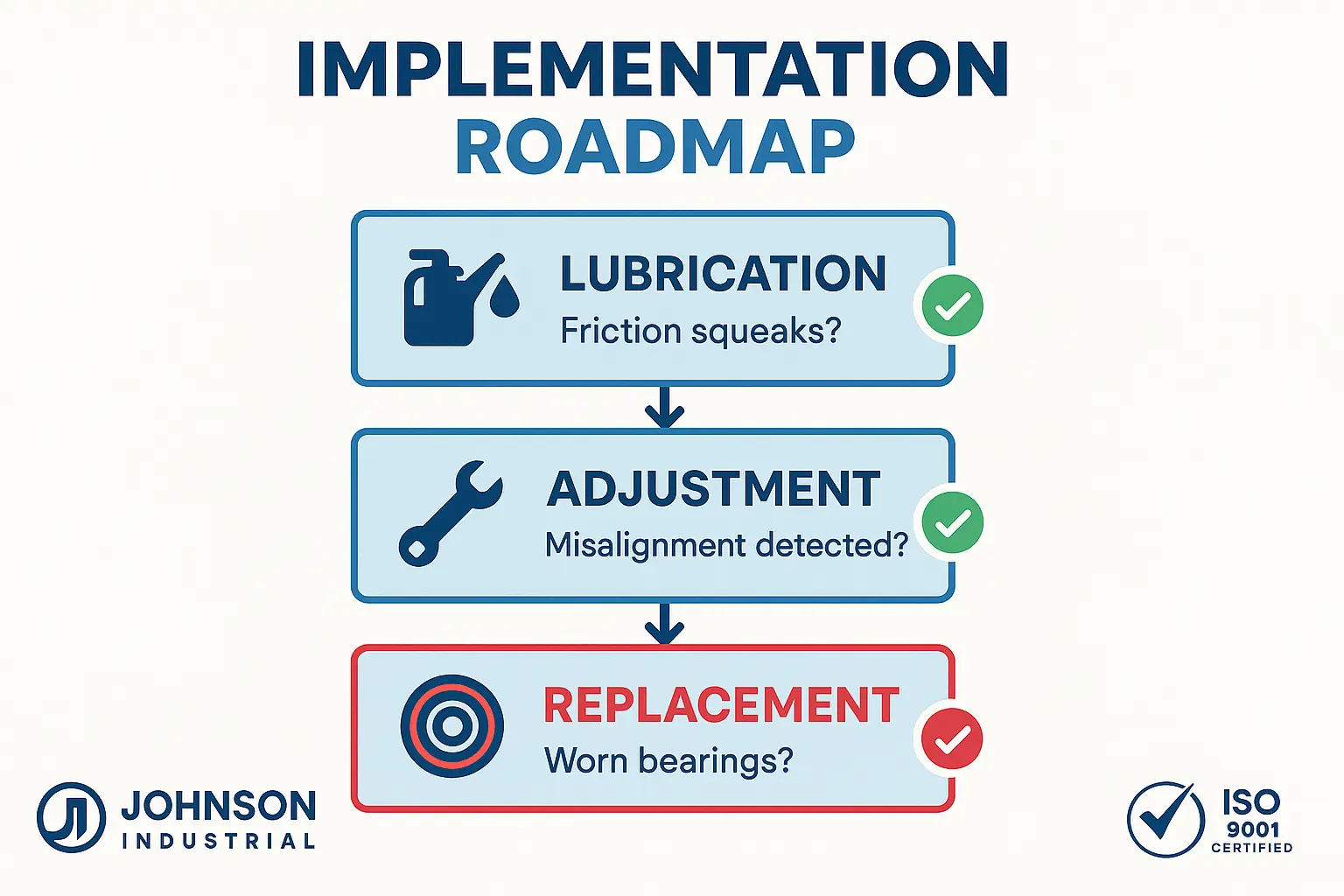
Once you’ve confirmed the high-pitched squeak is coming from your pulleys, the next step is to determine the right course of action. It’s not always about adding more lubricant; it’s about applying the correct solution.
Following a regular garage door maintenance checklist can help identify pulley wear and prevent recurring noise issues before they become more serious.

Scenario A: The Simple Squeak (Time for a Tune-Up

If the pulley appears to be spinning smoothly without any wobble, the squeak is likely caused by simple friction on the axle.

The “WD-40” Misconception: The Most Common DIY Mistake

Here’s the “aha moment” that separates DIY novices from pros. Many people reach for a can of WD-40 to fix any squeak, but for garage door parts, it can do more harm than good.
WD-40 is a solvent and a degreaser, not a long-term lubricant.: It can clean parts effectively, but it also strips away any existing grease. When used on pulleys or rollers, it provides a temporary silence before evaporating, leaving the parts drier than they were before and accelerating wear.

Always choose a lubricant designed for garage doors. White lithium grease provides a thick, durable coating, while silicone spray is excellent at penetrating tight spaces without attracting dust.

Scenario B: The Persistent Squeal (A Sign of Worn Bearings)

If lubrication doesn’t stop the noise, or if the squeal sounds more like a metallic screech, you’re likely dealing with a worn-out bearing inside the pulley. Lubricant can’t fix a failing mechanical part.

The “Wobble Test”: Your Go-To Diagnostic
With the garage door closed and the opener disengaged, gently try to wiggle one of the bottom pulleys.

FAQ: Your Garage Door Pulley Questions, Answered


How long do garage door pulleys last?

High-quality pulleys can last 10-15 years with proper care. Since pulleys work closely with the springs to support and balance the door, wear in one component can affect the performance of the entire system. Learn more about the warning signs of worn hardware and when to consider garage door spring repair.

What kind of lubricant is best for garage door pulleys?

Stick to white lithium grease or a silicone spray designed specifically for garage doors. Avoid WD-40 and heavy greases that can attract dirt and gum up the works.

Can a bad pulley cause the garage door chain to go off track?

Indirectly, yes. A failing pulley puts extra strain on the entire system, including the opener. This added resistance can contribute to issues like having the garage door off chain, as the motor works harder to overcome the friction. Since worn pulleys are often part of broader garage door system problems, it helps to understand other common issues that can develop over time. Learn more in our guide to the most common garage door repairs and how to avoid them.

Is replacing a garage door pulley a DIY job?

Due to the extreme tension on the attached cables, we strongly advise against DIY pulley replacement. It is one of the more dangerous garage door repairs. A professional technician has the specialized tools and training to do the job safely.

What happens if I ignore a squeaky pulley?

Ignoring a worn pulley can lead to serious problems. The pulley can eventually seize, causing the lift cable to fray and snap. A broken cable can cause the door to fall suddenly and will render it inoperable. Regular inspections and preventive maintenance can help avoid these costly repairs.

From Squeaky Annoyance to Smooth Operation


That irritating squeak is your garage door’s way of asking for help. By taking a diagnostic-first approach, you can move beyond temporary fixes and address the true source of the problem. You now know how to perform the “Listen & Look” test, differentiate between the sounds of various parts, and determine if your pulleys need a simple tune-up or a professional replacement.

Empowered with this knowledge, you can perform basic maintenance with confidence and, more importantly, know when a problem requires the skilled hand of a professional. If you’ve diagnosed a worn pulley or feel uncomfortable with any step of the process, our team of experienced technicians is ready to help restore your door to safe, silent operation.

Frequently Asked Questions


How long do garage door pulleys last?

With regular maintenance, high-quality pulleys can last 10-15 years. However, factors like climate, usage frequency, and lack of lubrication can cause them to wear out much sooner.

What kind of lubricant is best for garage door pulleys?

Stick to white lithium grease or a silicone spray designed specifically for garage doors. Avoid WD-40 and heavy greases that can attract dirt and gum up the works.

Can a bad pulley cause the garage door chain to go off track?

Indirectly, yes. A failing pulley puts extra strain on the entire system, including the opener. This added resistance can contribute to issues like having the garage door off chain, as the motor works harder to overcome the friction.

Is replacing a garage door pulley a DIY job?

Due to the extreme tension on the attached cables, we strongly advise against DIY pulley replacement. It is one of the more dangerous garage door repairs. A professional technician has the specialized tools and training to do the job safely.

What happens if I ignore a squeaky pulley?

Ignoring a worn pulley can lead to serious problems. The pulley can eventually seize, causing the lift cable to fray and snap. A broken cable can cause the door to fall suddenly and will render it inoperable.

Contact / Request a Call