Most of us use garage doors daily but rarely think about what’s happening behind the scenes. That smooth motion depends on a network of springs, rollers, and cables working together to lift and lower the door with balance and control. These parts are built to handle repeated use, but when one starts to wear down, it often puts additional strain on the others.
This guide breaks down key garage door part names, how each piece fits into the bigger picture, and how small changes, like uneven movement or unusual noise, can point to the part that needs attention. Understanding how each part works makes it easier to spot early signs of trouble and prevent more expensive repairs in the future.
Understanding Garage Door Parts: Names, Functions, and Replacement Tips
Published: May 30, 2025 | Updated: Jul 28, 2026
How Garage Door Parts Work Together
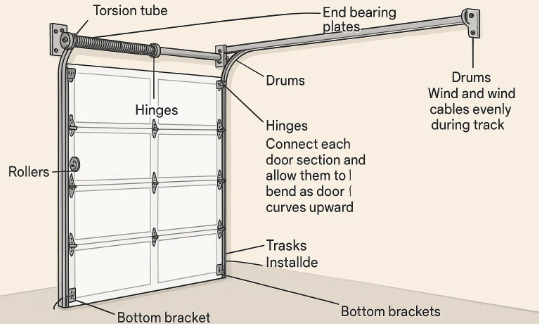
Every garage door relies on a mix of mechanical parts working together to lift, lower, and secure the door. Most of these pieces are visible, and when one starts wearing out, the signs are usually easy to spot. If your door starts shaking, dragging, or making strange noises, one part of the garage door may already be on its way out.
Garage Door Part Names and Their Functions
There’s no need to memorize every bolt and bracket, but knowing the basics helps you understand how your garage door functions and recognize when something isn’t right. Below are the most common garage door part names, each one playing an important role in the door’s operation:
If any of these parts start to fail, you’ll usually hear or feel it when opening the door manually. For a deeper dive into how these parts interact across different garage door models, check out this breakdown on Understanding Garage Door Mechanisms.
What to Know About Garage Door Opener Parts
The opener is the motorized brain of your garage door. It includes a drive gear, trolley, motor, logic board, safety sensors, and a rail system. Each garage door opener part plays a role in how the door moves, stops, and responds.
When something’s off, it can show up in different ways. You might notice a delay after pressing the remote, a jerky start, or the door reversing before it fully closes.
In some cases, a dirty or misaligned sensor is the problem. In others, it could be a failing logic board or stripped gear.
When something’s off, it can show up in different ways. You might notice a delay after pressing the remote, a jerky start, or the door reversing before it fully closes.
In some cases, a dirty or misaligned sensor is the problem. In others, it could be a failing logic board or stripped gear.
When to Repair or Replace Opener Components
You don’t always need a full opener replacement when the system starts acting up. If the motor makes noise but the door doesn’t move, it could be a stripped gear. If the door starts to lift but stops midway, the problem might be with the travel limit or a worn trolley. Replacing a single garage door opener part often resolves the issue without touching the rest of the unit. Issues like these are typically addressed through professional garage door repair and can often be fixed quickly by a qualified technician.
Garage Door Spring Replacement Parts and How to Choose Them
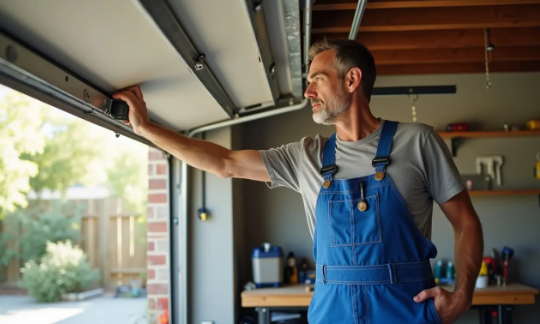
Garage door springs carry more weight than most people realize. They help counterbalance the door, allowing it to lift smoothly without putting too much strain on the opener.
There are two main types: torsion springs and extension springs. Torsion springs are mounted above the door and twist to create tension, offering a more controlled, balanced motion. Extension springs stretch along the sides and expand as the door moves. Over time, either type can wear out, especially in homes where the door is used frequently. When a spring fails, the door may drop suddenly or become too heavy to lift.
There are two main types: torsion springs and extension springs. Torsion springs are mounted above the door and twist to create tension, offering a more controlled, balanced motion. Extension springs stretch along the sides and expand as the door moves. Over time, either type can wear out, especially in homes where the door is used frequently. When a spring fails, the door may drop suddenly or become too heavy to lift.
Signs You Need a Garage Door Spring Replacement Part
When spring breaks, it’s a loud, unmistakable event, and your garage door may not open at all. That’s when a new garage door spring replacement part becomes necessary. Some signs of spring failure are hard to miss. A loud bang in the garage could mean a spring has snapped under tension. Other signs are more gradual: the door may drop quickly, lift unevenly, or only open a few inches before stopping. Even if the door still functions, a weakened spring can put added pressure on the opener and cables, leading to more wear across the system.
Choosing the Right Replacement Springs for Durability
Not all springs are created equal, and quality is important for long-term performance. Some are rated for around 10,000 cycles, while others are built to last 25,000 or more. If your garage door is a part of your daily routine, it’s worth choosing a garage door spring replacement part with a higher cycle rating. The wrong type or size can increase wear on other garage door parts and reduce the overall lifespan of your system. For the right fit and installation, a local garage door company can recommend the best spring based on your door’s weight, design, and usage.
Final Thoughts
Getting familiar with garage door components doesn’t mean you have to handle troubleshooting on your own. This article was created to help you notice early signs of wear, understand how each part of the garage door works, and make better decisions before minor issues turn into major ones. A cracked hinge or a noisy roller might not seem urgent, but these small changes often point to wear developing in other parts of the door.
If you’re planning a repair or simply want a second opinion, 24H Garage Doors offers practical solutions, clear advice, and the experience to keep your door working the way it should. Give us a call whenever you need professional support.
If you’re planning a repair or simply want a second opinion, 24H Garage Doors offers practical solutions, clear advice, and the experience to keep your door working the way it should. Give us a call whenever you need professional support.
Frequently Asked Questions
What could be causing my garage door to wobble or squeak?
Worn rollers, the small wheels that glide along the track, may cause wobbling, squeaking, or rough movement. When one part starts wearing out, the signs like shaking, dragging, or strange noises are usually easy to spot since most of these pieces are visible.
What role do the cables and drums play in my door's movement?
Cables work with the springs to raise and lower the door, and they can fray or stretch over time. The drums are located above the door and wind and unwind the cables evenly during movement.
How can I tell if a garage door part is starting to fail?
If any of these parts start to fail, you will usually hear or feel it when opening the door manually. Small changes like uneven movement or unusual noise can point to the specific part that needs attention.
What are the main components inside a garage door opener?
The opener is the motorized brain of your garage door and includes a drive gear, trolley, motor, logic board, safety sensors, and a rail system. Each part plays a role in how the door moves, stops, and responds, so problems can show up as a delay after pressing the remote, a jerky start, or the door reversing.