How to Troubleshoot and Fix a Slipping Garage Door Cable


Published: Jun 16, 2026 | Updated: Jul 28, 2026

You hit the button, and something just isn’t right. One side of your garage door lifts faster than the other, creating a jarring, crooked angle. Or maybe you heard a loud bang, and now a cable is hanging loose, looking like a tangled fishing line. It’s a common problem, but it’s also a clear signal that a critical part of your garage door system is failing—and it’s more dangerous than most people realize.

That crooked door is a symptom, not the core issue. The real problem lies in the complex, high-tension system of cables, drums, and springs that does the heavy lifting. When a cable winds unevenly on its drum, it throws the entire system out of balance. This guide will help you safely diagnose what’s happening, understand why it’s happening, and learn the crucial difference between a simple check-up and a high-risk repair that’s best left to the pros.

The Foundation: Anatomy of the Cable and Drum System


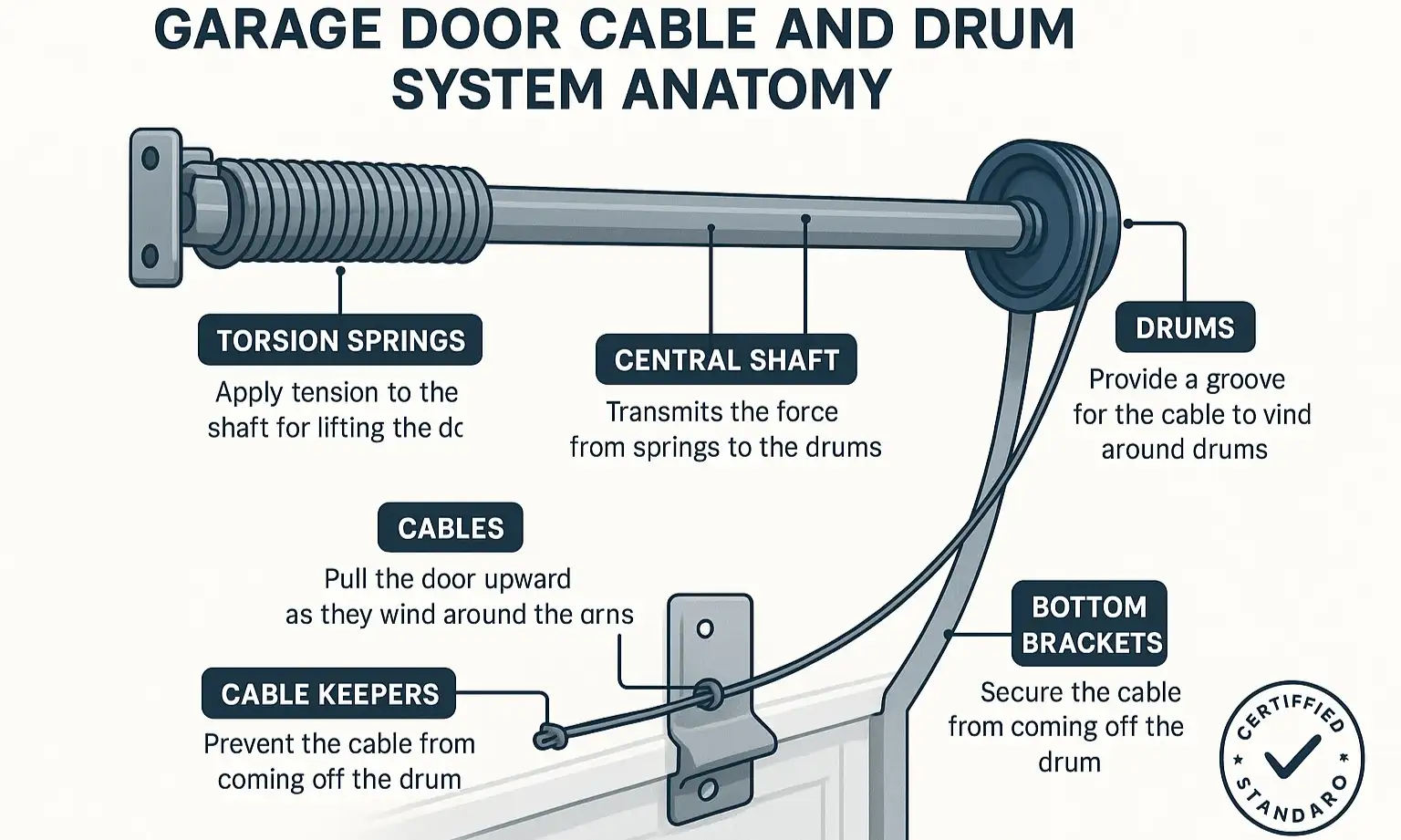
Comprehensive anatomy diagram builds foundational understanding of garage door mechanics, positioning our resource as the trusted expert for safe diagnosis and repair.
Before you can diagnose a problem, it helps to understand how the system is supposed to work. Think of your garage door’s lifting system like a professional fishing reel. To pull in a heavy catch smoothly, the line must be under constant, even tension as it wraps around the spool. If the tension goes slack, the line tangles.

Your garage door works on the same principle:

When you open the door, the torsion spring unwinds, rotating the shaft. This rotation turns the cable drums, which neatly wrap the cables and lift the door evenly on both sides. When even a single part of this system is compromised, the “line” goes slack, and you get uneven winding, overlaps, and a dangerously unbalanced door.

The Diagnosis: A Step-by-Step Safety Inspection Guide


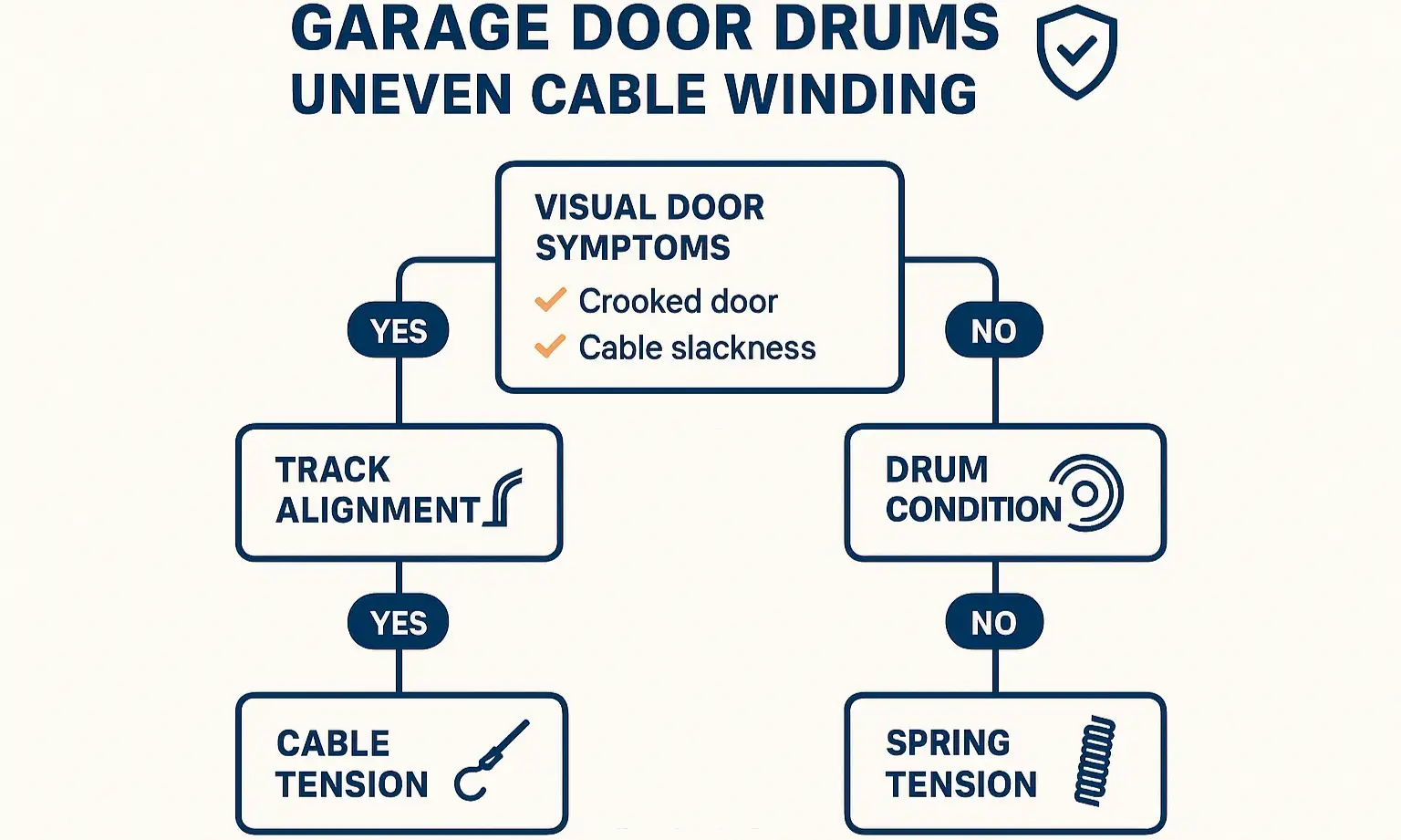
Visual diagnostic flowchart simplifying root cause identification of uneven cable winding helps homeowners and technicians evaluate problems effectively and safely.
Warning: This is a “look, don’t touch” inspection.: The torsion spring system is under extreme tension and can cause severe injury or death if handled improperly. Do not attempt to adjust springs, cables, or brackets without professional training. This visual guide will help you identify the most likely root cause of your issue, so you know exactly what you’re dealing with.

Step 1: Check for Obvious Obstructions

The simplest explanation is often the right one. Look for anything physically blocking the door’s path on one side—a stray tool, a misplaced recycling bin, or debris in the track. This can cause the door to jam and throw a cable off the drum.

Step 2: Inspect the Tracks for Misalignment

Visually inspect the vertical and horizontal metal tracks on both sides of the door. Are they parallel? Do you see any bends, dents, or loose bolts where the track is fastened to the wall? A misaligned track can cause the door’s rollers to bind, creating slack in the cable on one side. Proper garage door alignment is critical for smooth operation.

Step 3: Examine the Cables Themselves

With the door closed and the tension off the cables, look closely at them. Do you see any signs of rust, fraying, or broken strands? A damaged cable can stretch or snag, preventing it from winding correctly. If you spot damage, a professional garage door cable repair is necessary to prevent a sudden failure.

Step 4: Look at the Drums

Check the cable drums at each end of the torsion shaft. Are they cracked or visibly worn down? Over time, the grooves that guide the cable can wear away, allowing the cable to overlap and wind unevenly. Worn-out drums are a common cause of recurring cable problems, and a professional garage door drum replacement is the only proper solution.

Step 5: Assess the Door’s Balance (Safely)

An improperly balanced door is a key indicator of a spring issue. To test it: 1. Close the garage door completely. 2. Pull the red emergency release cord on your opener to disconnect it from the door. 3. Carefully lift the door manually to about halfway up. 4. Let go. A well-balanced door should stay in place. If it slams down or flies up, the spring tension is incorrect. This imbalance is a primary cause of slack cables and must be adjusted by a professional.

The Solution: Safe Repair Guides & 'The Pro-Zone'


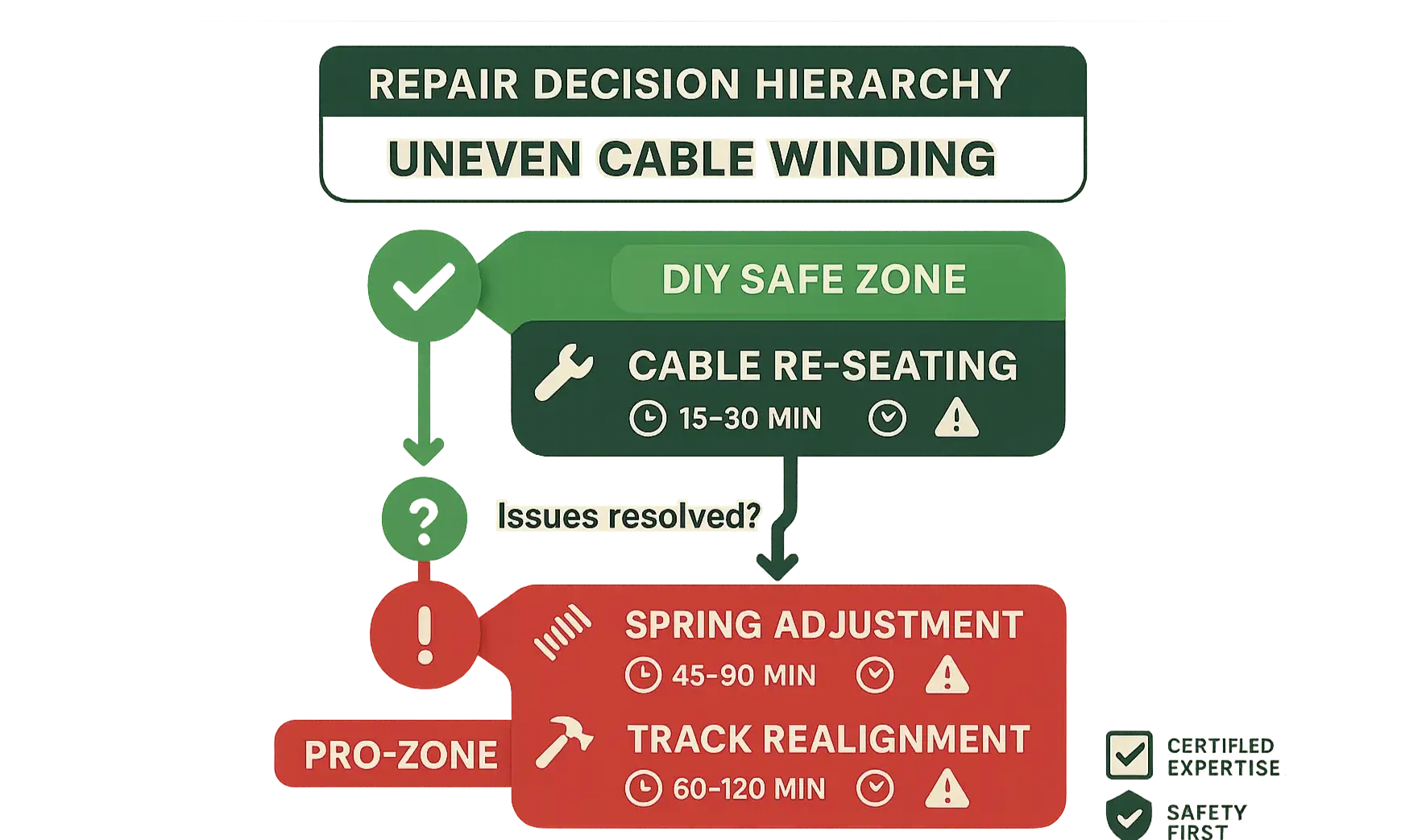
A clear repair roadmap empowers confident decision-making by distinguishing simple safe tasks from high-risk repairs that require professional expertise.
Once you have a better idea of the cause, the next question is: can you fix it yourself? This roadmap helps distinguish between a low-risk task and a job that falls squarely in “The Pro-Zone.”

Simple Fixes You Might Consider (With Extreme Caution)

If a cable has simply slipped off the drum _while the door was fully closed and all spring tension was off_, re-seating it may be possible. However, you must first clamp the door firmly to the track with C-clamps and lock the torsion shaft so it cannot move. Even this simple-sounding task carries risks and is not recommended for beginners.

Welcome to ‘The Pro-Zone’: When to Call a Professional Immediately

For your safety, any of the following issues are non-negotiable and require a trained technician:

The Prevention: A Maintenance Checklist for Long-Term Health


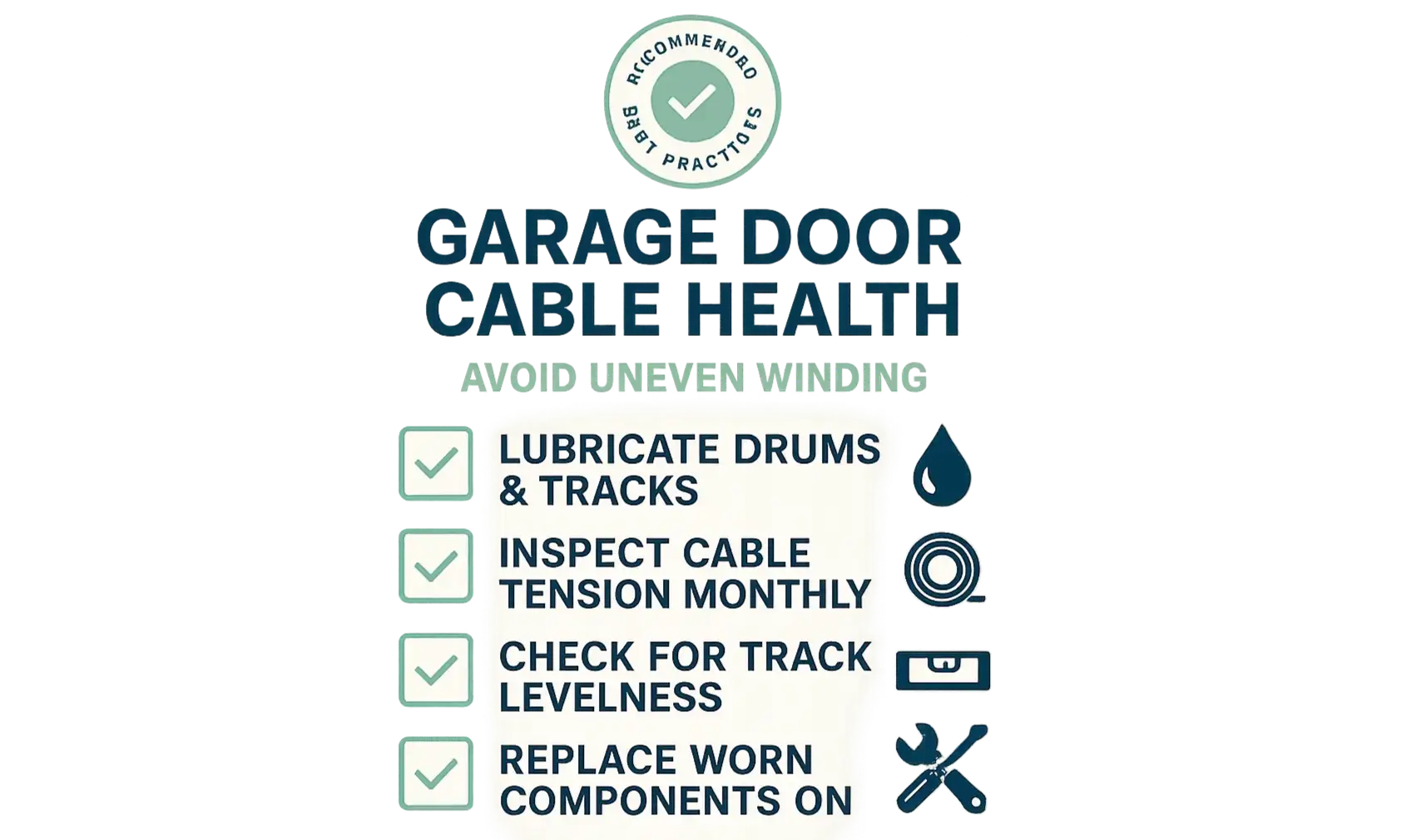
An actionable maintenance checklist supports long-term system health and prevention of uneven cable winding, encouraging proactive care and reducing future service costs.
The best way to fix a problem is to prevent it from happening in the first place. A few minutes of proactive maintenance a few times a year can save you from costly and dangerous failures.

Frequently Asked Questions (FAQ)


What is the most common cause of uneven cable winding?

While several issues can cause it, the most frequent culprits are an obstruction in the door’s path that causes a cable to go slack, or an improperly balanced door due to incorrect spring tension.

Is it safe to fix a garage door cable myself?

In most cases, no. If the cable requires any tension adjustment or if you need to handle the springs, it is extremely dangerous. Unless a cable has simply slipped off while the door was fully closed with no tension, you should always call a professional.

Do garage door cables stretch over time?

Yes, over many years of use, garage door cables can experience minor stretching. However, a sudden change in length is more likely due to fraying or damage. Any visible wear on a cable means it’s time for a replacement.

Why did my garage door cable come off the drum?

This typically happens when the cable momentarily loses tension. The door might have been obstructed, a roller could have gotten stuck in a damaged track, or the spring tension is incorrect, creating slack that allows the cable to unspool.

Your Path to a Safe and Smooth-Running Garage Door


A crooked or jammed garage door is more than an inconvenience; it’s a critical safety warning. By understanding the fundamentals of how your cable and drum system works, you can now spot the tell-tale signs of trouble before they become catastrophic failures.

Remember the golden rules: diagnose before you act, prioritize safety above all else, and recognize when a problem has entered “The Pro-Zone.” Taking a few minutes to inspect your system can provide peace of mind and help you make an informed, safe decision for your home.

Frequently Asked Questions


What causes uneven garage door cable winding?

Uneven cable winding is typically caused by unbalanced spring tension, worn-out cable drums, frayed cables, or the garage door hitting an obstruction on the way down, causing the cables to jump off their tracks and spool incorrectly.

How can I tell if my garage door cables are winding unevenly?

Common signs include a visibly crooked or jammed garage door, cables hanging loose or sagging on one side, and scraping or popping noises coming from the cable drums when the door operates.

Is it safe to fix an uneven garage door cable myself?

No, it is highly recommended to hire a professional. Fixing an uneven cable involves releasing, reseating, and re-tensioning the high-pressure springs. These components are under extreme tension and can cause severe injury if handled incorrectly.

Contact / Request a Call