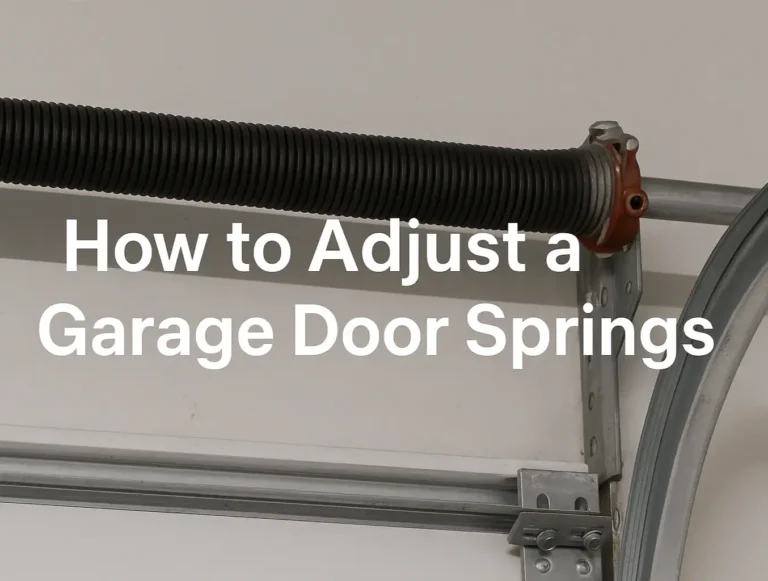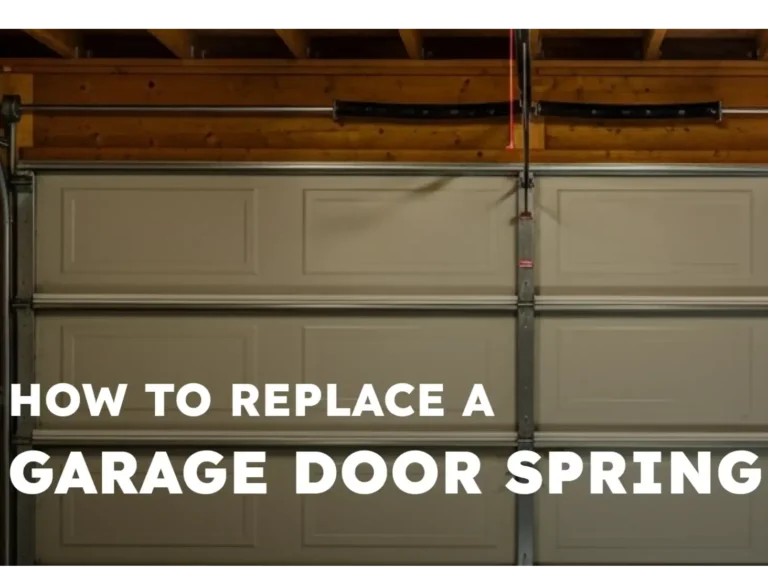
A garage door spring might seem like just another metal coil — until it snaps. For many American homeowners and business owners, a noisy or stuck garage door leads to one tempting thought: “I’ll just fix the spring myself.” Before grabbing a wrench, it’s important to understand one key thing: “why are garage door springs dangerous?” — and how much tension you’re really dealing with.
This guide from 24H Garage Doors explains the dangers of garage door springs, how the springs actually work, and why calling in a pro is more than just a safe bet — it’s the best way to avoid damage or injury.
Why Are Garage Door Springs Dangerous: Think Before DIY
Published: Jan 7, 2026 | Updated: Jul 28, 2026
What Makes Garage Door Springs So Dangerous
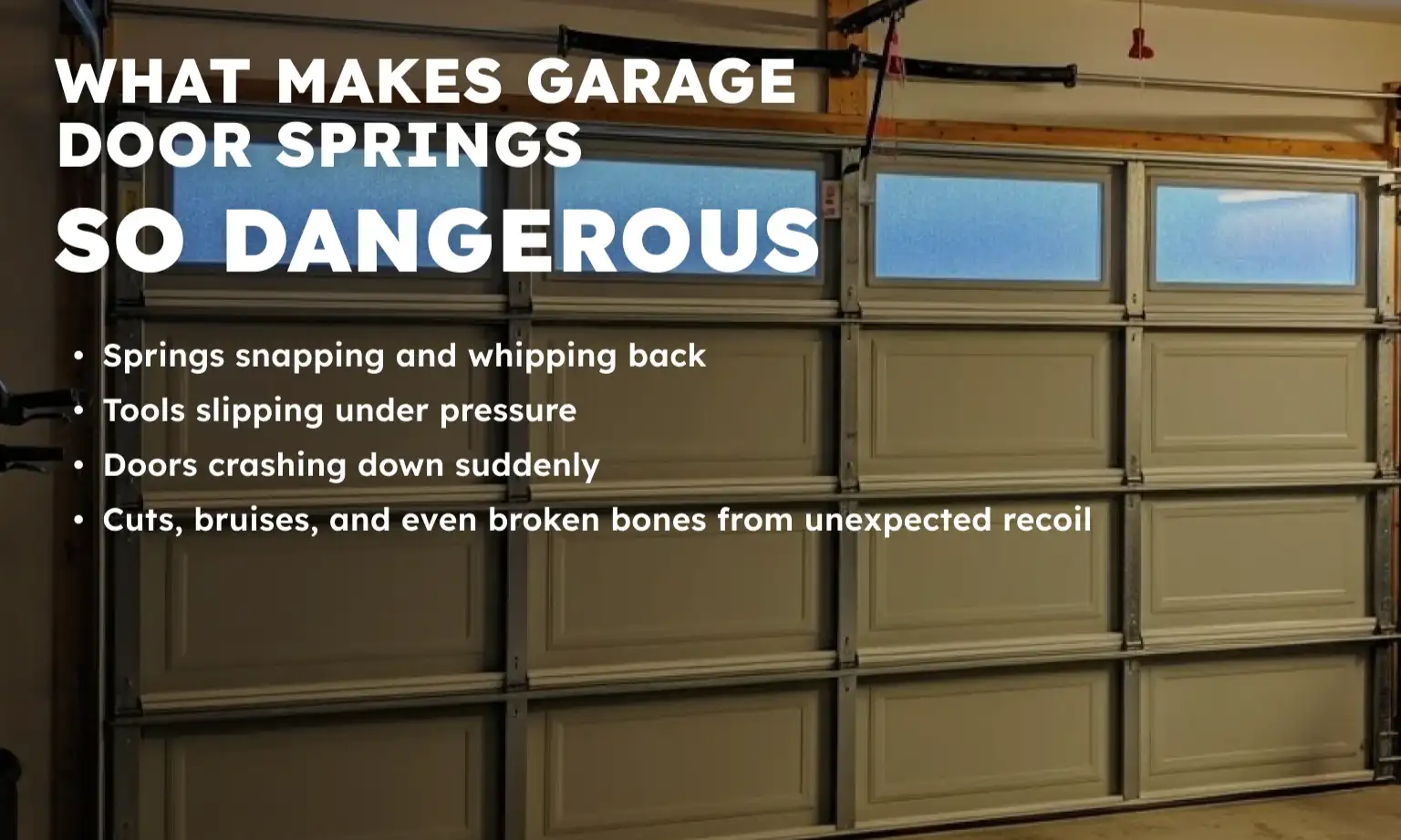
Garage door springs aren’t risky because of what they look like — they’re risky because of what they do. These tightly wound coils carry the heavy lifting load for your garage door. That can mean holding the force of 150 to 400 pounds.
The real garage spring danger lies in the stored energy. When you open or close your door, the spring winds and unwinds, keeping the door balanced. If it breaks or slips under tension, that energy gets released fast — and dangerously.
Common risks include:
Common risks include:
Even experienced DIYers have been caught off guard. Each year, thousands of injuries are tied to the dangers of garage door springs, especially during untrained repairs. What’s more, when you’re working on a tight timeline — like many small business owners are — rushing through the job can make things worse.
What’s Behind All That Tension?
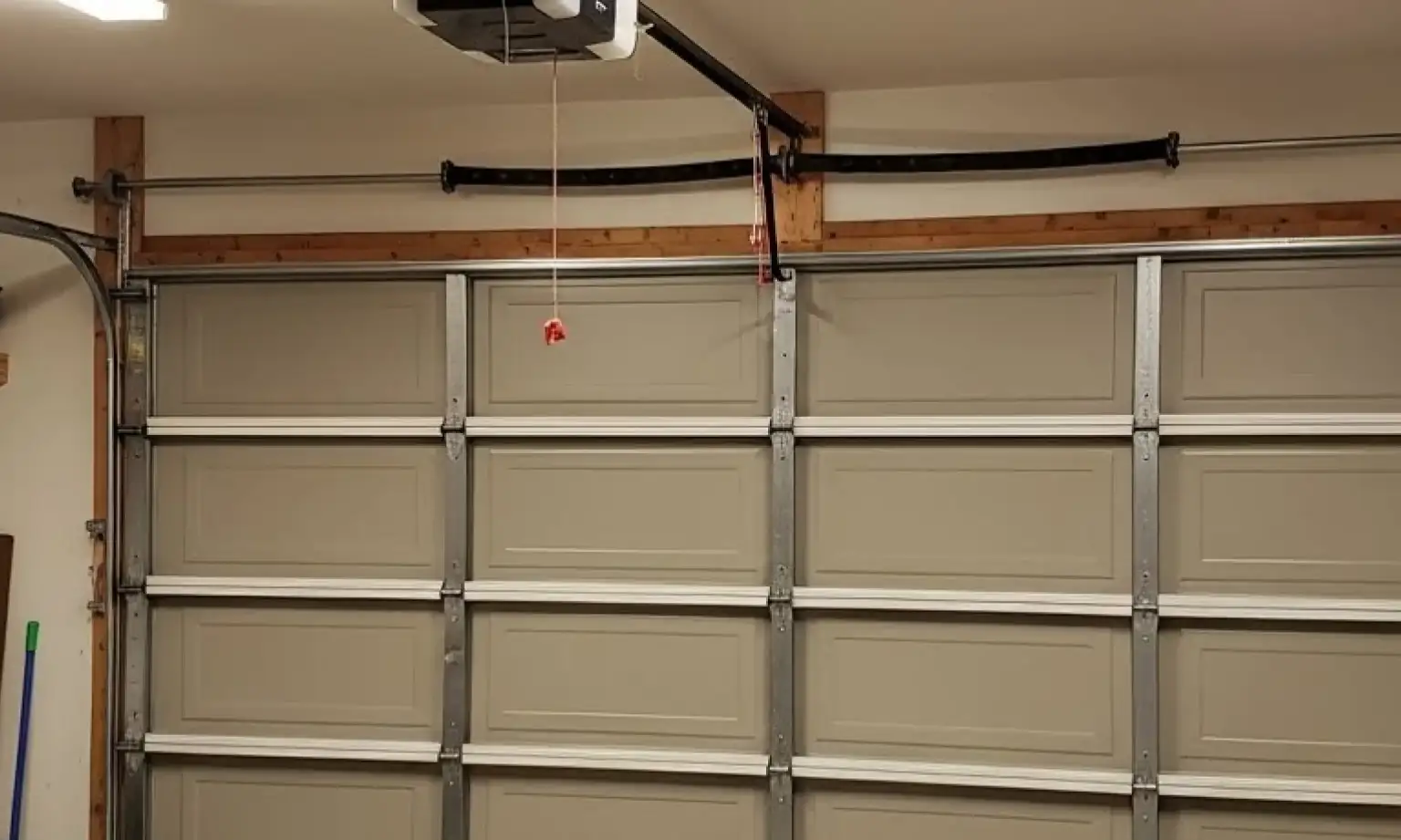
To understand why they’re so hazardous, it helps to know how a garage door spring works.
Most systems use either torsion or extension springs:
Most systems use either torsion or extension springs:
In both cases, the spring is doing the heavy lifting, so you don’t have to. When worn or misaligned, these springs lose balance. That’s when doors become heavy, lopsided, or stuck — and when people start trying risky DIY repairs.
When you’re dealing with parts that are under that much force, even a small mistake can lead to big problems.
When you’re dealing with parts that are under that much force, even a small mistake can lead to big problems.
The Problem with DIY Spring Repair
It’s tempting to think you can watch a video and handle it yourself. The reality is, spring repair is one of the most dangerous types of garage maintenance. Most property owners don’t have the tools or training to safely remove or install a spring under high tension. Here’s what commonly goes wrong:
Aside from personal safety, incorrect repair can lead to more costly damage or total failure. A door that’s out of alignment may stop working altogether or even cause damage to the opener. In the end, trying to save a few dollars could end up costing you much more — in both time and medical bills.
Whether it’s a residential door or a light commercial garage door setup, the risks stay the same. And for spaces that rely on regular garage access — like workshops or auto shops — downtime from a botched spring repair can hurt business.
Whether it’s a residential door or a light commercial garage door setup, the risks stay the same. And for spaces that rely on regular garage access — like workshops or auto shops — downtime from a botched spring repair can hurt business.
Trust 24H Garage Doors for Safe, Expert Spring Repair
You don’t need to risk it. At 24H Garage Doors, we provide safe, efficient, and affordable solutions for both homeowners and businesses. If you’re noticing unbalanced movement, loud noises, or your door won’t stay up, it’s time to call in the pros. Our licensed technicians know how to handle the tension safely and quickly. We’ll evaluate your system, match the correct spring, and restore smooth movement — without the risks.
Explore our full-service garage door spring repair options or just give us a call to schedule your visit. We’re here 24/7 to help you avoid injury, prevent costly damage, and get your garage door back in top shape.
Explore our full-service garage door spring repair options or just give us a call to schedule your visit. We’re here 24/7 to help you avoid injury, prevent costly damage, and get your garage door back in top shape.
Frequently Asked Questions
Why is repairing a garage door spring yourself so risky?
The real danger lies in the stored energy the spring holds while carrying the door's heavy lifting load, which can mean holding the force of 150 to 400 pounds. If it breaks or slips under tension, that energy is released fast and dangerously, and most property owners don't have the tools or training to handle it safely.
What is the difference between torsion and extension springs?
Torsion springs are mounted above the garage door and twist to create torque, while extension springs stretch along the sides and expand to hold tension. In both cases, the spring is doing the heavy lifting so you don't have to.
What kinds of injuries can a spring cause during a DIY repair?
Common risks include springs snapping and whipping back, tools slipping under pressure, and doors crashing down suddenly. These can lead to cuts, bruises, and even broken bones from unexpected recoil.
Besides injury, what else can go wrong with an incorrect spring repair?
Incorrect repair can lead to more costly damage or total failure. A door that's out of alignment may stop working altogether or even cause damage to the opener, so trying to save a few dollars could end up costing you much more in both time and medical bills.