How to Prevent Accidental Garage Door Emergency Release Activation


Published: Jul 1, 2026 | Updated: Jul 28, 2026

Picture this: you’re unloading groceries, and you turn around just in time to see your curious toddler, eyes wide with discovery, reach up and give that enticing red cord dangling from the garage door opener a firm tug. The door suddenly disengages with a loud clunk.

It’s a heart-stopping moment many parents and pet owners can imagine all too well. That red handle is a critical safety feature, but its bright color and dangling nature make it an irresistible target for little hands and paws.

This creates a classic dilemma for homeowners: How do you keep this essential release accessible for a real emergency while preventing it from becoming a household hazard? The answer isn’t about complicated gadgets or compromising your safety; it’s about understanding the cord’s true purpose and making a few simple, smart adjustments.
What is That Red Cord, Anyway? (And Why You Absolutely Need It)


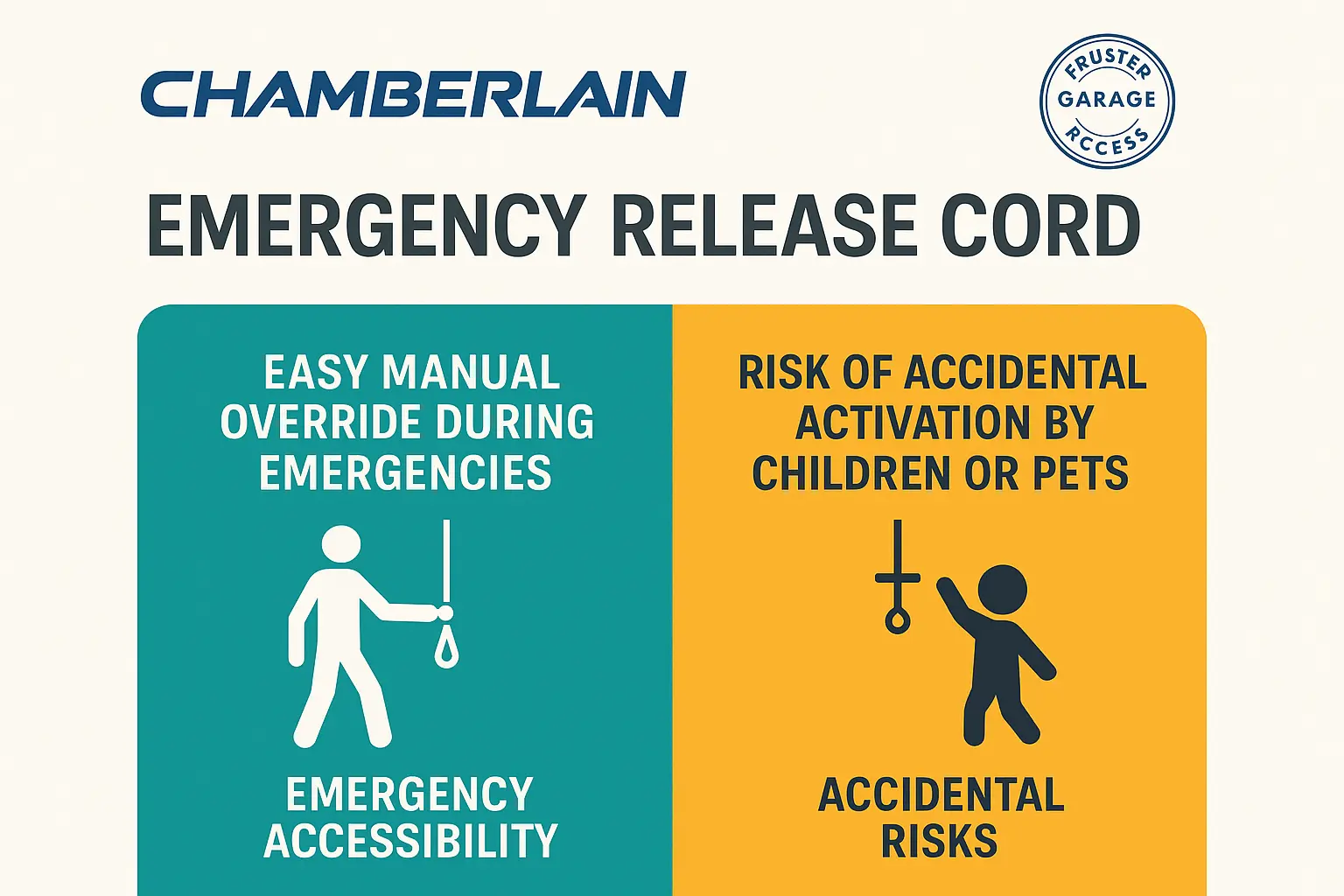
A close-up view of a garage door emergency release cord with a red handle, symbolizing the balance between safety and accessibility.
Before we talk about securing it, let’s have a quick coffee-chat about what that cord actually does. The emergency release cord is your direct connection to the garage door’s manual override. Pulling it disengages the door from the automatic opener’s chain or belt drive.

This feature is not just for convenience; it’s a non-negotiable safety tool designed for situations like:

Knowing how to open your garage door manually is a fundamental skill for any homeowner. The release cord makes that possible.

Shifting from Burglary Prevention to Child Safety


If you’ve searched for ways to secure this cord, you’ve likely found dozens of articles about the “6-second break-in.” This is a technique where a burglar uses a coat hanger to hook the release cord from outside. The common advice? Use a zip tie to fasten the release lever, making it impossible to pull from the outside.
Here’s the problem: that advice is framed entirely around external security, and it completely overlooks internal household safety. For a family with young children or pets, creating a situation where you can’t quickly disengage the door in an emergency is a far greater and more probable risk than a niche burglary attempt.

The real conversation we should be having is about the difference between a security risk and a daily safety hazard. While preventing garage door break-ins is important, it shouldn’t come at the cost of your family’s immediate safety. A garage door emergency can happen at any time, and you need immediate access to that cord.

Common "Fixes" and Better Alternatives for Your Family


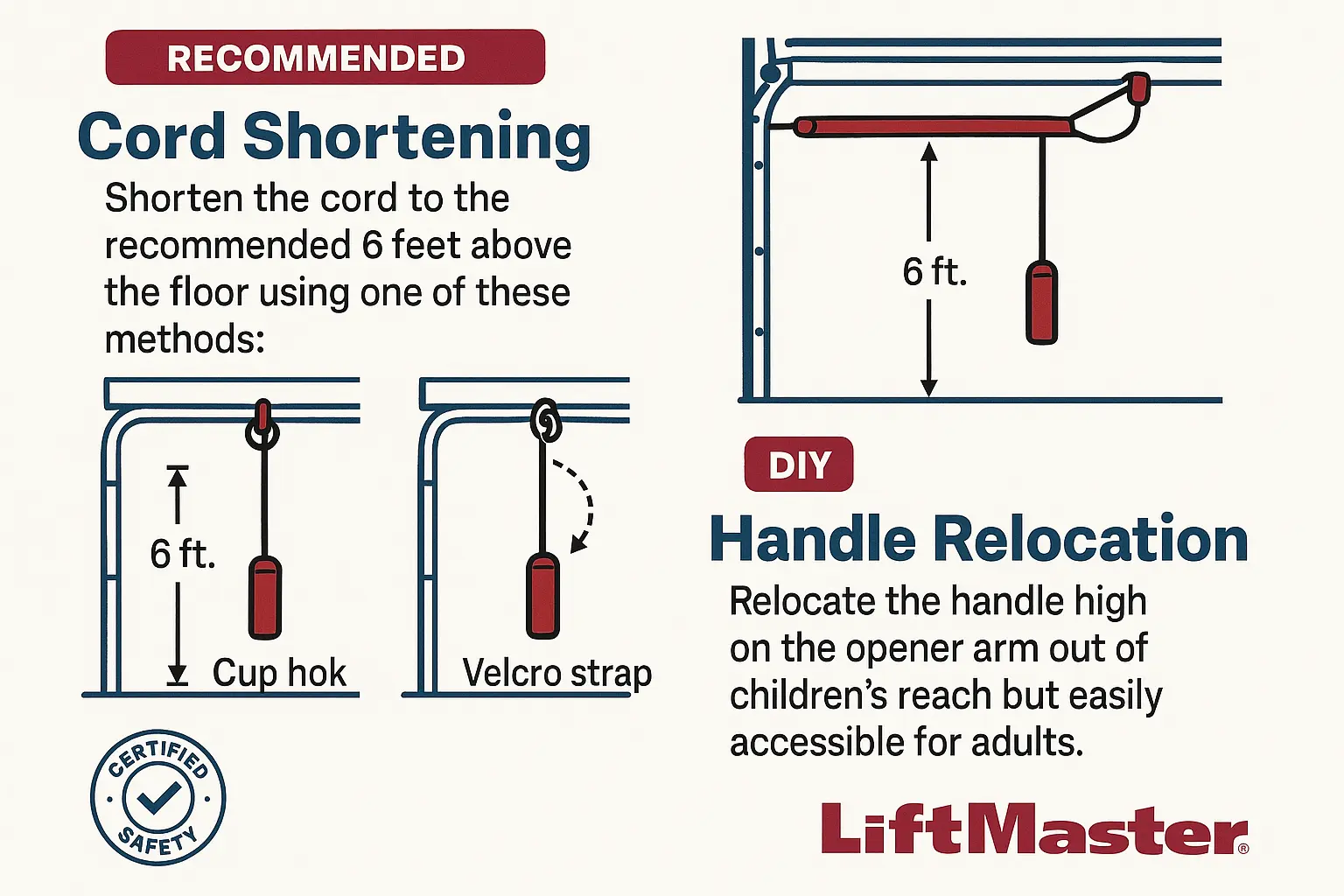
A visual guide showing two safe methods to secure a garage door emergency release cord: shortening the cord to the industry-standard 6-foot height and relocating the handle by looping it over the opener arm.
So, if the popular internet hack is a no-go, what should you do? Let’s walk through the options, starting with the one to avoid and moving to simple, effective solutions.

The Popular (But Potentially Dangerous) Zip Tie Trick

As we mentioned, this involves using a zip tie or wire to secure the release arm to the trolley. While effective at stopping the coat hanger trick, it severely restricts your ability to use the cord in a power outage or fire. Fumbling to cut a zip tie in the dark or with smoke filling the garage is a scenario no one wants to face.
Verdict for families: Avoid this method. The safety trade-off is simply not worth it.

A Safer Approach: Adjusting and Relocating the Cord

The best solutions don’t disable the mechanism; they simply move it out of a child’s reach while keeping it accessible to adults. Here are two expert-approved methods.
Method 1: Shorten the Cord to the Proper Height Most garage door manufacturers and the Door & Access Systems Manufacturers Association (DASMA) recommend that the grip of the emergency release cord hang no more than 6 feet from the floor. This is high enough to be out of reach for most young children but low enough for an adult to easily grab.
1. Untie the Knot: Untie the knot securing the handle to the cord.
2. Measure and Cut: Pull the handle up so it’s 6 feet from the floor.
3. Rethread and Re-tie: Thread the cord back through the handle and tie a secure double knot. Trim any excess cord.
Method 2: Simple DIY Relocation: If your cord is already at the correct height but you want an extra layer of protection, you can easily tuck it away.
1. Loop the Cord: Gently loop the cord and handle over the opener’s trolley arm or support bracket.
2. Use a Cup Hook: For a more secure hold, you can install a small cup hook on the opener motor housing or a nearby beam and hang the handle there. These simple adjustments ensure the cord isn’t a dangling temptation while remaining fully functional for an adult in seconds.

Choosing the Right Solution for Your Home


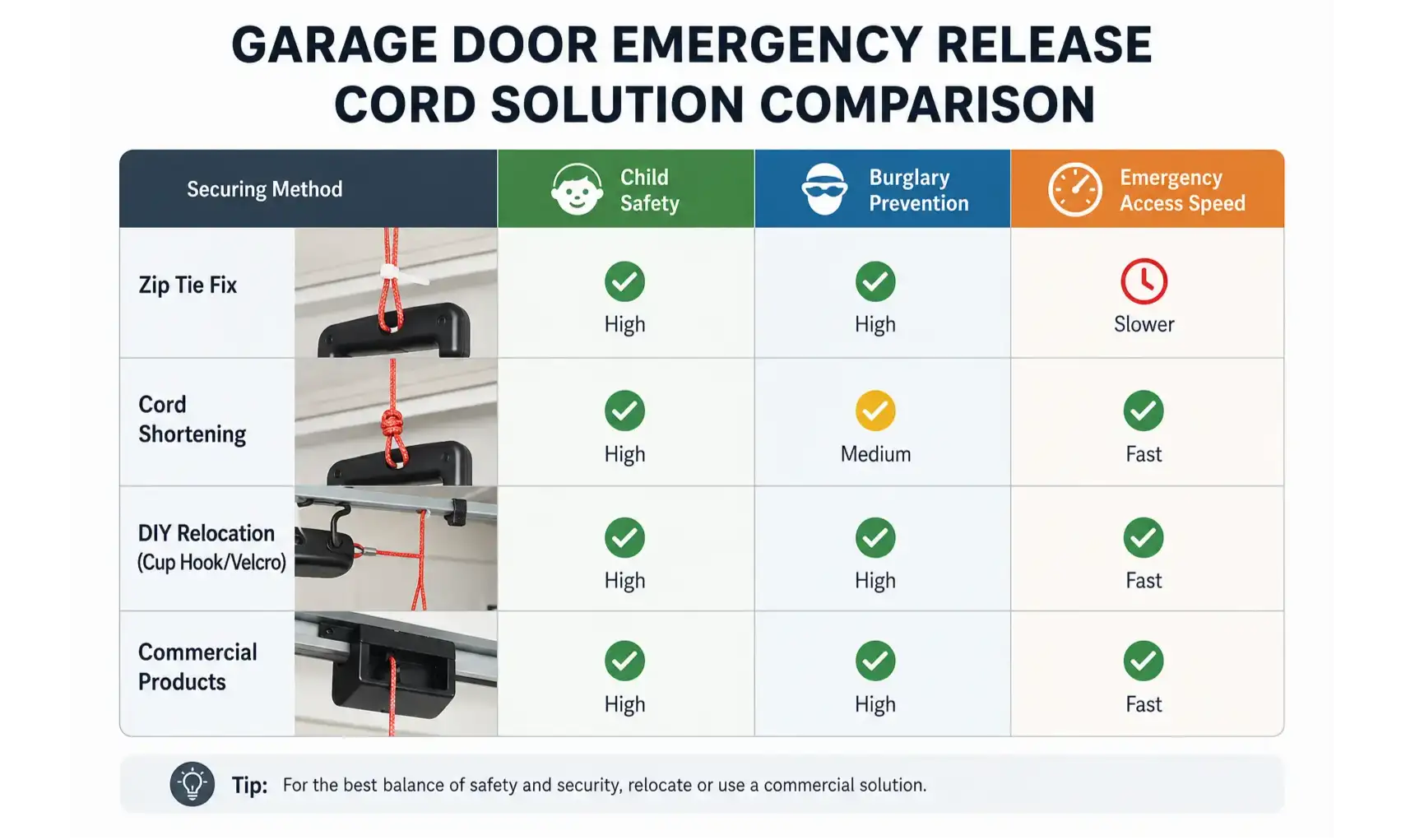
A comparison chart evaluating three methods (Zip Tie, Shortening Cord, Relocating Cord) across three criteria: Child/Pet Safety, External Security, and Emergency Access Speed, clearly showing that shortening or relocating the cord offers the best balance for families.
Still weighing the options? This simple matrix breaks down the pros and cons of each method, helping you decide what’s best for your family’s safety and peace of mind.

As the chart shows, simple adjustments like shortening or relocating the cord provide a high degree of child safety without compromising the critical speed of emergency access.

Your Garage-Wide Safety Checklist


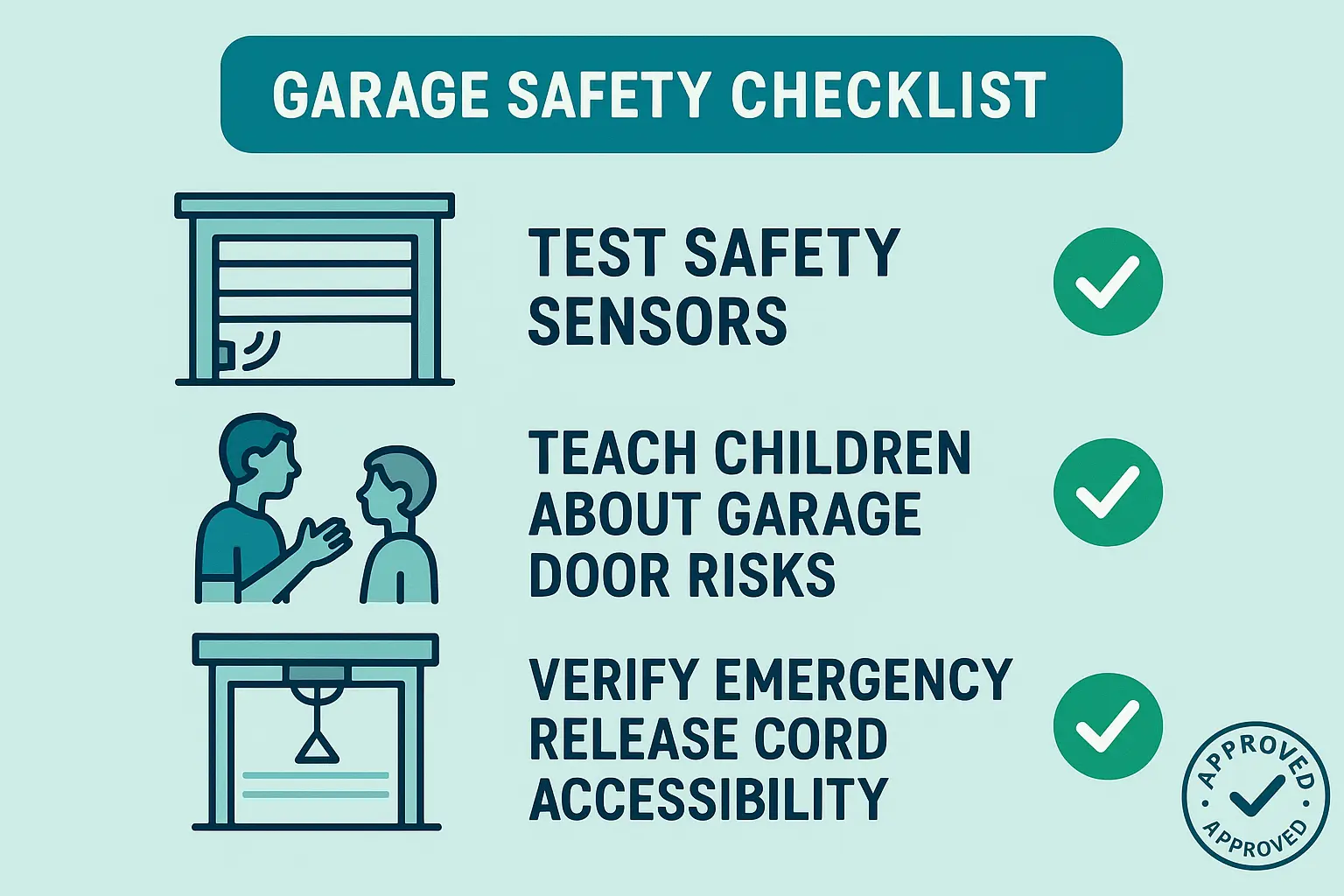
An illustrated checklist with icons for key garage safety actions: testing safety sensors, teaching children about door safety, knowing how to reset the opener, and performing regular maintenance checks.
Securing the release cord is a great first step, but true garage safety is a holistic effort. Use this checklist to make your garage a safer space for everyone.

Frequently Asked Questions (FAQ)


Q: What happens if the cord is pulled while the garage door is open?

This is extremely dangerous. If the door is open, pulling the cord will disengage it from the opener. If the door’s springs are broken or unbalanced, the door can slam shut with immense force, causing serious injury or damage. As a rule, you should only use the emergency release when the garage door is fully closed.

Q: How do I re-engage the garage door after pulling the cord?

Usually, you can re-engage the door by running the opener until the trolley clicks back into place with the attachment point on the door. For detailed instructions, see our step-by-step reset guide.

Q: Is it okay to just remove the red cord completely?

No, absolutely not. Removing the cord eliminates your ability to open the door manually during a power outage or emergency. This is a significant safety risk. The goal is to make it safe, not remove it.

By taking these simple, thoughtful steps, you can solve the red cord conundrum for good—transforming a source of worry into the reliable safety feature it was always meant to be.

Frequently Asked Questions


What happens if the cord is pulled while the garage door is open?

This is extremely dangerous. If the door is open, pulling the cord will disengage it from the opener. If the door's springs are broken or unbalanced, the door can slam shut with immense force, causing serious injury or damage. As a rule, you should only use the emergency release when the garage door is fully closed.

How do I re-engage the garage door after pulling the cord?

Usually, you can re-engage the door by running the opener until the trolley clicks back into place with the attachment point on the door. For detailed instructions, see our step-by-step reset guide.

Is it okay to just remove the red cord completely?

No, absolutely not. Removing the cord eliminates your ability to open the door manually during a power outage or emergency. This is a significant safety risk. The goal is to make it safe, not remove it. By taking these simple, thoughtful steps, you can solve the red cord conundrum for good—transforming a source of worry into the reliable safety feature it was always meant to be.

Contact / Request a Call