You rush out to the garage, late for work, and hit the button on your garage door remote. Nothing happens. Or maybe you hear a faint click, the lights flicker, and then… silence. Later that evening, you realize the breaker tripped, and the chest freezer in the corner has been off all day.
Sound familiar? These frustrating moments often have a hidden cause: an overloaded electrical circuit. Your garage door opener, a powerful motor in disguise, might be sharing its power line with other appliances, creating a recipe for failure and inconvenience.
Understanding the difference between a shared outlet and a dedicated circuit isn’t just for electricians—it’s the key to ensuring your garage door works reliably every single time. Let’s break down the power specs for your garage and turn you into an informed homeowner.
Dedicated vs. Shared Power: What’s Best for Your Garage Door Opener
Published: Apr 16, 2026 | Updated: Jul 28, 2026
The Foundation: The 'One Pipe' Rule for Power-Hungry Appliances
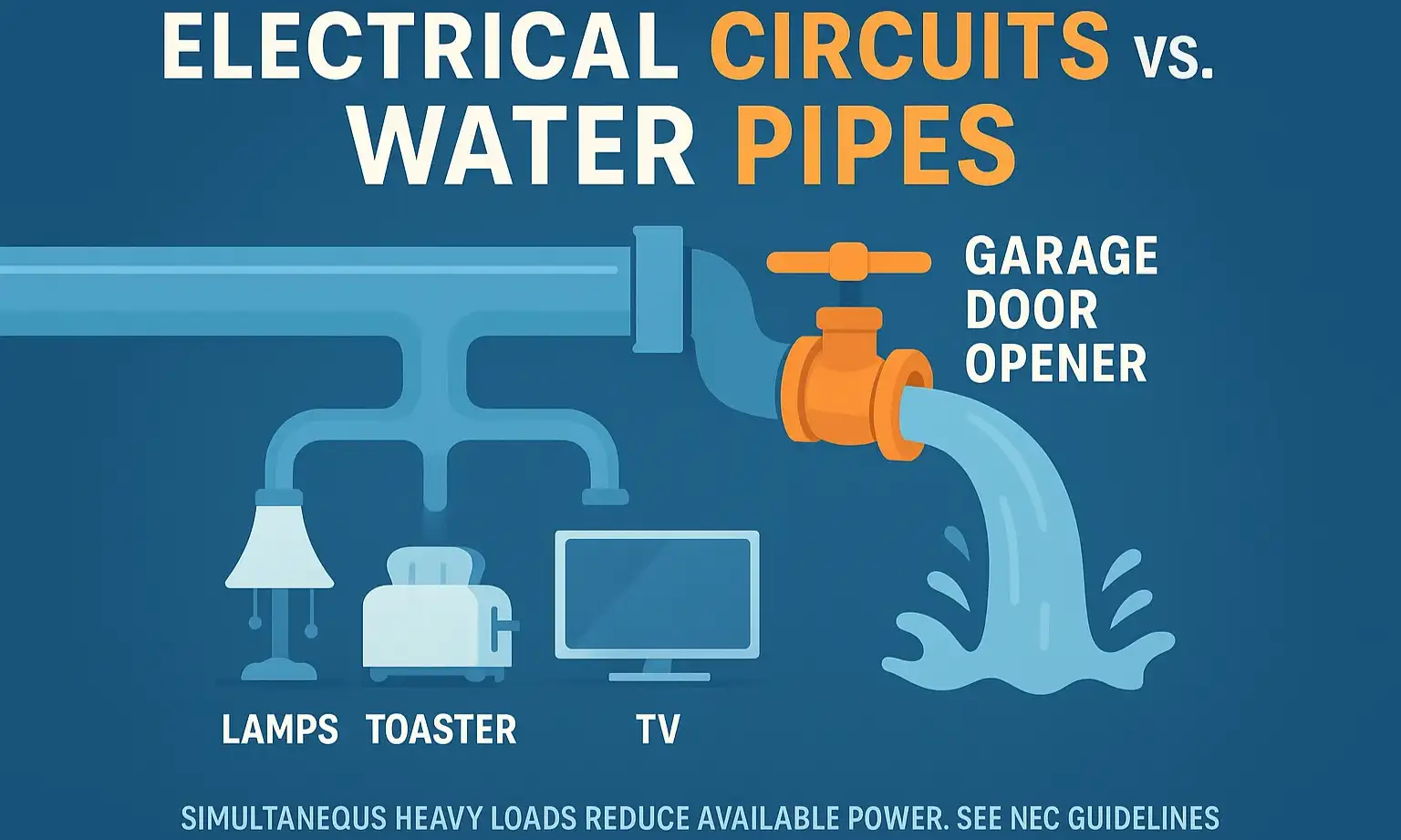
Think of your home’s electrical system like the plumbing. Each circuit is a pipe that can only handle a certain amount of water (electricity) at one time. The amount of electricity an appliance uses is called its “load,” measured in amperes (amps).
Most appliances that use motors or heating elements, like refrigerators, microwaves, and garage door openers, perform best with their own “private pipe.”
Building: Why Your Garage Door Opener is a 'Power-Hungry' Appliance
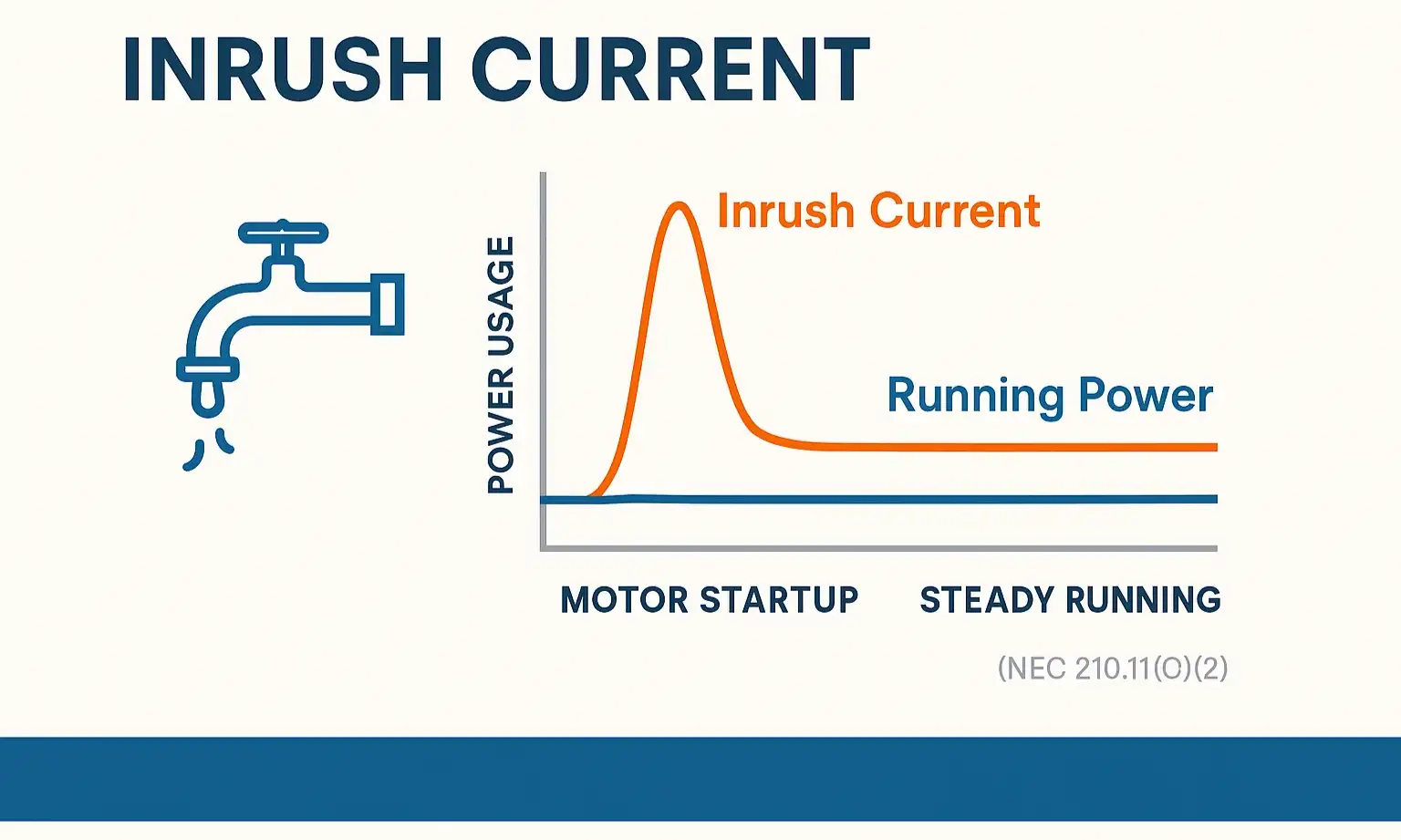
“But it’s just a small motor,” you might think. “How much power can it really use?” While the day-to-day power draw is low, the secret lies in the first two seconds of operation. This is the “Aha!” moment for understanding your opener’s electrical needs.
When you press that button, the motor needs a massive burst of energy to overcome inertia and lift a door that can weigh hundreds of pounds. This initial surge is called inrush current.
When you press that button, the motor needs a massive burst of energy to overcome inertia and lift a door that can weigh hundreds of pounds. This initial surge is called inrush current.
Imagine trying to push a stalled car. The first push takes the most effort. Once it’s rolling, it’s much easier to keep it moving. A garage door opener motor does the same thing, demanding 2-3 times its normal running amperage for a brief moment.
If the opener is on a shared circuit with other devices, this sudden power grab can “starve” everything else on the line, leading to:
If the opener is on a shared circuit with other devices, this sudden power grab can “starve” everything else on the line, leading to:
Understanding exactly how many amps a garage door opener uses during this startup phase is crucial to appreciating why a dedicated circuit is the professional standard.
Mastery: The Risk Assessment - Dedicated vs. Shared
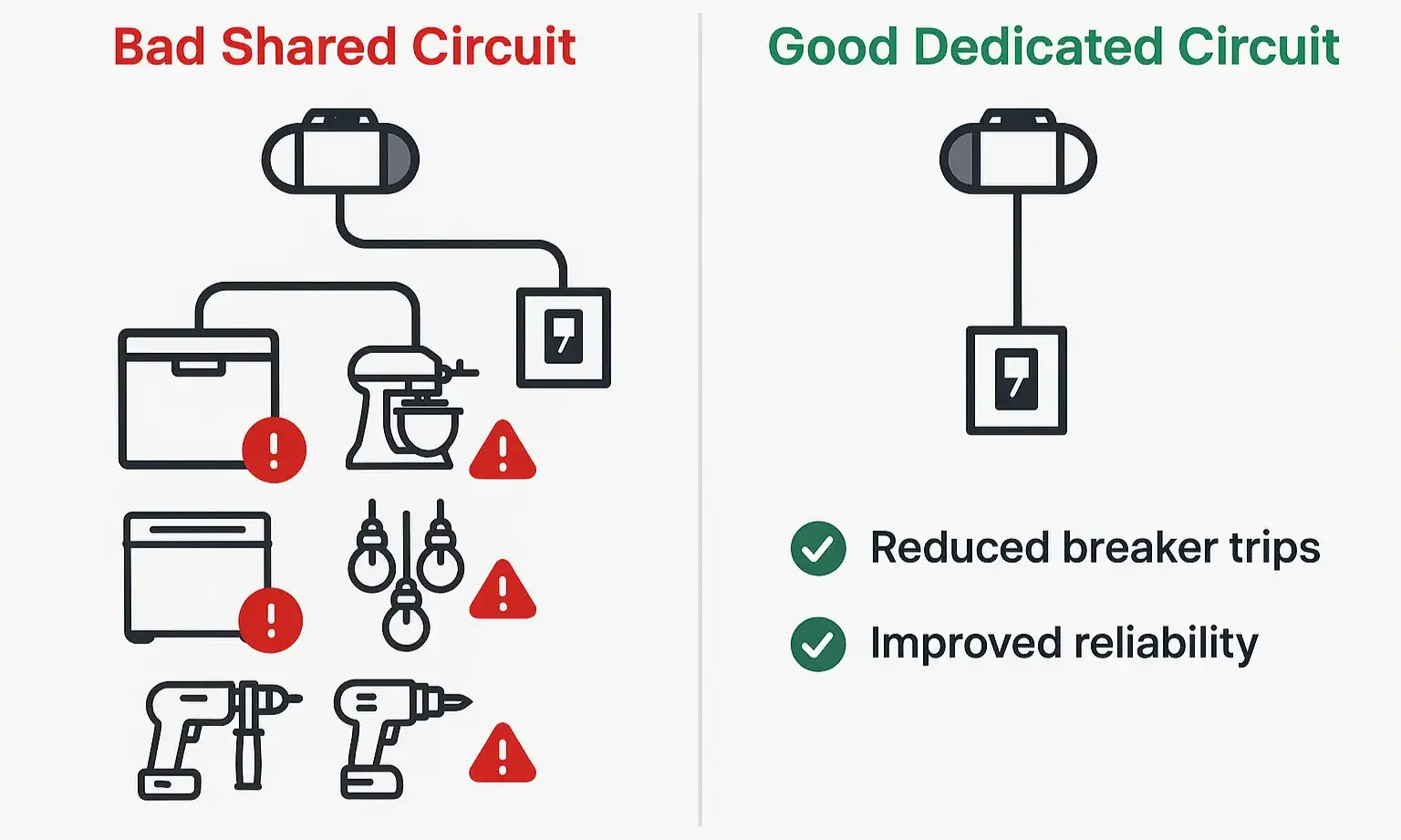
So, is a shared circuit ever acceptable? It depends entirely on what it’s being shared with. Let’s look at the risk levels.
Scenario 1: The Low-Risk Shared Circuit
Scenario 2: The High-Risk Shared Circuit (The Common Mistake)
What’s on the circuit: The garage door opener, a chest freezer or second refrigerator, a workbench with power tools, and a battery charger.
The risk: Extremely high. This is the scenario that leads to problems.
The takeaway is clear: While the electrical code may not always explicitly require a dedicated circuit for a garage door opener in every jurisdiction, it is overwhelmingly considered best practice for safety, reliability, and protecting your investments.
Action: Your 5-Minute Garage Electrical Health Check
Not sure about your setup? You don’t need to be an electrician to do some basic detective work. This quick check can help you assess your situation.
The Breaker Test (Use a partner):
1. Identify: Find your home’s main electrical panel. Each breaker should control a different circuit.
2. Plug In: Plug a small lamp or radio into the same outlet as your garage door opener. Turn it on.
3. Test: Have a partner watch the lamp/radio as you turn off breakers one by one. Do not turn off the main breaker.
4. Observe:
1. Identify: Find your home’s main electrical panel. Each breaker should control a different circuit.
2. Plug In: Plug a small lamp or radio into the same outlet as your garage door opener. Turn it on.
3. Test: Have a partner watch the lamp/radio as you turn off breakers one by one. Do not turn off the main breaker.
4. Observe:
5. Assess:
Frequently Asked Questions About Garage Door Opener Wiring
Does a garage door opener legally need a dedicated circuit?
It depends on your local building codes, which often follow the National Electrical Code (NEC). While the NEC doesn’t always single out garage door openers for a mandatory dedicated circuit, it does have rules about garage wiring that often make a dedicated circuit the most practical and compliant solution. Best practice always recommends it for performance and safety.
Can I plug my garage door opener into an extension cord?
Absolutely not. The manufacturer’s instructions and the NEC strictly prohibit using an extension cord for permanent installation. Standard extension cords are not rated for the inrush current of the motor and can overheat, creating a serious fire hazard.
Does the outlet for a garage door opener need to be GFCI?
Yes. Modern building codes (specifically NEC 210.8(A)(2)) require that all 120-volt receptacles in a garage be protected by a Ground Fault Circuit Interrupter (GFCI). This is a critical safety feature that protects you from electrical shock in potentially damp environments.
Can two garage door openers be on the same circuit?
If it’s a dedicated 20-amp circuit with nothing else on it, it is generally acceptable to power two openers from it. However, a standard 15-amp circuit may trip if you try to operate both doors at the exact same time.
The Final Connection: Powering Your Peace of Mind
Ensuring your garage door opener has the right power supply is a foundational step in its long-term health. A stable, dedicated circuit protects the sensitive electronics inside, prevents nuisance breaker trips, and ensures the motor always has the power it needs to keep your day moving smoothly. A solid electrical foundation is just as important as the mechanics of the system, whether it’s the chain drive or the photo-eye sensors.
If you have any doubts about your garage’s wiring or are experiencing issues like a garage door light that’s not working, it’s always best to consult a professional. A small investment in proper wiring today can save you from major headaches and expenses tomorrow.
If you have any doubts about your garage’s wiring or are experiencing issues like a garage door light that’s not working, it’s always best to consult a professional. A small investment in proper wiring today can save you from major headaches and expenses tomorrow.
Frequently Asked Questions
Does a garage door opener legally need a dedicated circuit?
It depends on your local building codes, which often follow the National Electrical Code (NEC). While the NEC doesn't always single out garage door openers for a mandatory dedicated circuit, it does have rules about garage wiring that often make a dedicated circuit the most practical and compliant solution. Best practice always recommends it for performance and safety.
Can I plug my garage door opener into an extension cord?
Absolutely not. The manufacturer's instructions and the NEC strictly prohibit using an extension cord for permanent installation. Standard extension cords are not rated for the inrush current of the motor and can overheat, creating a serious fire hazard.
Does the outlet for a garage door opener need to be GFCI?
Yes. Modern building codes (specifically NEC 210.8(A)(2)) require that all 120-volt receptacles in a garage be protected by a Ground Fault Circuit Interrupter (GFCI). This is a critical safety feature that protects you from electrical shock in potentially damp environments.
Can two garage door openers be on the same circuit?
If it's a dedicated 20-amp circuit with nothing else on it, it is generally acceptable to power two openers from it. However, a standard 15-amp circuit may trip if you try to operate both doors at the exact same time.