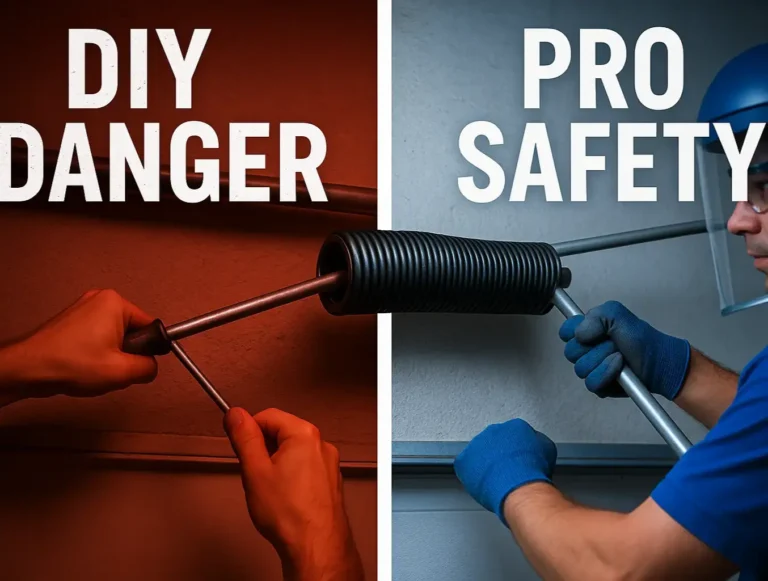
A smoothly working garage door relies on its springs, but when they lose tension or become unbalanced, your door can feel heavy or even unsafe. Since these springs are under high pressure, adjusting them comes with serious risk, and it’s often safest to leave the job to professionals. That said, let’s learn how to rewind a garage door spring, so you know what to expect or what to watch for if you ever face this issue.
How to Rewind a Garage Door Spring with Proper Tension
Published: Nov 10, 2025 | Updated: Jul 28, 2026
Garage Door Spring Safety: What to Do Before You Start
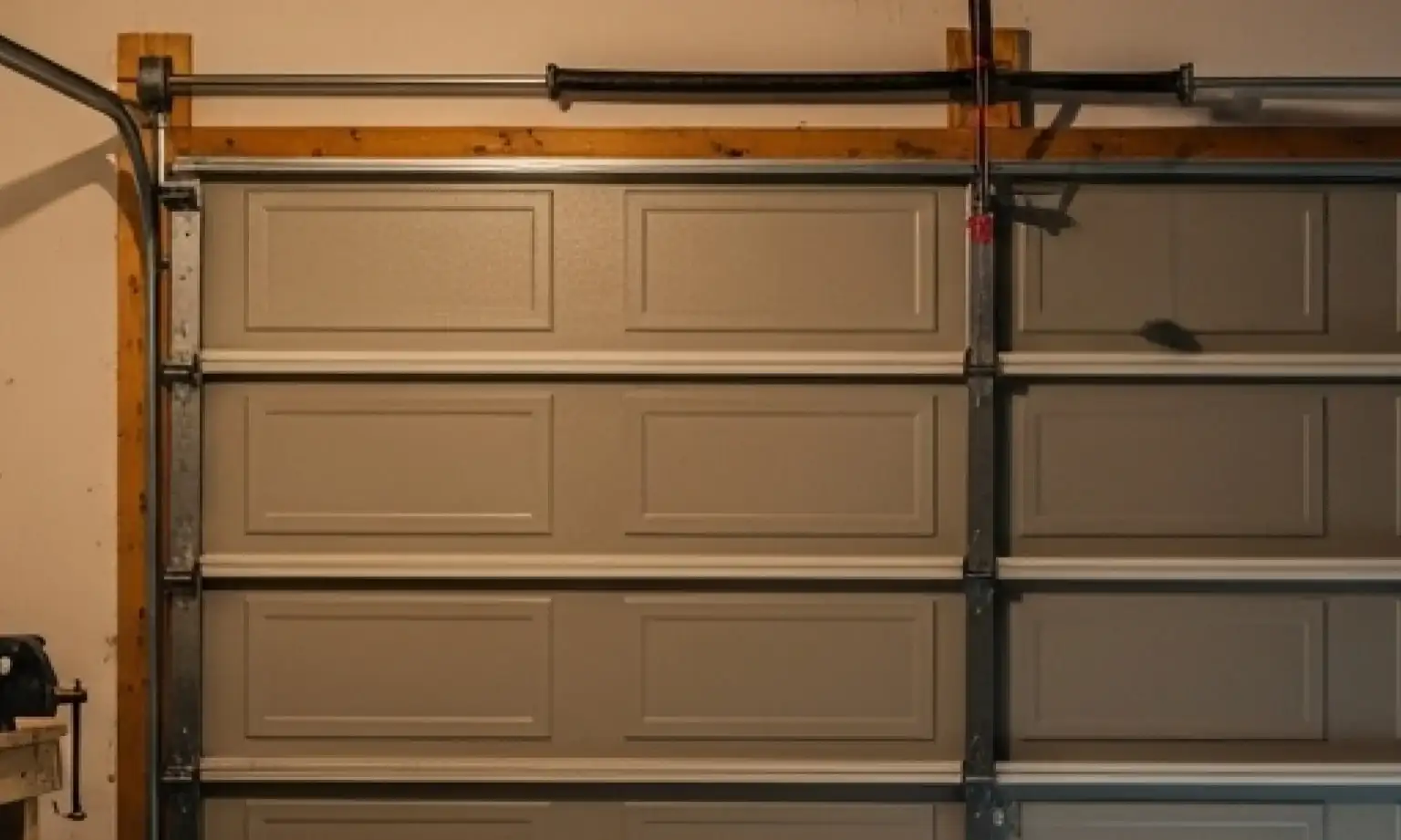
Before you even think about how to rewind a garage door spring, staying safe is the absolute top priority. Garage door springs, whether they’re the torsion kind or extension springs, are under significant tension. They store so much power that they can cause serious injuries if not handled correctly. Due to this danger, many homeowners wisely choose to hire professionals.
If you do attempt it, always wear safety glasses and tough gloves. Make sure the garage door is fully closed, unplug the opener, and keep kids and pets at a safe distance. If you’re unsure about any step or don’t feel confident proceeding, stop right away. It’s better to call in support than risk your safety.
If you do attempt it, always wear safety glasses and tough gloves. Make sure the garage door is fully closed, unplug the opener, and keep kids and pets at a safe distance. If you’re unsure about any step or don’t feel confident proceeding, stop right away. It’s better to call in support than risk your safety.
Step-by-Step: How to Wind Garage Door Springs
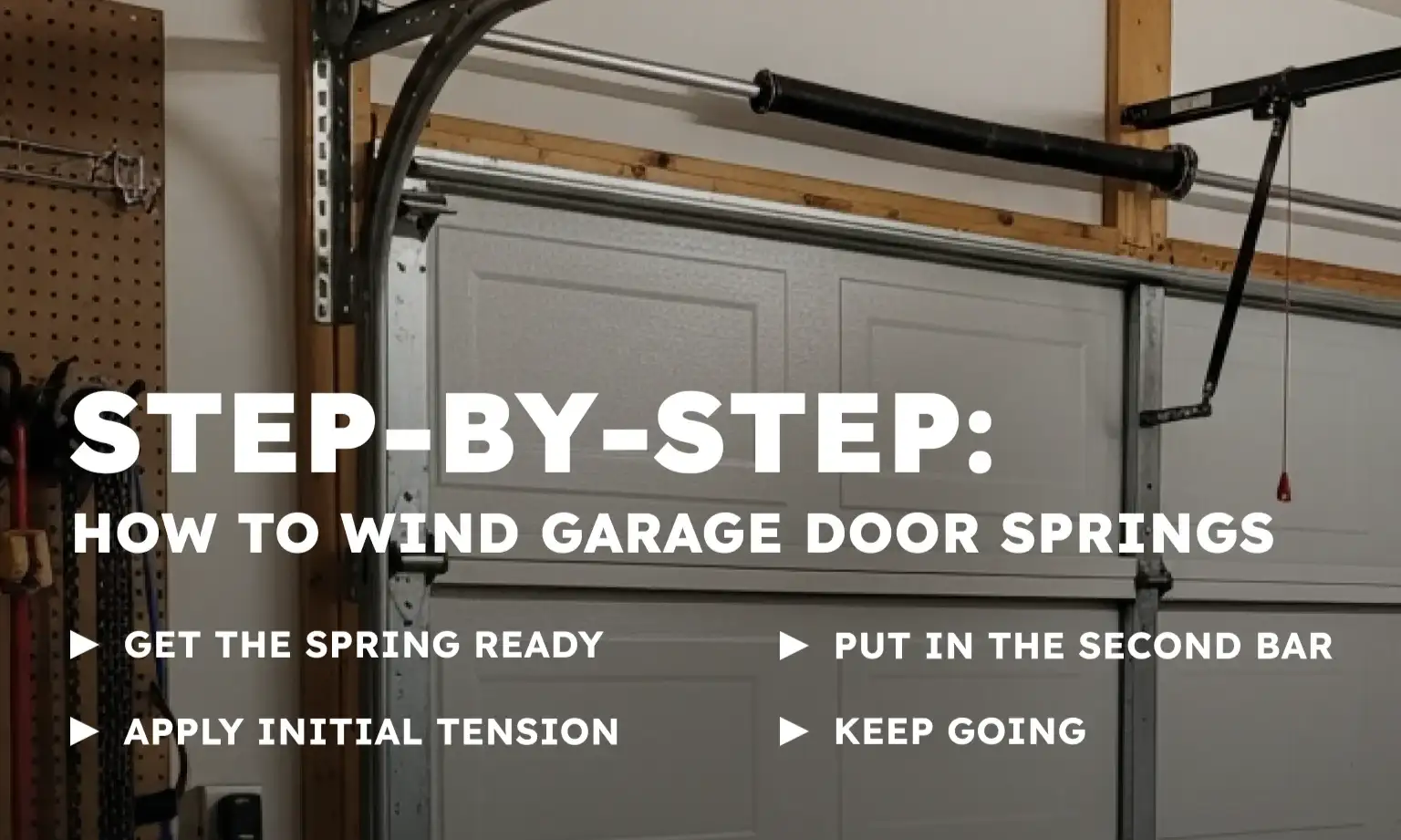
Before you begin, identify what kind of springs your garage door uses. Torsion springs are mounted above the door, while extension springs run along the sides of the door. This guide focuses on how to wind garage door springs with a torsion setup.
You’ll need a set of winding bars — special tools designed for this job, available at most hardware stores. However, keep in mind that even with the right tools, working on these springs can lead to serious injury.
You’ll need a set of winding bars — special tools designed for this job, available at most hardware stores. However, keep in mind that even with the right tools, working on these springs can lead to serious injury.
How to Wind a Double Spring Garage Door
If you have two torsion springs, the winding process is pretty much the same as for one, but with one important difference. To correctly follow how to wind a double spring garage door, you must apply the same number of turns to each spring. This keeps the door evenly balanced and prevents stress on one side of the mechanism.
Once each spring is wound, tighten the set screws on the winding cone to secure the spring to the torsion shaft. Finally, double-check that both sides are even before testing the door.
Once each spring is wound, tighten the set screws on the winding cone to secure the spring to the torsion shaft. Finally, double-check that both sides are even before testing the door.
How to Test and Adjust Garage Door Spring Tension
After you’ve wound the springs, gently test how your garage door balances. Disconnect the opener and lift the door by hand to about your waist height. It should stay put without dropping or flying up. If it sags, it needs a bit more tension; if it shoots up, it’s got too much.
Make small, quarter-turn tweaks until the door sits perfectly balanced. Knowing how to adjust a garage door spring properly helps the door operate smoothly and reduces wear on your opener. If you find it tough to get the balance just right, or if the door still feels off, the experts at 24H Garage Doors can fine-tune it safely and efficiently.
Make small, quarter-turn tweaks until the door sits perfectly balanced. Knowing how to adjust a garage door spring properly helps the door operate smoothly and reduces wear on your opener. If you find it tough to get the balance just right, or if the door still feels off, the experts at 24H Garage Doors can fine-tune it safely and efficiently.
Summing Up
Rewinding a garage door spring is a tricky and potentially risky job. While this article explains the basics of how to rewind a garage door spring, working with high-tension springs should never be taken lightly. If you’re unsure, lack the right tools, or are dealing with a broken spring, attempting the repair yourself can lead to serious injury or further damage.
For reliable and safe garage door spring service, including adjustments and replacements, contact the experts at 24H Garage Doors. We’re here to keep your garage door running safely and smoothly, so you can relax.
For reliable and safe garage door spring service, including adjustments and replacements, contact the experts at 24H Garage Doors. We’re here to keep your garage door running safely and smoothly, so you can relax.
Frequently Asked Questions
What safety precautions should I take before rewinding a garage door spring?
Because both torsion and extension springs are under significant tension and can cause serious injuries, safety comes first. If you attempt it, wear safety glasses and tough gloves, make sure the door is fully closed, unplug the opener, and keep kids and pets at a safe distance. If you are unsure about any step or do not feel confident, stop right away and call for support, as many homeowners wisely choose to hire professionals.
How many turns of tension does a torsion spring usually need?
Most home garage doors need about 7 to 9 quarter-turns of tension, depending on the door's weight and size. You apply the tension a quarter-turn at a time using winding bars. If you are unsure of the exact number, refer to your door's manual or consult a technician.
Which direction do I wind the spring, and what tools do I need?
You will need a set of winding bars, which are special tools designed for this job and available at most hardware stores. Make sure you know which way to wind before you begin, since it is typically clockwise on the left and counterclockwise on the right. Even with the right tools, working on these springs can lead to serious injury.
How do the two winding bars work together while adding tension?
You start by inserting a winding bar into one of the holes on the cone at the end of the spring and turning it up a quarter-turn at a time. After each quarter-turn, you put the second winding bar into the next open hole to hold the tension, then carefully remove the first bar while keeping the second in place. You keep repeating this, switching bars, until you reach the correct number of turns your door needs.