It’s a sound you’ll never forget. A sudden, sharp BANG from the garage that’s so loud it makes you jump. You check the cars, look for fallen objects, but find nothing out of place. Nothing, that is, until you try to open the garage door and it either refuses to budge or lifts just a few inches before groaning to a halt.
If this has happened to you, you’ve likely just experienced a spring failure. While it’s a common problem, the real danger isn’t just the inconvenience of a stuck door. The true risk lies in the science of why it broke—and what that means for your safety, especially with older, fatigued springs that haven’t failed yet. This is your guide to understanding the silent threat building tension above your head.
The Dangers of Aging Garage Door Springs
Published: Apr 6, 2026 | Updated: Jul 28, 2026
The Unseen Force: What Your Garage Door Springs Actually Do
Most people believe their automatic opener lifts the heavy garage door. It’s a common misconception. In reality, the opener only provides a little nudge to get things started. The real muscle is the spring system.
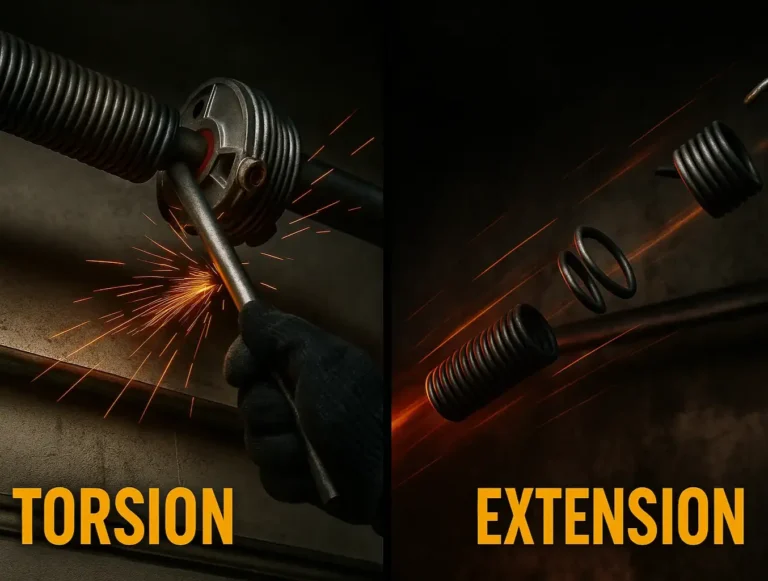
Whether you have large torsion springs on a bar above the door or long extension springs running alongside the tracks, their job is the same: to act as a counterbalance. When wound, they store an immense amount of mechanical energy—enough to make a 300-pound door feel light as a feather. You can learn more about exactly how garage door springs work to do this heavy lifting. But this constant cycle of storing and releasing massive amounts of energy comes at a cost.
Whether you have large torsion springs on a bar above the door or long extension springs running alongside the tracks, their job is the same: to act as a counterbalance. When wound, they store an immense amount of mechanical energy—enough to make a 300-pound door feel light as a feather. You can learn more about exactly how garage door springs work to do this heavy lifting. But this constant cycle of storing and releasing massive amounts of energy comes at a cost.
The Paperclip Analogy: Understanding Metal Fatigue
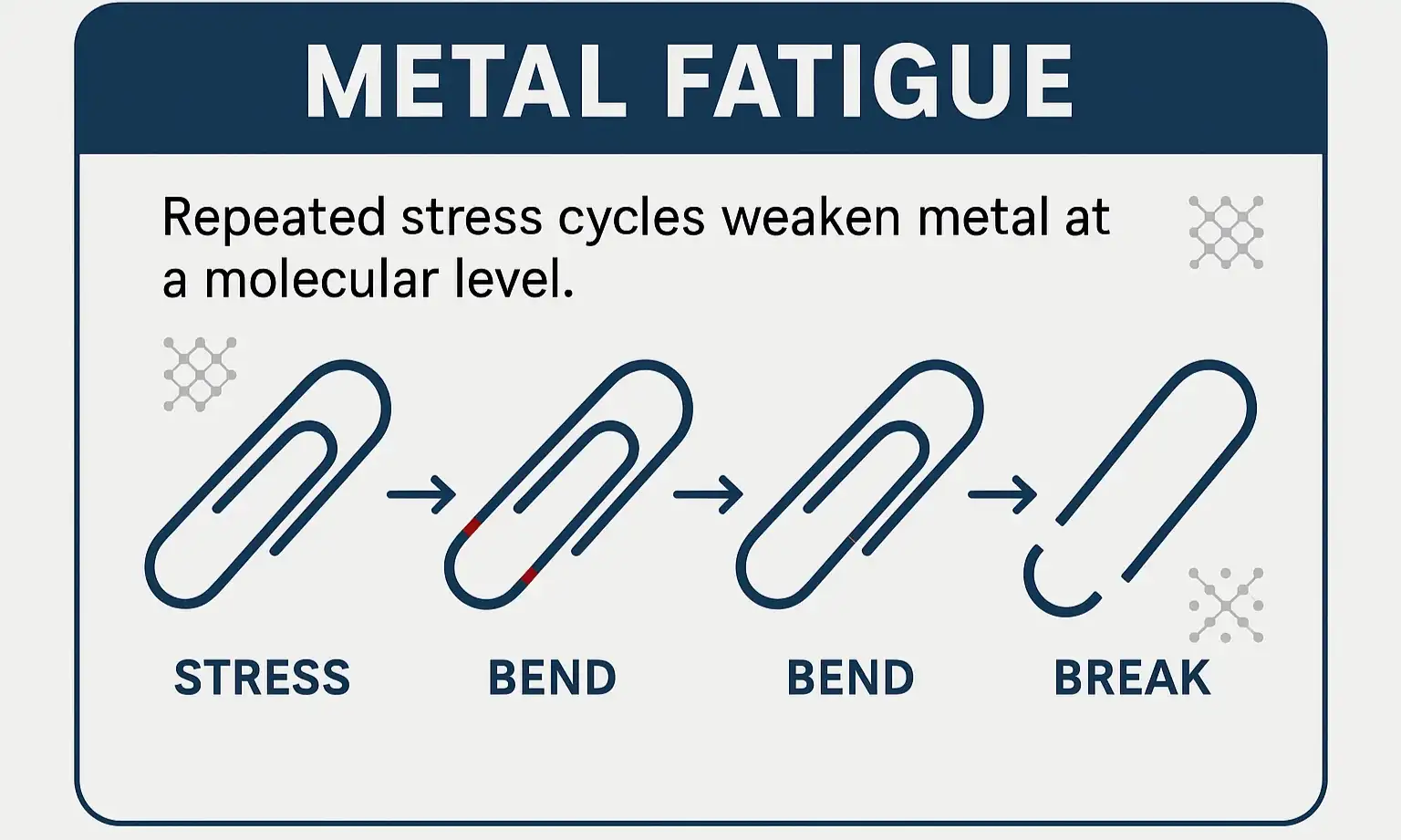
To understand why a spring that looks fine one day can violently snap the next, grab a paperclip.
Bend a section of it back and forth. The first few bends are easy. But as you continue, the metal at the bend point gets weaker. You don’t see any dramatic change, but on a molecular level, tiny fractures are forming. Suddenly, without any extra effort, it snaps.
That is metal fatigue.
Your garage door springs go through the exact same process. Each time you open and close your door, it’s one “bend” in the life of the spring. A standard spring is rated for about 10,000 cycles. If you use your door four times a day, that’s roughly seven years of service. After thousands of cycles, the steel becomes brittle and is primed for a sudden, catastrophic failure.
How to Spot a Spring on the Brink of Failure
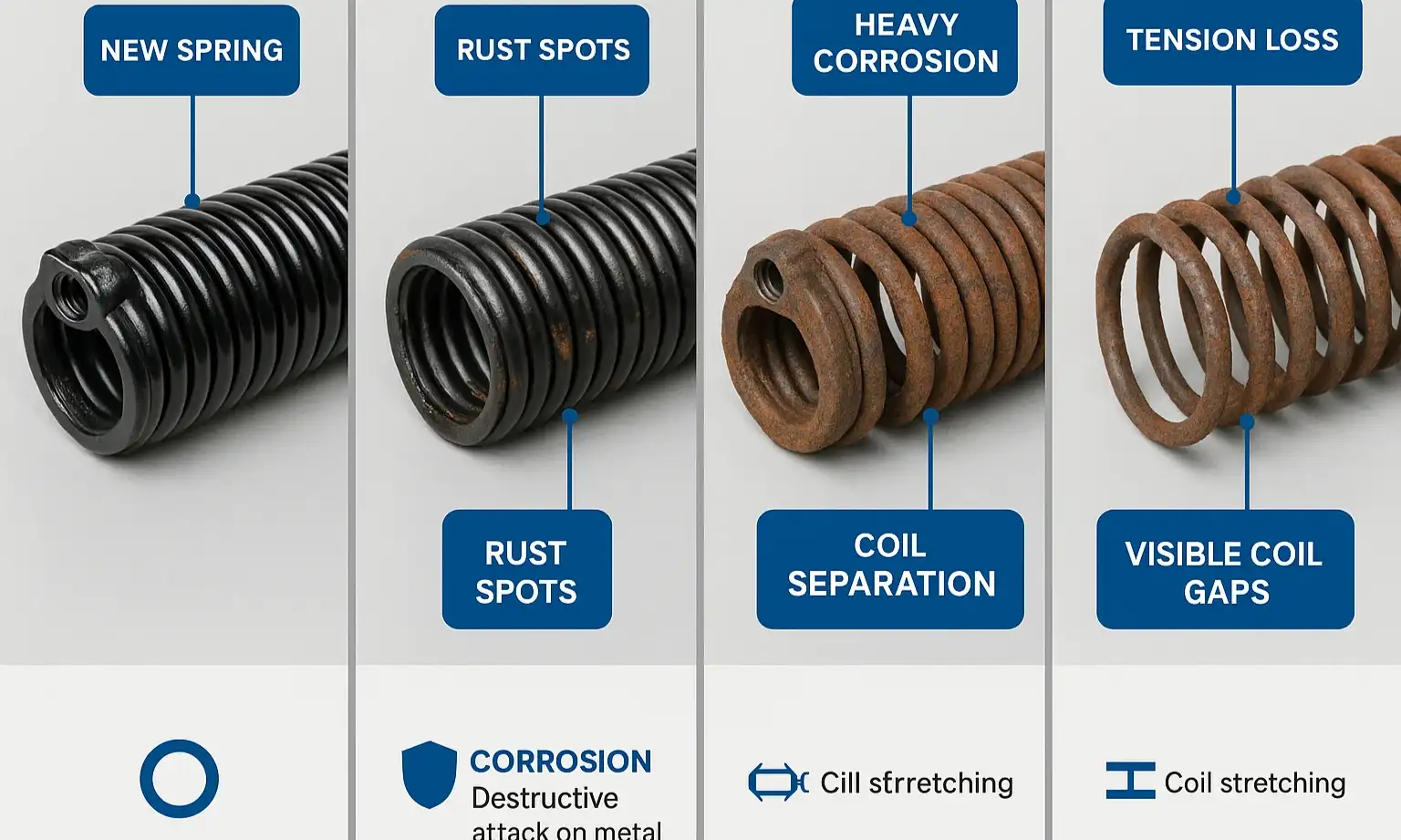
Because metal fatigue is an internal process, you can’t always see the danger. However, there are visible signs that a spring is aged and entering the high-risk zone. Knowing how to tell if a garage door spring is broken or worn out can prevent a dangerous situation.
Here are the key indicators to look for:
Properly maintained springs last longer. A key part of that maintenance is knowing how to lubricate garage door springs, which helps reduce friction and prevent rust.
More Than an Inconvenience: The Real Risks of a Broken Spring
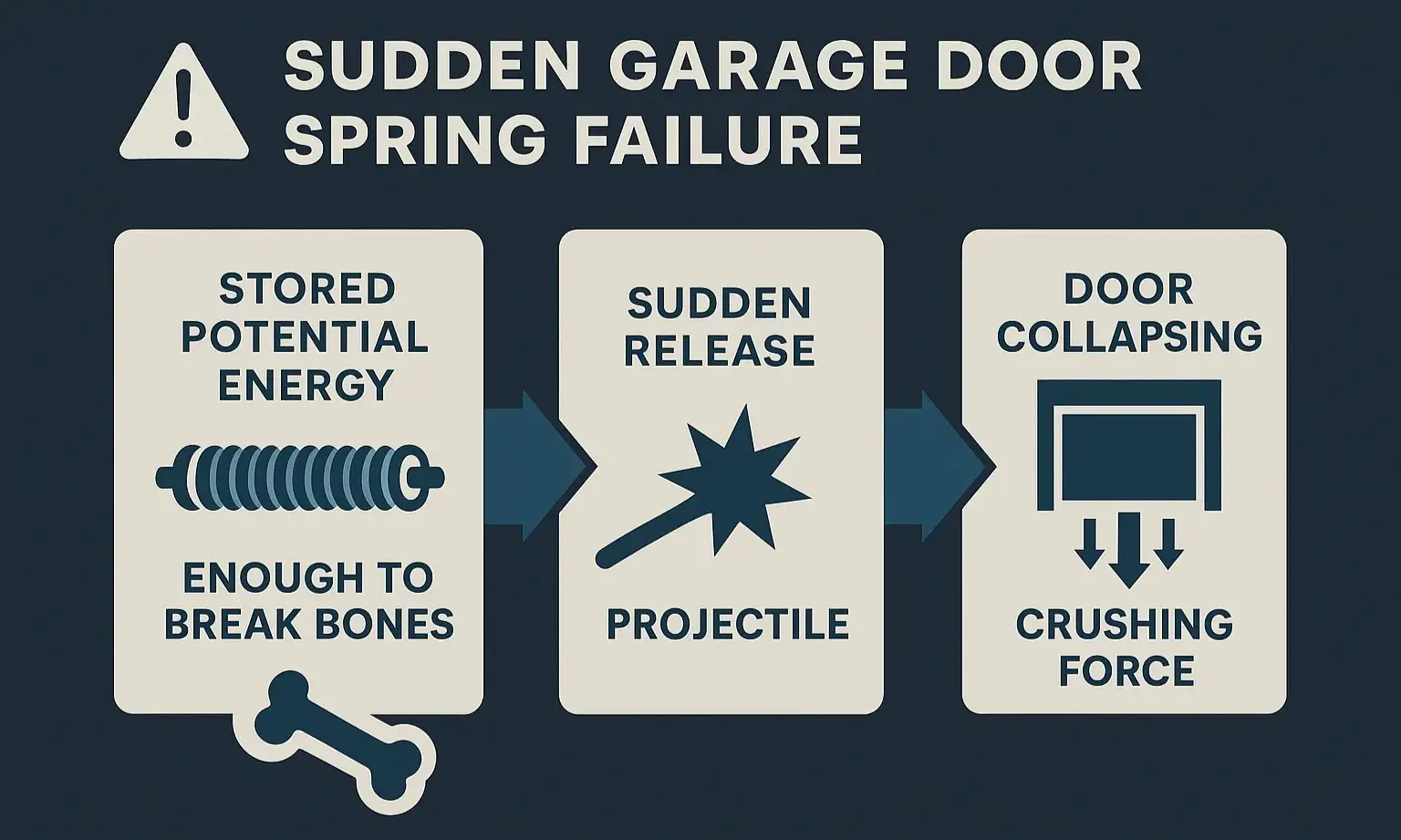
Understanding that your springs are under immense tension is critical to respecting the danger they pose. The reasons why are garage door springs dangerous go far beyond a door that won’t open.
The Three Primary Dangers
The Ultimate DIY Hazard
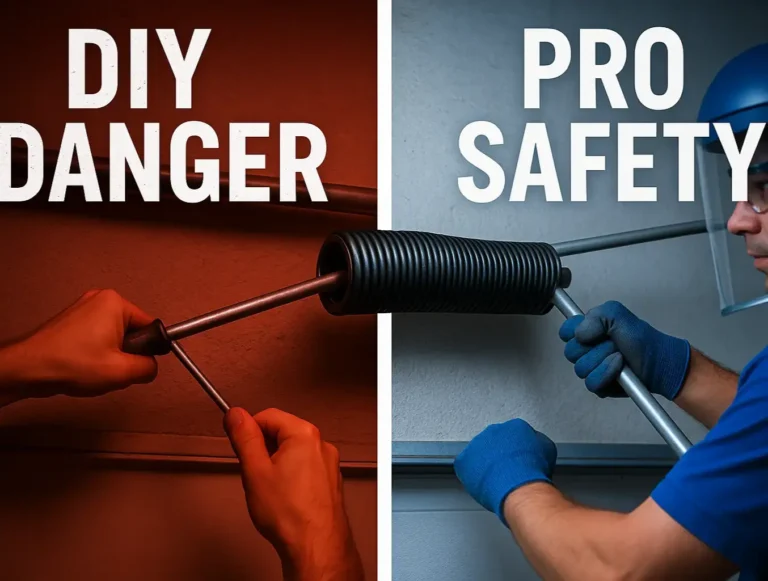
Given these risks, attempting a DIY spring replacement is one of the most dangerous home repair jobs you can undertake. Industry reports consistently cite garage door accidents as a source of serious injuries each year. Trying to release that much tension without specialized tools and training is a recipe for disaster. The potential energy in a wound spring is enough to cause severe lacerations, broken bones, or worse. It’s crucial to understand common DIY mistakes and know that learning how to remove a garage door spring safely is a job reserved for trained professionals.
What to Do When You Suspect Your Springs Are Failing
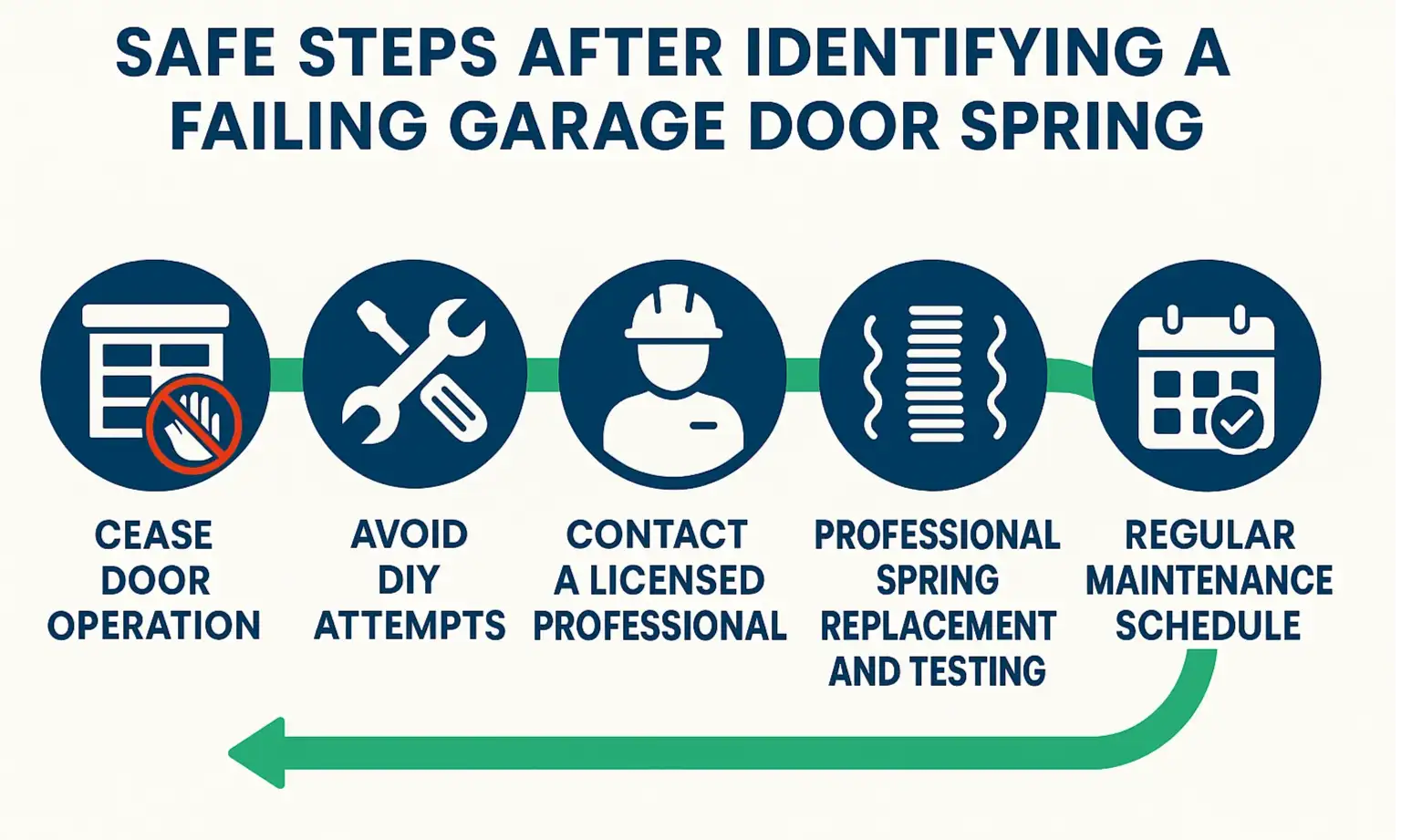
If you heard that loud bang or notice any of the visual warning signs, your immediate actions are critical for safety.
Frequently Asked Questions About Garage Door Springs
How long do garage door springs last?
Standard torsion springs are rated for 10,000 cycles (one open and close). Depending on your usage, this typically translates to 7-10 years. High-cycle springs are available that can last much longer.
Why did only one of my two springs break?
Even when installed at the same time, tiny differences in the steel and usage can cause one spring to fail before the other. However, if one has broken due to age and metal fatigue, the other is not far behind. A professional will always replace both springs at the same time.
Can a garage door spring really kill you?
While extremely rare, it is possible. The greater risk comes from the significant potential for serious garage door spring injuries, including deep cuts from snapping metal, broken bones, or head trauma from a falling door. The danger is real and should be taken seriously.
Is it okay to open my garage door if the spring is broken?
No. Attempting to lift the full dead weight of the door yourself is dangerous and can cause back injury. Using the opener can strip its gears or burn out the motor, leading to a much more expensive repair.
What does a broken spring sound like?
The most common sound is a single, extremely loud “BANG” or “POP” that echoes through the garage. It’s often mistaken for a gunshot or something heavy falling.
From Awareness to Action
Your garage door springs work tirelessly and silently, day after day. But they don’t last forever. Understanding the science of metal fatigue changes your perspective: an old spring isn’t just “worn out,” it’s a system under immense stress that’s becoming more brittle and unpredictable with every cycle.
Don’t wait for the loud bang. Take a moment to look at your springs. If you see rust, gaps, or your door feels heavy, you’re seeing the warning signs of a failure waiting to happen. Being proactive is always safer—and less stressful—than reacting to an emergency. If you have any doubts about the condition of your springs, the safest next step is a professional inspection.
Don’t wait for the loud bang. Take a moment to look at your springs. If you see rust, gaps, or your door feels heavy, you’re seeing the warning signs of a failure waiting to happen. Being proactive is always safer—and less stressful—than reacting to an emergency. If you have any doubts about the condition of your springs, the safest next step is a professional inspection.
Frequently Asked Questions
How long do garage door springs last?
Standard torsion springs are rated for 10,000 cycles (one open and close). Depending on your usage, this typically translates to 7-10 years. High-cycle springs are available that can last much longer.
Why did only one of my two springs break?
Even when installed at the same time, tiny differences in the steel and usage can cause one spring to fail before the other. However, if one has broken due to age and metal fatigue, the other is not far behind. A professional will always replace both springs at the same time.
Can a garage door spring really kill you?
While extremely rare, it is possible. The greater risk comes from the significant potential for serious garage door spring injuries, including deep cuts from snapping metal, broken bones, or head trauma from a falling door. The danger is real and should be taken seriously.
Is it okay to open my garage door if the spring is broken?
No. Attempting to lift the full dead weight of the door yourself is dangerous and can cause back injury. Using the opener can strip its gears or burn out the motor, leading to a much more expensive repair.
What does a broken spring sound like?
The most common sound is a single, extremely loud "BANG" or "POP" that echoes through the garage. It's often mistaken for a gunshot or something heavy falling.