
Keeping your garage door in top shape doesn’t have to be complicated, and it’s something you can do yourself. One of the easiest and most effective ways to reduce noise and keep everything running smoothly is regular lubrication. If that sounds like a difficult task, 24H Garage Doors is here to answer the common question, “How do you lubricate a garage door to achieve that smooth, quiet operation?” This guide offers a simple step-by-step guide to help you get the job done right.
How to Lubricate a Garage Door: Smooth, Quiet Operation Made Easy
Published: May 30, 2025 | Updated: Jul 28, 2026
What to Use to Lubricate a Garage Door
When you want your garage door to operate smoothly, quietly, and reliably, it really matters what lubricant you use. Not every household spray or grease will do the job properly in the long run. So, what is the best lubricant for garage doors? Generally, silicone-based sprays are an excellent choice for most moving parts — rollers, hinges, and springs. A lithium-based grease works best for the metal chain on your opener or metal-on-metal contact points.
Look for lubricants clearly marked for garage doors, ideally non-drip and long-lasting, and if you’re still unsure what to lubricate the garage door with, feel free to consult with professionals.
Look for lubricants clearly marked for garage doors, ideally non-drip and long-lasting, and if you’re still unsure what to lubricate the garage door with, feel free to consult with professionals.
What Parts to Lubricate on a Garage Door
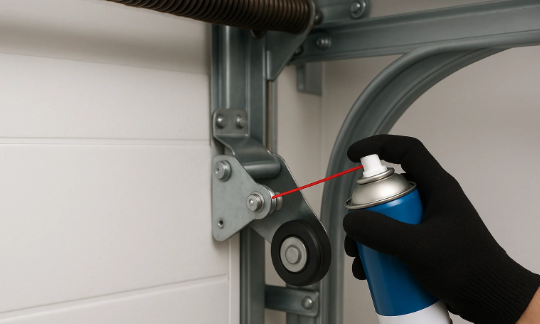
Once you’ve picked the right lubricant, look closer at your garage door system. Before you begin, it’s necessary to review where to lubricate garage door components:
How to Lubricate Your Garage Door: Step-by-Step
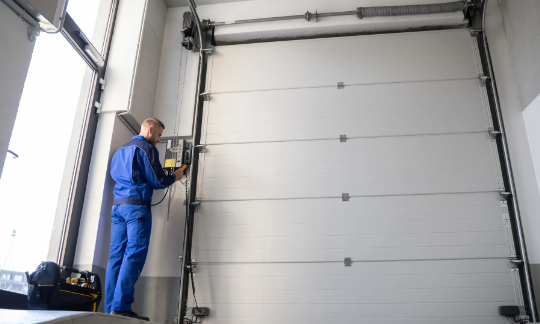
So, now you have the lubricant and a clear idea of what to lubricate on garage door mechanisms. The next question might appear in your head: “How do I lubricate my garage door?” Here’s a quick and safe DIY guide to walk you through the process from start to finish, step by step.
Step 1. Disconnect the Opener
Before you start working on any part of your garage door, make sure the automatic opener is disabled. You can do this by either unplugging the motor unit from the electrical outlet or, if that’s not easily accessible, switching off the dedicated circuit breaker for the garage door in your home’s electrical panel.
Step 2. Clean the Parts You’ll Lubricate
Take a clean, old rag and wipe down the key areas: hinges, rollers, springs, and rail. Make sure the parts are clean and free of debris before applying lubricant.
Step 3. Apply Lubricant
This is the key step in the process. Grab your lubricant and apply it lightly on each moving part. Focus on the sections mentioned above.
Once you’ve applied the lubricant, carefully open and close the garage door manually a few times so the lubricant spreads evenly.
Step 4. Test the Door
With the lubrication done, reconnect the opener by plugging it back in or turning the breaker back on. Then, operate the door using the opener and listen carefully as it moves. It should sound smoother and quieter.
If you still hear squeaks or grinding, go back and apply a little more lubricant to the affected area.
Summing Up
You’ve now learned how to grease garage door opener systems and other key components to achieve smoother, quieter operation. Lubricate your garage door at least every six months as part of your regular maintenance, and you’ll extend its life. Even with regular care, garage doors may eventually need professional attention. If you require garage door repair services or just want more information about how to lubricate a garage door, feel free to call 24H Garage Doors for fast, professional support.
Frequently Asked Questions
Which lubricant should I use on my garage door's moving parts?
Silicone-based sprays are an excellent choice for most moving parts, including rollers, hinges, and springs. For the metal chain on your opener or any metal-on-metal contact points, a lithium-based grease works best. Look for lubricants clearly marked for garage doors that are ideally non-drip and long-lasting.
Do I need to lubricate my garage door rollers, and how?
You should only lubricate rollers if they are made of metal, applying the lubricant to the internal bearings. If your rollers are not metal, they do not need to be lubricated this way.
How do I safely handle the springs when lubricating the door?
Springs are under high tension and can be dangerous, so proceed with caution or consult a professional if needed. For extension springs that stretch alongside the tracks, focus on the metal coils. For torsion springs mounted above the door, apply lubricant to the bearings at the ends where they meet the support brackets.
What is the first thing I should do before I start lubricating?
Before working on any part of your garage door, make sure the automatic opener is disabled. You can do this by unplugging the motor unit from the electrical outlet, or if that is not easily accessible, switching off the dedicated circuit breaker for the garage door in your electrical panel.