How to Choose a Garage Door Color That Matches Your Exterior


Published: Jun 17, 2026 | Updated: Jul 28, 2026

Choosing a garage door color can feel surprisingly high-stakes. It covers a huge portion of your home’s exterior and has the power to either create a polished, harmonious look or an accidental eyesore. If you’re staring at a wall of paint swatches feeling lost, you’re not alone. Many homeowners focus on finding a “popular” color, but the secret to curb appeal isn’t about trends—it’s about harmony.

Think of your garage door as your home’s second front door. It’s a major architectural feature that can dramatically boost your home’s character when chosen thoughtfully. This guide will walk you through the same principles designers use, transforming that overwhelming decision into a simple, confident choice. We’ll move beyond just looking at colors and teach you how to see them, ensuring your new garage door perfectly complements your home’s beautiful brick, stone, or stucco.

Foundation: The 3 Simple Principles of Color Harmony


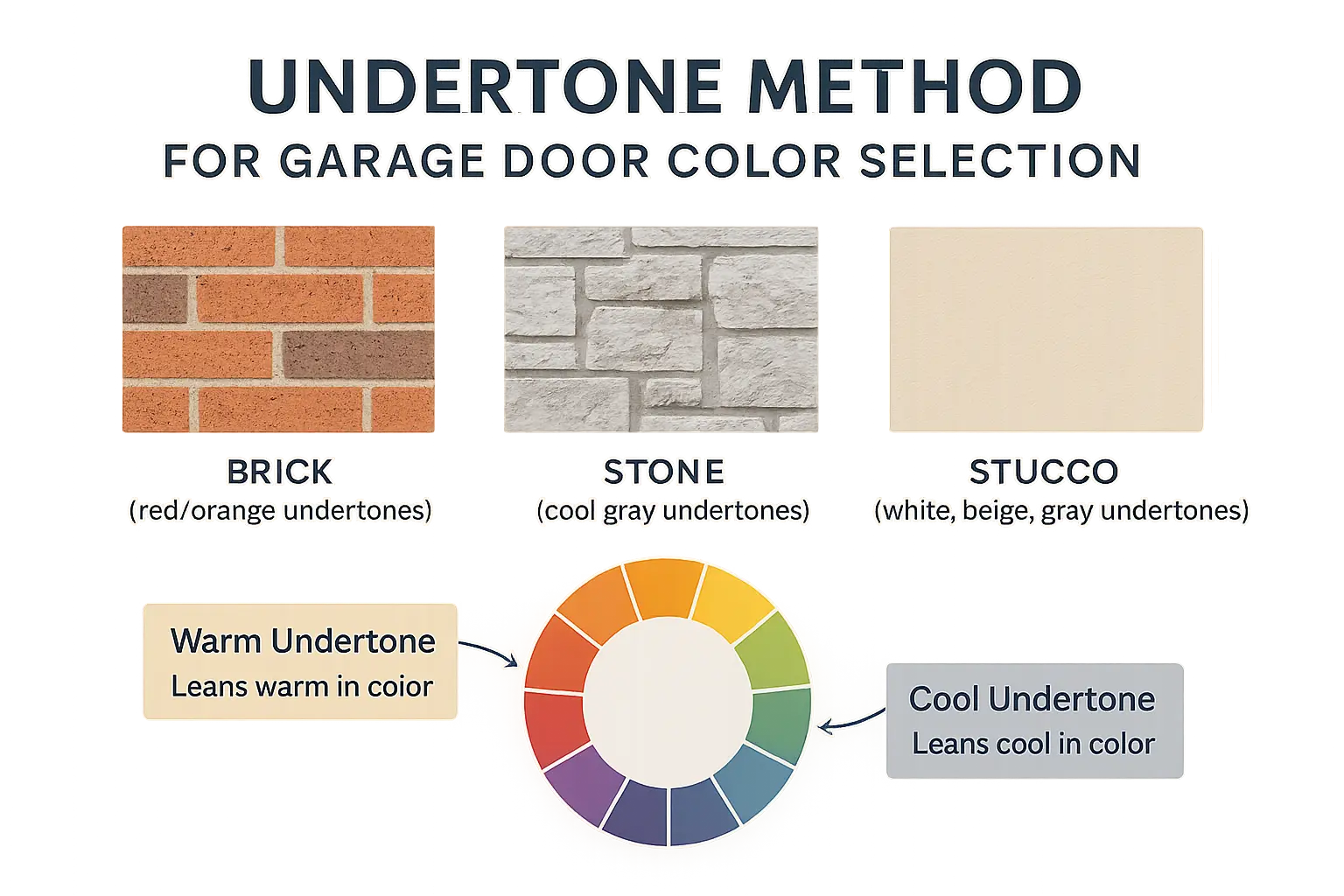
The 'Undertone Method' infographic teaches homeowners how to identify key undertones in exterior materials, enabling confident and precise garage door color matches.
Before you dive into color chips, let’s establish a simple framework. These three principles are the foundation for making a choice you’ll love for years to come.

Principle 1: Identify Your Home’s Dominant Undertone (The “Undertone Method”)

This is the most important concept that most guides miss, and it’s the key to getting your color choice right. The main color of your brick or stone is one thing, but its undertone is the subtle color lurking beneath the surface. Matching this undertone is what creates a seamless, professional look.

For example, not all red brick is the same. Some has a warm, orangey-red undertone, while others might have a cooler, pinkish-brown hue. Stone can have cool blue-gray undertones or warm, creamy beige undertones.
How to Find Your Undertone:

Principle 2: Choose Your Strategy: Blend In or Stand Out?

With your undertone identified, you now have a strategic choice to make. Do you want your garage door to be a quiet, supporting feature or a bold statement piece?

Building: The Ultimate Material Matching Guide


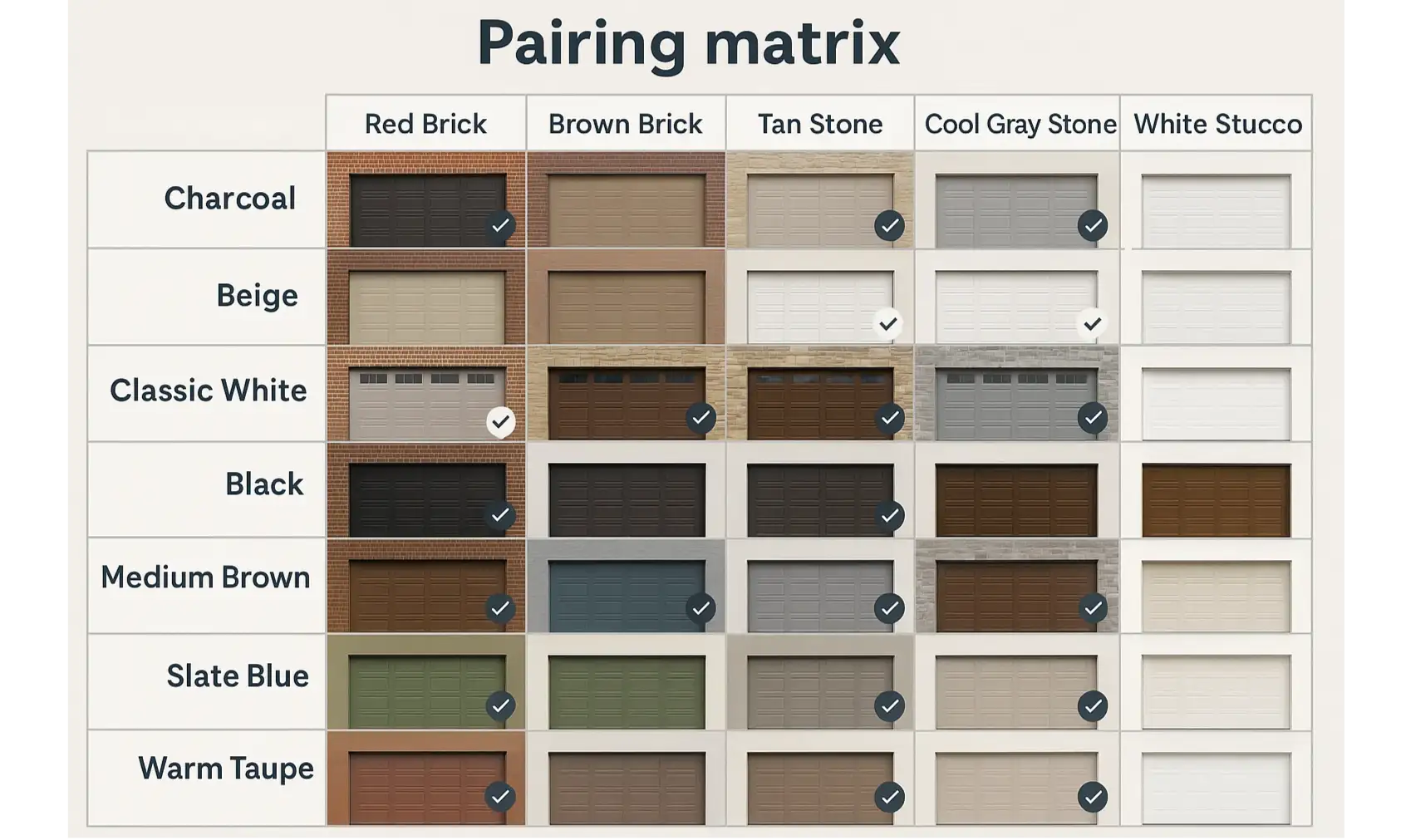
Use this visual pairing matrix to quickly evaluate which garage door colors best harmonize with your home’s exterior material, simplifying your color selection process.
Now, let’s apply these principles to the most common exterior materials. Use this section as a visual library to find inspiration that matches your home.

Matching Garage Doors to Brick Homes

Brick is rich with color and texture, making the undertone method essential. The biggest mistake is matching the mortar color; always focus on the dominant color of the bricks themselves.

For Red Brick (Warm Undertones): Red brick often has orange, tan, or warm brown undertones.

To Blend: Warm beige, taupe, or a medium brown will feel natural and harmonious.

To Contrast: Deep charcoal gray or a warm, “greige” (gray-beige) can look incredibly sharp. Black is also a classic, bold choice.

For Brown/Tan Brick (Earthy Undertones): These bricks work beautifully with other earthy, nature-inspired colors.

To Blend: Look for colors like sand, almond, or a slightly darker shade of brown. Wood-tone garage doors are a perfect match here.

To Contrast: A rich olive green or a deep bronze can create a stunning, unique look.

For Painted or Whitewashed Brick: You have more flexibility here. The undertone will be determined by the paint color.

With Creamy White Brick: A soft gray, taupe, or even a muted blue can be beautiful.

With Cool Gray Brick: Crisp white, deep charcoal, or black are no-fail options for a modern aesthetic.

Matching Garage Doors to Stone Homes

Stone exteriors, whether uniform or multi-colored, are all about texture. Your garage door color can either complement this texture or provide a smooth, balancing contrast.

For Warm-Toned Stone (Beige, Tan, Cream): This stone has yellow, gold, or peachy undertones.

To Blend: Almond, sand, and wood-tones are excellent choices that enhance the stone’s natural warmth.

To Contrast: A deep, warm brown or a bronze color adds depth and richness.

For Cool-Toned Stone (Gray, Blue-Gray): This stone is common in modern and classic architecture.

To Blend: Lighter shades of gray, off-white, or a muted blue-gray will look sleek and sophisticated.

To Contrast: Black or a deep charcoal gray creates a powerful, contemporary statement.

For Multi-Color Stone: The trick is to isolate one color from the stone and use that for your garage door. Pick a mid-tone color from the stone—not the darkest or the lightest—to create the most balanced look.

Matching Garage Doors to Stone Homes

Stone exteriors, whether uniform or multi-colored, are all about texture. Your garage door color can either complement this texture or provide a smooth, balancing contrast.

For Warm-Toned Stone (Beige, Tan, Cream): This stone has yellow, gold, or peachy undertones.

To Blend: Almond, sand, and wood-tones are excellent choices that enhance the stone’s natural warmth.

To Contrast: A deep, warm brown or a bronze color adds depth and richness.

For Cool-Toned Stone (Gray, Blue-Gray): This stone is common in modern and classic architecture.

To Blend: Lighter shades of gray, off-white, or a muted blue-gray will look sleek and sophisticated.

To Contrast: Black or a deep charcoal gray creates a powerful, contemporary statement.

For Multi-Color Stone: The trick is to isolate one color from the stone and use that for your garage door. Pick a mid-tone color from the stone—not the darkest or the lightest—to create the most balanced look.

Matching Garage Doors to Stucco Homes

Stucco provides a smooth canvas, so the garage door color and style play a huge role in defining the home’s personality.

For White/Off-White Stucco: A classic and versatile backdrop.

To Blend: A matching white creates a clean, minimalist look. This is common in modern architecture.

To Contrast: Anything goes! Black, charcoal, wood-tones, or even a pop of color are all great options.

For Beige/Tan Stucco: This warm, earthy base pairs well with other natural tones.

To Blend: A slightly lighter or darker beige or a warm white keeps the look soft and inviting.

To Contrast: A dark brown or a bronze-finished door adds welcome definition.

For Gray Stucco: A popular choice for a modern, sophisticated exterior.

To Blend: A garage door in a lighter or darker shade of the same gray creates an elegant, monochromatic scheme.

To Contrast: A crisp white door provides a sharp, clean look, while a black door offers bold, dramatic flair.

Matching Garage Doors to Stucco Homes

Stucco provides a smooth canvas, so the garage door color and style play a huge role in defining the home’s personality.

For White/Off-White Stucco: A classic and versatile backdrop.

To Blend: A matching white creates a clean, minimalist look. This is common in modern architecture.

To Contrast: Anything goes! Black, charcoal, wood-tones, or even a pop of color are all great options.

For Beige/Tan Stucco: This warm, earthy base pairs well with other natural tones.

To Blend: A slightly lighter or darker beige or a warm white keeps the look soft and inviting.

To Contrast: A dark brown or a bronze-finished door adds welcome definition.

For Gray Stucco: A popular choice for a modern, sophisticated exterior.

To Blend: A garage door in a lighter or darker shade of the same gray creates an elegant, monochromatic scheme.

To Contrast: A crisp white door provides a sharp, clean look, while a black door offers bold, dramatic flair.
Mastery: Pro Tips & Common Mistakes to Avoid


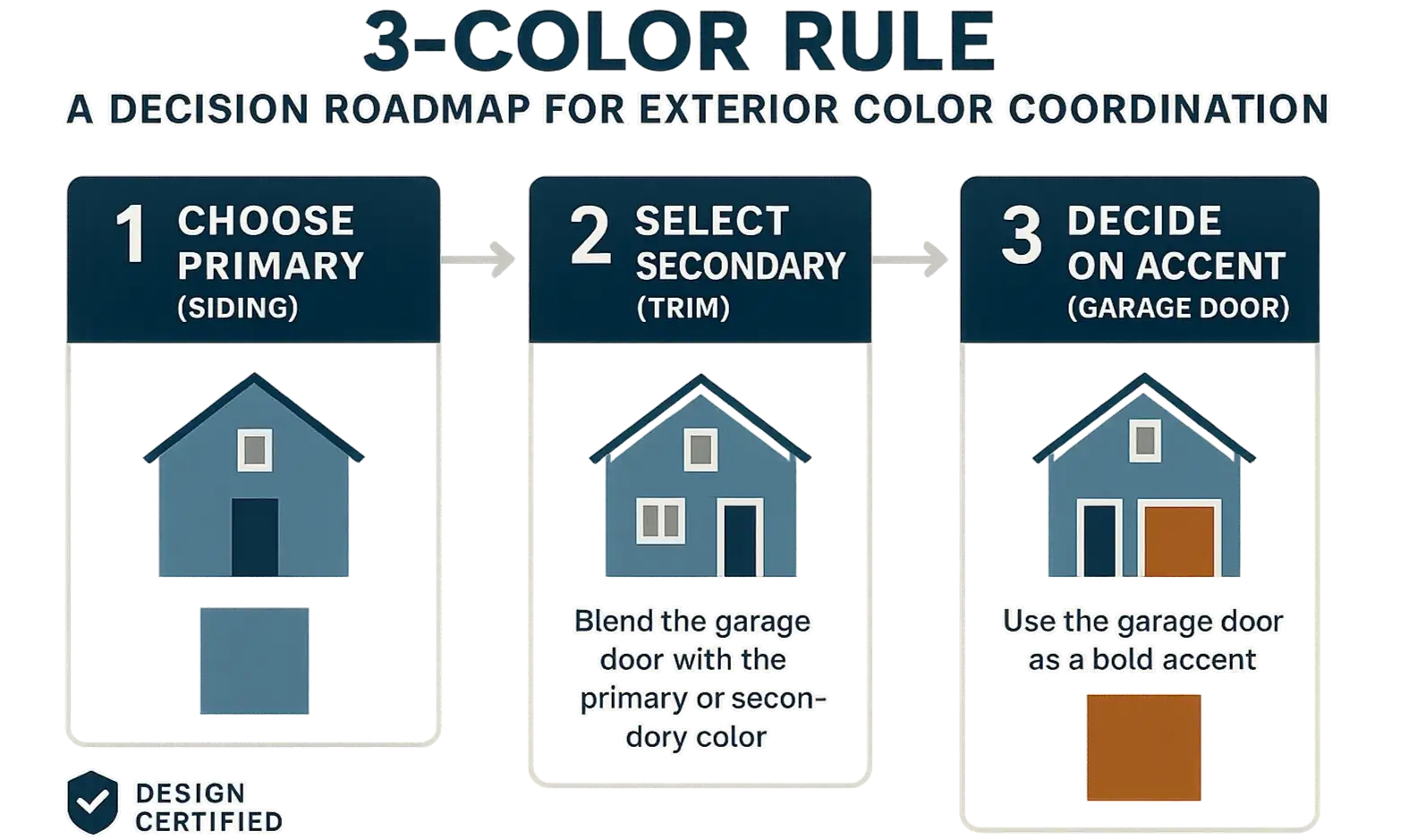
Follow the 3-Color Rule roadmap to confidently coordinate your garage door color with your home's siding and trim, ensuring a balanced and appealing exterior.
You’ve got the foundations down. Here are a few extra tips to help you finalize your choice with complete confidence.

Your Decision Checklist


Feeling ready? Walk through these steps to make your final call.

Frequently Asked Questions (FAQ)


Should my front door and garage door be the same color?

Generally, no. Your front door is the main focal point and should be the star of the show. Painting the garage door the same bold color can overwhelm your home’s facade and make the garage the center of attention. A good rule is to let the garage door match the house or trim, and let the front door be the unique accent.

What are the most popular garage door colors right now?

While timeless neutrals are always in style, we are seeing some interesting shifts. For a full breakdown, explore the latest garage door trends which include everything from bold black finishes to realistic wood-tones and modern panel designs.

How does the style of my garage door affect the color choice?

The style is crucial. A modern home with a flush panel garage door might look best with a bold, solid color like black or charcoal. A traditional carriage-house style door, however, often shines with a classic white, a two-tone paint scheme, or a rich wood finish. The door’s design and color should work together to complement your home’s architecture.

What if my house has mixed materials, like brick and stone?

This is common! Follow the same undertone principle. Look for a common color temperature between the two materials. Do both have warm undertones? Or is there a color fleck in the stone that matches the brick? Find that unifying color and use it as the basis for your garage door choice.

Bringing Your Vision to Life


Choosing the right color is the first step toward transforming your home’s curb appeal. The final, crucial step is ensuring the door is installed perfectly to look and function its best for years to come. A professional garage door installation or replacement guarantees that your investment not only looks beautiful but also operates safely and efficiently.

And remember, a new door’s beauty is maintained through care. Just like any other major part of your home, regular upkeep is key to longevity. A periodic garage door tune-up and repair service can prevent small issues from becoming big problems, keeping your door running smoothly and looking great.

Frequently Asked Questions


What color garage door looks best with a red brick house?

For red brick homes, complementary earth tones like dark bronze, chocolate brown, and warm beige work beautifully to ground the property. If you want a modern, high-contrast look, matte charcoal gray, black, or deep hunter green provide a stunning contemporary edge.

Should your garage door match your front door or your siding?

There is no strict rule, but matching your garage door to your window trim or your siding creates a clean, cohesive baseline. Matching it exactly to your front door works beautifully if the garage faces away from the street, but if your garage door is massive and front-facing, matching a bright front door accent color might overwhelm the house. In that case, choose a neutral tone for the garage and keep the bright pop of color on the front entry.

How do you pick a garage door color for a natural stone exterior?

Look closely at the secondary undertones within the natural stone. If the stone has cool gray and blue flecks, opt for slate gray or crisp white garage doors. If the stone features warm tan, gold, or brown tones, lean into rich wood grains, bronze hardware, or sand accents to tie the materials together organically.

What garage door colors complement neutral stucco homes?

Stucco offers a clean, flat canvas. High-contrast colors like deep charcoal, black, or walnut wood stains look highly sophisticated against light cream or white stucco. For a softer, monochromatic look, choose a garage door that is two to three shades darker than the stucco walls.

Will painting my garage door a bold color hurt my home's resale value?

It can if it clashes with the neighborhood. Extremely bright or trendy colors may alienate potential buyers. Sticking to sophisticated neutrals (white, black, gray, beige) or timeless dark wood stains yields the highest return on investment (ROI) and broadens market appeal.

Contact / Request a Call