The Unseen Force Behind Your Garage Door: Why Flexibility Beats Brittleness


Published: Jul 17, 2026 | Updated: Jul 28, 2026

Ever wondered why one garage door can take a hit from a basketball and bounce back, while another cracks mysteriously on a cold winter morning? You might think the answer is simply “steel vs. vinyl,” but the real story is much more fascinating. It’s about a hidden property that most homeowners overlook: the constant battle between brittleness and flexibility within the material itself.

Understanding this single concept can completely change how you view your garage door’s performance, longevity, and even the sounds it makes. It’s the secret language of materials, and learning to speak it is the first step toward making a truly informed decision for your home.

Cracking the Code on Brittleness vs. Flexibility


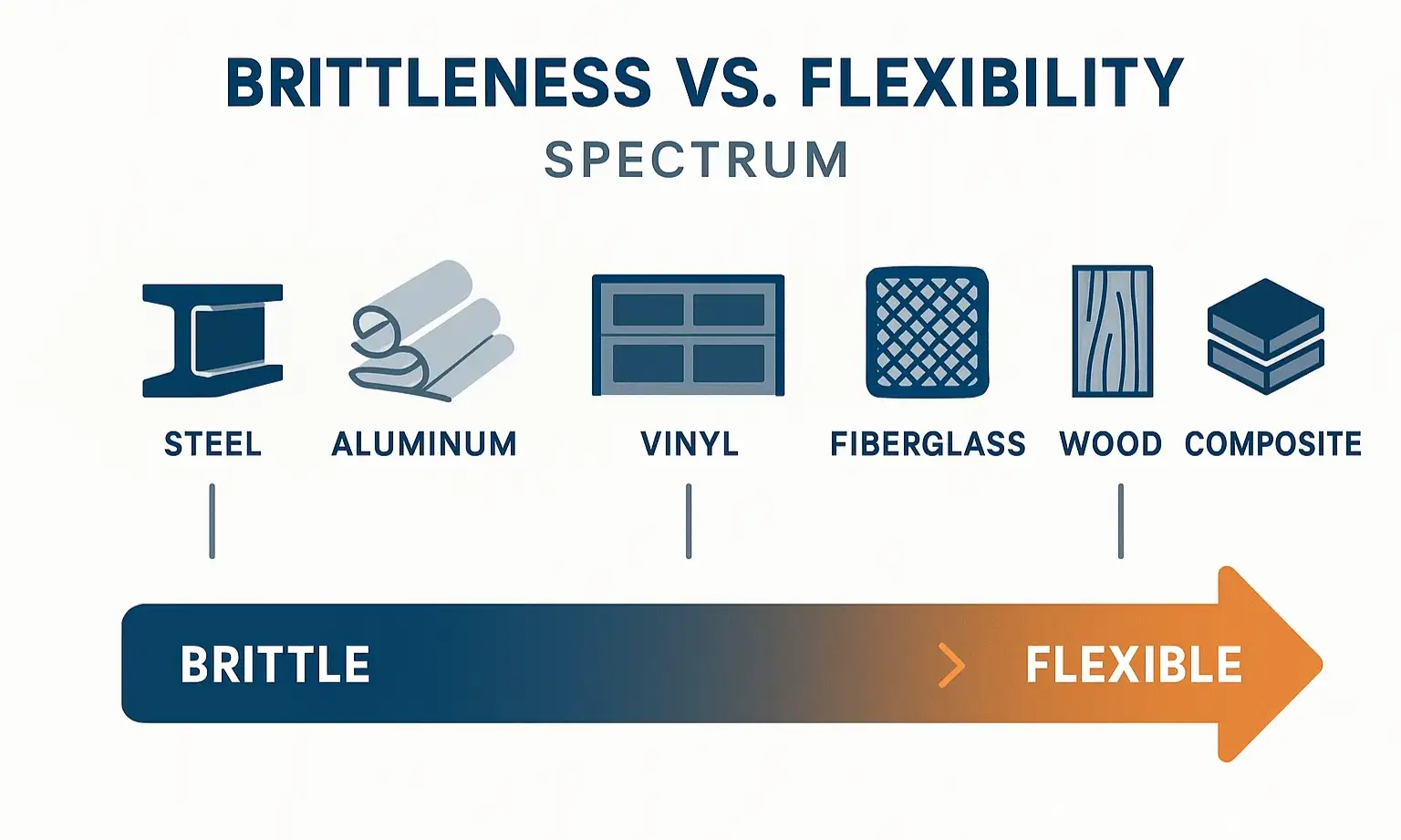
Visualize how garage door materials rank on the brittleness-flexibility spectrum to understand their impact on durability and lifespan.
Before we can compare materials, we need to grasp these two core ideas. Think of it like this:
Every garage door material exists somewhere on a spectrum between these two extremes. A material’s position on this spectrum is the single greatest predictor of its long-term durability.

Key Takeaway: A garage door’s “durability” isn’t just about surface hardness. It’s about its ability to handle stress. Flexible materials bend and absorb energy, while brittle materials resist and then break.

Where Common Garage Door Materials Fall on the Spectrum


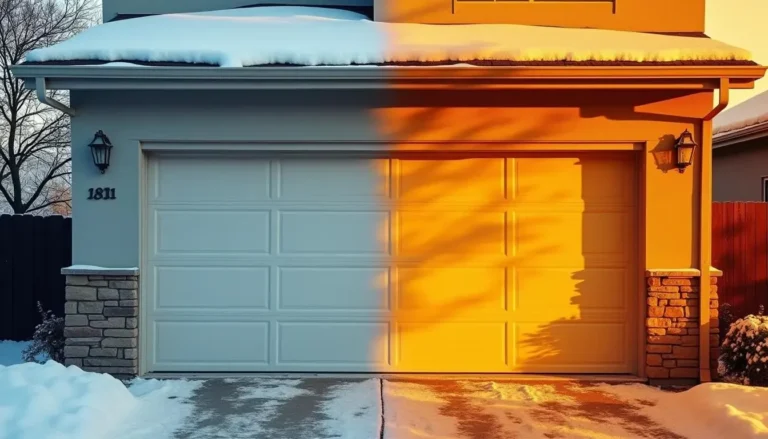
Understand how the inherent material properties of your garage door influence the lifespan and maintenance needs of crucial system parts.
Now let’s place common materials on our spectrum to see how their inherent properties affect their real-world performance.

The Brittle End: Rigid Vinyl & Certain Woods

Materials on this end of the spectrum are prone to cracking under stress.

Rigid Vinyl: While valued for being low-maintenance and resistant to rot, standard vinyl doors are notoriously brittle, especially in the cold. As temperatures drop, the material loses what little flexibility it has, making it highly susceptible to cracking from minor impacts or even the stress of normal operation. This is a primary cause of many common winter garage door problems.

Natural Wood: Certain types of wood, especially if not properly sealed and maintained, can become brittle over time. They can dry out, leading to splitting and cracking along the grain as the door expands and contracts with changing humidity.

The Balanced Middle: Steel & Aluminum

These materials offer a blend of rigidity and flexibility, making them popular choices.

Steel: As the most common garage door material, steel provides an excellent balance. It’s strong, but it also has enough flexibility to dent rather than shatter. A dent is evidence of the material absorbing impact energy. While nobody wants a dent, it’s far better than a full-blown crack that compromises the door’s structure. Learning about the full range of steel garage door benefits can help you decide if it’s the right fit for you.

Aluminum: Lighter and less prone to rust than steel, aluminum is also on the flexible side. However, its lower density means it dents more easily. It shares steel’s “bend-don’t-break” characteristic but has less overall impact resistance.

The Flexible Champions: Fiberglass & High-End Composites

These materials are engineered for resilience and sit firmly on the flexible end of the spectrum.

Fiberglass: This material is the MVP of impact absorption. It’s constructed from a mesh of glass fibers set in a resin, which allows it to flex significantly under stress and return to its original form. This makes it an ideal choice for homes with active kids and a stray basketball or two. Its excellent garage door abrasion resistance means it stands up well to daily wear and tear.

Composite: Often made from a combination of wood fibers and synthetic resins, composite doors mimic the look of wood without the tendency to rot or crack. They are designed to be stable and flexible, providing a durable and low-maintenance wood alternative.

Common Mistake: Choosing a garage door based on looks or initial price alone. A cheap, rigid vinyl door might save you money upfront, but it could cost you more in the long run with premature cracks and replacement panels, especially in a climate with four distinct seasons.

How a Door's Flexibility Impacts the Entire System


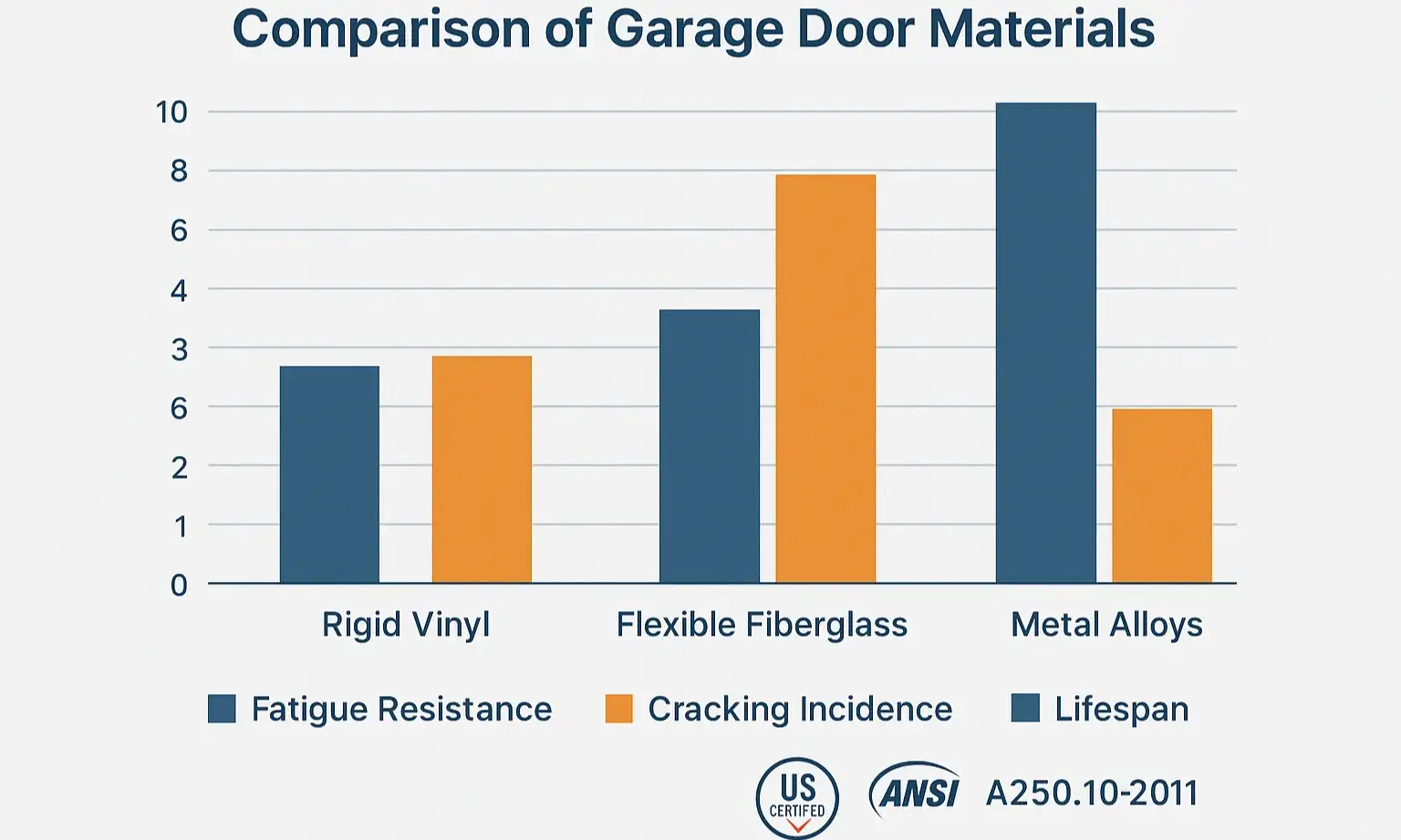
Data comparison of key durability metrics illustrates why material flexibility impacts garage door longevity more than surface appearances suggest.
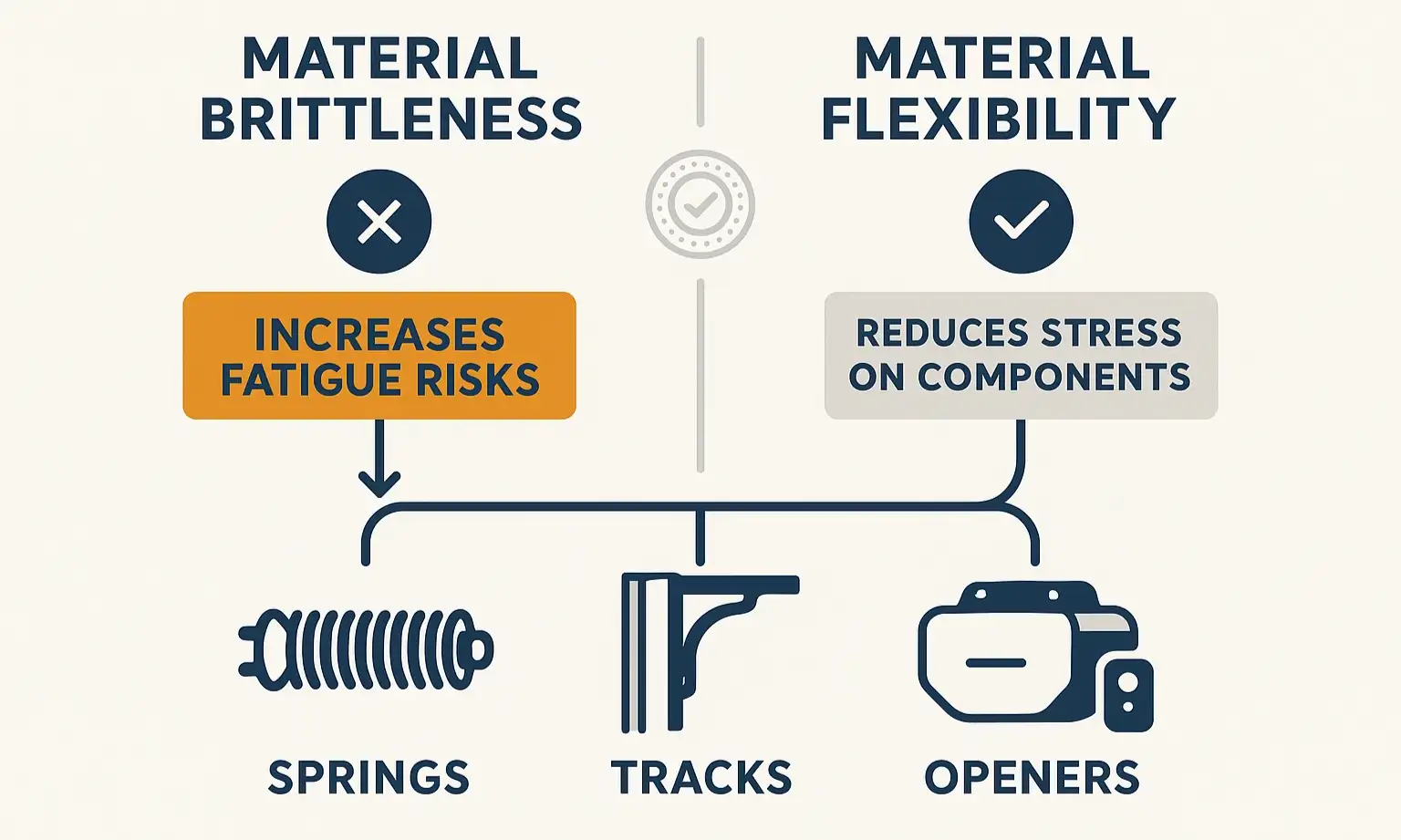
Here’s the “aha moment”: the brittleness or flexibility of your door panels doesn’t just affect the panels themselves. It sends ripples through the entire garage door system.

A heavy, rigid door that doesn’t absorb operational stress efficiently transfers that energy directly to other components. The daily vibrations from opening and closing can prematurely wear out rollers, hinges, and even the opener motor.

Conversely, a more flexible door panel can dampen these vibrations, much like the suspension on a car. This small amount of “give” reduces the strain on the springs and opener, potentially extending their lifespan. A rigid, shuddering door is more likely to cause issues that can lead to a garage door springs break, a common and dangerous problem.

The bottom line is that a door’s material properties influence everything from its quietness of operation to the longevity of its most critical parts.

Key Takeaway: Think of your garage door as a complete system. The flexibility of the panels acts as a shock absorber, protecting the springs, opener, and hardware from excessive wear and tear.

Choosing Your Door's "Personality" for Long-Term Harmony


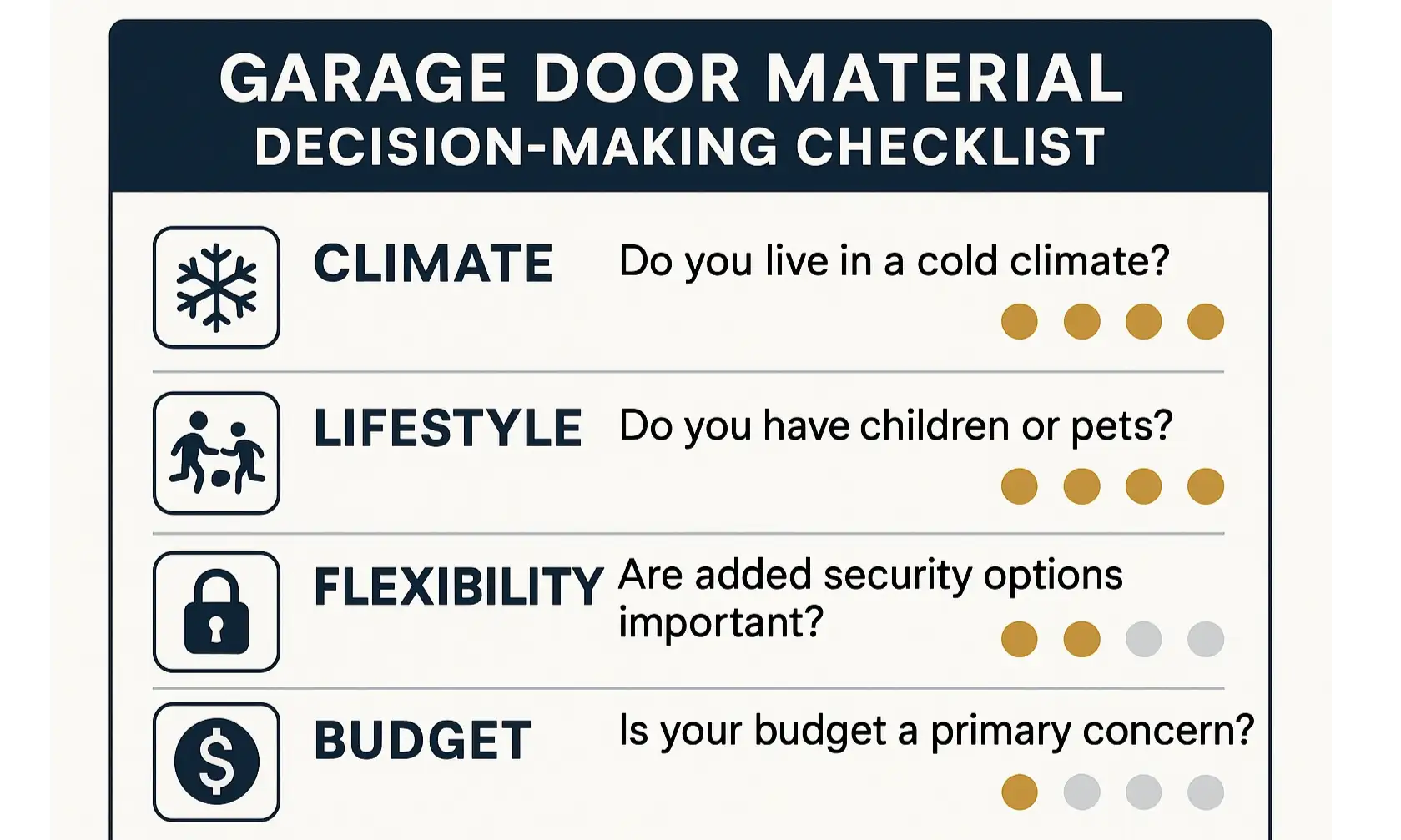
Use this decision checklist to match your needs with the ideal garage door material, ensuring lasting performance tailored to your lifestyle.
Armed with this new understanding, you can now choose a door based on your specific needs, not just generic pros and cons.

Consider Your Climate

Cold Winters? Prioritize flexibility. Fiberglass, composites, and insulated steel doors are far less likely to become brittle and crack in freezing temperatures.

Coastal or Humid Areas? Flexibility is still important, but corrosion resistance becomes key. Materials like fiberglass, vinyl, and aluminum are often considered among the best garage doors for coastal areas because they won’t rust.

Consider Your Lifestyle

Active Household? If your driveway is a playground, a flexible fiberglass or composite door that can withstand impacts is a smart investment.

Low-Maintenance Priority? Steel, fiberglass, and vinyl require less upkeep than wood, but remember the brittleness trade-off with standard vinyl.

Budget-Conscious? A non-insulated, single-layer steel door offers a good balance of durability and cost-effectiveness.

Your Decision-Making Checklist

Use this simple checklist to guide your thinking and find the material that best matches your home’s unique demands.

Frequently Asked Questions (FAQ)


Why do garage doors crack and break?

The primary causes are impacts and thermal stress. Brittle materials like rigid vinyl can’t absorb the energy from a sudden impact or the stress from expanding and contracting with temperature changes, leading to cracks.

How long do garage doors last?

This depends heavily on the material’s properties and maintenance. A flexible, well-maintained fiberglass or steel door in a mild climate can last 30 years or more. A brittle vinyl door in a harsh climate may show signs of failure in less than 10. You can learn more about how to extend the lifespan of your garage door with proper care.

So, what’s the single best material for a garage door?

There isn’t one—the “best” material is the one that best matches your climate, lifestyle, and budget. This guide is designed to help you define your priorities so you can choose the material that’s truly best for you. For example, the garage-door-materials-coastalbest garage door material for coastal homes will be different from the best for a cold, inland climate.

Why do my garage door springs break?

Garage door springs are rated for a specific number of cycles (one open and close), but factors like a heavy, rigid door that transfers more operational stress can accelerate wear and lead to premature failure.

What is the rubber part at the bottom of a garage door called?

That is the bottom seal or weatherstripping. It’s crucial for keeping out drafts, water, and pests. Like the door itself, the flexibility of this material is key to its longevity, which is why it is typically made of durable rubber or vinyl. If you are wondering what that rubber strip is called, the garage door bottom seal plays a vital role in weatherproofing your home and keeping outdoor elements at bay.

Your Next Step to a More Durable Garage Door


Choosing a new garage door is a long-term investment. By looking beyond surface-level aesthetics and understanding the fundamental properties of brittleness and flexibility, you are now equipped to choose a door that won’t just look good, but will perform reliably for years to come. You’ve moved from a casual browser to an engaged, informed homeowner—and that’s the key to making a decision you’ll be happy with every time you pull into the driveway.

Frequently Asked Questions


How does cold weather affect garage door materials and flexibility?

Freezing temperatures cause materials to contract and lose their natural elasticity. This thermal contraction makes components like vinyl panels, weatherstripping, and metal moving parts increasingly brittle, reducing their flexibility and making them more susceptible to cracking or breaking under operational stress.

Which garage door materials are least prone to brittleness in freezing temperatures?

Insulated multi-layer steel and high-density fiberglass garage doors offer superior resistance to brittleness. The built-in polyurethane or polystyrene insulation acts as a thermal barrier, helping the exterior panels maintain structural integrity and preventing the extreme temperature fluctuations that cause material degradation.

Why do garage door springs snap more frequently during the winter?

Steel torsion and extension springs become physically brittle when exposed to sub-zero temperatures. When the garage door is opened, the sudden mechanical tension applied to the cold, rigid steel—often combined with added weight from hardening grease or ice—can exceed the material's tensile strength, causing the spring to snap.

How can I prevent my garage door components from becoming stiff and brittle?

You can mitigate brittleness by conducting regular seasonal maintenance. Apply a silicone-based or white lithium grease to all metal moving parts (springs, rollers, hinges) before winter, replace hardened or cracked bottom weather seals, and ensure your garage door is properly balanced to reduce unnecessary strain on rigid materials.

Contact / Request a Call