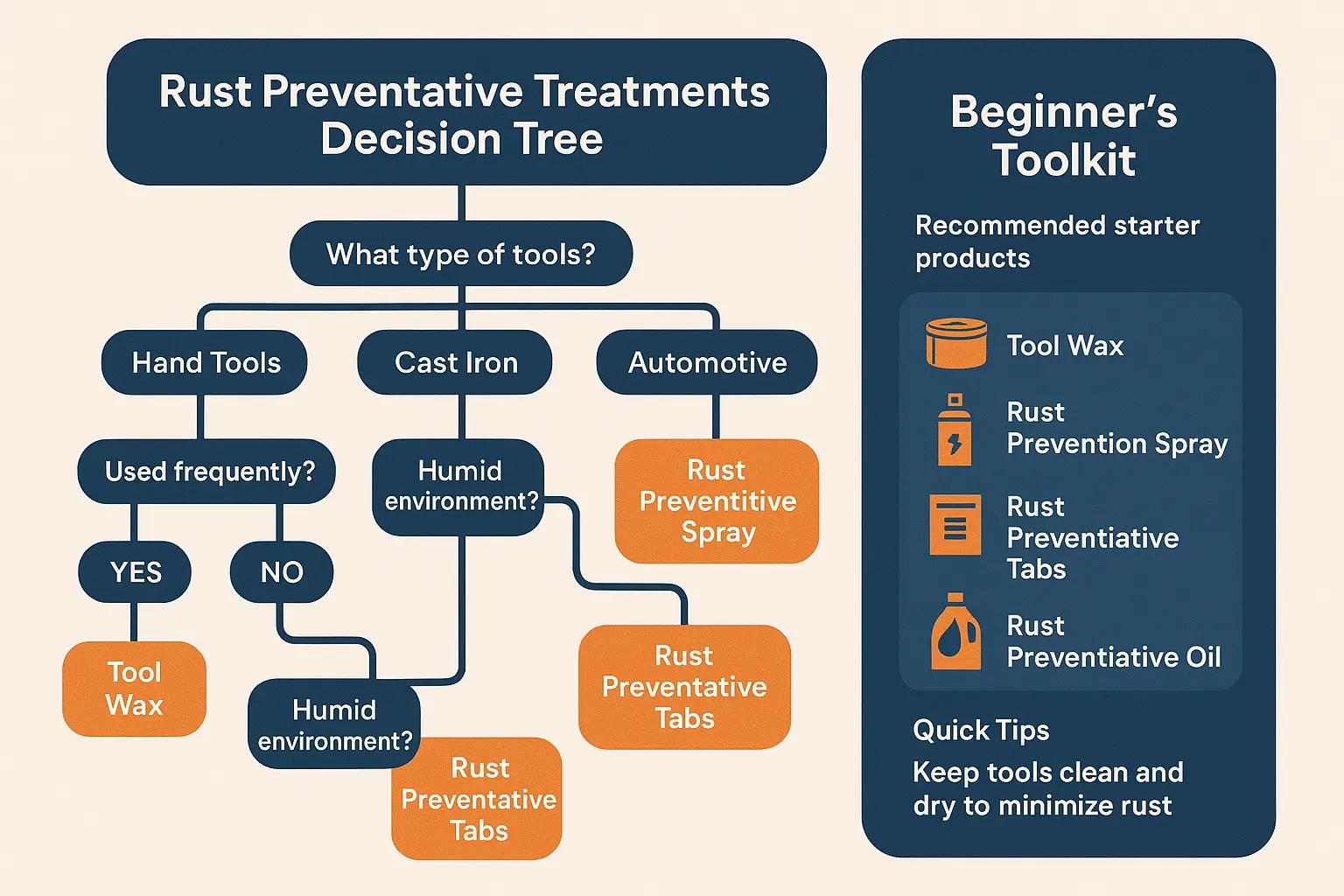
The world of rust preventatives can feel overwhelming. Oils, waxes, sprays, greases, strange-looking plastic chips—what’s the difference, and when should you use each one? Let’s break down the major categories so you can choose your champion.
Oils: The Classic Go-To
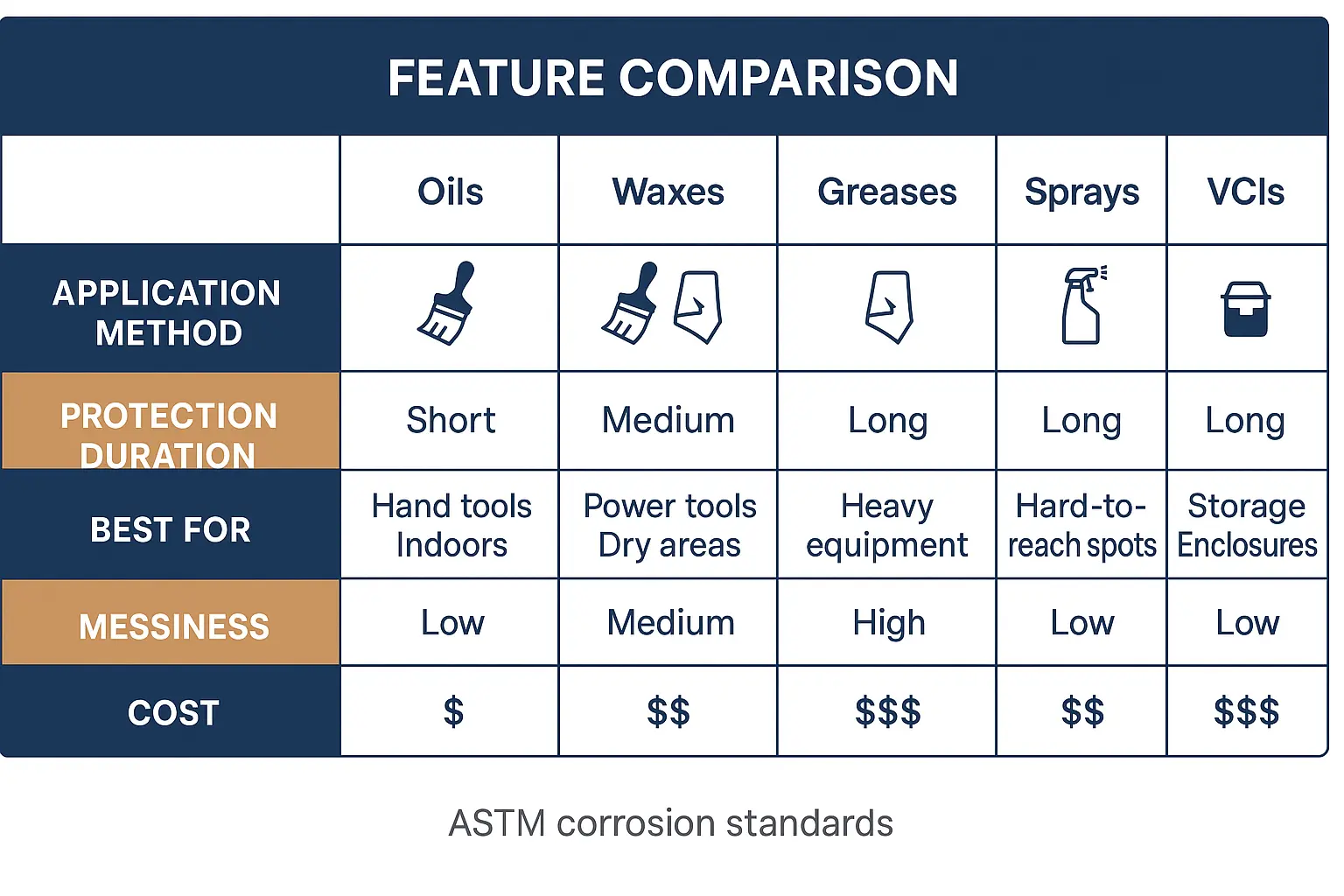
Light mineral oils, camellia oil, and 3-in-1 oil are staples for a reason. They are easy to apply and excellent for tools you use frequently. A quick wipe-down leaves a thin, wet film that displaces moisture.
• How It Works: Creates a simple liquid barrier between the metal and the air.
• Best For: Daily or weekly wipe-downs of hand tools, lubricating moving parts.
Waxes: The Dry Shield
Products like paste wax create a hard, dry barrier that doesn’t feel greasy to the touch. This makes them a favorite among woodworkers for protecting large cast-iron surfaces like table saws and jointers.
How It Works: You apply the wax, let the solvents evaporate, and buff it to a dry, slick film that seals the metal.
Best For: Large, flat surfaces (table saw tops), hand planes, chisels where you don’t want an oily residue.
Solvent-Based Sprays: The Modern Standard
This category includes popular products like Boeshield T-9 and Cosmoline. They are a hybrid solution, containing a waxy or oily protectant suspended in a solvent. The solvent helps the product creep into tight spaces, then evaporates, leaving a thin, durable protective film.
• How It Works: The solvent carrier delivers a waxy or oil-based barrier deep into the tool’s pores and crevices.
• Best For: General-purpose protection, tools with intricate parts, and seasonal or long-term storage.
Greases: The Heavy-Duty Protector
When you need uncompromising, long-term protection for tools you won’t be touching for months or years, grease is the answer.
• How It Works: Creates a thick, semi-solid barrier that is highly resistant to moisture.
• Best For: Mothballing seasonal equipment (like lawnmowers), protecting spare parts, threads on bolts and screws.
Vapor Corrosion Inhibitors (VCIs): The Invisible Shield
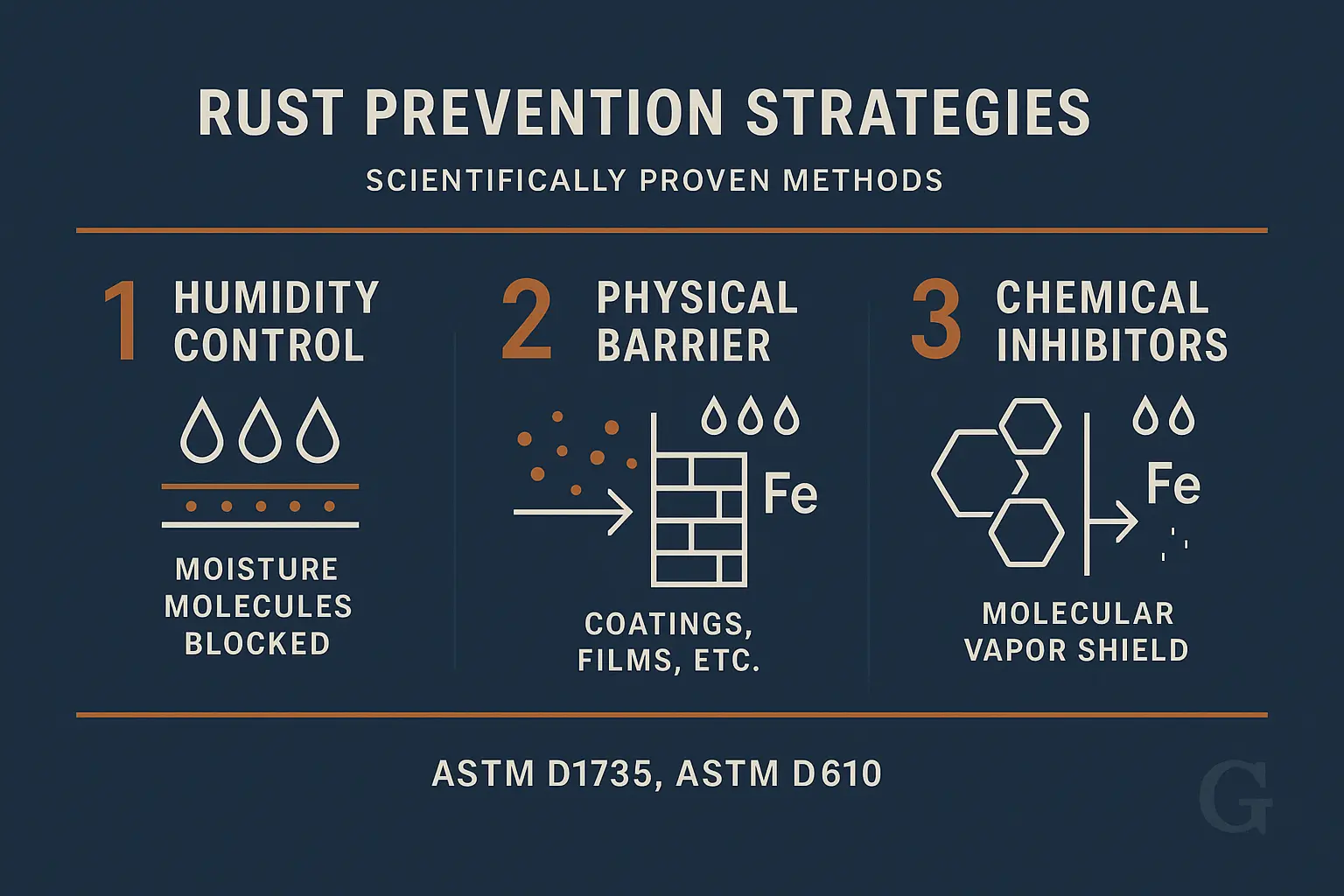
VCIs are a fascinating technology. They come in the form of emitters, bags, or paper liners. These products slowly release a harmless, odorless vapor that forms an invisible, monomolecular layer on any metal surface within an enclosed space. This layer stops the rust reaction before it can start.
• How It Works: The vapor creates a chemical shield on the metal, neutralizing its ability to react with oxygen and moisture.
• Best For: Protecting tools inside enclosed spaces like toolboxes, cabinets, and drawers.