How To Integrate Smart Tech into Your Bespoke Garage Door


Published: Jul 7, 2026 | Updated: Jul 28, 2026

You’ve invested in a bespoke garage door—a stunning piece of architecture that elevates your home’s curb appeal. Whether it’s the rich grain of solid cedar on modern carriage garage doors or the clean lines of flush-panel aluminum, it’s a statement. The last thing you want is for that carefully curated design to be marred by a pair of clunky plastic sensors and a tangle of visible wires.

For years, the conversation around smart garages has been dominated by off-the-shelf DIY kits. While great for standard doors, they completely overlook the aesthetic demands of high-end design. This guide fills that gap. We’ll explore the art and science of seamless integration, showing you how to hide the hardware, conceal the wiring, and choose the right system to make your garage door both brilliant and beautiful.

Smart Garage Tech 101: Moving Beyond the Standard Kit


Before we talk about hiding technology, it helps to understand what we’re working with. At its core, a smart garage system involves a motorized opener, sensors for safety and status, and a controller that connects to your Wi-Fi.

Most people are familiar with the standard safety sensors that come with any modern opener. But if you’ve ever wondered how do garage door safety sensors work, they simply project an infrared beam across the opening; if anything breaks the beam, the door reverses.

For a bespoke installation, however, we need to think beyond these basic components and consider more sophisticated options designed for discretion:

Understanding these options is the first step toward achieving a truly integrated smart home experience.

The Art of Integration: Hiding the Hardware


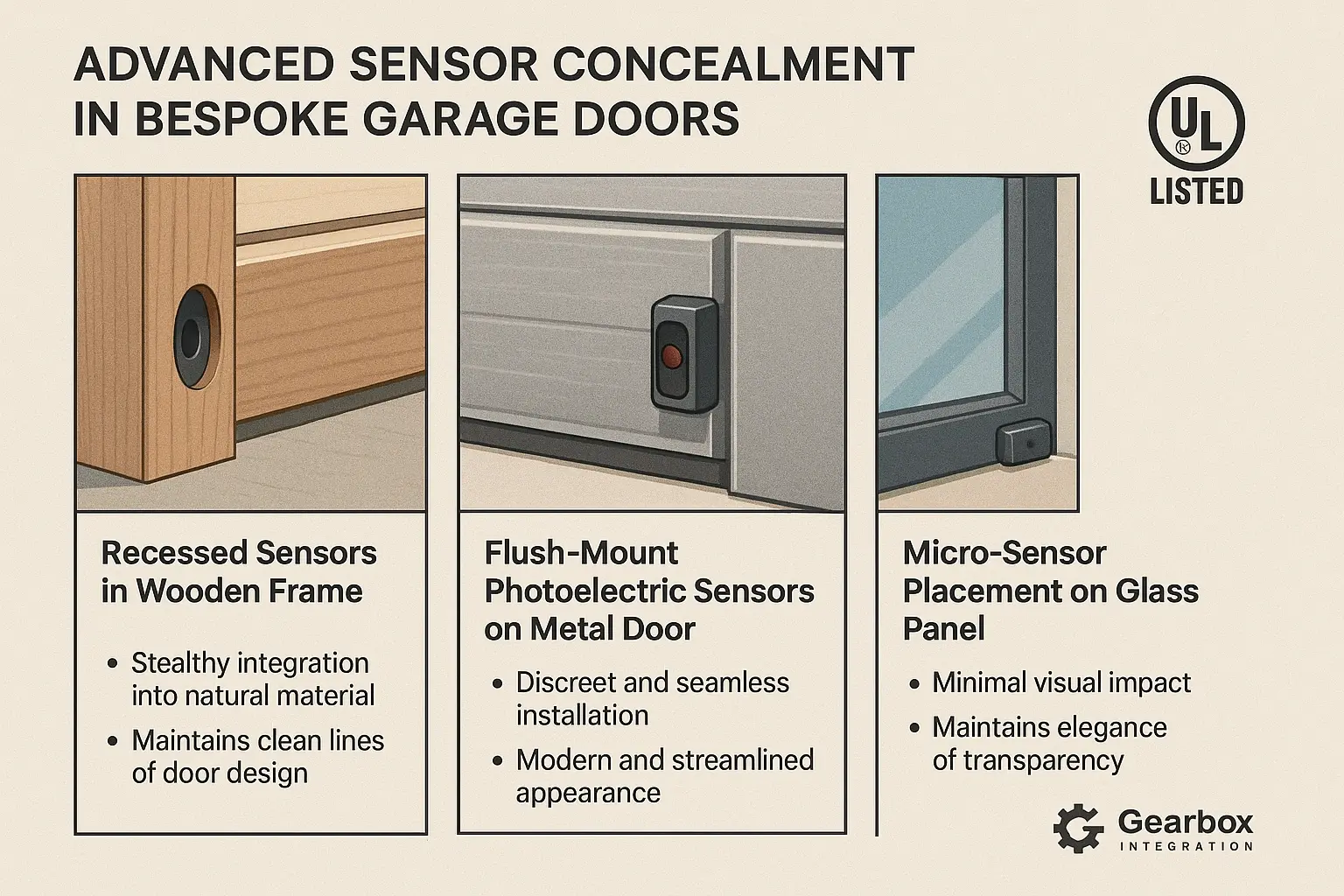
Explore expert sensor concealment solutions that seamlessly merge smart technology into bespoke garage doors without compromising design beauty.
This is where design intent meets technical execution. The goal is to make the technology disappear, preserving the door’s clean lines and material beauty. This requires planning and a few key techniques.

Sensor Concealment Techniques

The most common eyesore in a garage is the pair of safety sensors mounted on metal brackets. In a custom installation, these are the first things to address.

Recessing into Frames: For wood or composite door frames, a skilled installer can create a small cavity to recess the sensor, so only the tiny lens is visible. This is the gold standard for concealment.

Flooring Integration: In new builds or major renovations, flush-mount sensors can be set directly into the concrete floor and the bottom of the door jamb, making them completely disappear from the vertical sightline.

Color-Matching and Painting: When recessing isn’t possible, some smaller sensors can be painted to match the exact color of the door frame, using paint formulated for plastics to ensure it adheres properly.

Invisible Wiring Solutions

Exposed staple-gunned wires running along the wall are an immediate giveaway of a standard installation. A bespoke approach demands that every wire is thoughtfully routed.

Grooved Channels: For solid wood doors and frames, a small channel or “rabbet” can be carved into the back of the trim to lay the wire in, which is then covered or caulked for a perfectly smooth finish.

Pre-Wired Doors: High-end door manufacturers sometimes offer the option to run wiring for sensors or locks through the panels during construction, providing the cleanest possible solution.

Wireless and Battery Power: While hardwiring is always preferable for reliability, some newer battery-powered sensors can communicate wirelessly with the hub, eliminating the need for wiring altogether. However, this requires periodic battery changes and is a trade-off between convenience and maintenance.

Choosing the Right System: From DIY Kits to Pro Integration


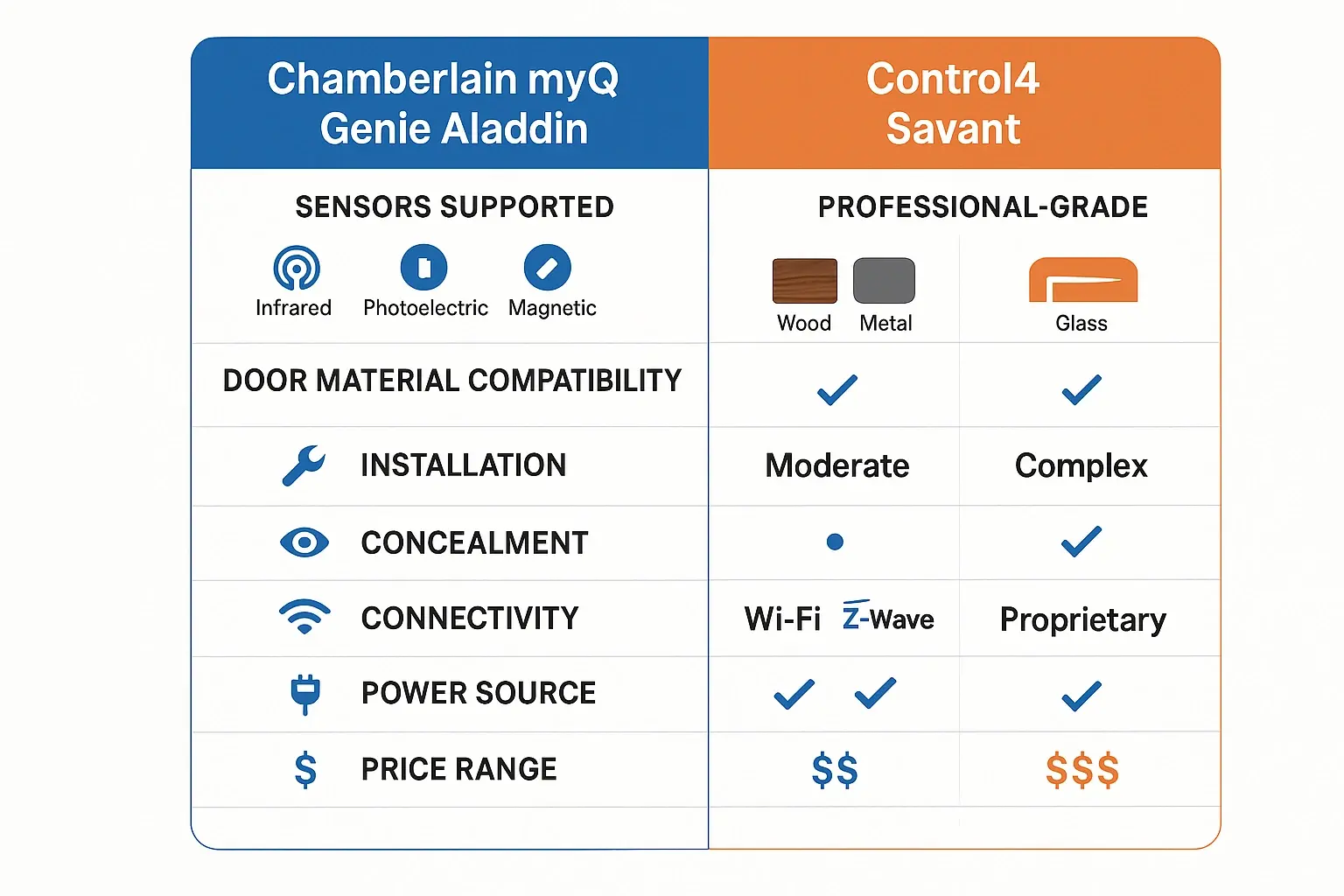
Detailed comparison of DIY and professional smart garage door systems, highlighting factors critical to bespoke door integration including concealment and material compatibility.
Not all smart systems are created equal, especially when it comes to custom applications. Your choice will depend on your desired level of integration, reliability, and aesthetics.

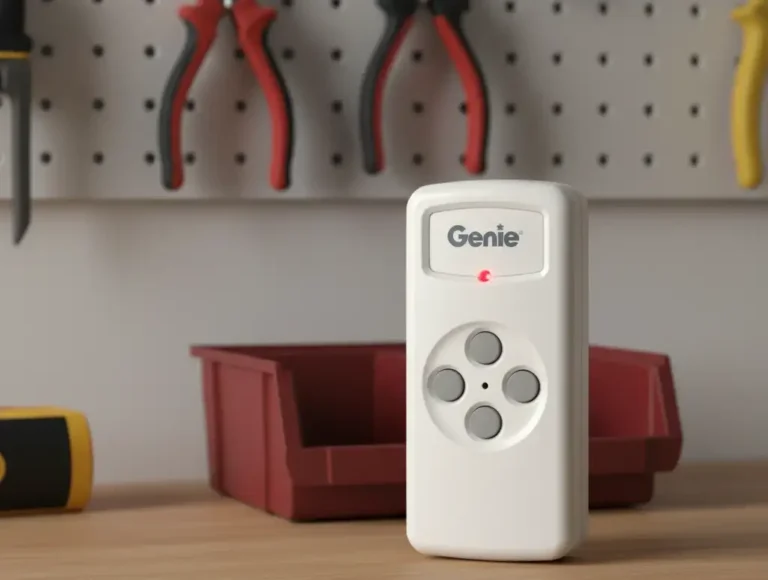
DIY Smart Add-Ons (e.g., Chamberlain myQ, Genie Aladdin Connect): These are add-on kits that work with most existing garage door openers.

Best for: Standard garage doors where aesthetics are not the primary concern. They are a cost-effective way to add smart functionality.

Limitations: They rely on standard, visible sensors and may have less reliable connectivity. Learning how to connect garage door opener kits is straightforward, but they offer little customization for concealment.

Professional Smart Home Systems (e.g., Control4, Savant, Crestron): These systems are installed by certified integrators and tie into your entire smart home ecosystem.

Best for: Custom homes and bespoke garage doors where seamless integration is paramount. They work with a wider range of discreet, pro-grade sensors and offer rock-solid reliability.

Limitations: They represent a higher investment and require professional installation.

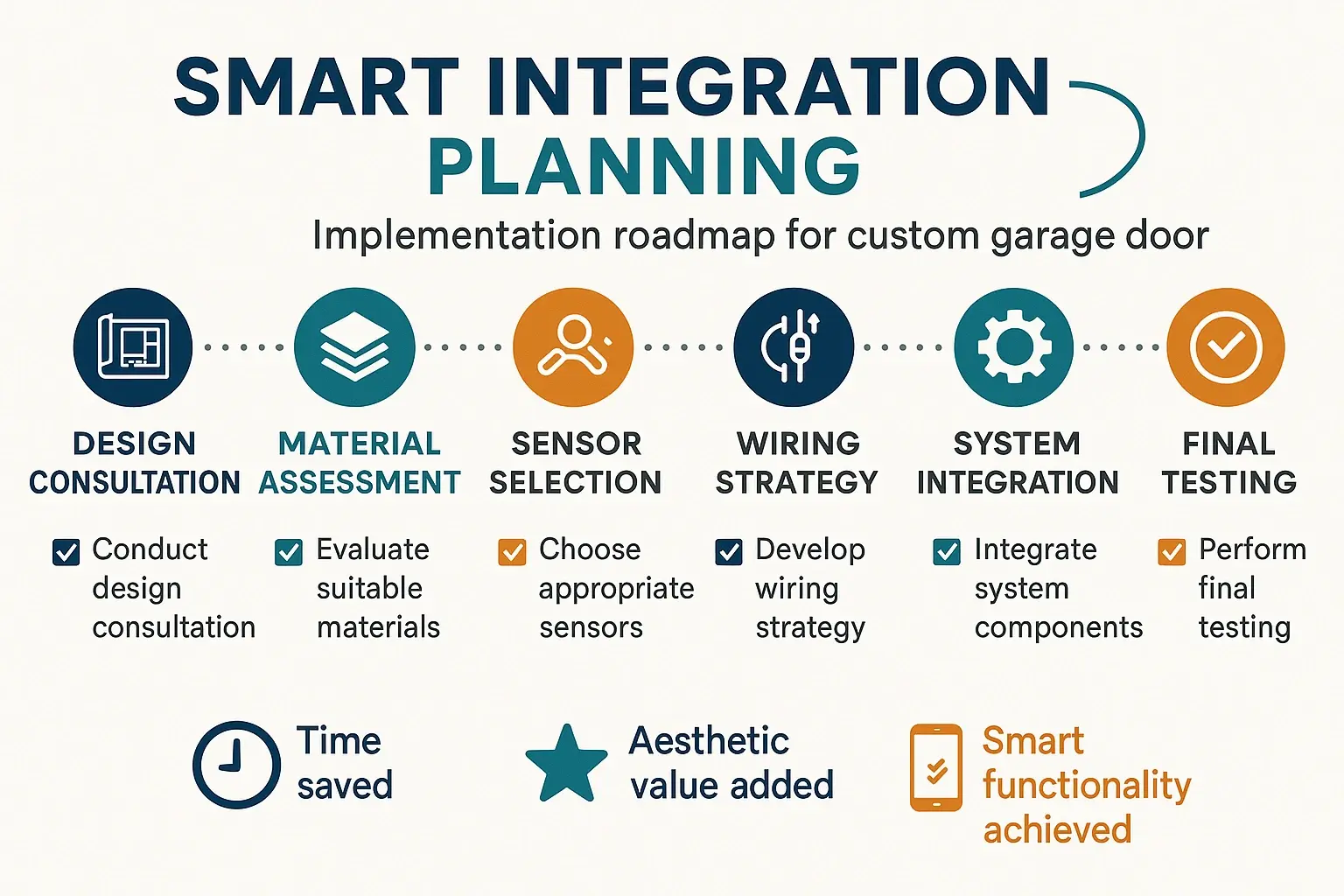
Design & Planning Checklist


Step-by-step planning checklist to ensure seamless and aesthetically pleasing smart home integration into bespoke garage doors.
To ensure a flawless result, smart technology should be part of the conversation from the very beginning of your design process. Use this checklist to guide discussions with your architect, builder, and garage door specialist.

Troubleshooting for Custom Installations


Even with careful planning, unique issues can arise. While standard troubleshooting often focuses on dirty lenses or misalignment, custom setups have their own quirks.

Recessed Sensor Misalignment: If a recessed sensor isn’t working, use a laser level to ensure the embedded sensors are aimed perfectly at each other. Even a slight angle can interrupt the beam.

Signal Interference with Metal Doors: Solid metal or insulated steel doors can sometimes interfere with the radio frequency of the smart controller. Ensure the controller’s antenna is positioned correctly and is not obstructed by metal components.

Power Issues: In a custom build, it’s easy to overlook where the garage door opener power is sourced from. If the system is unresponsive, check the specific circuit breaker it’s connected to, which may be different from the main garage power.

Frequently Asked Questions (FAQ)


Can I make my existing custom garage door smart?

Absolutely. While it’s easiest to plan during a new build, a skilled technician can retrofit most custom doors. This may involve carefully drilling into frames to run wires and finding creative ways to mount discreet sensors.

Are hidden sensors as safe and reliable as standard ones?

Yes, provided they are installed correctly. Professional-grade flush-mount and micro-sensors are built to the same safety standards (UL 325) as the clunky ones you’re used to seeing. The key is precise alignment and secure installation.

Do smart garage doors work during a power outage?

Like any standard opener, a smart opener will not operate during a power outage unless it is connected to a battery backup system. Many modern openers offer this as an optional feature, which is highly recommended.

What is the benefit of a professional system over a DIY kit?

Reliability and integration. A pro system is hard-wired and communicates directly with a central hub, making it less susceptible to Wi-Fi dropouts. It can also trigger more complex actions, like turning on entry lights and disarming your security system when the garage door opens.

The Best of Both Worlds


Your garage door is more than just an entry point—it’s an integral part of your home’s design. By planning ahead and working with knowledgeable professionals, you don’t have to choose between cutting-edge technology and timeless aesthetics. You can have a garage that is secure, intelligent, and every bit as beautiful as you envisioned.

For complex projects involving bespoke doors and integrated systems, expert guidance is key. If you’re looking for garage door installation near me and want to explore seamless smart home solutions, consulting with a specialist can ensure your vision becomes a reality.

Frequently Asked Questions


Can you add smart home features to a custom garage door without ruining its design

Yes, you can integrate smart home technology into custom or bespoke garage doors without altering their exterior aesthetics. By using discreetly installed smart openers, hidden sensors, and integrated smartphone apps, you can keep the design intact while enjoying modern automation.

What are the benefits of integrating home automation with a custom garage door

Integrating your custom garage door with home automation systems provides real-time monitoring alerts, remote opening and closing capabilities via your smartphone, improved security through advanced encryption, and the ability to sync your garage door with home lighting and security routines.

Are modern smart garage door openers compatible with luxury wooden or glass doors

Absolutely. Modern smart garage door openers work seamlessly with high-end materials like wood, glass, and copper. The automation hardware is installed entirely on the inside of the garage, ensuring that the premium look of your custom door remains completely unaffected from the outside.

How does a smart garage door improve home security

Smart garage doors enhance safety by sending instant smartphone notifications if the door is left open. They also feature automatic closing schedules, digital guest keys that expire after a set time, and encrypted rolling code technology that prevents high-tech thieves from copying your remote signal.

Contact / Request a Call