It often starts with a sound so loud and sudden it’s mistaken for a gunshot. One moment, your garage is quiet; the next, a deafening BANG echoes off the walls. This isn’t just a sign of a broken part—it’s the sound of immense, stored energy being violently released. That sound is a warning that one of the most dangerous components in your home has just failed: a garage door spring.
Many homeowners underestimate these tightly coiled pieces of metal, viewing them as a simple mechanical part. But understanding what happens when they break, and the specific injuries they can cause, reveals a far more serious reality. This isn’t just about a door that won’t open; it’s about preventing life-altering accidents.
The Life-Altering Injuries from Garage Door Springs
Published: Mar 31, 2026 | Updated: Jul 28, 2026
Foundation: Why a Small Spring is the Most Dangerous Thing in Your Garage
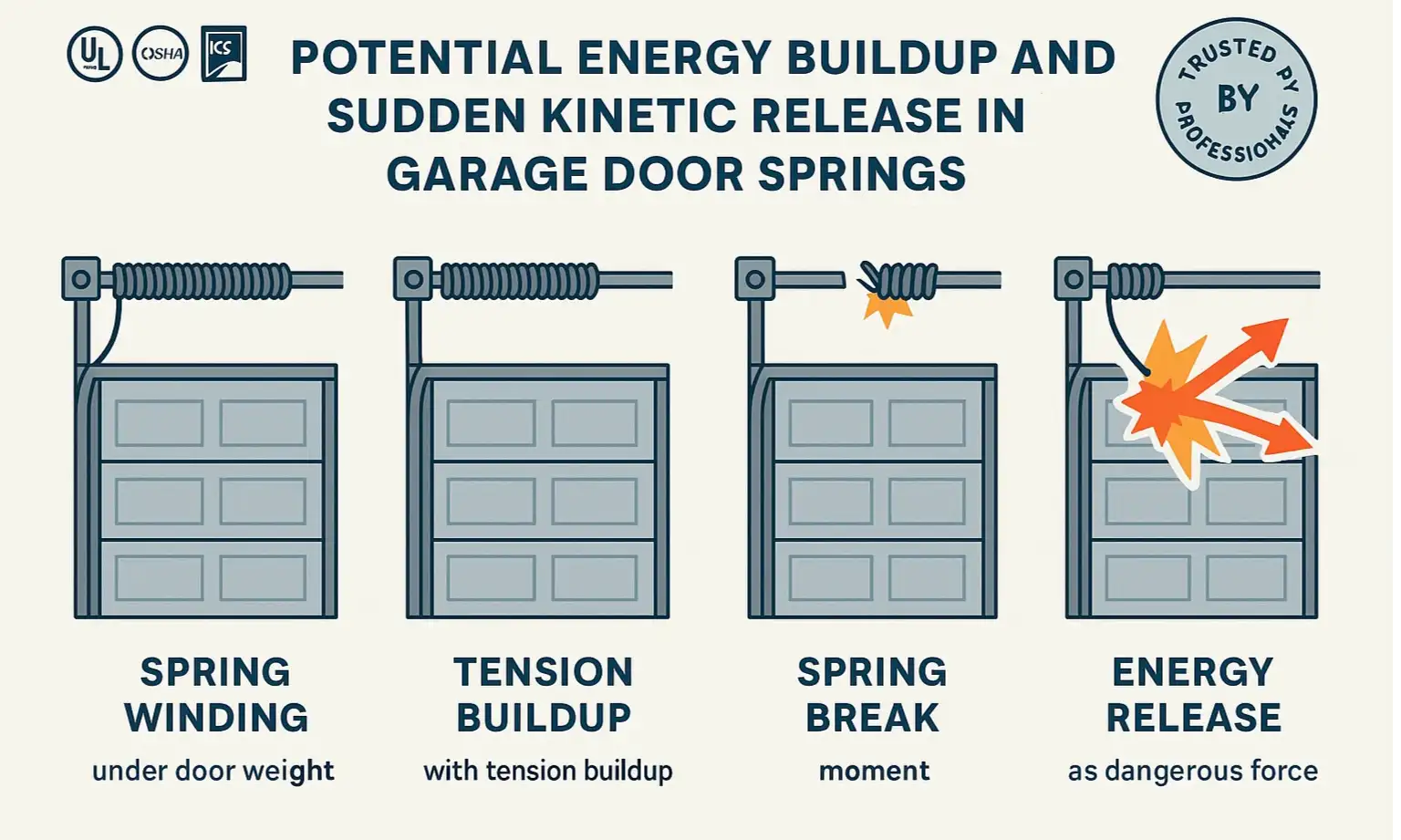
To understand the danger, we need to talk about energy. A garage door can weigh anywhere from 150 to 400 pounds. The springs are what do the heavy lifting, making it possible for you (and your automatic opener) to move that immense weight with ease.
They do this by storing a tremendous amount of mechanical energy, known as potential energy. Think of it like a drawn bowstring. The string itself isn’t moving, but it holds the power to launch an arrow. Your garage door springs are constantly in that “drawn” state, holding hundreds of pounds of force in check.
When a spring breaks, that stored potential energy is instantly converted into kinetic energy—the energy of motion. And it happens with explosive, uncontrolled force.
They do this by storing a tremendous amount of mechanical energy, known as potential energy. Think of it like a drawn bowstring. The string itself isn’t moving, but it holds the power to launch an arrow. Your garage door springs are constantly in that “drawn” state, holding hundreds of pounds of force in check.
When a spring breaks, that stored potential energy is instantly converted into kinetic energy—the energy of motion. And it happens with explosive, uncontrolled force.
To put this into perspective: A standard torsion spring for a 200-pound door stores enough energy to launch a 10-pound bowling ball over 50 feet into the air. Now imagine that force unleashed inside your garage.
There are two main types of springs, and understanding them helps clarify why are garage door springs dangerous in different ways:
There are two main types of springs, and understanding them helps clarify why are garage door springs dangerous in different ways:
Building: A Detailed Look at the Injuries (The Core Content)
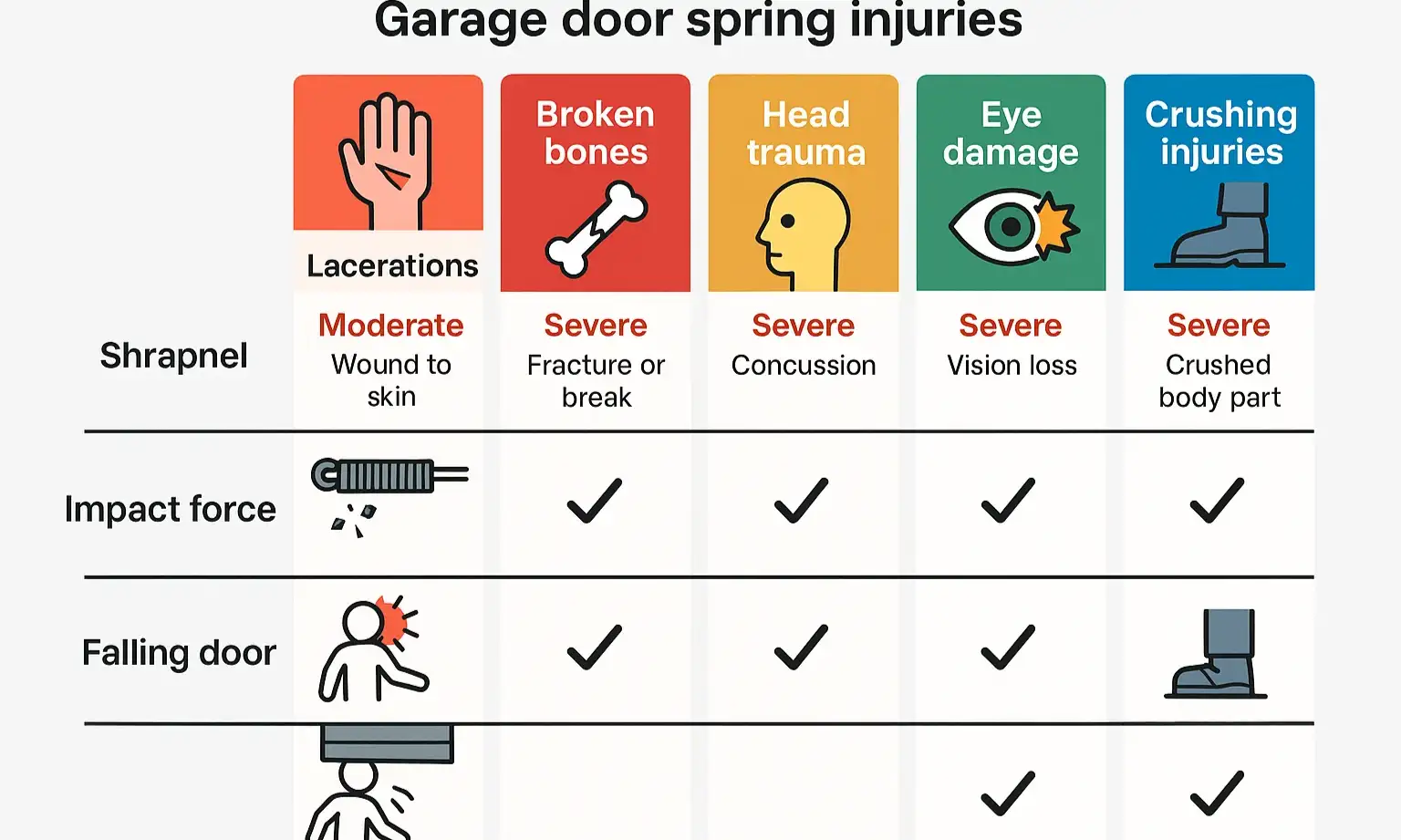
Saying a broken spring is “dangerous” is an understatement. The reality is a spectrum of severe, life-changing injuries. Understanding the specific mechanisms of these injuries is the first step toward true prevention.
Projectile Injuries: Shrapnel in Your Garage
How it happens: When a spring, particularly an extension spring without a safety cable, snaps, the force can turn the broken pieces into high-velocity projectiles. The end cones, connectors, or fragments of the spring coil itself become shrapnel.
The result:
Deep Lacerations and Puncture Wounds: These metal fragments can easily tear through skin and muscle, causing severe cuts that require stitches or surgery.
Embedded Objects: Pieces of the spring can become lodged in a limb, wall, or vehicle, requiring medical intervention to remove.
Blunt Force Trauma: The Uncoiling Whip
How it happens: Even if the spring doesn’t shatter into multiple pieces, the two ends can whip around with incredible force. If a torsion spring breaks while someone is trying to adjust it, or an extension spring snaps, the remaining parts can strike a person with the force of a heavy club.
The result:
Broken Bones: A direct hit to an arm, leg, hand, or rib can easily cause a fracture.
Concussions and Head Trauma: A strike to the head can cause serious brain injury, even if there is no visible cut. This is one of the most severe risks.
Crushing Injuries & Amputation: The Force of Gravity
How it happens: This injury occurs when the door itself becomes the weapon. With one or both springs broken, the full weight of the door is no longer supported. If someone is working underneath it or tries to manually lift it without understanding the danger, the door can slam shut with hundreds of pounds of force.
The result:
Crushed Limbs: Hands, feet, arms, or legs caught under the falling door can be crushed, leading to permanent damage.
Amputation: In the most severe cases, the force is great enough to cause traumatic amputation of fingers or hands.
Eye Damage & Facial Injuries: A High-Stakes Hazard
How it happens: The face and eyes are particularly vulnerable to the small, fast-moving shrapnel from a shattered spring. The unpredictable trajectory means even someone standing several feet away is at risk.
The result:
Permanent Vision Loss: A metal fragment striking the eye can lead to blindness.
Facial Fractures: Broken cheekbones, jaws, or orbital bones are common outcomes of being struck by a whipping spring or projectile.
Action: The Only Safe Next Step
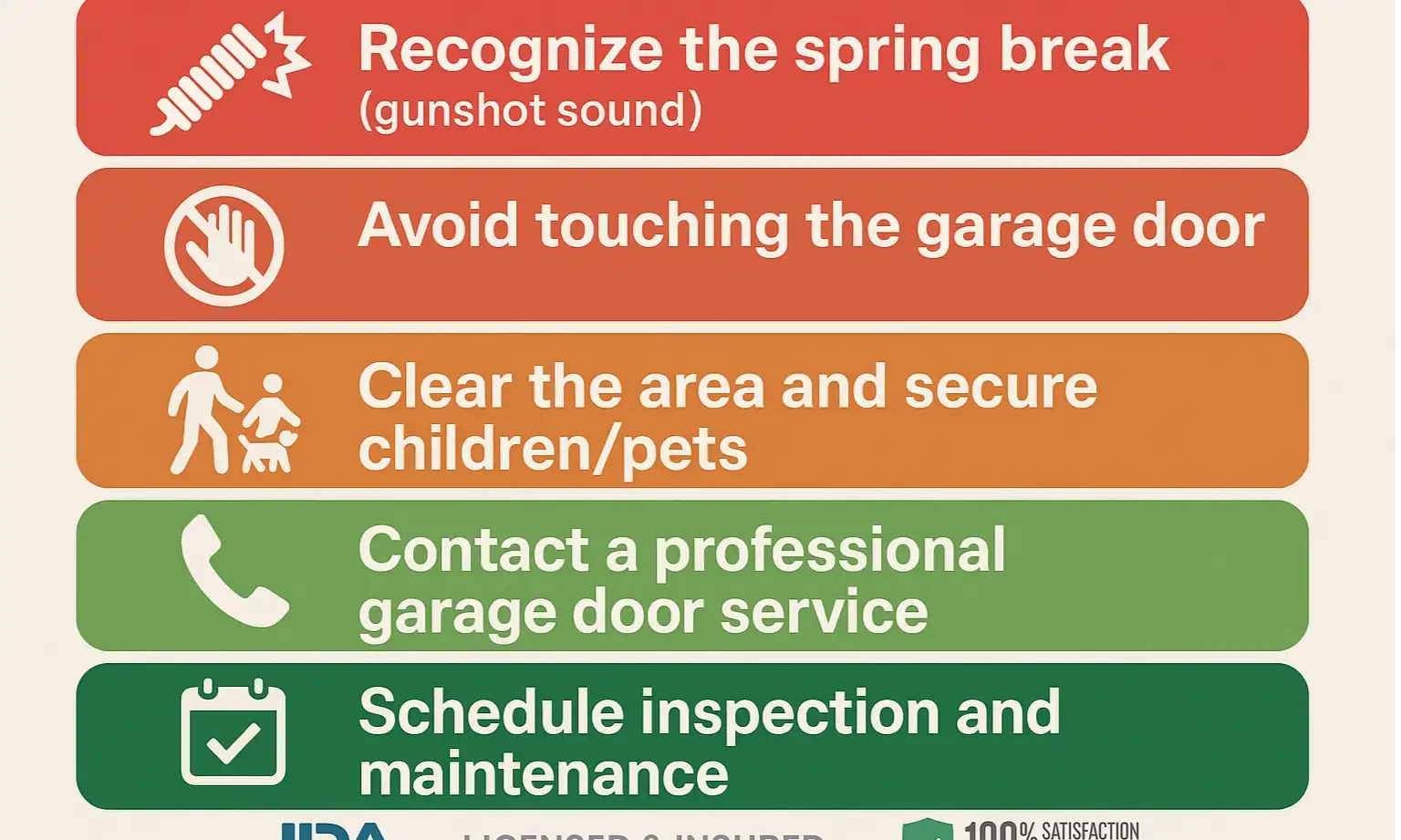
Recognizing the signs of a failing spring is critical, but knowing what to do after it breaks is a matter of personal safety. Attempting a DIY broken garage door spring repair exposes you to every single risk detailed above. The specialized tools and knowledge required are not just for convenience—they are for preventing catastrophic injury.
If you hear that “gunshot” sound, or if you see a visible break in a spring, follow this simple safety protocol:
If you hear that “gunshot” sound, or if you see a visible break in a spring, follow this simple safety protocol:
Common Mistake Callout: A frequent and dangerous mistake is trying to lift the door manually. You might wonder how to open a garage door when the spring breaks, but without the springs, you are attempting to lift the full 200-400 pounds of dead weight. If you lose your grip, the door will slam shut with crushing force.
Frequently Asked Questions
What are the warning signs of a failing garage door spring?
Before a complete break, you might notice several garage door broken spring symptoms. The door may feel extremely heavy to lift manually, it might look crooked as it moves up or down, or you may hear squeaking or grinding noises. You might also see a visible 1-2 inch gap in the spring itself.
Can a garage door spring actually kill you?
While extremely rare, fatalities have occurred. The greater risk lies in the life-altering injuries described above—head trauma, blindness, and amputation—which are far more common and can result from the uncontrolled release of energy.
How much force is in a garage door spring?
Enough to counterbalance a door weighing hundreds of pounds. As mentioned, the stored energy is comparable to what’s needed to launch a 10-pound bowling ball over 50 feet. It’s a level of force that demands respect and professional handling.
Is it safe to use my garage door opener if the spring is broken?
No, it is extremely unsafe. The opener is designed to guide the door, not lift its full weight. Forcing it to do so can strip the gears, burn out the motor, and cause other components like the trolley or rails to buckle or break, creating an even more dangerous situation.
Frequently Asked Questions
What are the warning signs of a failing garage door spring?
Before a complete break, you might notice several garage door broken spring symptoms. The door may feel extremely heavy to lift manually, it might look crooked as it moves up or down, or you may hear squeaking or grinding noises. You might also see a visible 1-2 inch gap in the spring itself.
Can a garage door spring actually kill you?
While extremely rare, fatalities have occurred. The greater risk lies in the life-altering injuries described above—head trauma, blindness, and amputation—which are far more common and can result from the uncontrolled release of energy.
How much force is in a garage door spring?
Enough to counterbalance a door weighing hundreds of pounds. As mentioned, the stored energy is comparable to what's needed to launch a 10-pound bowling ball over 50 feet. It’s a level of force that demands respect and professional handling.
Is it safe to use my garage door opener if the spring is broken?
No, it is extremely unsafe. The opener is designed to guide the door, not lift its full weight. Forcing it to do so can strip the gears, burn out the motor, and cause other components like the trolley or rails to buckle or break, creating an even more dangerous situation.