
That rattling, sagging garage door chain is more than just an annoyance. It’s a sign that your garage door opener needs attention. And while your first instinct might be to grab a wrench and tighten it yourself, it’s crucial to pause and understand what you’re really dealing with.
A garage door isn’t just a simple door on a track; it’s a complex, counter-balanced system where hundreds of pounds of force are held in check by a few critical components. Working on the opener chain without understanding the risks is like trying to fix a clock without realizing it’s connected to a bomb.
This guide isn’t about scaring you—it’s about empowering you. We’re going to walk through the essential safety precautions that must come before any adjustment. Think of this as the required reading before you even open your toolbox.
Essential Safety Precautions for Working on Garage Door Opener Chains
Published: Jun 8, 2026 | Updated: Jul 28, 2026
Foundation: Understanding the System's Dangers
Most DIY guides jump straight to the “how-to.” We need to start with the “what-if.” Three primary dangers are present any time you work on your garage door: electrical shock, the door’s crushing weight, and the explosive power of the springs. Ignoring any one of them can have serious consequences.
Springs 101: The REAL Threat Hiding in Plain Sight
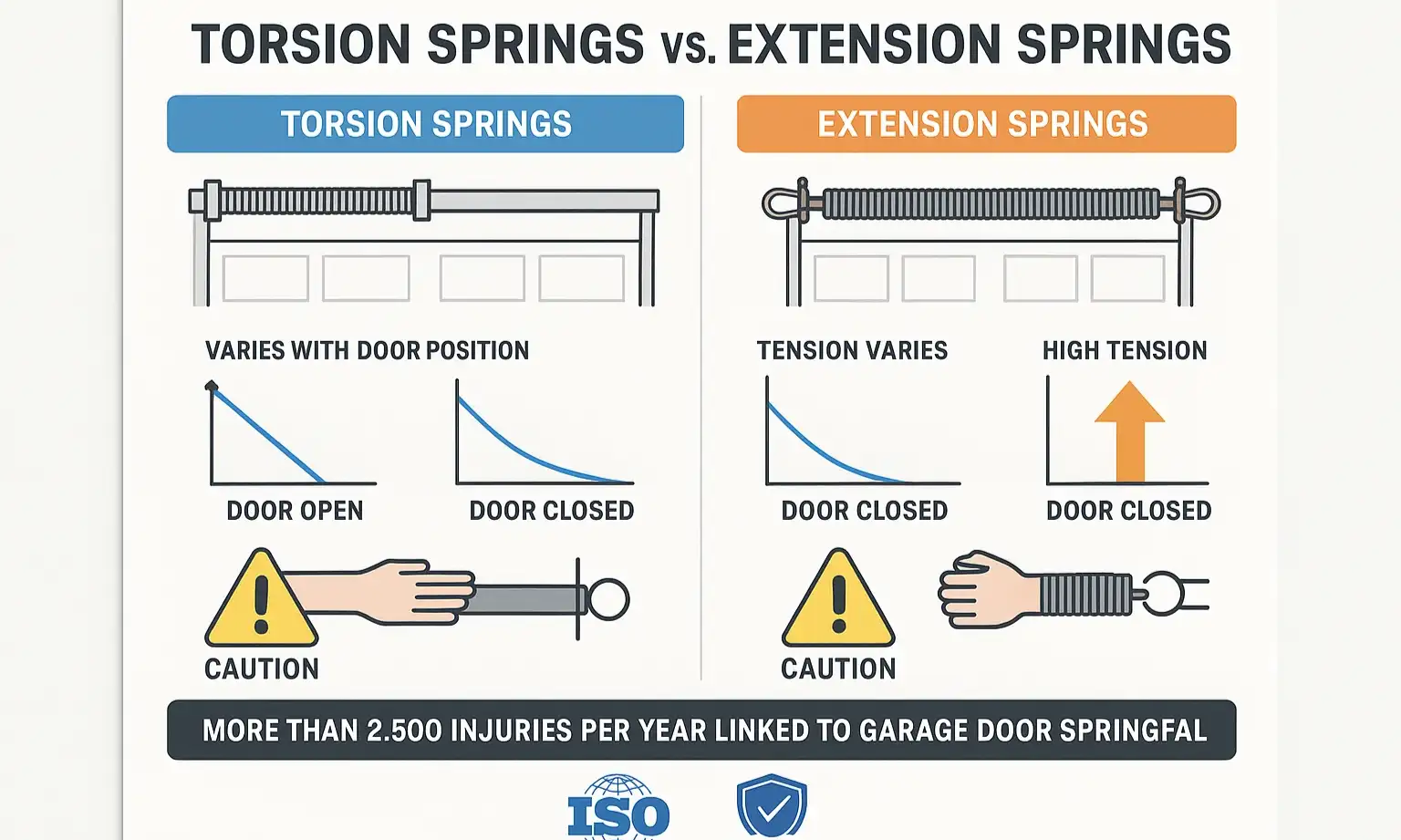
Let’s be clear: the single greatest danger in your garage door system is not the opener or the chain. It’s the springs. These high-tension springs are what do the actual heavy lifting, counterbalancing the door’s immense weight so the opener can move it with minimal effort.
They store a tremendous amount of mechanical energy. If a spring breaks or is handled improperly, that energy can be released in an instant, turning metal parts into dangerous projectiles.
There are two main types, and knowing which you have is key:
The key “aha moment” here is realizing why you never work on a door with the springs under high tension. It’s why safely closing the door is the first step for most repairs. For a deeper dive into this critical topic, understanding proper garage door spring safety is non-negotiable.
Building: The Pre-Work Checklist
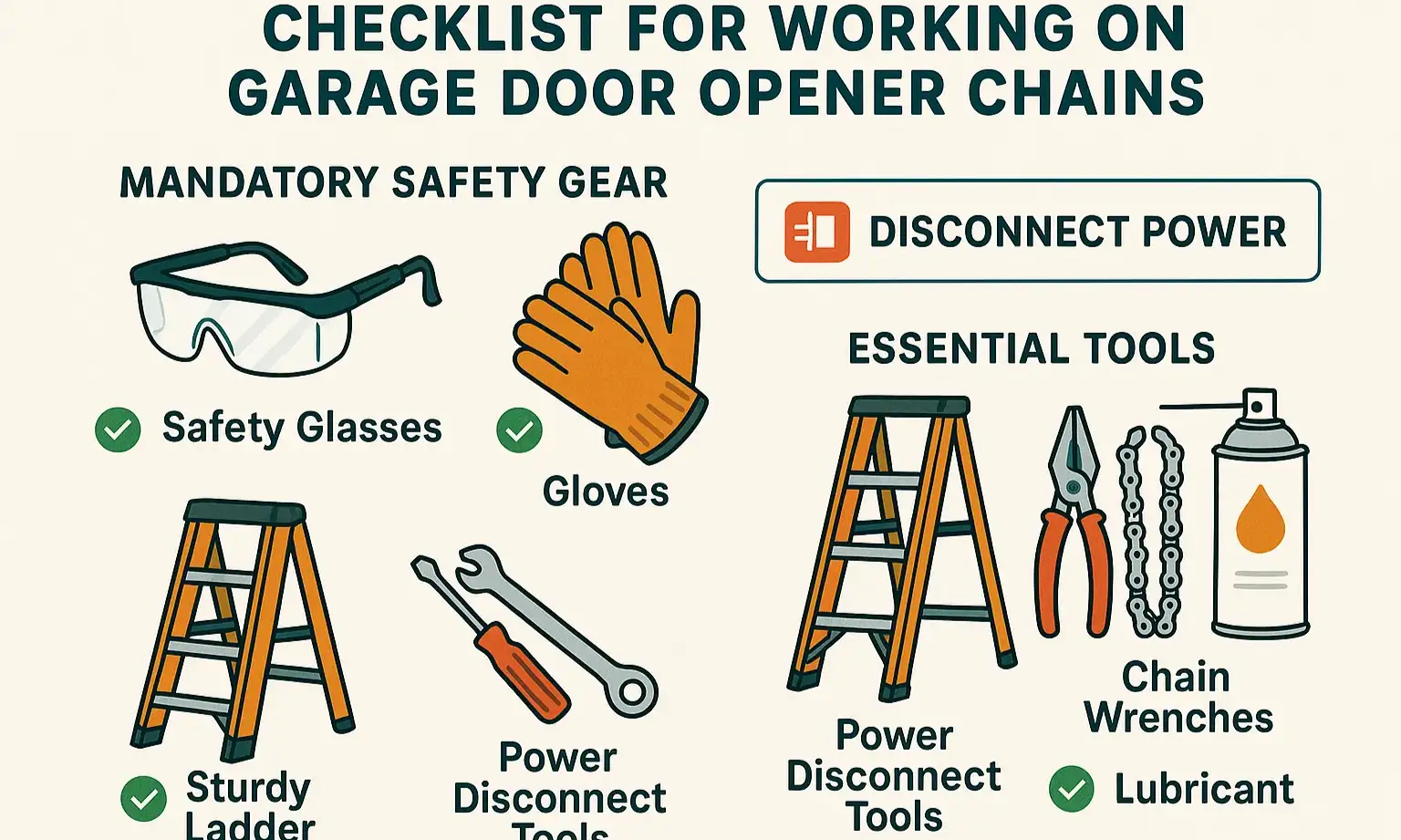
Proper preparation is 90% of safety. Before you even think about making an adjustment, you must assemble the right gear and, most importantly, completely disconnect the power.
Mandatory Safety Gear & Tools
Working on your garage door isn’t a t-shirt and flip-flops job. Treat it with the respect it deserves by gathering these items first:
The Power-Down Procedure: Your Non-Negotiable First Step
An accidental activation while you’re working on the chain can cause serious injury.
Mastery: Safely Diagnosing and Addressing Common Chain Problems
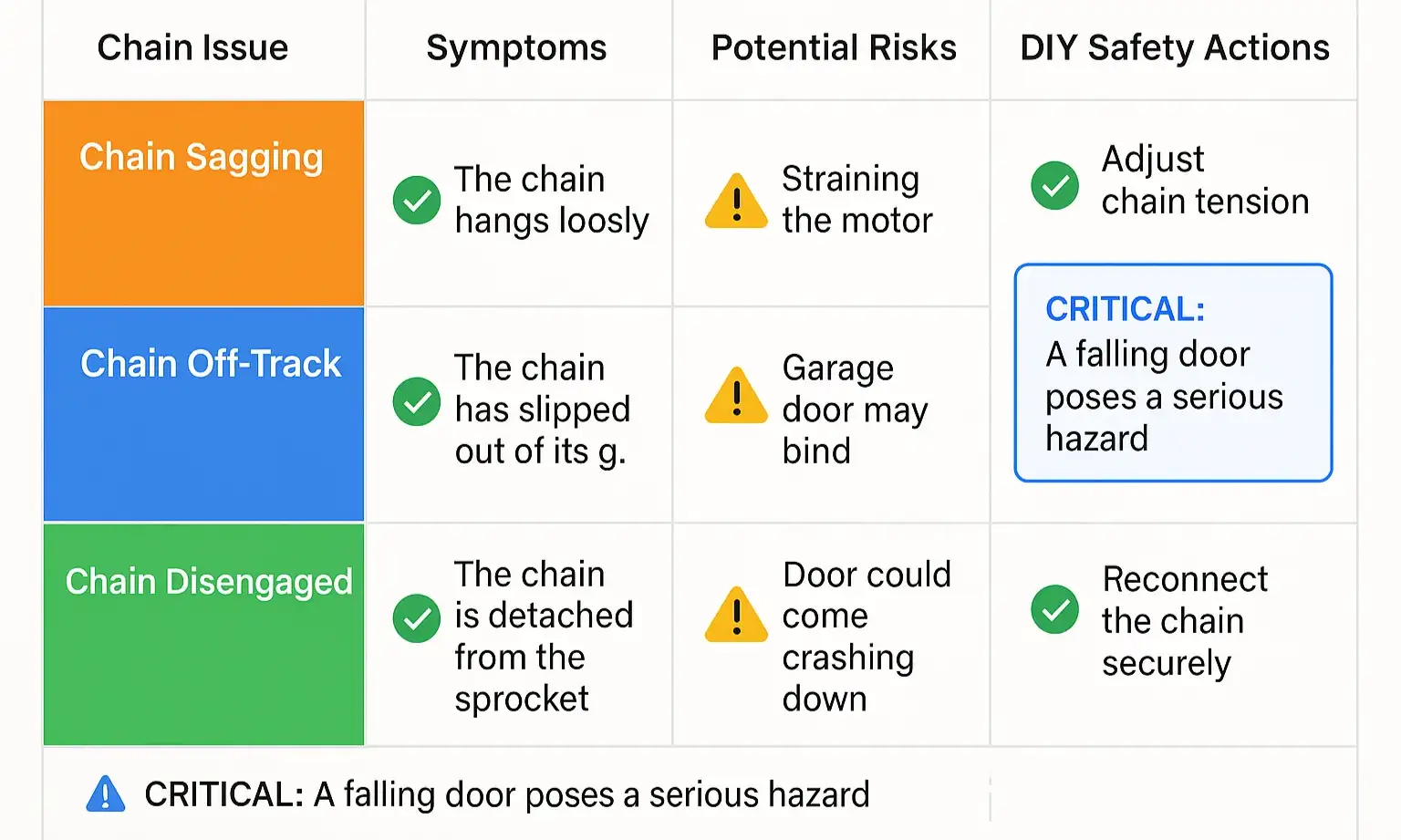
With the power off and your safety gear on, you can now safely inspect the chain. Different symptoms point to different issues.
What’s Your Chain Trying to Tell You?
Your chain’s behavior is a clue to the underlying problem.
A Quick Guide to Safe Adjustments
Once you’ve identified the issue, the next step may seem simple, but precision is key.
Action: Smart Prevention and Knowing Your Limits
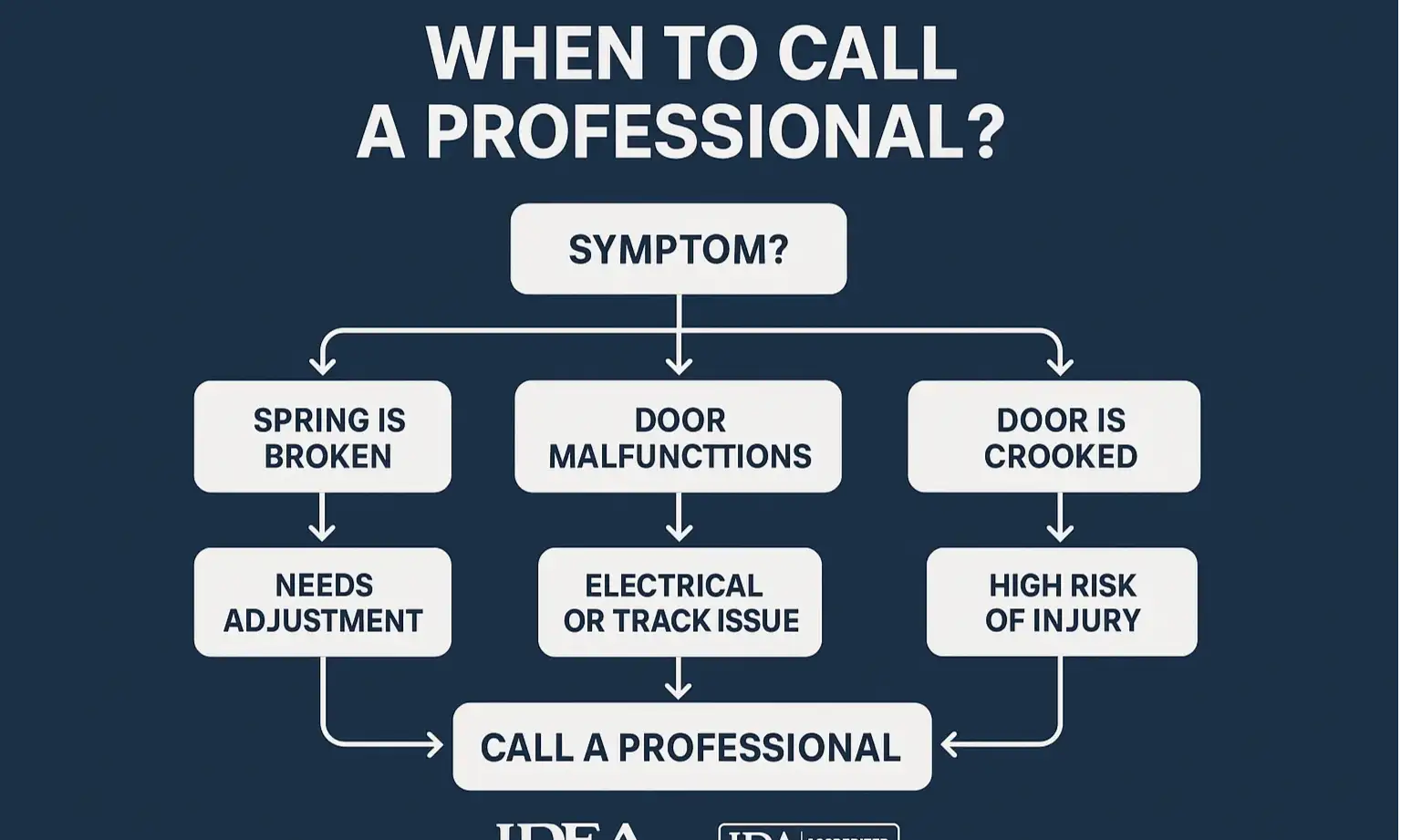
The best repair is the one you never have to make. A little routine inspection can save you a lot of trouble. But even more important is knowing when a job is too big or too dangerous for a DIY approach.
When to Put Down the Wrench and Call a Professional
Your safety is not worth the savings of a DIY repair. Immediately stop and call a professional if you see:
Frequently Asked Questions (FAQ) About Garage Door Chain Safety
How much slack should be in my garage door chain?
A properly tensioned chain should have a little slack but shouldn’t be drooping. A good rule of thumb is that it should sit about 1/4 to 1/2 inch above the base of the metal rail it runs along.
Why is it so dangerous to work on the door while it’s open?
It depends on your spring type. For extension springs (along the sides), they are under maximum tension when the door is open, making it the most dangerous time for them to break. Even with torsion springs, an open door is only held up by the system’s components. If something fails, the full weight of the door could come crashing down. Always work on a closed and disconnected door.
What are those little black boxes near the bottom of the track?
Those are your safety sensors. It’s helpful to understand how do garage door safety sensors work: they project an infrared beam across the opening, and if anything breaks that beam while the door is closing, the door automatically reverses. They are a critical safety feature.
Is there anything else I should know about keeping my family safe?
Absolutely. Regular maintenance is key, but so is education. It’s important to implement garage door safety for kids and pets, teaching them never to play with the door or its controls.
Working on your garage door can be a rewarding DIY project, but only when done with a profound respect for the power you’re dealing with. By prioritizing safety, understanding the system, and knowing your limits, you can make smart decisions that keep you and your home safe.
Frequently Asked Questions
How much slack should be in my garage door chain?
A properly tensioned chain should have a little slack but shouldn't be drooping. A good rule of thumb is that it should sit about 1/4 to 1/2 inch above the base of the metal rail it runs along.
Why is it so dangerous to work on the door while it's open?
It depends on your spring type. For extension springs (along the sides), they are under maximum tension when the door is open, making it the most dangerous time for them to break. Even with torsion springs, an open door is only held up by the system's components. If something fails, the full weight of the door could come crashing down. Always work on a closed and disconnected door.
What are those little black boxes near the bottom of the track?
Those are your safety sensors. It's helpful to understand how do garage door safety sensors work: they project an infrared beam across the opening, and if anything breaks that beam while the door is closing, the door automatically reverses. They are a critical safety feature.
Is there anything else I should know about keeping my family safe?
Absolutely. Regular maintenance is key, but so is education. It’s important to implement garage door safety for kids and pets, teaching them never to play with the door or its controls.