A chain drive garage door opener is a common choice for many homeowners, but unfortunately, it comes with a fairly common problem. Because of everyday vibration, regular use, or tension changes, you might face a sagging or detached chain. When that happens, you’ll need to know how to reattach a garage door chain to get your opener working again. This guide will teach everything from the necessary tools to final checks.
How to Reattach a Garage Door Chain: Easy Fix for Chain Drive Openers
Published: Jun 16, 2025 | Updated: Jul 28, 2026
What to Do Before You Begin
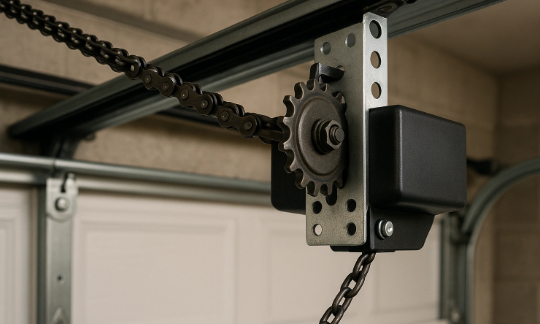
When you work with the chain garage door opener, it’s always important to make sure that everything is safe. The first step is to completely disconnect the power to the opener. The easiest way is to unplug it from the ceiling outlet or switch off the dedicated circuit breaker for the garage.
Once the power is off, gather tools to make the process easier. For example, you’ll need a stable ladder to reach the opener mechanism and a wrench or socket set for adjustments. It’s a good idea to use a flashlight because natural light isn’t enough, and your garage can be dim. Also, it’s advisable to use protective gloves since they will give you a better grip and protect your hands from grease and sharp edges.
Most importantly, make sure there are no damaged springs or cables. These components are under extreme tension and can cause serious injury if mishandled. If you see any wear or damage on them, the safest course of action is to call a professional for garage door opener repair.
Once the power is off, gather tools to make the process easier. For example, you’ll need a stable ladder to reach the opener mechanism and a wrench or socket set for adjustments. It’s a good idea to use a flashlight because natural light isn’t enough, and your garage can be dim. Also, it’s advisable to use protective gloves since they will give you a better grip and protect your hands from grease and sharp edges.
Most importantly, make sure there are no damaged springs or cables. These components are under extreme tension and can cause serious injury if mishandled. If you see any wear or damage on them, the safest course of action is to call a professional for garage door opener repair.
How to Reattach a Garage Door Chain: Step-by-Step
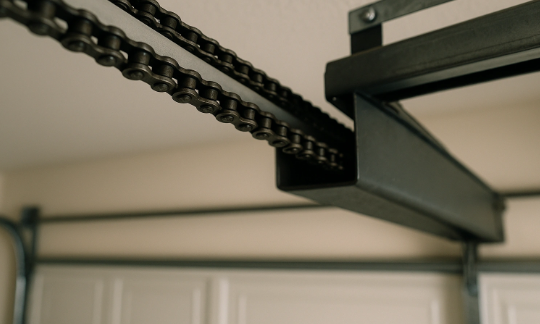
Once everything is safe, the power is off, and your tools are ready, you can start to reattach a garage door chain.
Locate the Chain
Look for the loose chain. It might hang down from the rail or off the sprocket and still be attached at one end.
Thread the Chain Back On
Carefully place the chain back onto the sprocket or along the guide rail, depending on your model. Take your time to make sure the chain is sitting correctly on all the wheels and guides.
Connect to Carriage
Once the chain is threaded along the rail, reattach the garage door chain to the carriage (or trolley), which moves along the rail and opens the door. The chain might have a master link or a connecting bracket that secures it to the carriage. If you’re unsure how to connect it, check your opener’s manual.
Secure Everything
Make sure the chain is threaded evenly and that it’s not twisted. If you had to loosen any nuts or brackets, tighten them just enough to be secure, but don’t overtighten.
Adjusting Chain Tension After Reattachment
Once you’ve successfully reattached the chain on your chain garage door opener, your next step is getting the tension just right. Near the end of the rail, you’ll find a tensioning bolt. Using your wrench, slowly turn this bolt to increase or decrease the chain’s tension. As you do, keep an eye on the chain’s shape.
How tight should the garage door chain be? If it’s too tight, it can put unnecessary stress on the opener’s motor. At the same time, if it’s too loose, it may flap against the rail or even slip off again. The ideal setup is a slight sag — around half an inch.
How tight should the garage door chain be? If it’s too tight, it can put unnecessary stress on the opener’s motor. At the same time, if it’s too loose, it may flap against the rail or even slip off again. The ideal setup is a slight sag — around half an inch.
Final Checks
When the chain is reattached and tensioned, it’s time to plug the garage door opener back in and give it a few test runs:
If everything moves smoothly, you’ve managed to reattach the garage door opener chain successfully.
Summing Up
Now you know how to reattach a garage door chain successfully. Still, some problems aren’t safe to handle on your own — sometimes, it’s better to call the professionals. If the chain keeps falling off, the sprocket is worn, or you notice fraying or damage, don’t hesitate to call an experienced technician. If you need a specific repair, a professional check-up, or more information about chain drive garage door openers, contact 24H Garage Doors for quick, dependable support.
Frequently Asked Questions
Why does the chain on my chain drive opener come loose in the first place?
A sagging or detached chain is a fairly common problem with chain drive openers. It can happen because of everyday vibration, regular use, or tension changes over time. Knowing how to reattach the chain gets the opener working again.
What safety steps should I take before reattaching the chain?
First, completely disconnect the power to the opener by unplugging it from the ceiling outlet or switching off the dedicated circuit breaker for the garage. Gather a stable ladder, a wrench or socket set, a flashlight, and protective gloves. Most importantly, make sure there are no damaged springs or cables, since these are under extreme tension and can cause serious injury; if you see wear or damage, call a professional.
How do I reconnect the chain once it's back on the rail?
Carefully place the chain back onto the sprocket or along the guide rail, taking your time so it sits correctly on all the wheels and guides. Then reattach the chain to the carriage, or trolley, which moves along the rail and opens the door. The chain may have a master link or a connecting bracket that secures it to the carriage, and you can check your opener's manual if you're unsure how to connect it.
How tight should the garage door chain be after I reattach it?
Near the end of the rail you'll find a tensioning bolt that you slowly turn with a wrench to increase or decrease tension. If the chain is too tight it can put unnecessary stress on the opener's motor, and if it's too loose it may flap against the rail or slip off again. The ideal setup is a slight sag of around half an inch.