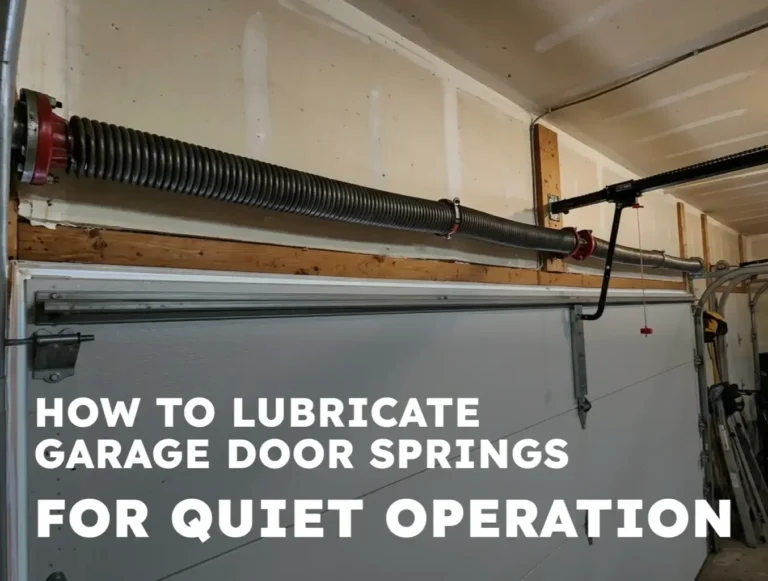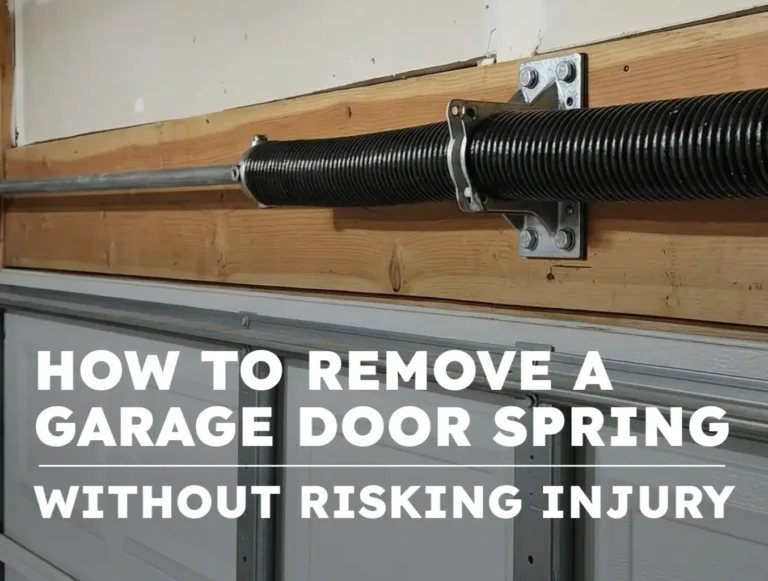
It often starts with a sound you can’t ignore—a loud, sudden BANG from the garage that sounds like a gunshot. Your first thought might be that something has fallen, but the reality is far more dramatic. That sound was a warning. It was the violent, explosive release of hundreds of pounds of stored energy as a critical component of your garage door system failed: the torsion spring.
In that moment, you’re faced with a decision. A quick search online reveals a world of DIY guides and videos. It looks straightforward enough, right? But what those guides often fail to show is the chasm of difference between a homeowner with a wrench and a trained technician with a deep understanding of physics, safety protocols, and specialized equipment.
This isn’t about scaring you; it’s about pulling back the curtain on the professional standard. It’s about understanding why this job is different and what goes into the training and safety procedures that keep technicians—and your family—safe.
Professional Garage Door Spring Replacement
Published: Apr 10, 2026 | Updated: Jul 28, 2026
The Physics of Danger in 60 Seconds
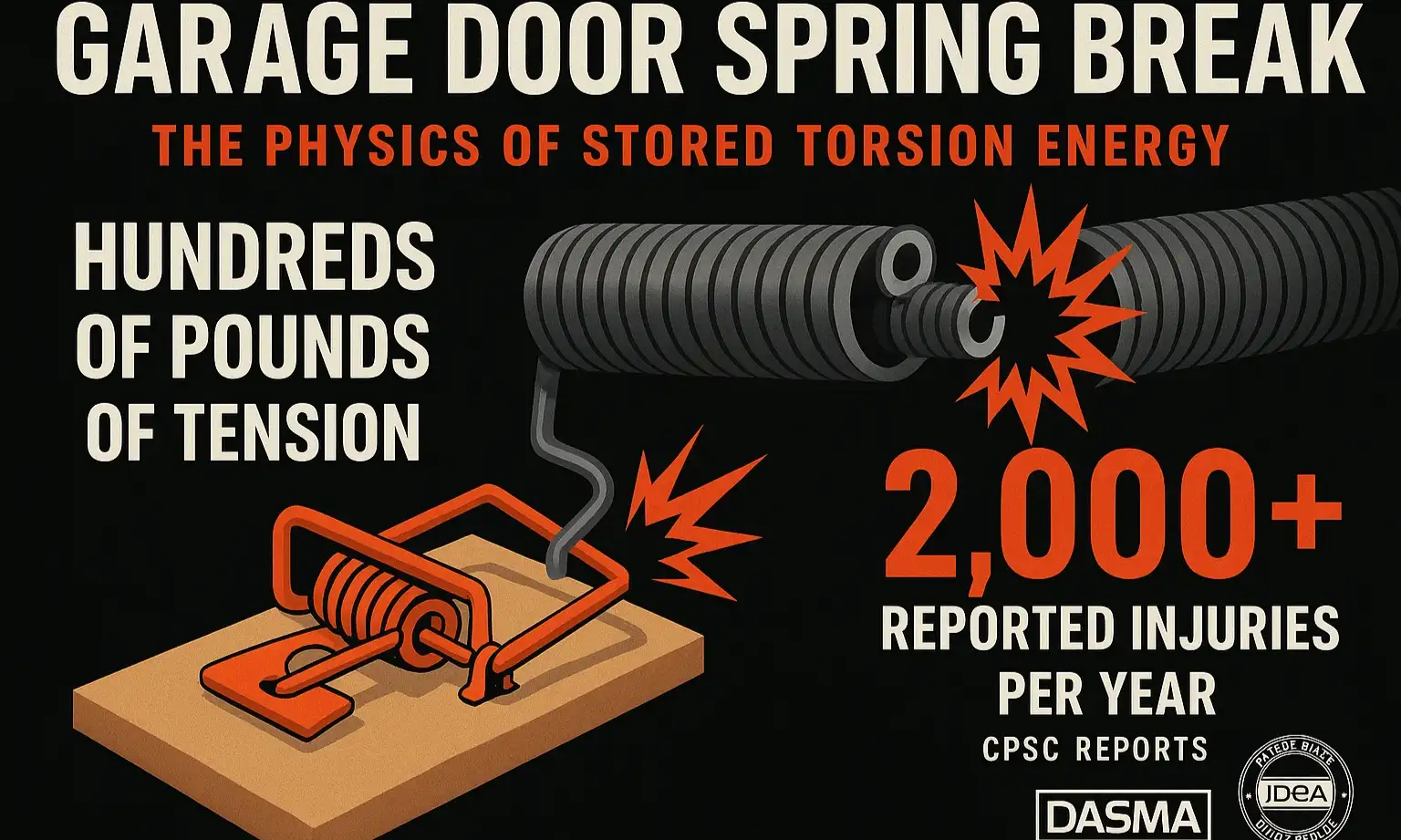
To understand the risk, you first have to understand the job your garage door springs are doing. Imagine a giant, coiled mousetrap. Winding that trap stores potential energy, and when it’s triggered, that energy is released instantly.
Your garage door’s torsion spring system works on the same principle. These tightly wound steel coils store an immense amount of mechanical energy. This energy is what allows you to lift a 300-400 pound door with one hand or what allows your opener to do its job without burning out. The springs are doing the heavy lifting, not the opener.
When a spring breaks, that stored energy is released uncontrollably. But the real danger lies in the unbroken spring (in a two-spring system) or during the process of installing a new one. Winding a new spring is like setting that giant mousetrap. It requires precise control, the right tools, and an understanding of the forces involved. One slip, one wrong tool, or one moment of inattention can result in the violent, uncontrolled release of that energy.
Your garage door’s torsion spring system works on the same principle. These tightly wound steel coils store an immense amount of mechanical energy. This energy is what allows you to lift a 300-400 pound door with one hand or what allows your opener to do its job without burning out. The springs are doing the heavy lifting, not the opener.
When a spring breaks, that stored energy is released uncontrollably. But the real danger lies in the unbroken spring (in a two-spring system) or during the process of installing a new one. Winding a new spring is like setting that giant mousetrap. It requires precise control, the right tools, and an understanding of the forces involved. One slip, one wrong tool, or one moment of inattention can result in the violent, uncontrolled release of that energy.
The Professional's Safety Protocol - A Step-by-Step Breakdown
When a certified technician arrives, they aren’t just there to swap a part. They are executing a series of methodical safety protocols honed through extensive training and experience. Here’s a glimpse into what their process looks like, which stands in stark contrast to a typical DIY attempt.
1. Comprehensive Site Assessment
Before a single tool is used, a pro conducts a full inspection. They aren’t just looking at the broken spring. They’re examining the entire system for related stress and wear.
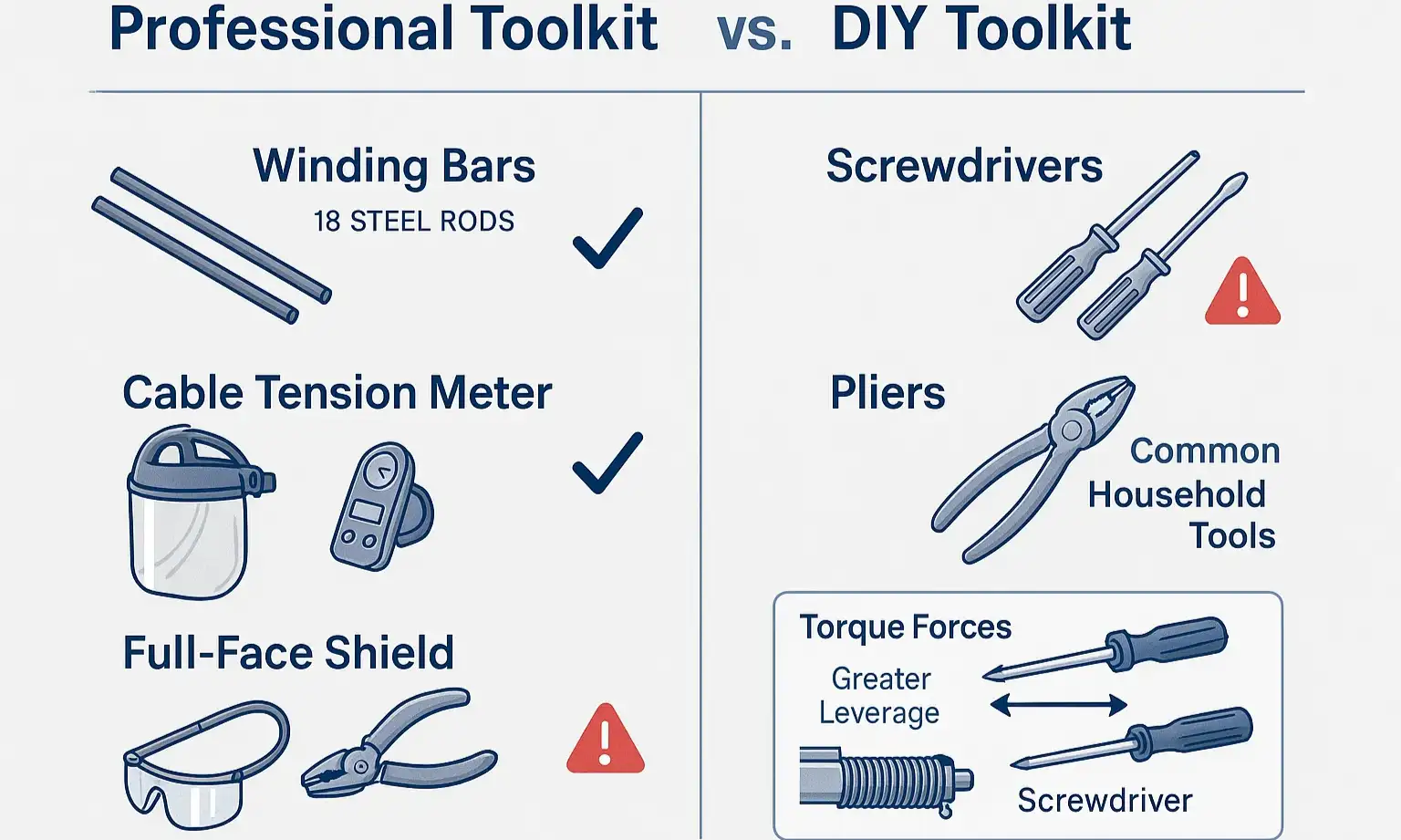
2. The Professional Toolkit vs. The DIY Toolbox
A technician arrives with a vehicle full of specialized tools designed for one purpose: safety and precision.
3. Securing the Door and Work Area
A pro will never work on a door with the opener still connected. They unplug it first. The door is always placed in the fully down position, and clamps are used to lock it in place. This prevents the door from unexpectedly shooting up once a new spring is tensioned.
4. Controlled Tension Release and Winding
This is where training is paramount. Using the proper winding bars, a technician carefully unwinds the remaining tension from the unbroken spring. When installing the new one, they follow a precise formula based on the door’s height and weight to apply the correct number of quarter-turns. This methodical process of garage door spring removal and installation is designed to maintain absolute control at all times.
5. The Final Balance and Safety Check
After installation, a technician tests the door’s balance. They disconnect the opener and lift the door by hand to about waist height. A perfectly balanced door will stay in place. If it falls or flies up, it needs adjustment. They then conduct a full cycle test, watching the cables track perfectly onto the drums and listening for any unusual sounds.
Mastery: 5 Common DIY Mistakes That Lead to Disaster
Understanding the professional protocol makes it easier to see why common DIY shortcuts are so dangerous. These aren’t minor missteps; they are gambles with life-altering consequences.
Action: Your Safe Next Steps
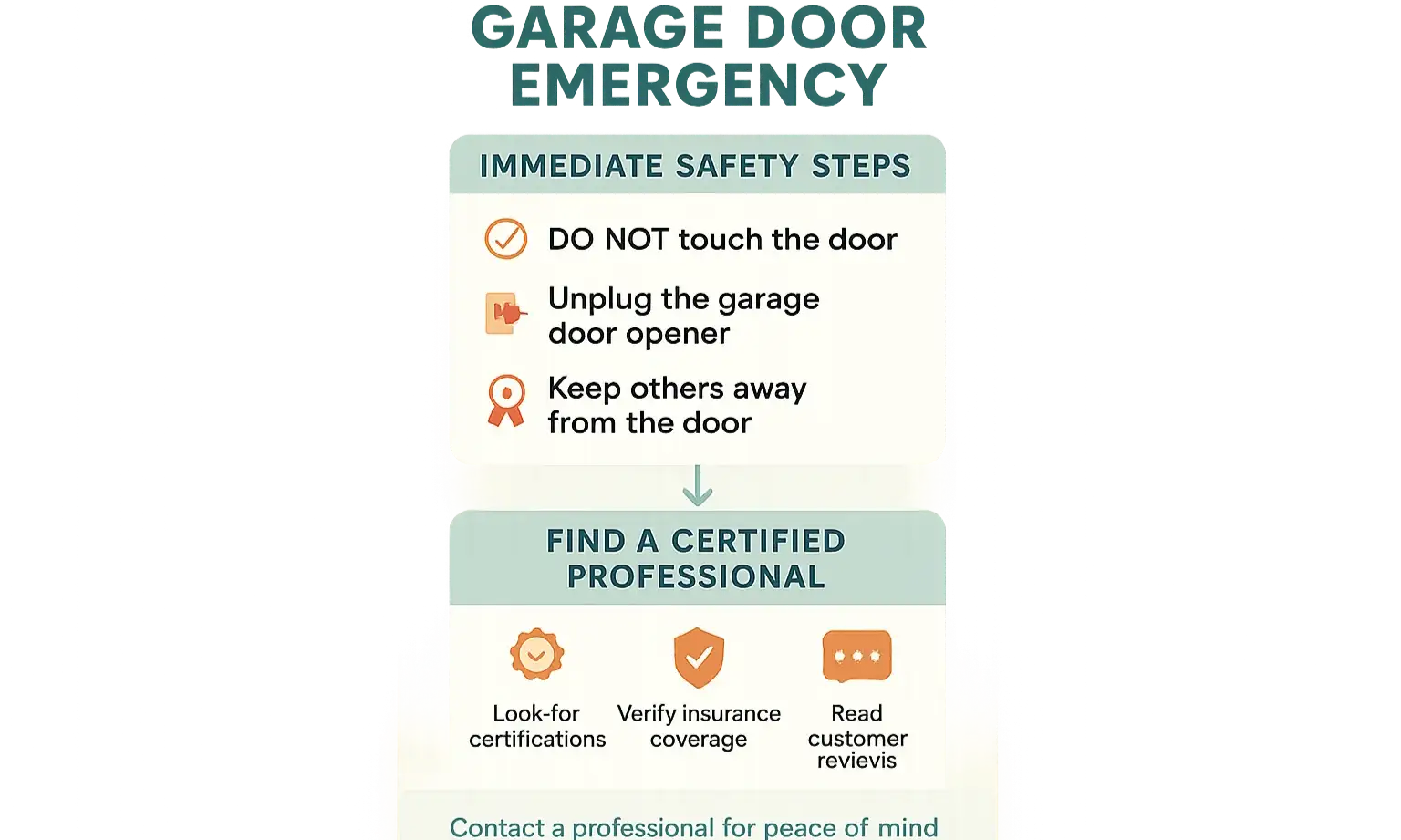
If you’ve heard that loud bang and see a visible gap in your garage door spring, the most important thing to do is recognize the situation for what it is: a hazardous materials problem. The “material” is stored energy. Here’s what to do right now.
Frequently Asked Questions
What’s the difference between torsion and extension springs?
Torsion springs are mounted on a metal bar above the garage door opening. They use torque (a twisting force) to lift the door. Extension springs are located on either side of the door, above the horizontal tracks, and they stretch and contract to provide lifting force. Torsion springs are generally considered safer and more durable.
How do I know if my garage door spring is broken?
The most obvious sign is a loud “bang” followed by the garage door not opening. You’ll likely see a 2-3 inch gap in one of the springs above your door. If the door feels extremely heavy when you try to lift it manually (after disconnecting the opener), that’s another clear indicator. It’s important to know how to tell if garage door spring is broken to avoid misdiagnosing the issue.
How long do garage door springs typically last?
Most standard garage door springs are rated for about 10,000 cycles. A “cycle” is one full opening and closing of the door. If you use your garage door 3-4 times a day, this translates to roughly 7-9 years of life.
Can a garage door spring really be that dangerous?
Yes. The immense, uncontrolled release of tension can cause the spring itself or the winding bars to become high-velocity projectiles. The resulting injuries can be severe, including lacerations, broken bones, and head trauma. This inherent garage door spring danger is why professional training is so critical.
Choosing to call a professional for a broken garage door spring isn’t an admission of defeat; it’s an act of responsible homeownership. It’s a recognition that some jobs carry risks that no amount of online video tutorials can mitigate. By understanding the professional standard, you empower yourself to make the safest choice for you and your family.
Frequently Asked Questions
What's the difference between torsion and extension springs?
Torsion springs are mounted on a metal bar above the garage door opening. They use torque (a twisting force) to lift the door. Extension springs are located on either side of the door, above the horizontal tracks, and they stretch and contract to provide lifting force. Torsion springs are generally considered safer and more durable.
How do I know if my garage door spring is broken?
The most obvious sign is a loud "bang" followed by the garage door not opening. You'll likely see a 2-3 inch gap in one of the springs above your door. If the door feels extremely heavy when you try to lift it manually (after disconnecting the opener), that’s another clear indicator. It's important to know how to tell if garage door spring is broken to avoid misdiagnosing the issue.
How long do garage door springs typically last?
Most standard garage door springs are rated for about 10,000 cycles. A "cycle" is one full opening and closing of the door. If you use your garage door 3-4 times a day, this translates to roughly 7-9 years of life.
Can a garage door spring really be that dangerous?
Yes. The immense, uncontrolled release of tension can cause the spring itself or the winding bars to become high-velocity projectiles. The resulting injuries can be severe, including lacerations, broken bones, and head trauma. This inherent garage door spring danger is why professional training is so critical.