It’s a sound you can’t ignore. A sudden, sharp BANG from the garage that echoes through the house, sounding like a firecracker or something heavy falling. Your first instinct might be to rush out and see what happened. But if that sound was a failing garage door spring, the most important thing you can do next is understand what not to do.
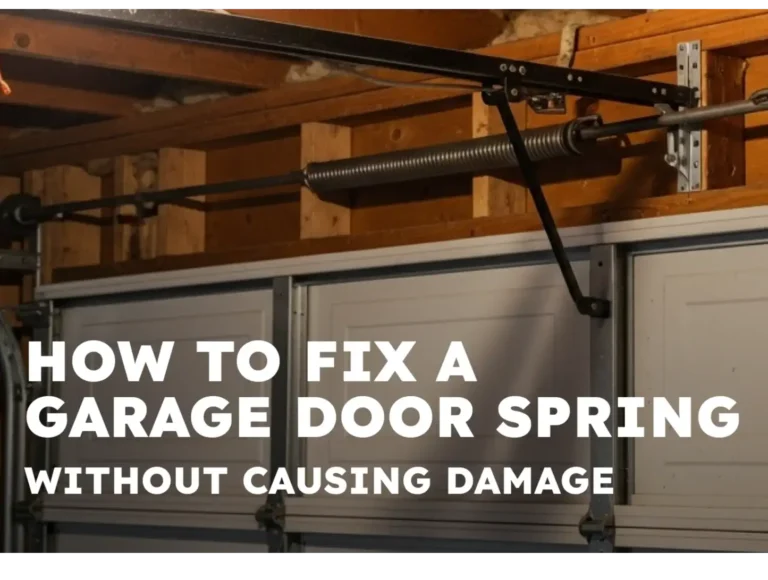
Many homeowners are surprised to learn that the springs—not the automatic opener—do the heavy lifting. They are tightly wound coils of steel that hold an immense amount of stored energy to counterbalance the door’s weight, which can be anywhere from 150 to 500 pounds.
When a spring fails, that energy is released instantly and violently.
Think of a wound torsion spring as holding the potential energy of a dropped sledgehammer. It’s this power that makes a broken spring one of the most dangerous situations a homeowner can face. This guide will help you safely identify the warning signs and know exactly what to do—and what to avoid.
That Loud Bang: 7 Signs Your Garage Door Spring is Failing
Published: Mar 4, 2026 | Updated: Jul 28, 2026
The Muscle Behind the Door: Understanding Torsion vs. Extension Springs
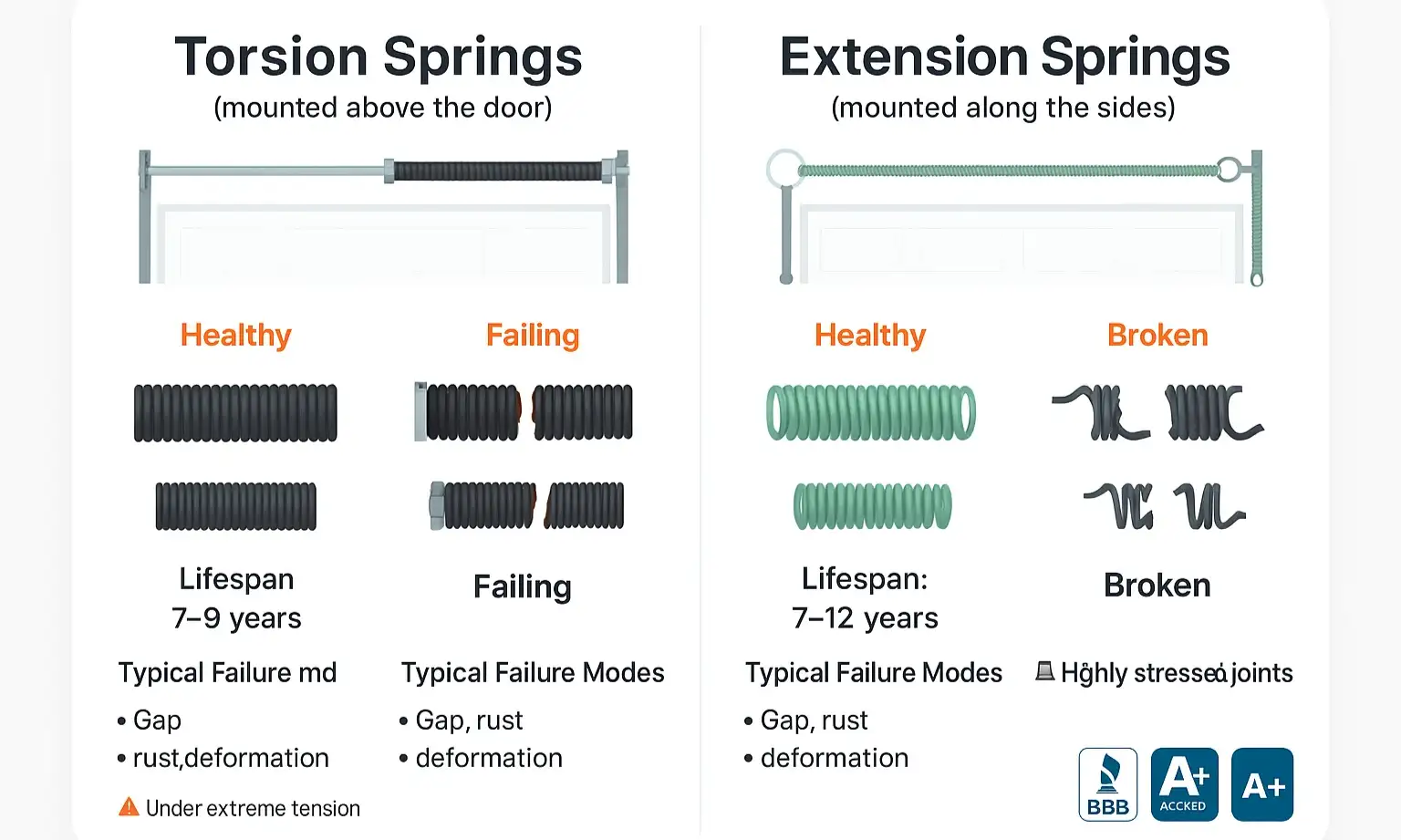
Before you can spot a problem, it helps to know what you’re looking at. Your garage door uses one of two main types of spring systems. While they perform the same job, they look and behave differently, especially when they fail. All these components are part of the larger system of garage door parts that work together.
Torsion Springs
Extension Springs
7 Telltale Signs of a Failing Garage Door Spring
Some signs are dramatic and obvious, while others are subtle clues that a failure is imminent. Here’s what to look for.
1. The Obvious Gap in the Spring
This is the clearest sign of a broken torsion spring. Look at the spring above your door. If you see a distinct, 2-to-3-inch gap where there used to be a continuous coil, the spring has snapped.
2. The Door Feels Extremely Heavy
If you disengage the automatic opener (by pulling the red emergency cord) and try to lift the door manually, it will feel incredibly heavy—if you can lift it at all. This is because the springs are no longer counterbalancing the door’s weight, leaving you to lift the full 200+ pounds on your own.
3. The Door Opens Crooked or Unevenly
When one of two extension springs breaks (or one of the lift cables snaps), the door loses support on one side. As it tries to open, it will appear slanted, jerky, or crooked in the tracks. This is a serious issue that puts immense strain on the tracks and can cause the door to come off its rails entirely.
4. You See Loose or Dangling Cables
The lift cables work hand-in-hand with the springs. They are attached to the bottom brackets of the door and wind around drums connected to the torsion spring bar. If a spring breaks, the tension is lost, and these cables will often become loose, unspooled, or even snap.
5. The Automatic Opener Strains or Fails
Your garage door opener is designed to guide a balanced door, not to lift its entire weight. If the spring is broken, the opener will strain audibly and may only be able to lift the door a few inches before stopping and reversing. Do not keep trying to use the opener. Doing so can strip the gears and destroy the motor, turning a spring repair into a much more expensive opener replacement.
6. The Door Slams Shut
A door with healthy springs should close in a controlled manner. If you notice it dropping much faster than usual or slamming into the ground, the springs are weak and losing their ability to properly counterbalance the weight. This is a critical warning sign that a complete failure is likely.
7. Visible Rust or Corrosion
Springs are made of high-tensile steel, but they aren’t immune to the elements. Rust and corrosion can weaken the steel over time, creating a stress point that will eventually break under pressure. If your springs look heavily rusted, they are living on borrowed time.
The Danger Zone: Why You Must Not Touch a Failing Spring
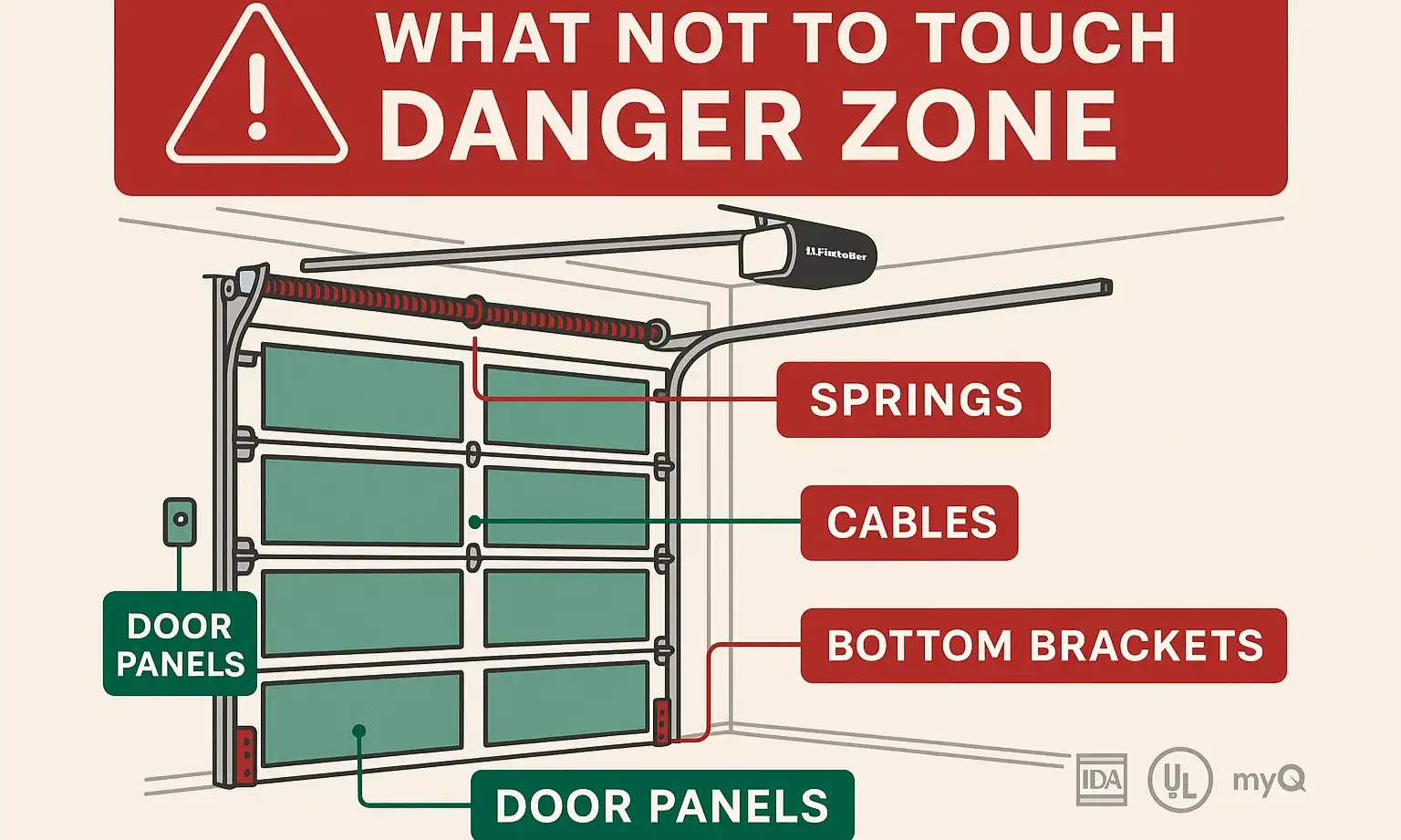
Understanding the signs is only half the battle. The most important lesson is about safety. The immense stored energy in the spring system makes it the most dangerous part of your garage door.
A professional knows exactly how many turns on a garage door spring are needed to balance a door’s weight without creating a safety hazard. Attempting to adjust, remove, or even touch a tensioned spring without the right tools and knowledge can result in the explosive release of energy, causing severe injury. The same goes for the parts directly connected to the springs under tension, like the bottom brackets and lift cables.
A professional knows exactly how many turns on a garage door spring are needed to balance a door’s weight without creating a safety hazard. Attempting to adjust, remove, or even touch a tensioned spring without the right tools and knowledge can result in the explosive release of energy, causing severe injury. The same goes for the parts directly connected to the springs under tension, like the bottom brackets and lift cables.
A Homeowner’s Safety Protocol
If you suspect a broken spring, your only job is to secure the area and call a professional. Do not attempt any intervention.
You've Identified a Problem. Here Are Your Next Safe Steps.
Realizing you have a broken spring can be stressful, but the solution is straightforward when you prioritize safety.
Frequently Asked Questions About Garage Door Springs
Can I still open my garage door if the spring is broken?
You should not. Attempting to open the door with the automatic opener can destroy the unit. Trying to lift it manually is extremely dangerous due to the door’s immense, unsupported weight. It’s best to leave the door closed and wait for a professional.
Why did my garage door spring break?
Springs break due to wear and tear. Most standard garage door springs are rated for about 10,000 cycles (one cycle is one full opening and closing). If you use your door four times a day, that’s about 7 years of life. Factors like rust, extreme cold, and poor garage door spring maintenance can shorten this lifespan.
Is it safe for me to attempt the repair myself?
Absolutely not. While some homeowners may search for online guides for broken garage door spring repair, this is one of the most dangerous home repair jobs. The stored energy in the springs is powerful enough to cause severe injury or even death if released improperly. It requires special tools and expertise and should only be performed by a trained professional.
Your garage door springs are the unsung heroes of your home’s largest moving object. By learning to recognize the signs of failure and, more importantly, understanding the “what not to touch” rule, you can navigate this common household issue safely and confidently. When in doubt, always step back and call in the experts.
Frequently Asked Questions
Can I still open my garage door if the spring is broken?
You should not. Attempting to open the door with the automatic opener can destroy the unit. Trying to lift it manually is extremely dangerous due to the door's immense, unsupported weight. It's best to leave the door closed and wait for a professional.
Why did my garage door spring break?
Springs break due to wear and tear. Most standard garage door springs are rated for about 10,000 cycles (one cycle is one full opening and closing). If you use your door four times a day, that’s about 7 years of life. Factors like rust, extreme cold, and poor garage door spring maintenance can shorten this lifespan.
Is it safe for me to attempt the repair myself?
Absolutely not. While some homeowners may search for online guides for broken garage door spring repair, this is one of the most dangerous home repair jobs. The stored energy in the springs is powerful enough to cause severe injury or even death if released improperly. It requires special tools and expertise and should only be performed by a trained professional.