You hear the rumble of a distant thunderstorm. The lights flicker for a second, then return to normal. You don’t think much of it, but inside your garage, a silent threat may have just targeted one of your home’s most important devices: your garage door opener.
Most of us don’t think about the power running to our opener until it stops working. But that single ceiling outlet is a gateway for electrical events that can instantly destroy the sensitive electronics inside.
So, do you need a surge protector for your garage door opener?
The short answer is yes. A quality surge protector is the single most cost-effective insurance you can buy for your opener’s sensitive logic board, protecting a $300+ machine with a sub-$20 device. This guide will walk you through exactly why it’s so important and how to choose the right protection for your home.
Surge Protectors and Voltage Stabilizers Explained
Published: May 12, 2026 | Updated: Jul 28, 2026
What is a Power Surge, and Why Does It Threaten Your Opener?
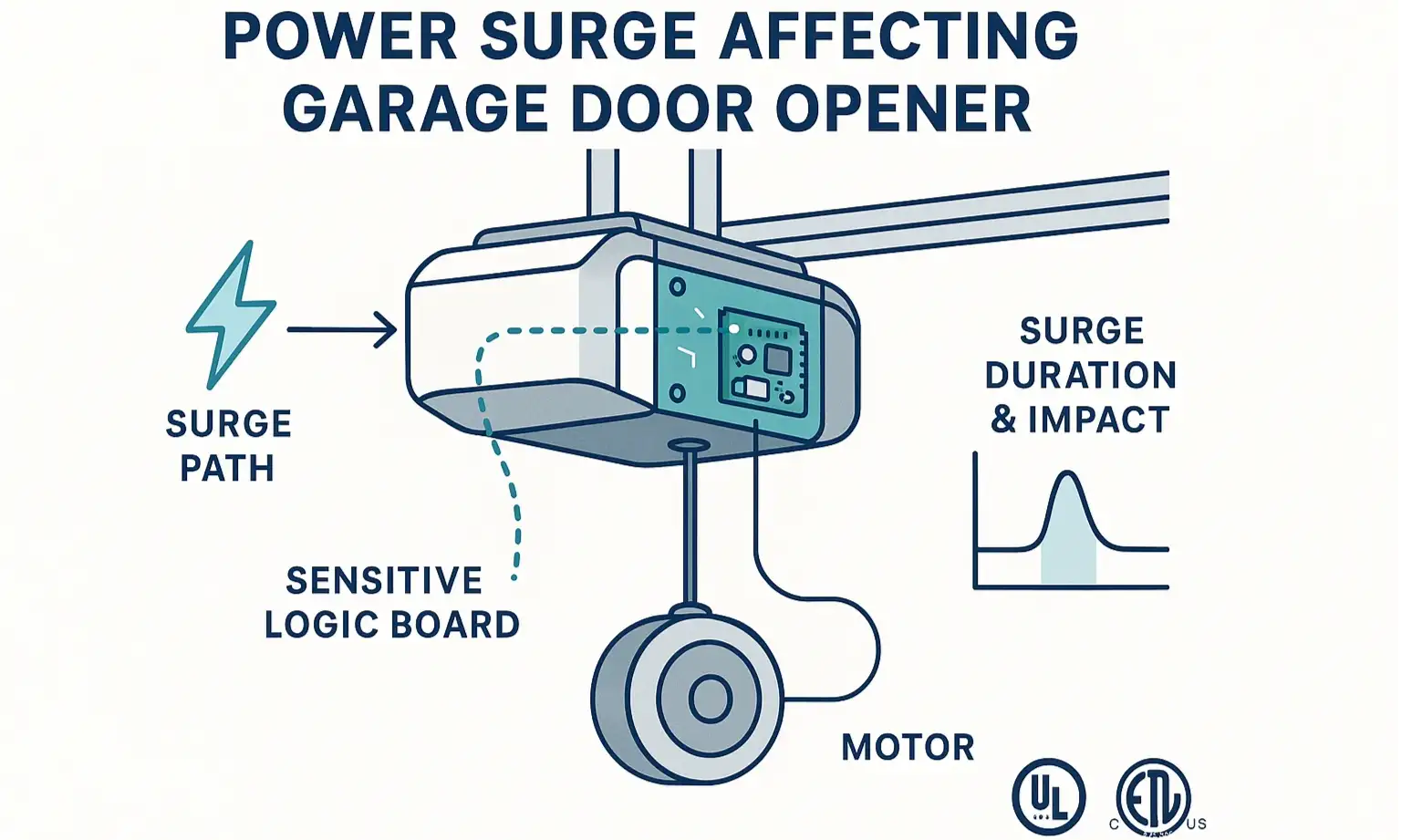
Think of your home’s electrical wiring as a plumbing system. The voltage is like the water pressure—it should be steady and consistent. A power surge is like a sudden, massive wave of water blasting through your pipes. It’s a brief but powerful increase in voltage that can overwhelm and destroy electronic components.
These surges aren’t just caused by lightning. In fact, most are generated right inside your home when large appliances like air conditioners or refrigerators cycle on and off.
The primary victim in your garage door opener is the logic board. This is the opener’s “brain,” a delicate circuit board that processes commands from your remotes and safety sensors. A power surge can instantly fry these circuits, rendering your opener useless.
Symptoms of surge damage can include:
The primary victim in your garage door opener is the logic board. This is the opener’s “brain,” a delicate circuit board that processes commands from your remotes and safety sensors. A power surge can instantly fry these circuits, rendering your opener useless.
Symptoms of surge damage can include:
The Tiers of Protection: From Basic Safeguards to Total Home Defense
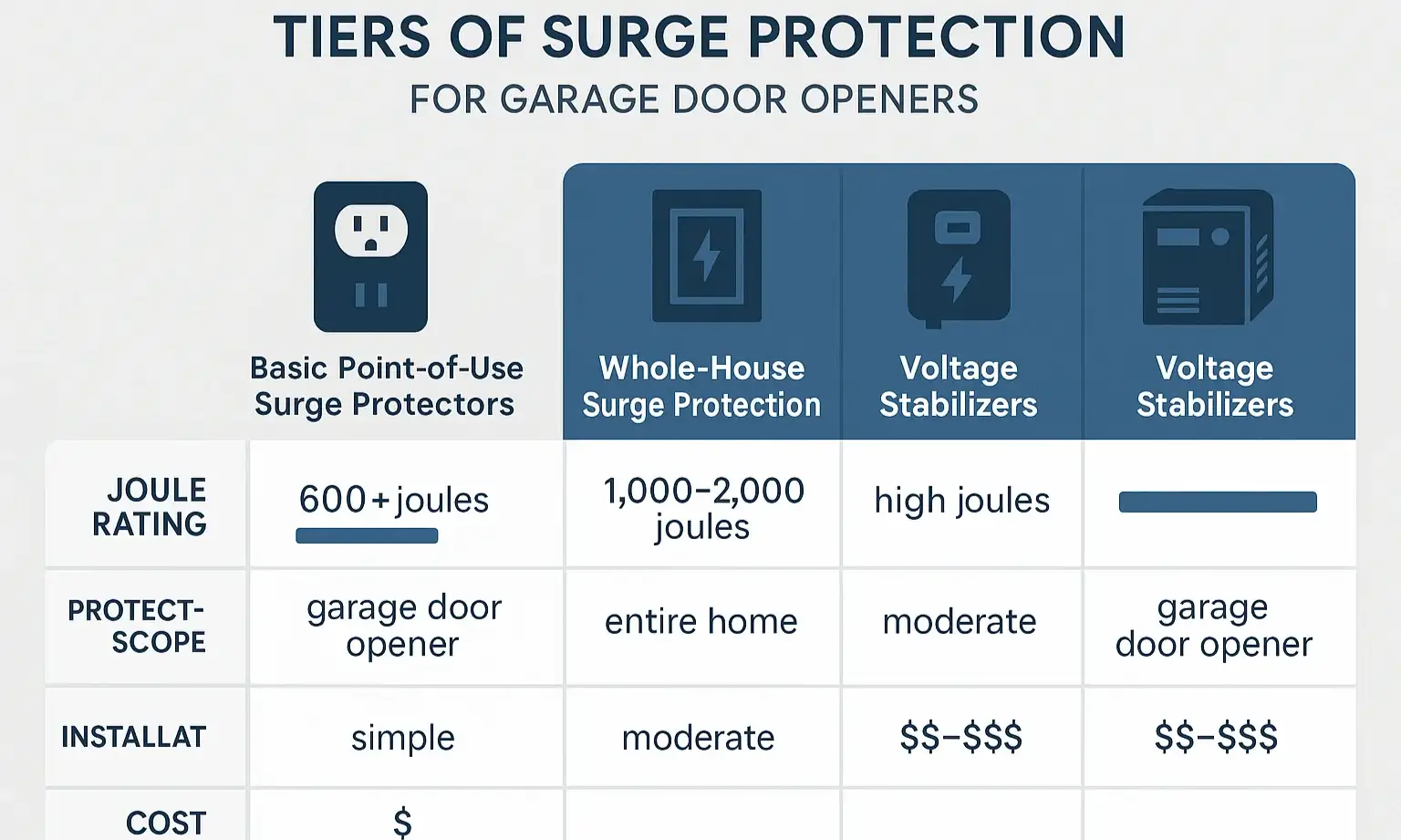
Protecting your opener isn’t a one-size-fits-all solution. There are different levels of defense, each suited for different needs and environments.
Level 1: Point-of-Use Surge Protector
This is the most common and essential layer of protection. It’s a device that plugs directly into the wall outlet, and your opener then plugs into it. It works by diverting any excess voltage safely to the ground wire. This is the minimum level of protection every garage door opener should have.
Level 2: Whole-House Surge Protection
Installed directly in your main electrical panel by a qualified electrician, a whole-house surge protector defends against major external surges, like those from lightning strikes or utility grid issues. It acts as the first line of defense, reducing a massive surge to a more manageable level that your point-of-use protectors can then handle. They work best as part of a two-stage system.
The Edge Case: Do You Need a Voltage Stabilizer?
While a surge protector handles too much voltage, a voltage stabilizer (or Automatic Voltage Regulator – AVR) handles inconsistent voltage. If you live in an area with frequent “brownouts” (where power sags) or fluctuating power, your opener’s motor can be strained. An AVR ensures the motor receives a steady, clean stream of power, prolonging its life. For most urban and suburban homes with stable power grids, this is overkill. But for rural properties or areas with known grid issues, it’s worth considering.
How to Choose the Right Surge Protector: A 4-Point Checklist
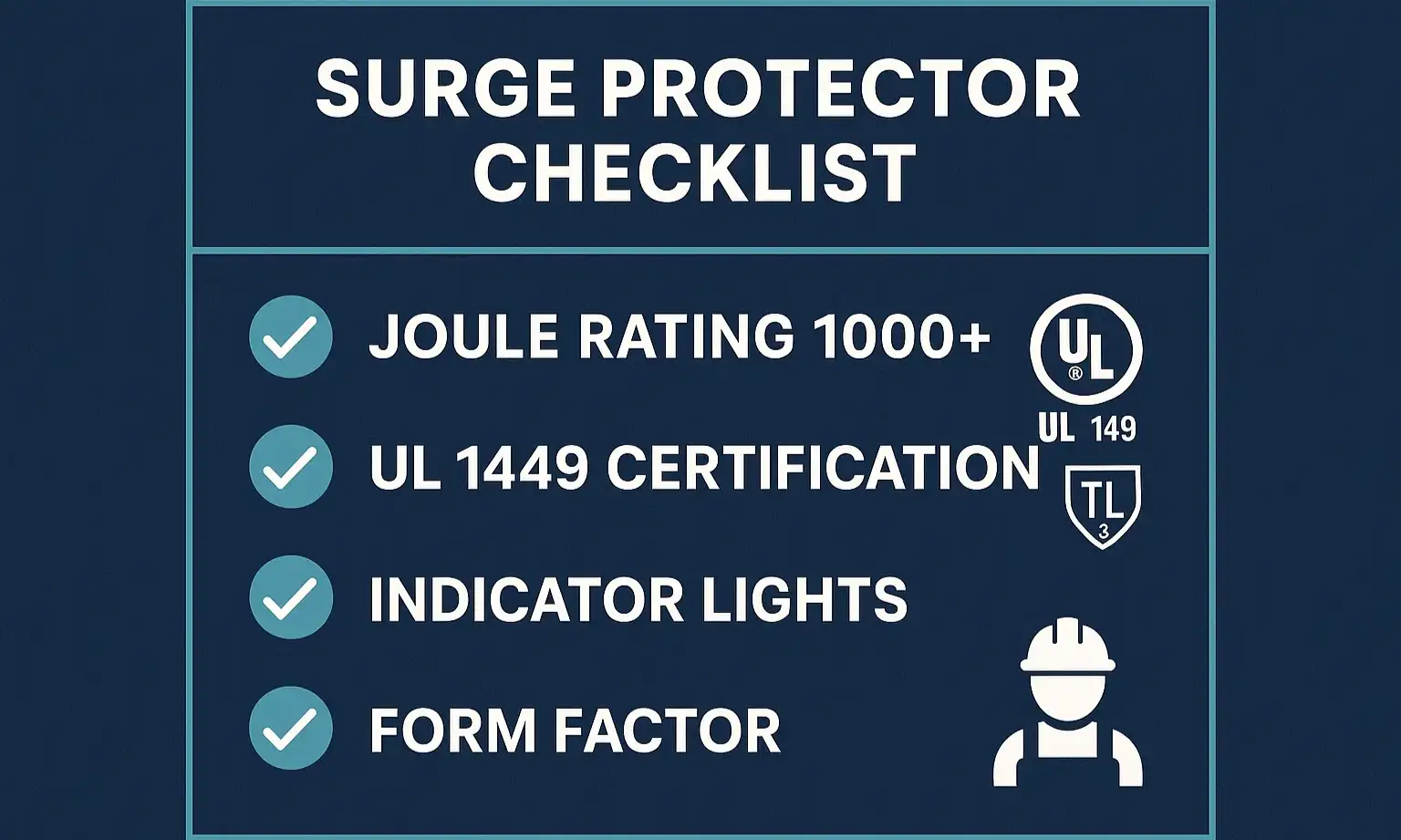
Walking into an electronics store can be overwhelming. Not all surge protectors are created equal. Use this checklist to choose a device that offers real protection.
Installation and Best Practices: A Simple Path to Protection
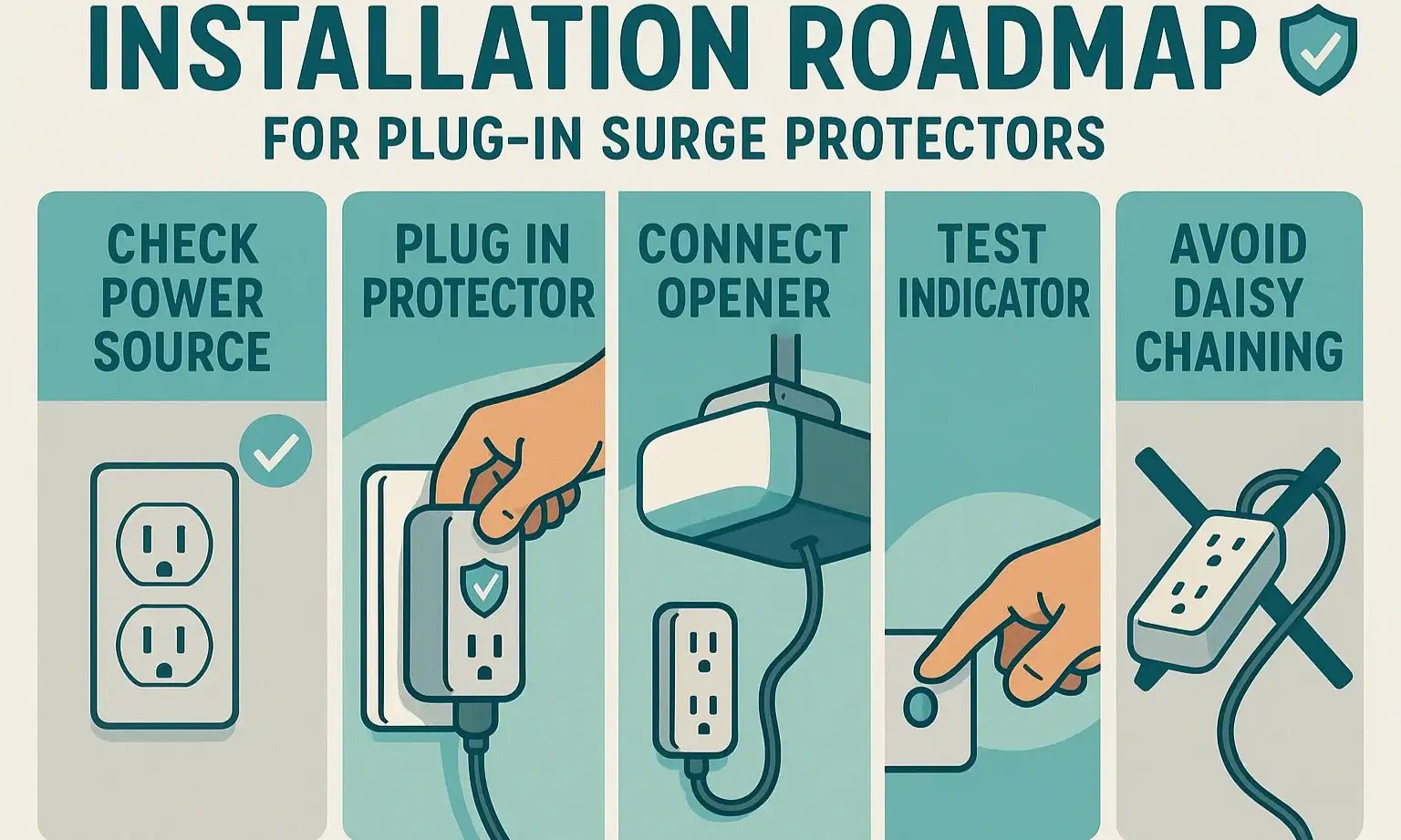
Installing a point-of-use surge protector is incredibly simple, but a few best practices ensure it works correctly.
Step-by-Step Installation:
Step-by-Step Installation:
Critical Safety Don’ts:
Frequently Asked Questions
Can I just plug my garage door opener into a regular power strip?
No. This is one of the most common and dangerous mistakes. Most power strips offer no surge protection whatsoever. You must use a device that is explicitly labeled as a “surge protector” or “surge suppressor” and has a joule rating.
What are the signs my opener has already been damaged by a surge?
Besides not working at all, you might notice erratic behavior, flashing lights that won’t reset, or the inability to pair new remotes. The internal safety sensors may also fail.
How often should I replace my surge protector?
This depends on how many surges it has absorbed. Most experts recommend replacing them every 3-5 years. If your area experiences a major electrical event like a nearby lightning strike, it’s wise to replace it immediately, even if the indicator light is still on.
Is a whole-house protector enough by itself?
While highly effective against large external surges, a whole-house unit can still let a small amount of excess voltage through. A point-of-use protector acts as a second, finer filter to protect the sensitive electronics of your opener. The two work best as a team.
Your First Step to a Smarter, Safer Garage
Protecting your garage door opener from electrical damage is a simple, proactive step that can save you hundreds of dollars and a major headache. For the cost of a couple of coffees, you can safeguard the complex electronics that make modern openers so convenient and reliable.
By understanding the risks and investing in the right device, you’re not just plugging in an accessory; you’re adopting a smart maintenance mindset. And taking these small, preventative measures is the best way to prevent garage door repairs and ensure your system runs smoothly for years to come.
By understanding the risks and investing in the right device, you’re not just plugging in an accessory; you’re adopting a smart maintenance mindset. And taking these small, preventative measures is the best way to prevent garage door repairs and ensure your system runs smoothly for years to come.
Frequently Asked Questions
Can I just plug my garage door opener into a regular power strip?
No. This is one of the most common and dangerous mistakes. Most power strips offer no surge protection whatsoever. You must use a device that is explicitly labeled as a 'surge protector' or 'surge suppressor' and has a joule rating.
What are the signs my opener has already been damaged by a surge?
Besides not working at all, you might notice erratic behavior, flashing lights that won't reset, or the inability to pair new remotes. The internal safety sensors may also fail.
How often should I replace my surge protector?
This depends on how many surges it has absorbed. Most experts recommend replacing them every 3-5 years. If your area experiences a major electrical event like a nearby lightning strike, it's wise to replace it immediately, even if the indicator light is still on.
Is a whole-house protector enough by itself?
While highly effective against large external surges, a whole-house unit can still let a small amount of excess voltage through. A point-of-use protector acts as a second, finer filter to protect the sensitive electronics of your opener. The two work best as a team.